
REVIEW · COMMUNIST HISTORY TOURS
Timisoara: Grand Communism Tour
Communism has a sound in Timisoara. This 3.5-hour tour traces Romania’s toughest era through SCARTZ and key revolution sites, guided in English or Romanian. I love how the small group size keeps the pace human, and I especially like the way the guide turns big events into real places you can stand inside.
The main thing to consider is tone. This is not a light history walk, and you’ll cover heavy political topics in a short time, so come with comfortable shoes and the mindset to listen.
In This Review
- Key Things You Should Know Before You Go
- Meeting at the Orthodox Cathedral, then moving like a pro
- SCARTZ Club and the Communist Customer Museum in the basement
- How the guide connects Ceausescu to Romania’s 1989 turning point
- Anti-Communist Resistance Movement Monument and the pushback of the 1950s and 1960s
- Reformed Hungarian Church, where December 1989 began
- Cemetery of Revolution Heroes and the final events that ended the regime
- Revolution Memorial of Timisoara, what you’re honoring at the end
- Price and value: what $70 buys you for 3.5 hours
- Guides and storytelling style, what to look for
- Who this tour is best for
- FAQ
- How long is the Timisoara Grand Communism Tour?
- What is the price per person?
- Where do we meet the guide?
- Is transportation between stops included?
- What does the tour price include?
- What is not included?
- What languages are the tours offered in?
- Is this a small group?
- Can I cancel and get a refund?
- Should you book this Grand Communism Tour in Timisoara?
Key Things You Should Know Before You Go
- Start at SCARTZ and see why this tour feels local, not generic
- Communist Customer Museum sits in SCARTZ’s basement, turning “history” into something physical
- The story runs from Ceausescu to the Romanian Revolution of 1989, with a 50-years timeline explained clearly
- You’ll visit opposition memorials, including the Anti-Communist Resistance Movement Monument
- Reformed Hungarian Church is a turning-point stop, tied to the December 1989 uprising
- You finish at the Revolution Memorial of Timisoara, focused on what the people are honored for
Meeting at the Orthodox Cathedral, then moving like a pro
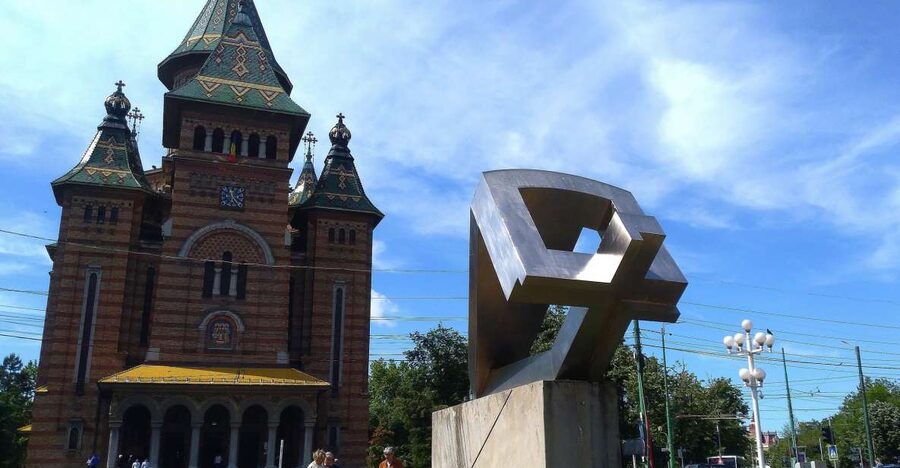
The tour meets in front of the Orthodox Cathedral, right where it’s easy to find and easy to orient yourself. From there, you head out with transportation included between stops, which matters because you’re not just passing by plaques. You’re moving from place to place where events happened, and you’ll want your legs ready for a few focused walks.
This is built for a small group, limited to 10 participants. That size makes a difference with a topic this serious. It’s easier to hear your guide, ask a question, and follow the timeline when the group is not too big to manage.
You’ll also notice the guide’s language flexibility, English and Romanian. If you’re traveling with a mixed-language group, having a real live guide instead of relying on headsets helps keep everyone on the same page.
More Communist History Tours in Timisoara:
- The Grand Tour of Communist Ages at Timisoara
★ 5.0 · 17 reviews - Bucharest: Communism and History Guided City Walking Tour
★ 4.9 · 918 reviews - The Real tour of Communism
★ 5.0 · 666 reviews
SCARTZ Club and the Communist Customer Museum in the basement
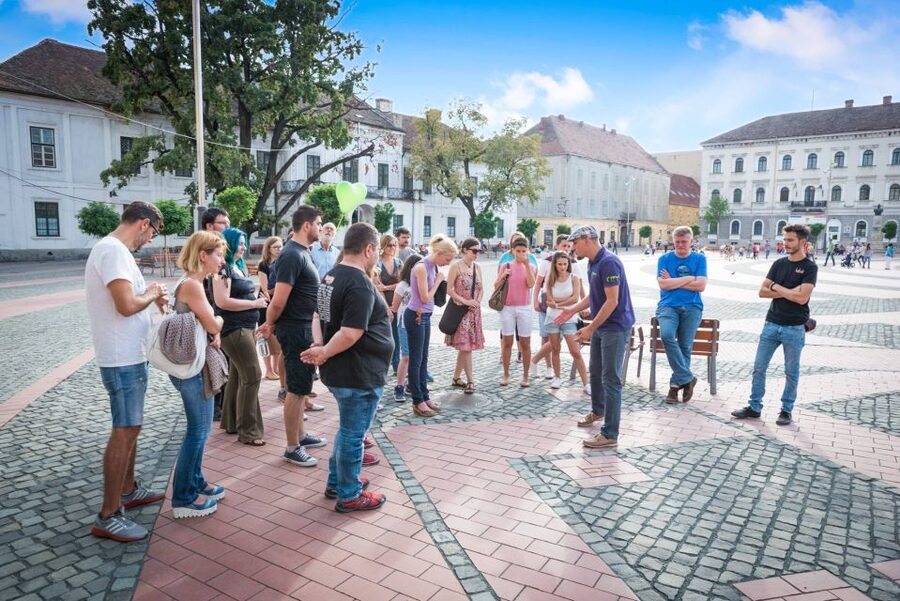
Your tour begins at the location of the misfit SCARTZ club. That start is smart. It sets a tone that history is not only in grand monuments. It’s also in buildings people use now, and in spaces that shaped everyday life, even during darker periods.
From SCARTZ, you visit the Communist Customer Museum, located in the basement of the club. I like this approach because it changes how you absorb the past. A basement museum naturally slows you down, and it supports the guide’s storytelling about what life under communism meant in practice, not just in speeches.
This stop is one of the tour’s best value points because it’s both experiential and specific. Instead of abstract talk, you get to look at a curated place that connects daily realities to the larger political system. Even if you think you already know the basics, standing in the museum space helps you reframe the era.
How the guide connects Ceausescu to Romania’s 1989 turning point
After you get oriented with SCARTZ and the museum, the tour shifts into the political backbone of the story. Your guide covers the most notorious Romanian during communist times, Nicolae Ceausescu, and explains how a long geopolitical evolution shaped what became the Romanian Revolution of 1989.
That “50-years evolution” framing is what makes this tour more than a sightseeing loop. You’re not just collecting facts. You’re building a timeline that helps you understand why the revolution happened when it did, and why the public mood in places like Timisoara mattered.
What I like most is how the guide ties the big names to a sense of cause and effect. You leave with the feeling that history was not inevitable. It was pushed, resisted, and argued over, often under pressure.
If you’re the kind of person who likes events to click together in your head, this part will feel organized rather than overwhelming.
Anti-Communist Resistance Movement Monument and the pushback of the 1950s and 1960s
Next comes the Anti-Communist Resistance Movement Monument. This stop puts opposition on the map, not just state power. In the 1950s and 1960s, the tour explains that Romanians harshly opposed the communists, and this monument helps you connect that reality to place.
I value this because it gives you context that many “Communism” tours skip. People often jump straight to the late 1980s revolution. But meaningful change usually has earlier roots, and this stop makes that visible.
One practical tip: when a tour is emotionally heavy, your brain needs time to process. This is a great moment to pause, look at what the monument represents, and let your guide’s explanation land. If you rush past it, you’ll miss the tour’s strongest theme: resistance existed long before 1989.
A different sort of day out in Romania:
- The Classic Tour of Timisoara
★ 5.0 · 154 reviews - Weekly Guided Tour in English – Tuesday, Thursday, Saturday
★ 5.0 · 84 reviews - Timisoara All in One – Walking and Tram Tour
★ 5.0 · 72 reviews - Weekly Guided Walking Tour – Tuesday, Thursday & Saturday
★ 5.0 · 49 reviews
Reformed Hungarian Church, where December 1989 began
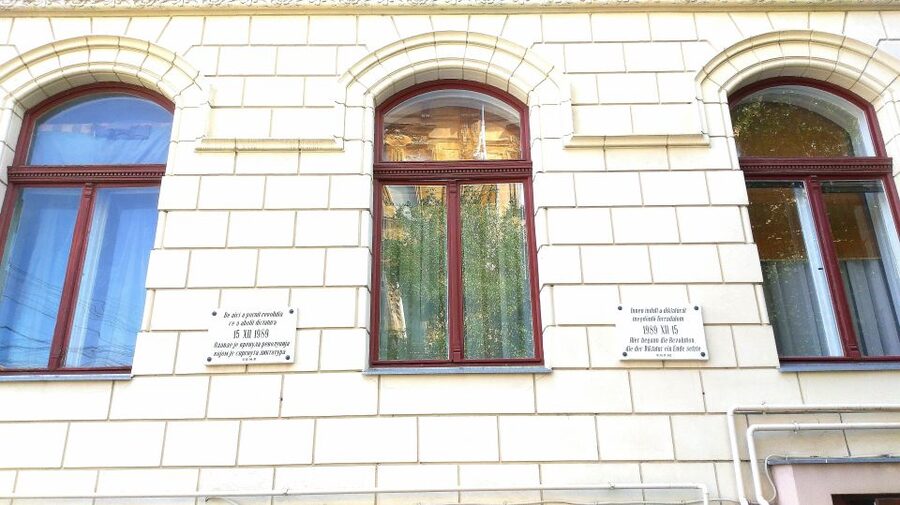
The tour then heads to the Reformed Hungarian Church. This is a key stop for anyone interested in how revolutions start, because it’s described as the place where the uprising started in December 1989.
You also get another layer here: the church is tied to local headquarters of the former Communist Party. So you’re seeing both sides of the conflict in the same broader area of meaning. That contrast is powerful. It helps you understand that political struggle is not only in textbooks. It’s in institutions people recognize, and in spaces where control was exercised or challenged.
This stop is likely to be your “this is why Timisoara mattered” moment. Even if you don’t know the local story, your guide’s narrative makes it clear that the revolution was not a distant event. It was happening in real neighborhoods with real stakes.
Cemetery of Revolution Heroes and the final events that ended the regime
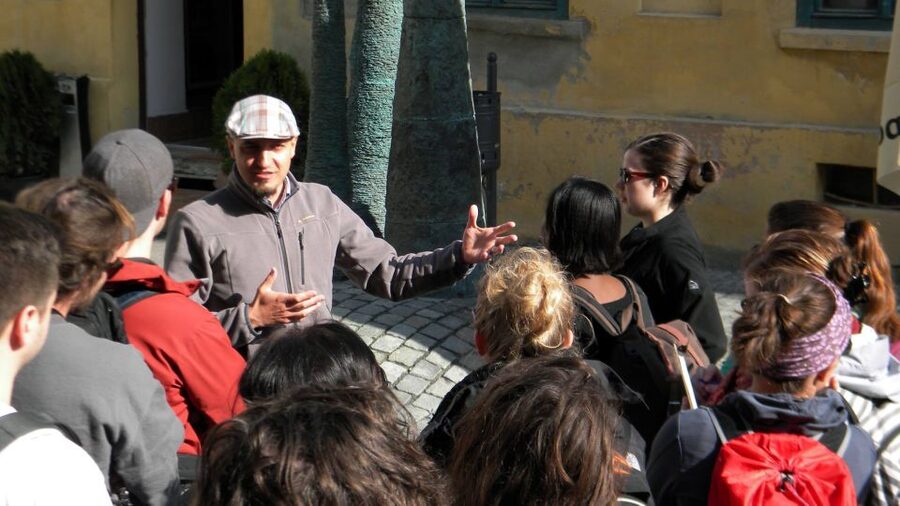
After the Reformed Hungarian Church, you visit the Cemetery of Revolution Heroes. Here, the focus shifts toward the final events that led to the end of Ceausescu’s regime.
I like cemetery stops on history tours when they’re handled with care, because they force you to slow down. The goal is not dark sightseeing. It’s remembrance, and it helps you understand what “the end of a regime” really means for people on the ground.
This is also where the tour’s emotional pacing works. Earlier stops are about ideas, institutions, and resistance. The cemetery is about consequences, and it gives your timeline a human weight.
Keep your questions coming here, if you have them. A good guide will connect what happened with how the story is interpreted through the sites you’re seeing.
Revolution Memorial of Timisoara, what you’re honoring at the end
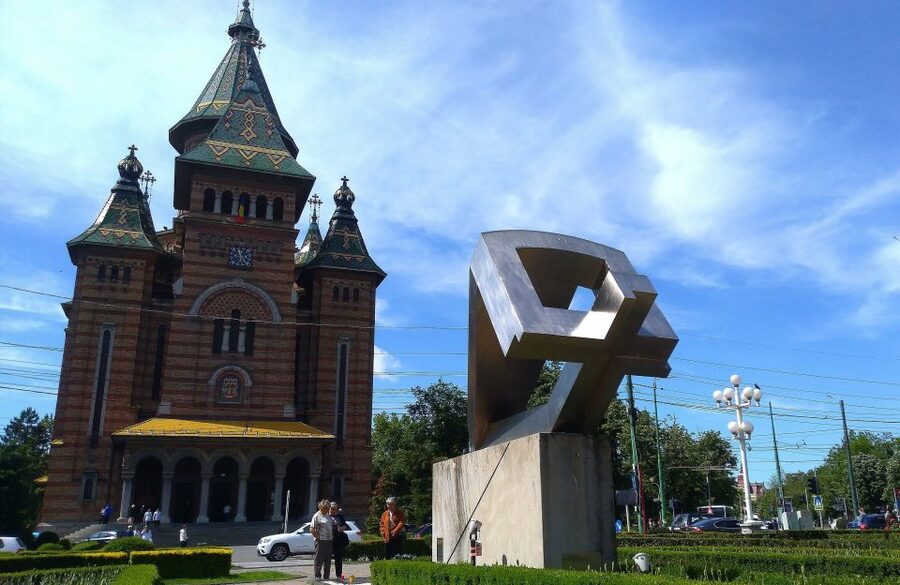
The tour ends at the Revolution Memorial of Timisoara. This site honors the brave people of the Anti-Ceausist Revolution of Timisoara, which ultimately helped lead to the end of Ceausescu’s regime in Romania.
One practical thing: the entrance fee to the Revolution Memorial is 20 RON, and it’s not included in the tour price. That’s normal for these kinds of cultural sites, but it’s worth budgeting so you do not have an awkward moment at the end when you are ready to wrap up.
What I appreciate about finishing here is that it frames the tour’s meaning. You’re not just learning the mechanics of a historical event. You’re learning what Timisoara chooses to remember, and why that memory matters when you’re living in the aftermath.
If you prefer your history lessons to end with a clear takeaway, this memorial stop delivers. It pulls the story together into a final note about people, not just politics.
Price and value: what $70 buys you for 3.5 hours
At $70 per person for about 3.5 hours, you’re paying for more than a walk between landmarks. You’re paying for a live guide, plus transportation between stops, and a tightly planned route that includes multiple important sites connected to the communist era and the revolution.
Here’s how I think about value with this tour:
- The small group size, limited to 10, helps the guide manage details and keep your experience personal.
- You’re not only outside looking in. You also get the Communist Customer Museum experience in SCARTZ’s basement, which is a more distinctive stop than typical “photo points.”
- Transportation between stops is included, which saves time and makes sense given the number of locations covered in one sitting.
- The only extra cost you should expect is the Revolution Memorial entrance fee of 20 RON.
So while $70 isn’t a bargain price, it’s fairly positioned for a focused, guide-led history route that covers serious content and multiple sites in one half afternoon.
If you love history and you want context tied to real locations, this is the kind of tour that often pays off because it saves you from piecing the story together on your own.
Guides and storytelling style, what to look for
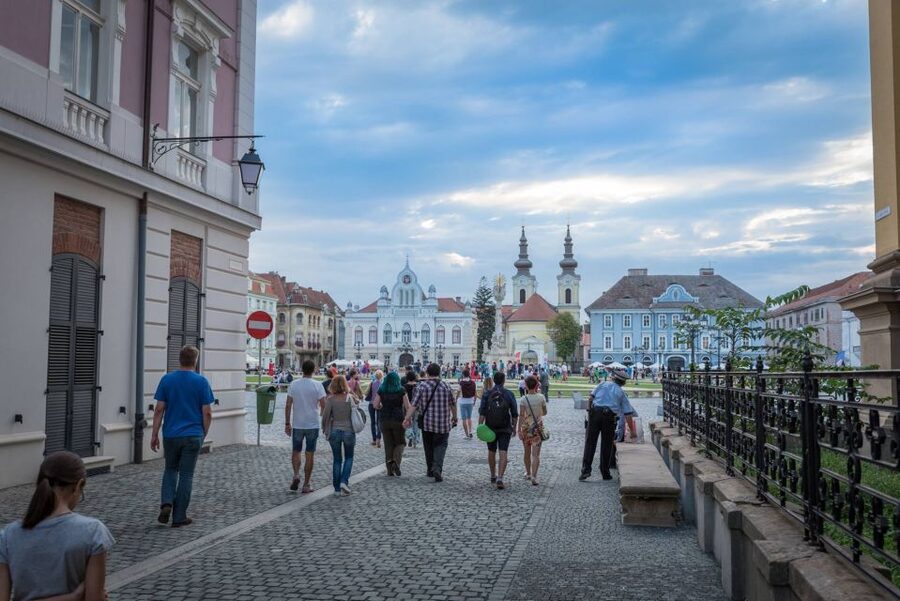
The strongest theme across guide feedback is storytelling. Names you may hear associated with this tour include Andrei, Sergio, and Roberta. Guides are described as engaging, knowledgeable, and good at making the communist era feel understandable to outsiders through anecdotes and personal framing.
That’s not fluff. For a topic like communism, the hardest part is turning “systems” into something a visitor can actually grasp. A strong guide helps you connect everyday life, political power, and resistance into one readable narrative.
If you want the most from your experience, do this: listen for the cause-and-effect links your guide makes. The tour is structured around places where history happened, but the real product is the explanation that connects them.
Who this tour is best for
This tour is ideal if you:
- Like history that ties politics to specific locations
- Want a structured timeline leading to 1989
- Prefer a small group with real conversation, not a rushed bus tour
- Are curious about how opposition formed during the 1950s and 1960s, not just the late 1980s
It may not be the best fit if you want a purely casual stroll or if you are easily overwhelmed by heavy political and human remembrance themes. The route is also fairly full for 3.5 hours, so be ready to move and listen.
FAQ
How long is the Timisoara Grand Communism Tour?
It lasts 3.5 hours.
What is the price per person?
The price is $70 per person.
Where do we meet the guide?
Meet in front of the Orthodox Cathedral.
Is transportation between stops included?
Yes. Transportation between stops is included.
What does the tour price include?
It includes the tour guide and transportation between stops.
What is not included?
The entrance fee to the Revolution Memorial is not included, and it costs 20 RON.
What languages are the tours offered in?
Tours are available in English and Romanian.
Is this a small group?
Yes. It is limited to 10 participants.
Can I cancel and get a refund?
Yes, you can cancel up to 24 hours in advance for a full refund.
Should you book this Grand Communism Tour in Timisoara?
Yes, if you want a tightly guided, place-based way to understand Romania’s communist era and the events around the Romanian Revolution of 1989. The mix of SCARTZ’s Communist Customer Museum, resistance and revolution landmarks, and a finishing memorial stop makes it feel like a complete story, not a list of stops.
Book it especially if you value a strong live guide and a small group pace. Just go in prepared for a serious, human topic, and you’ll come away with context that sticks.
Recently listed in Timisoara
- Bite your way through Timisoara – Timisoara’s Street Food Tour★ 5.0 · 14 reviews
- Timisoara Downtown Dream Tour★ 5.0 · 5 reviews
- The Grand Tour of Communist Ages at Timisoara★ 5.0 · 17 reviews
- The Jewish Heritage Tour of Timisoara★ 5.0 · 9 reviews
- One Day in Transylvania – Departure from Timisoara★ 5.0 · 16 reviews
- Nera Gorge National Park – Private Day Tour from Timisoara★ 4.5 · 4 reviews
- Ecumenical Tour of Timisoara★ 5.0 · 15 reviews
- Day Trip to Turda Salt Mine and Corvin Castle from Timisoara★ 5.0 · 10 reviews
Communist History Tours, compared.
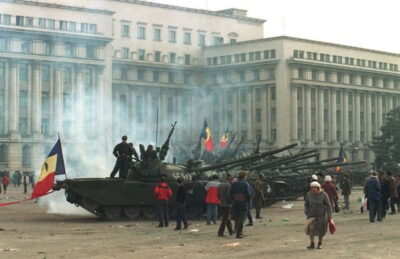


Parliament, Ceausescu House & Village Museum Tour
Read our review →
Bucharest Essential Tour: Old Town, Calea Victoriei & Communism
Read our review →
Communism in Bucharest – Landmarks, Museum & Communist Appetizers
Read our review →
Palace of Parliament, Ceausescu House & Village Museum
Read our review →Browse the lists this tour appears in