REVIEW · COMMUNIST HISTORY TOURS
Bucharest: Communism and History Guided City Walking Tour
Bucharest has a second story in stone. I love how this tour uses big, famous landmarks, like the Palace of the Parliament, to explain what communism did to real Romanian life. You do not just hear dates, you walk the city and see the visible results.
I also like the way the guide turns ideology into street-level scenes, especially around the Secret Police influence and the day-to-day struggles people faced. The stops connect institutions to ordinary routines, like religion under pressure and food and grocery life under shortages.
One caution: this is a 3-hour walk with some uphill approach, and it is not set up for wheelchairs or people with back problems. Bring comfortable shoes, and be ready for weather, because it runs rain or shine.
In This Review
- Key takeaways before you lace up
- Why Bucharest’s Communist Story Hits Hard on Foot
- Starting at Patriarchal Cathedral, Where Religion Meets the Regime
- Nationalization on Neighborhood Streets, Not Just in Textbooks
- The Palace of the Parliament Outside, Ceausescu’s Megalomania in Plain View
- Antim Monastery and the City That Got Moved
- Everyday Life Under Communism, From Alimentara to Real Stress
- Calea Victoriei and the Secret Police Sites That Change the Atmosphere
- Caru’ cu bere Stop and the Mid-Tour Break That Helps You Process
- Revolution Square Ending, 1989 to Democracy, With the Whole Timeline in Your Head
- Price and time: is $31 worth it for 3 hours?
- What I’d pack, and how to plan your day around the walk
- Should you book this Bucharest Communism and History walking tour?
- FAQ
- FAQ
- Where does the tour meet?
- How long is the guided tour?
- Can I go inside the Palace of the Parliament?
- What is included in the price?
- Is hotel pickup or drop-off included?
- Does the tour run in bad weather?
- Is the tour wheelchair accessible or suitable for back problems?
- Is there free cancellation and can I pay later?
Key takeaways before you lace up

- Outside views of the Palace of the Parliament make the story readable without needing a ticketed site visit
- Secret Police themes add weight to what you see on Calea Victoriei
- Moved buildings, including Antim Monastery show how the communist project literally reshaped the city
- Everyday life stops (like an Alimentara-style grocery) make shortages and stress feel real
- Revolution Square ending ties the whole timeline to the fall of communism in 1989
Why Bucharest’s Communist Story Hits Hard on Foot
Bucharest feels like a normal capital until you start linking the dots. This tour does that job for you, with a walking route that follows how the communist regime remade politics, neighborhoods, and even entire buildings. By the time you reach the Revolution Square, the city stops being a postcard and starts acting like a timeline.
I like that the pace is built for learning. You get a steady rhythm of walking, short guided segments, photo moments, and at least one break in the middle. It is not a sprint through facts, it is designed to help you connect themes.
Also, the price is reasonable for what you get: 3 hours with a live English guide, about 15 stopping points across the era, and a communist-type snack included. You are paying for interpretation, not just sightseeing.
More City Tours in Bucharest
- Bucharest: City Highlights Guided Walking Tour
★ 4.9 · 1,482 reviews - Bucharest: 2-Hour City Highlights Bike Tour
★ 4.8 · 269 reviews - Bucharest Tuk Tuk city tour
★ 5.0 · 188 reviews
Starting at Patriarchal Cathedral, Where Religion Meets the Regime
The tour meets in front of the Patriarchal Cathedral. From there, you start with the early context that helps explain why the communist era could not treat religion as just another topic. The guide frames what religion looked like in communist Romania and also points to the historical events that helped lead into the regime.
This first stop is smart because it sets the tone. Instead of beginning with the dramatic architecture, you start with control, legitimacy, and everyday pressure. Even if you know some European 20th-century history, you get fresh angles on how these ideas played out locally in Romania.
If you are coming by metro, the closest station is Piata Unirii (Union Square). You will need to climb the hill up to the cathedral area, so factor that into your start time.
Nationalization on Neighborhood Streets, Not Just in Textbooks
After the cathedral, you head toward a nearby neighborhood to see the results of nationalisation. This matters because nationalisation is one of those words that sounds abstract until you watch it change what people can own, build, or keep. The guide uses the streets and buildings around you to explain how policy turned into visible neighborhood patterns.
This is where the tour earns its “history through daily life” promise. You are not only learning what the government said. You are seeing the city as evidence of what the government did.
One practical note: these are street-level stops. Even when you are not entering buildings, you still need to keep moving, turn your attention when asked, and stay aware of footing.
The Palace of the Parliament Outside, Ceausescu’s Megalomania in Plain View
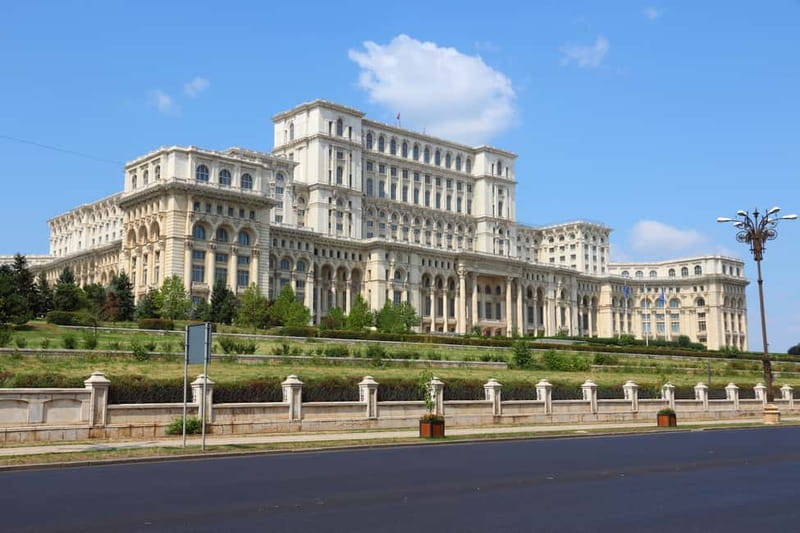
Then comes the big one: the Palace of the Parliament, also known as the House of People. You only see it from outside, but you still get one of the most important parts of the story. The guide explains the construction and what it symbolized, including the megalomania of Nicolae Ceausescu.
Here’s the key for you: this is not presented as one giant building moment. It is presented as a regime strategy. The tour links the palace project to the destruction and reshaping of Bucharest during peace time, described as the biggest destruction of a European city during that period. When you hear that framing while looking at the scale in front of you, it stops sounding like hyperbole.
You also get a photo stop, which helps. You can stand there, take your pictures, and then refocus on what you just learned about how such projects were paid for in human cost.
More History Tours in Bucharest
- Bucharest: 3-Hour Dark History Tour with a Local
★ 4.9 · 301 reviews - Bucharest: Small Group History, Art & Secrets Tour
★ 4.7 · 152 reviews - Guided Walking Tour of Historical Bucharest
★ 5.0 · 84 reviews - Roma Culture, Realities and Slavery History, Walking tour
★ 4.9 · 52 reviews
Antim Monastery and the City That Got Moved
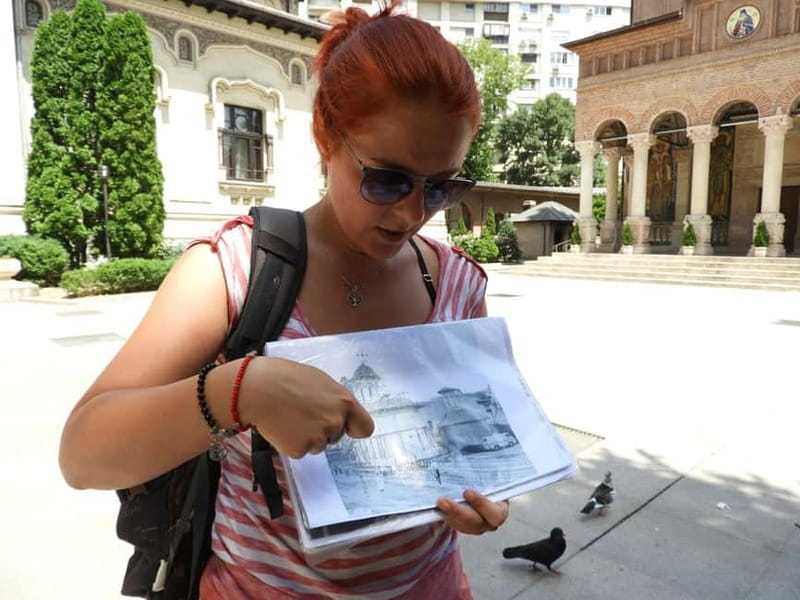
One of the most memorable concepts on this route is that some buildings were moved to keep them from being destroyed. You get this point while walking past sites connected to that story, and one highlight is Antim Monastery.
Antim Monastery is important here because it acts like a counter-argument to the communist urge to erase the old. The guide explains how parts of Bucharest were preserved by moving them, while other parts were demolished to make way for the regime’s plans. It is a physical reminder that even when a government is powerful, decisions can still vary between total destruction and reluctant preservation.
This section also helps you read Bucharest’s layers. You start noticing how the city looks like it was assembled with a purpose, not by chance.
If you enjoy architecture but also care about politics, this is one of the best balances in the tour. You do not get architecture as wallpaper. You get it as evidence.
Everyday Life Under Communism, From Alimentara to Real Stress
A good guided tour makes history personal. This one tries to do that through day-to-day themes. After a short break, you get a chance to learn about the well-being of people in front of an old Alimentara-style grocery store.
Why that stop matters: food and supply are the easiest ways for a regime to affect ordinary life. When the guide talks about everyday conditions, the grocery setting makes it concrete. You can imagine what it would mean to plan around rationing, shortages, and the constant pressure of making life work.
This is also where the included snack fits in. The tour provides a communist-type snack, which is a small but clever touch. One story from a guide moment that you may hear in groups is a rum-flavored biscuit meant to evoke the feel of ration-era treats. Even if your snack is different, the intention is the same: give you a taste of what daily life felt like, not just what it looked like on a map.
Calea Victoriei and the Secret Police Sites That Change the Atmosphere
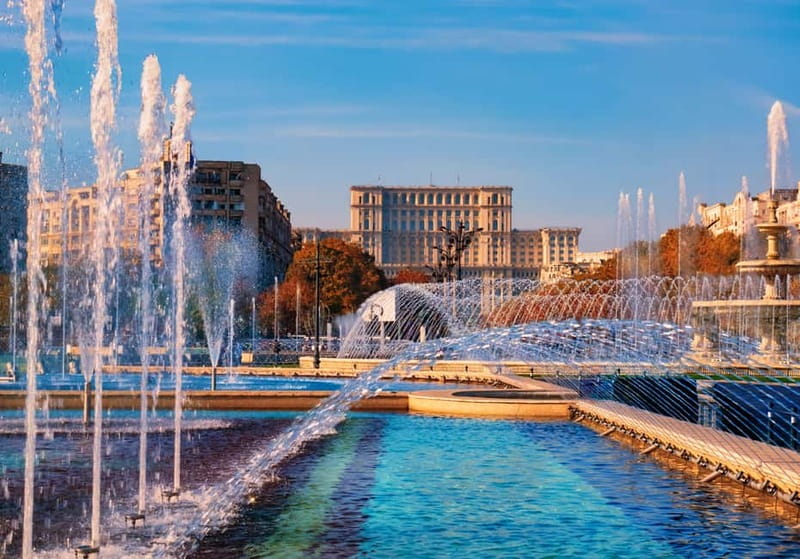
Toward the later part of the walk, you reach Calea Victoriei Boulevard, one of Bucharest’s most beautiful streets. This is also a place where beauty and fear sit uncomfortably close together, which is exactly what the tour wants you to notice.
You walk at a normal pace along the boulevard and the guide points out communist symbols. The most serious moment here is what used to be a center connected with the Secret Police, including torture and repression. The tour handles this in a way that does not turn it into theatre. It is serious, and the street setting gives it a stronger weight.
If you have ever wondered why some cities seem cold even when they look lively, this section offers a clue. Buildings and monuments outlast governments. When those symbols are tied to violence, they can color the whole street feel for decades.
Caru’ cu bere Stop and the Mid-Tour Break That Helps You Process
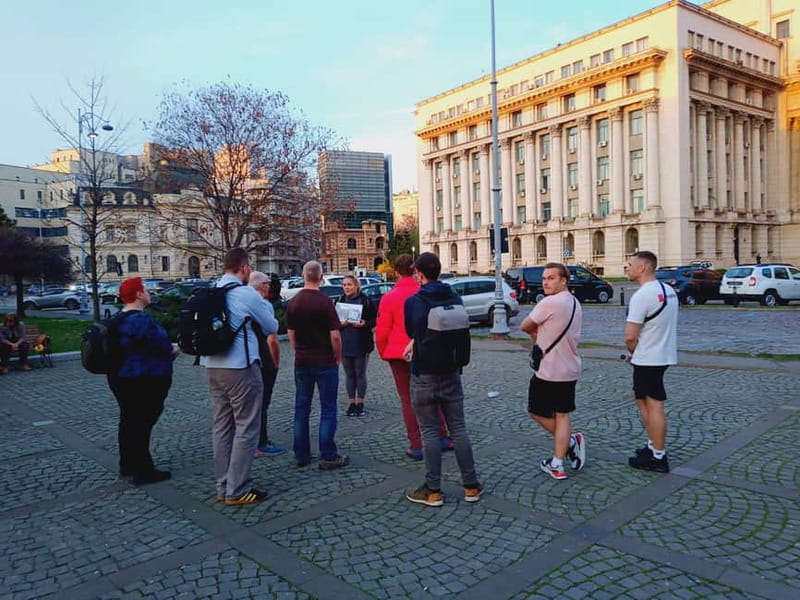
At about the middle, you get a break time around a local café. The tour includes a 15-minute window, which is more useful than it sounds. Communist history has a way of stacking heavy ideas on top of each other, and a quick pause helps you absorb what you just learned.
You also pass by Caru’ cu bere, which gives you a contrast. It is a famous old dining spot in Bucharest, and even though it is not the tour’s main theme, it helps you remember this city is not trapped in one era. You are learning the communist timeline, but you are still walking through Bucharest as it exists today.
On top of that, several guides have been praised for handling questions well and keeping the group comfortable. That matters because this tour includes hard topics, and you want a guide who can explain clearly and answer follow-ups without rushing.
Revolution Square Ending, 1989 to Democracy, With the Whole Timeline in Your Head
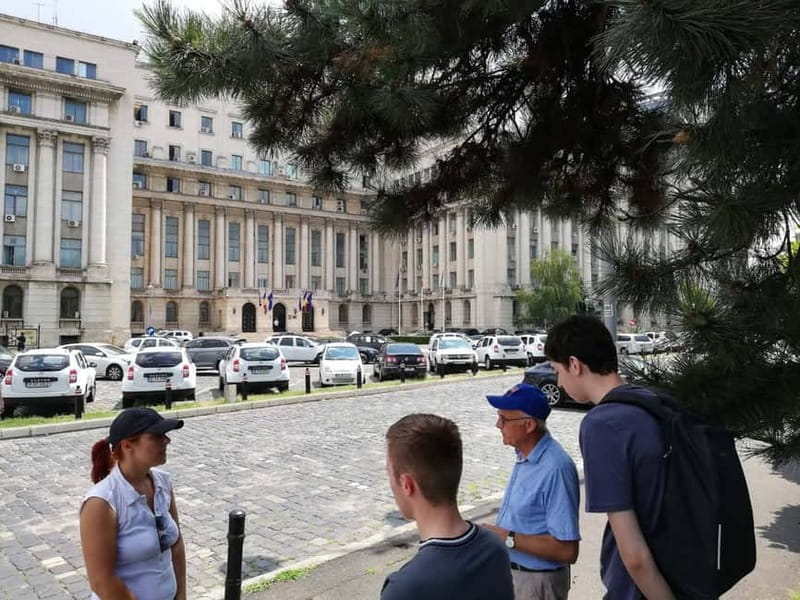
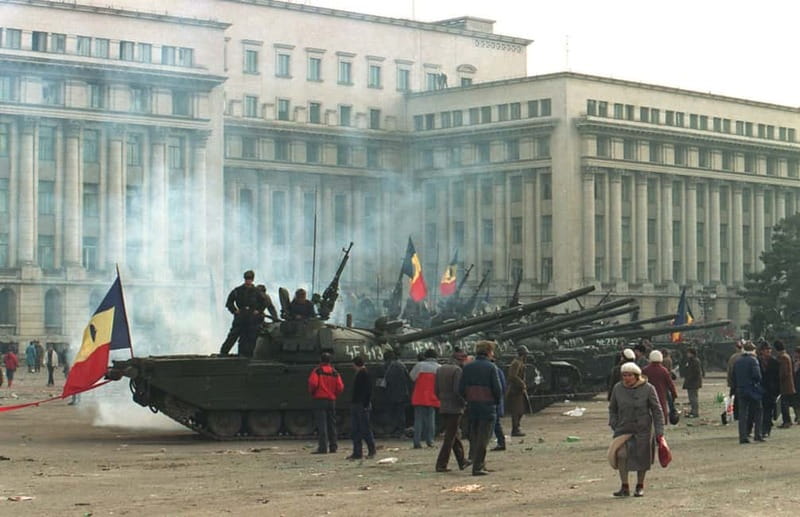
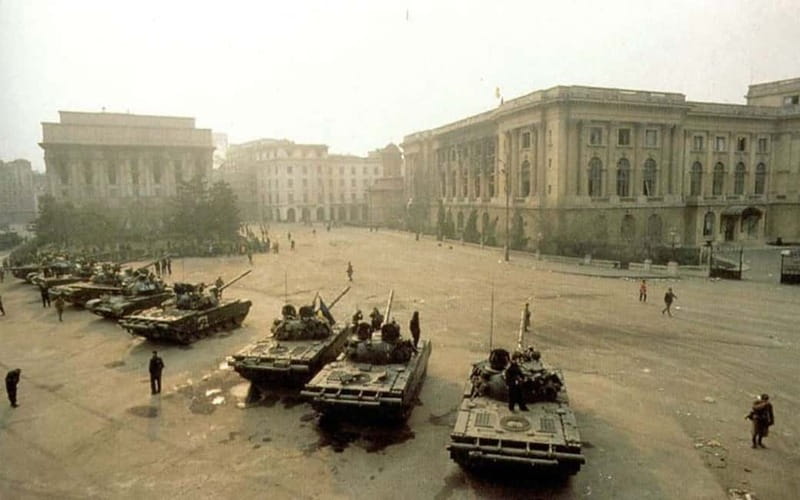
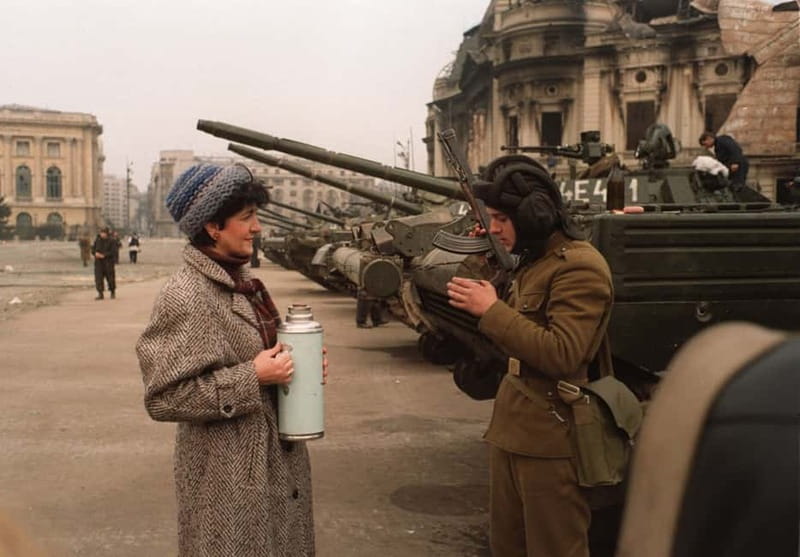
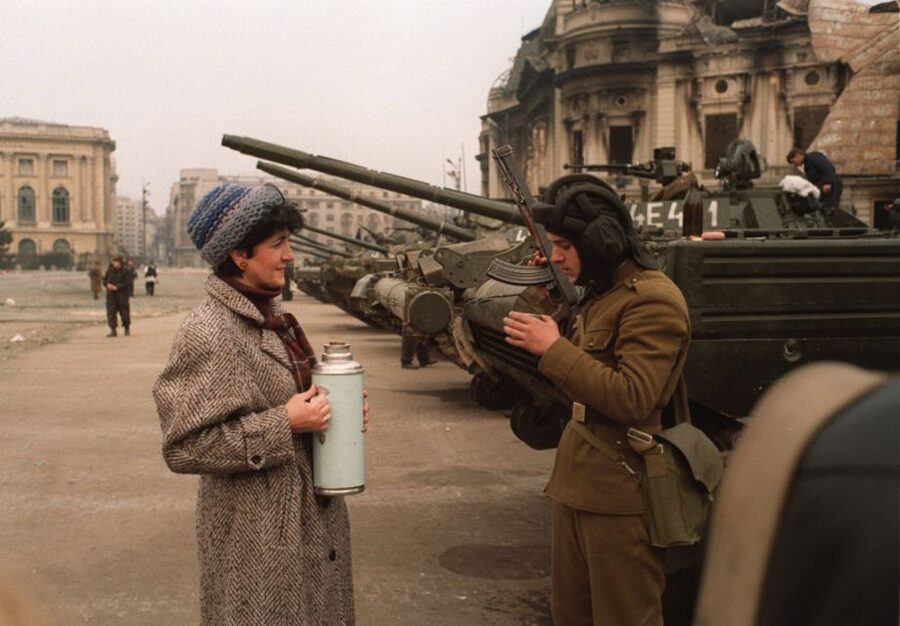
The final act is Revolution Square, where the guide tells the story of the end of the communist regime in 1989 and the beginning of democracy. This is the point where everything you saw earlier stops feeling random.
You started with religion under communism, then moved through nationalisation results, the huge Ceausescu project, the reshaping of Bucharest, and daily life stress. Now you land on the public moment when the system broke. Ending here turns your photos into a narrative.
It is also a strong choice of location because you can look around after the tour and still feel the impact of what you learned. You are not just leaving a building behind. You are leaving with a new way to read the city you are standing in.
Price and time: is $31 worth it for 3 hours?
For $31 per person, you are getting a live English guide for 3 hours, around 15 objectives tied to a communism timeline, a snack, and a route that includes both major landmarks and less obvious history points. That is the real value here, not the time on a map.
Tours that only point at famous sites can feel thin. This one tries to connect famous sites to the mechanics of control, destruction, and everyday survival. You are not only seeing Parliament from the outside. You are also hearing why it required so much city change and how the regime shaped daily life.
One tradeoff: you need to show up ready to walk. There is no hotel pickup or drop-off, so you are handling your own transit to the meeting point. Plan that hill climb from Piata Unirii and give yourself a few extra minutes so you do not start stressed.
What I’d pack, and how to plan your day around the walk
This is a walking tour, so your main packing item is simple: comfortable shoes. The route takes you through multiple stops, and even with a mid-tour break, you will be on your feet the whole time.
If rain is in the forecast, do not assume you can skip layers. The tour runs rain or shine, but it may be canceled or rescheduled if extreme conditions make it risky or impossible. If you hate getting caught in weather, check the day-of and bring what you need to stay comfortable.
Also, this tour is not suitable for wheelchair users and it may not work well for people with back problems. That is worth taking seriously because the route includes walking and a hillside approach from the metro.
Should you book this Bucharest Communism and History walking tour?
If you want Bucharest explained like a story, I think you will like this. It is built around clear themes: dictatorship, nationalisation, Secret Police influence, demolitions, and the full 1989 revolution arc. The outside views of the Parliament building and the emphasis on everyday life stops help you go beyond the obvious.
I would book it early in your visit. You will get a framework for everything else you see afterward, especially when you notice symbols, building scale, and the city’s uneven layers of old and reshaped.
On the other hand, if you want a light, purely scenic walk, this is probably not your match. It deals with torture-related history and the harsh realities of the communist system. Bring a curious mindset, and ask questions if you want more detail.
FAQ
FAQ
Where does the tour meet?
The meeting point is in front of the Patriarchal Cathedral. The closest metro station is Piata Unirii (Union Square), and you will need to climb the hill toward the cathedral.
How long is the guided tour?
The tour lasts 3 hours.
Can I go inside the Palace of the Parliament?
No. You only see the House of People (Parliament) from the outside.
What is included in the price?
The price includes the 3-hour guided walking tour on the streets of Bucharest, about 15 objectives along the timeline, a communist-type snack, and an English live guide.
Is hotel pickup or drop-off included?
No, hotel pickup and drop-off are not included.
Does the tour run in bad weather?
It takes place rain or shine, unless weather conditions are extreme enough to make the tour unsafe or impossible. In that case, it will be canceled with a full refund or rescheduled.
Is the tour wheelchair accessible or suitable for back problems?
No. It is not suitable for wheelchair users and people with back problems.
Is there free cancellation and can I pay later?
Yes. You can cancel up to 24 hours in advance for a full refund, and you can reserve now and pay later.
More Communist History Tours in Bucharest
- The Real tour of Communism
★ 5.0 · 666 reviews - Life under Communism
★ 5.0 · 358 reviews - 3-Hour Guided Tour of Communist Bucharest
★ 4.9 · 303 reviews - Bucharest: Parliament, Ceausescu House & Village Museum Tour
★ 5.0 · 208 reviews
More Walking Tours in Bucharest
- Bucharest Highlights Walking Tour
★ 5.0 · 469 reviews - Bucharest: Hidden Markets Walking Tour with Tastings
★ 4.9 · 329 reviews - Bucharest: Ghost Stories & Romanian Mythology Walking Tour
★ 4.9 · 287 reviews - Bucharest: Guided Walking Tour with Romanian Snack
★ 4.9 · 228 reviews
Recently listed in Bucharest
- Village Museum Bucharest Guided Tour★ 5.0 · 6 reviews
- Wine Tasting and Dinner, including Sommelier★ 5.0 · 3 reviews
- Winery touring & private wine tasting – one day private tour★ 5.0 · 3 reviews
- Bucharest: Dealu Mare Winery Private Trip with Wine Tasting★ 4.9 · 6 reviews
- Transylvania Tour: Dracula’s Castle, Peles Palace & Brasov★ 5.0 · 19 reviews
- Traditions in Bucharest: Village Museum and Wine Tasting★ 5.0 · 8 reviews
- Airport Henri Coanda (Otopeni) to Bucharest – Private Transfer – Driver★ 5.0 · 5 reviews
- Discover Medieval Transylvania Small Group Tour – 7 days★ 5.0 · 4 reviews
Communist History Tours, compared.
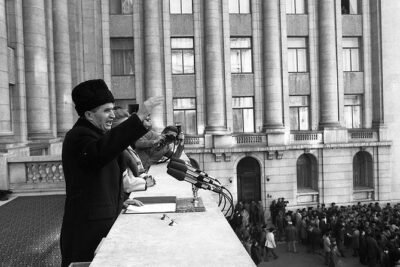

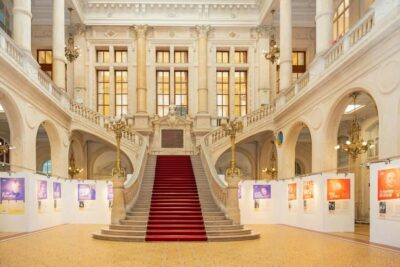
Parliament, Ceausescu House & Village Museum Tour
Read our review →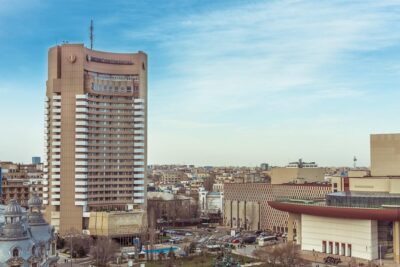
Bucharest Essential Tour: Old Town, Calea Victoriei & Communism
Read our review →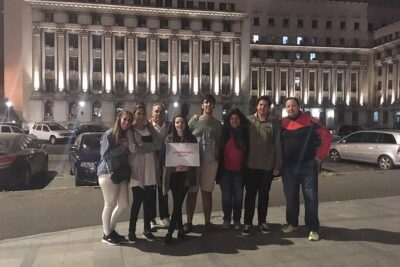
Communism in Bucharest – Landmarks, Museum & Communist Appetizers
Read our review →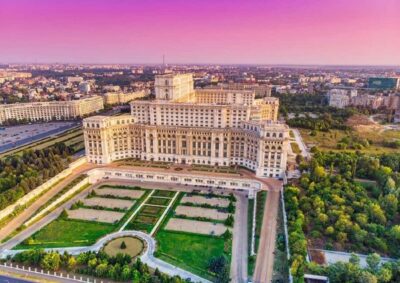
Palace of Parliament, Ceausescu House & Village Museum
Read our review →