

REVIEW · COMMUNIST HISTORY TOURS
Life under Communism
Communism has left visible scars in Bucharest. This tour turns those scars into a clear story, with Ceaușescu explained through real buildings and street-level details, not just textbook names. I especially love how the guides keep the pace human and the context grounded, and I love the English clarity that makes tough history easier to follow. One drawback: it is a walking route, so you will want comfortable shoes and a little patience with city sidewalks and stops.
In about three hours, you move from major political symbolism to smaller, everyday traces of the regime. You will walk past landmark architecture tied to power, then end near the places where Romania’s communist story dramatically flipped in 1989.
In This Review
- Key highlights you will actually feel on this tour
- Reading Bucharest through the lens of Ceaușescu
- Stop 1, Catedrala Patriarhala and the violent beginning
- Stop 2, the Palace of Parliament, power in concrete and scale
- Stop 3, Manastirea Antim and what happened to religion
- Stop 4, Old Town and Caru’ cu bere’s unexpected role
- Stop 5, Piața Revoluției and the violent collapse of communism
- The guide makes the difference, especially with real stories
- Route logic, pacing, and why three hours works
- Tickets, entry fees, and what your $42.33 realistically buys
- Who this tour is best for (and who should think twice)
- Practical details that help you have a smoother day
- Should you book Life under Communism in Bucharest?
- FAQ
- How long is the Life under Communism tour in Bucharest?
- How much does the tour cost?
- Is food and drink included?
- Do I need to pay entry for the Palace of Parliament?
- Is the tour offered in English, and how large is the group?
- Can I cancel and get a full refund?
Key highlights you will actually feel on this tour
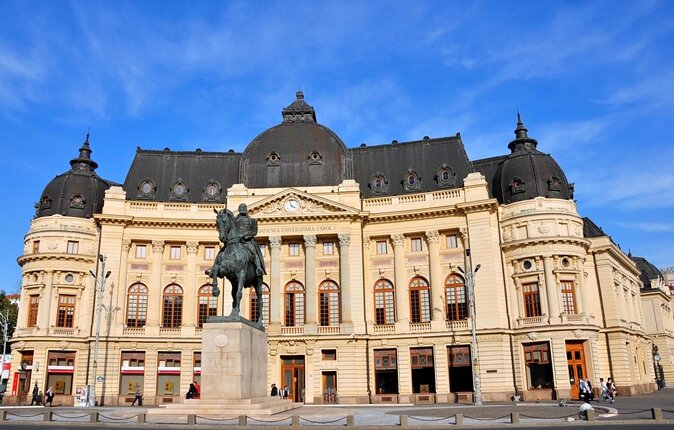
- Small-group pacing (up to 20) that keeps questions from getting lost in the crowd
- Ceaușescu context that connects power to daily life, not just dates and slogans
- Landmarks with real political meaning, from the massive Palace of Parliament to Revolution Square
- Big-to-small contrast, including overlooked spots that show how communism shaped ordinary routines
- Guides who speak clear English and adjust for slower walkers and hearing needs
Reading Bucharest through the lens of Ceaușescu
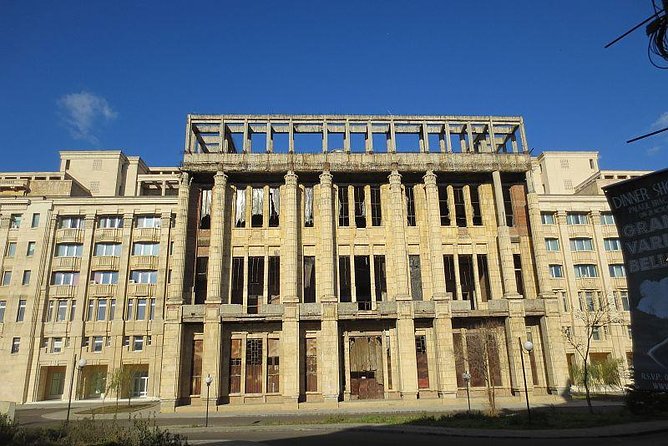
Bucharest’s communist era is not tucked away in a museum. It is sitting in plain sight, in buildings that still shape how the city feels today. This is why I like starting your understanding early in the route, where the guide can frame the whole story before you get surrounded by the architecture of the regime.
A big strength here is that the tour stays balanced. It does not just condemn or celebrate. You get the messy middle: how a system gained control, how it affected homes and minds, and why the collapse in 1989 happened the way it did.
If you are the type of traveler who likes to connect dots, this helps. You leave with a better grasp of how political power turned into daily rules, shortages, fear, and propaganda, and how those pressures created conditions for the uprising.
More Communist History Tours in Bucharest:
- Bucharest: Communism and History Guided City Walking Tour
★ 4.9 · 918 reviews - The Real tour of Communism
★ 5.0 · 666 reviews - 3-Hour Guided Tour of Communist Bucharest
★ 4.9 · 303 reviews
Stop 1, Catedrala Patriarhala and the violent beginning
Your first stop is Catedrala Patriarhala. The guide uses it to talk about the early violence connected to communism, setting a tone that is not sugarcoated. It is a short stop, but it works because it is a foundation moment, before you move into the heavier symbols of state power.
What I appreciate is that it is not only about abstract history. The story is tied to institutions and what happens when a new regime challenges existing life. Even when you do not have the background, the guide makes the sequence of events feel logical.
Consideration: the first parts can be emotionally intense because the framing includes violence and repression. If you prefer only mild history, this might feel heavy right away.
Stop 2, the Palace of Parliament, power in concrete and scale
Next comes the Palace of Parliament, one of the defining communist-era statements in Bucharest. The key detail you should know in advance: this stop has an admission ticket, and that ticket is not included in your tour price.
Still, the visit is worth planning for. This building is tied to how the regime tried to show strength and permanence through enormous, centralized power. The guide also provides the real story behind why it became the world-class talking point it is today.
A practical tip: since the Palace is the biggest kind of stop, it helps to go in mentally ready for scale. Even if you are not usually into architecture, you will understand why this place mattered politically.
Watch-outs: you should bring water and take a moment when you can. After a few steps, the size can make you forget that you are still walking and standing in one place.
Stop 3, Manastirea Antim and what happened to religion
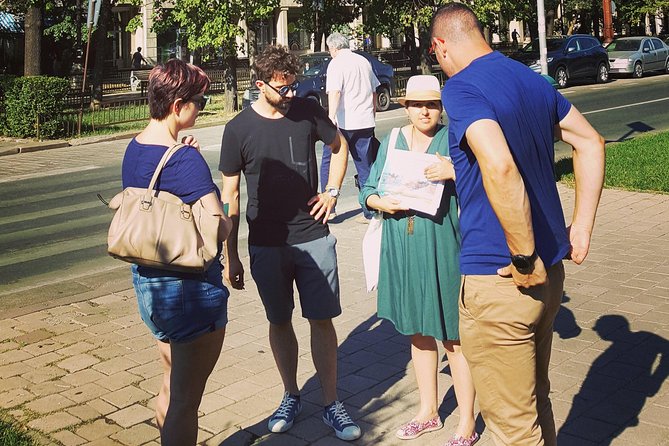
From state power, you shift toward faith at Manastirea Antim, a picturesque medieval monastery. This is where the tour starts showing you what communism meant beyond politics, specifically the pressure placed on religion.
The guide explains how religious life changed under the communist regime, and you get a sense for how a society negotiates with state control. It also helps you see why the cultural memory of that era still matters.
If you like “contrast stops,” this is a good one. You go from heavy administrative symbolism to a quieter, more human space. That shift makes the history easier to process.
A different sort of day out in Romania:
- Bucharest: Dracula’s Castle, Peles Castle, & Brasov Old Town
★ 4.5 · 17,858 reviews - Bucharest: Dracula Castle, Peles Castle & Brasov Old Town
★ 4.6 · 10,891 reviews - Bucharest: Dracula’s Castle, Peleș Castle & Brașov Day Trip
★ 4.4 · 6,100 reviews - Bucharest: Palace of Parliament Tickets and Guide
★ 4.3 · 3,182 reviews
Stop 4, Old Town and Caru’ cu bere’s unexpected role
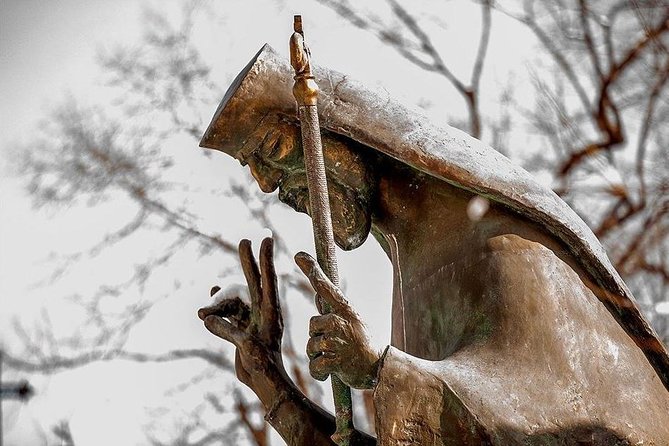
Old Town is where the tour turns more social and, in a way, more surprising. You get to discover Caru’ cu bere, the famous restaurant tied to foreign policy under communism.
This is one of those stops that feels like regular tourism until the guide explains why it mattered. Under communism, controlled access and curated images mattered. Restaurants like this could function as stages where diplomacy, perception, and influence met.
I like that the guide does not treat this as just trivia. You hear how small choices in daily life and hospitality linked back to bigger systems.
Also, Old Town is just a nice place to be between stops, so it helps your energy level before the final, more intense part of the route.
Stop 5, Piața Revoluției and the violent collapse of communism
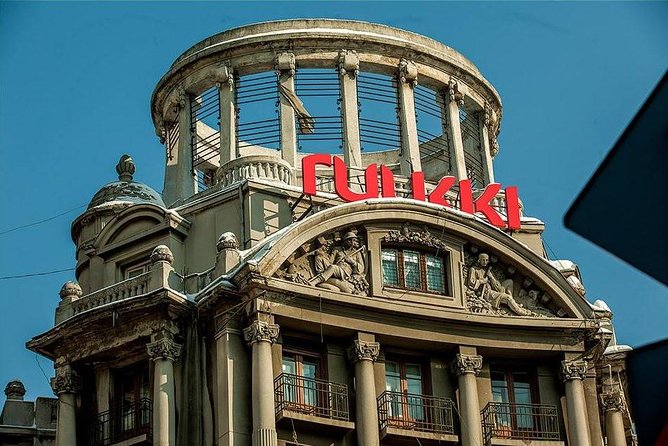
The final stop is at Piața Revoluției, where the collapse of communism is tied directly to Ceausescu’s downfall. This is the emotional climax, and the guide frames it as a violent turning point, not a polite transition.
You learn how the situation unraveled and why the revolution became possible. The guide’s job here is to connect the political decisions and repression to what people finally did in the streets.
I also love that the route can include visible reminders of the era’s conflict. In the experience I’m describing, there is mention of seeing actual bullet holes in buildings along the way. That kind of detail is hard to forget because it turns history into something you can literally point at.
This ending works especially well if you like history that feels immediate. After this, you can look at Bucharest with new eyes, noticing how the city carries memory in stone, street plans, and public spaces.
The guide makes the difference, especially with real stories
This tour lives or dies on the guide. In this case, the consistent theme is clarity plus personal storytelling. Christina, a frequent guide on this experience, gets strong praise for speaking clear English and explaining complicated history in a way that does not lose the plot.
There are also stories about her making the tour workable for people with limited mobility and for hearing-impaired guests. In particular, she was described as stopping in spots where participants could sit or lean, and generally adjusting pacing when needed. That matters. A walking tour can become frustrating fast when the guide is rigid.
You may also be guided by others such as Stefan or Victor. The throughline stays the same: context plus personal perspectives, plus real answers to questions. One review even highlighted that the tour aims for nuance, not a simple attack or a simple defense of communism. That tone is what keeps the experience believable.
If you are traveling with family members who need a slower pace, or if you have accessibility needs, this guide style is a real advantage. It is not just about facts. It is about how the facts are delivered.
Route logic, pacing, and why three hours works
The tour runs about three hours. That length is a sweet spot. It is long enough to cover major symbols, but short enough that you do not end the day exhausted and numb.
The route also has good sequencing. You start with early framing, then move into major state architecture, then into religion and social life, then finish with the revolutionary endgame. If you tend to get lost in timelines, this structure helps.
And because it is a walking tour, timing and comfort matter. Plan for cobblestones, curbs, and regular city sidewalks. If you know you tire easily, bring a plan for rest, and do not be shy about asking the guide to slow down.
Tickets, entry fees, and what your $42.33 realistically buys
At $42.33 per person for about three hours, you are paying mainly for expert interpretation and a structured walk through key sites. The big included item is the professional guide.
Entry costs are mixed. Most listed stops have free admission, but the Palace of Parliament is specifically noted as not included. So you should expect that you will pay for that stop if you choose to enter as part of the experience.
Food and drinks are also not included unless specified. That means you should plan snacks or a drink break on your own. Old Town is full of options, but it is better to decide ahead rather than hunt while your group is waiting.
When I look at value, I judge it by what the guide adds. Here, the guide is delivering political and social context across multiple eras of Romania’s 20th-century story. That is the kind of value that sticks with you longer than another quick photo stop.
Who this tour is best for (and who should think twice)
This is a strong fit if you want:
- A guided English explanation of Romania under communism and the path to 1989
- A route that includes both monumental buildings and everyday-style context
- Clear speaking and time for questions, especially if you learn best by asking
It is also a good choice if you are the type who likes to understand how politics reshapes daily life. The tour does not treat communism as a distant political concept. It brings it down to routines, control, and consequences.
Who might think twice?
- If you want only light sightseeing and no heavy topics, the violent beginning and the violent end may feel intense.
- If walking three hours is hard for you, consider your comfort level and your need for frequent stopping. The guide style described in feedback suggests they can be accommodating, but you still have to walk.
Practical details that help you have a smoother day
This experience uses a mobile ticket. Confirmation is received at booking time. It operates in all weather conditions, so dress appropriately, especially if rain is likely.
It is also near public transportation, which makes it easier to reach the meeting point without a long pre-trip commute. Service animals are allowed.
The tour caps at a maximum of 20 travelers, which is a big deal for conversation and questions. Smaller groups generally mean you get more direct answers and better attention from the guide.
Should you book Life under Communism in Bucharest?
If you want a focused, guided way to understand communism in Bucharest, I think this is a smart booking. The strongest reason is the combination of key sites and real interpretation. You cover the rise and fall tied to Ceaușescu, you see the architectural language of the regime, and you end at the political heart of 1989.
Book it if you like history that connects to place. Bring your walking shoes, accept that the Palace of Parliament may involve an extra ticket cost, and plan to manage your own food since it is not included.
Skip it only if you are aiming for a purely relaxed sightseeing afternoon or you strongly prefer history without violence and repression in the story.
If you do book, try arriving with one curiosity question in mind, something like how a regime controls daily life or why certain buildings were built on that scale. The guide time is best used when you show up ready to ask.
FAQ
How long is the Life under Communism tour in Bucharest?
It lasts about 3 hours.
How much does the tour cost?
The price is $42.33 per person.
Is food and drink included?
Food and drinks are not included unless specified. You should plan to get your own refreshments during the tour.
Do I need to pay entry for the Palace of Parliament?
Yes. The Palace of Parliament stop notes that admission tickets are not included, while several other stops are listed as free.
Is the tour offered in English, and how large is the group?
The tour is offered in English and has a maximum of 20 travelers.
Can I cancel and get a full refund?
Yes, you can cancel for a full refund if you cancel at least 24 hours before the experience starts. If you cancel less than 24 hours before, the amount you paid will not be refunded.
Recently listed in Bucharest
- Winery touring & private wine tasting – one day private tour★ 5.0 · 3 reviews
- Village Museum Bucharest Guided Tour★ 5.0 · 6 reviews
- Wine Tasting and Dinner, including Sommelier★ 5.0 · 3 reviews
- Bucharest: Dealu Mare Winery Private Trip with Wine Tasting★ 4.9 · 6 reviews
- Transylvania Tour: Dracula’s Castle, Peles Palace & Brasov★ 5.0 · 19 reviews
- Traditions in Bucharest: Village Museum and Wine Tasting★ 5.0 · 8 reviews
- Airport Henri Coanda (Otopeni) to Bucharest – Private Transfer – Driver★ 5.0 · 5 reviews
- Discover Medieval Transylvania Small Group Tour – 7 days★ 5.0 · 4 reviews
Communist History Tours, compared.
Parliament, Ceausescu House & Village Museum Tour
Read our review →
Bucharest Essential Tour: Old Town, Calea Victoriei & Communism
Read our review →
Communism in Bucharest – Landmarks, Museum & Communist Appetizers
Read our review →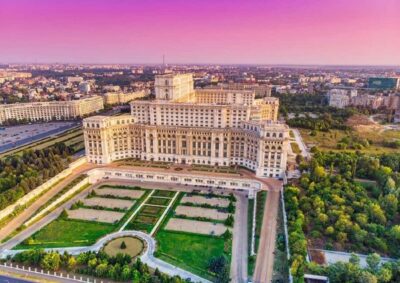
Palace of Parliament, Ceausescu House & Village Museum
Read our review →
Browse the lists this tour appears in