

REVIEW · COMMUNIST HISTORY TOURS
Bucharest Essential Tour: Old Town, Calea Victoriei & Communism
Bucharest gets real fast on this walk. I like how the route stitches together Old Town drama, Calea Victoriei’s grand avenue, and Revolution Square’s communist-era story without dragging on. Two standout wins for me are the photo-friendly stops and the way the guide turns buildings and monuments into something you can actually picture. One thing to keep in mind: the Ateneul Roman stop may cost extra since admission is not included.
If you want an easy first taste of the city, this fits. The small group size (up to 12) keeps the pace manageable, and you can ask questions as you go. The main catch is simple, you will walk, so if your knees hate long strolls, plan for slower moments and breaks.
In This Review
- Key things to know before you go
- Why this 2.5-hour route feels like the right “first day” in Bucharest
- Getting to the start point and how the walk is paced
- Stop 1: Ateneul Roman, Bucharest’s grand “first impression” building
- Stop 2: Statuia Ecvestra a Lui Carol I, monarchy you can still point at
- Stop 3: Piaka Revolukiei (Revolution Square) and the brutal reality of control
- Stop 4: Calea Victoriei, royal stroll vibes and Belle Epoque facades
- Stop 5: Old Town, Vlad Dracula, and the buildings that explain how Bucharest grew
- The guide factor: why these tours feel personal
- Price and value: what you pay $24.20 for, and what you should budget for
- Who should book this tour, and who might want a different pace
- Should you book this Bucharest Essential Tour?
- FAQ
- How long is the Bucharest Essential Tour?
- How much does the tour cost?
- Where does the tour start and end?
- Is the tour offered in English?
- Is admission included for Ateneul Roman?
- What is included in the tour price?
- What if the weather is bad or I need to cancel?
Key things to know before you go
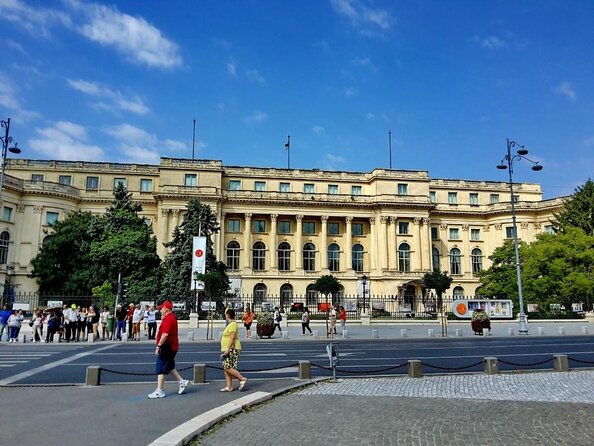
- Small-group, English-led walk: up to 12 people, designed to be easy to follow.
- Communism plus architecture in one loop: Revolution Square, then Belle Epoque streets.
- Plenty of stops for photos: you pause often, not just for a quick glance.
- Ends right in Old Town near Piata Unirii: you finish at Hanul lui Manuc.
- Most sights are free, with one ticket exception: Ateneul Roman needs separate admission.
Why this 2.5-hour route feels like the right “first day” in Bucharest
This tour works because it’s built like a guided city storybook, not a marathon. In about 2 hours 30 minutes, you cover the feel of different Bucharest eras, from monarchy and European elegance to the brutal control of communism and then back to the older lanes around Old Town.
I also like the pacing. The time at each stop is short enough that you stay fresh, but long enough to actually read what you’re looking at. If you’ve got limited time in town, this is a strong “get your bearings fast” option.
Finally, the route is designed to be practical. You start in a central spot on Strada Benjamin Franklin and end at Hanul lui Manuc, which is close to Piata Unirii, so it’s easier to continue on your own.
More Communist History Tours in Bucharest:
- Bucharest: Communism and History Guided City Walking Tour
★ 4.9 · 918 reviews - The Real tour of Communism
★ 5.0 · 666 reviews - Life under Communism
★ 5.0 · 358 reviews
Getting to the start point and how the walk is paced
You meet at Strada Benjamin Franklin 8, in central Bucharest. The meeting point is meant to be easy to find, and it’s near public transportation, so you’re not stuck trying to navigate the city maze with no plan.
The tour stays within a compact area, so even though it covers a range of neighborhoods and styles, the walking effort stays reasonable. The experience is described as suitable for most travelers, and the group size stays capped at 12, which helps if you want the guide to answer questions without the usual crowd crush.
One small practical consideration: since the tour depends on good weather, you’ll want to dress for the day. If it’s cold or rainy, bring a layer you can tolerate for a couple hours on foot.
Stop 1: Ateneul Roman, Bucharest’s grand “first impression” building
The walk kicks off at Ateneul Roman, one of the city’s most beautiful landmarks. You spend about 15 minutes here, so it’s not a long museum stop, but it’s enough time to take in the building and understand why it matters.
Admission for Ateneul Roman is not included, so if you’re the kind of person who likes interior views as well as the exterior, you should budget for that extra ticket. If you’re mainly there for architecture and photos, you can still enjoy this stop without any add-on.
This first stop sets the tone well. It helps you see Bucharest as a European capital with ambition, not just a place you pass through on the way to something else.
Stop 2: Statuia Ecvestra a Lui Carol I, monarchy you can still point at
Next up is the equestrian statue of Carol I. You get about 15 minutes here, and it’s free to visit, so there’s no ticket pressure.
The key value of this stop is the story thread. You’ll connect the statue to Romania’s first king and to the broader idea of monarchy, including how royal power shaped the city. The guide also ties this to nearby landmarks like the former Royal Palace and the impressive University Library, so you’re not just looking at one sculpture in isolation.
If you like history that you can visually track, this works. You can stand in one place and get multiple city links, which makes the later stops around political change hit harder.
More Old Town Walks in Bucharest:
- Bucharest: Dracula’s Castle, Peles Castle, & Brasov Old Town
★ 4.5 · 17,858 reviews - Bucharest: Dracula Castle, Peles Castle & Brasov Old Town
★ 4.6 · 10,891 reviews - Bucharest: Peles Castle, Bran Castle, & Brasov Old Town Tour
★ 4.5 · 1,035 reviews - Bucharest Pub Crawl in the Old Town
★ 5.0 · 462 reviews
Stop 3: Piaka Revolukiei (Revolution Square) and the brutal reality of control
Then the tour shifts gears to Piaka Revolukiei, about 30 minutes. This is a free stop, but it’s the emotional center of the walk.
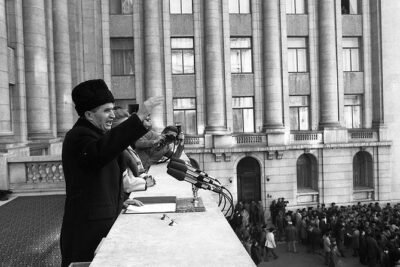
Here, you learn how totalitarian control shaped everyday life, including hunger and food rations. You also hear about the bloody revolution in December 1989 and the downfall of Nicolae Ceaușescu, which is where Romania’s move toward a democratic future really takes shape.
What I like about handling communism in this format is that it doesn’t stay abstract. Even without going deep into timelines, you’re pushed to connect cause and effect: how power becomes visible in public space, how that pressure lives in people’s daily routines, and how political rupture changes the country.
The only consideration is the subject matter. This part can feel heavy, so if you want a lighter tone on day one, go in with a mindset that this is part of seeing Bucharest clearly, not a casual photo break.
Stop 4: Calea Victoriei, royal stroll vibes and Belle Epoque facades
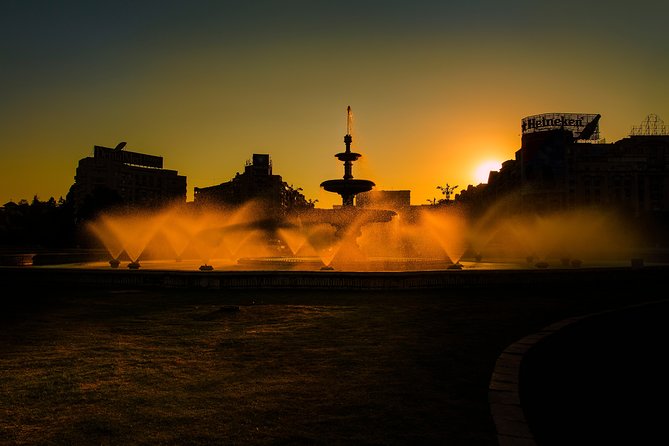
After Revolution Square, you walk along Calea Victoriei, spending about 30 minutes. This avenue is where Bucharest shows off its more romantic, European side, and the buildings help you understand why locals once treated the city like a stage.
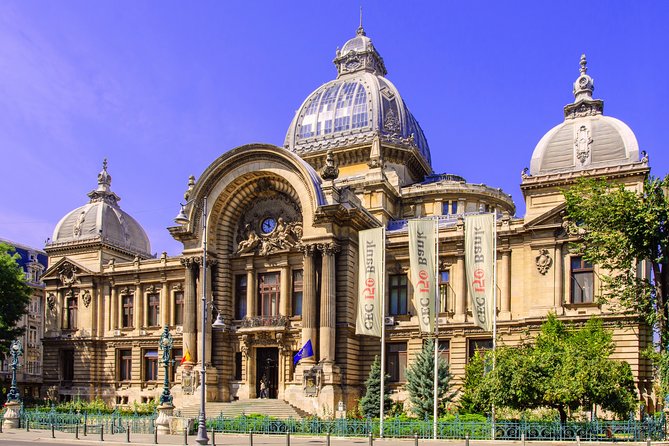
Your guide points out major Belle Epoque structures such as the CEC Palace, the Grand Hôtel du Boulevard, and the University Library. Since this stop is free, you can focus on the details and photos without adding costs.
I also appreciate that the tour frames Calea Victoriei as more than scenery. It’s described as an avenue where kings had daily strolls, so you’re not just admiring facades, you’re imagining the social life attached to them.
If you like architecture, this section is a highlight. It’s one of the easiest places on the route to spot patterns and changes in style.
Stop 5: Old Town, Vlad Dracula, and the buildings that explain how Bucharest grew
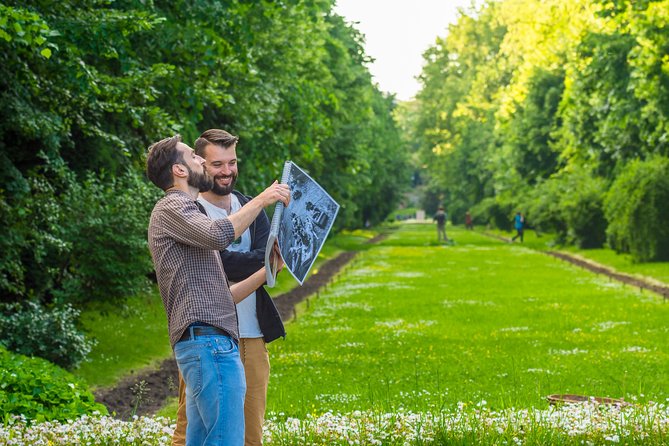
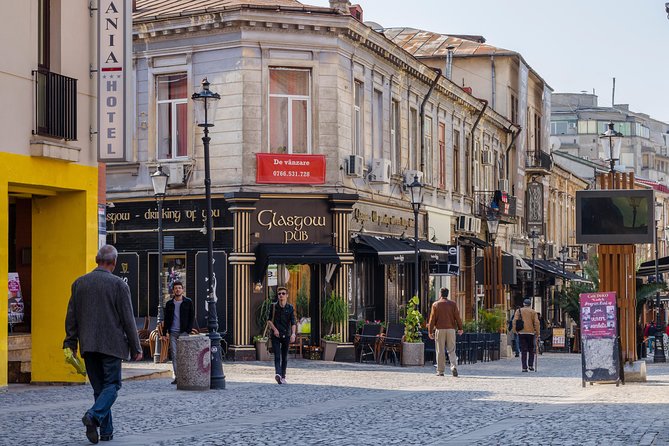
The final section is Old Town, and it’s the longest part at about 1 hour. This is free, and it’s where the city feels most like itself: layered, a little theatrical, and full of corners you can keep exploring after the tour ends.
You start by walking on the steps tied to the story of Vlad Dracula and his fortress. From there, you head toward Manuc’s Inn (Hanul lui Manuc), which the tour describes as a former commercial settlement, a caravanserai where trade and travel shaped what the neighborhood became.
This is also where the guide helps you understand the city’s “two-world” evolution. You’ll hear how Bucharest grew through a meeting between East and West, which shows up in the mix of building types and street atmosphere.
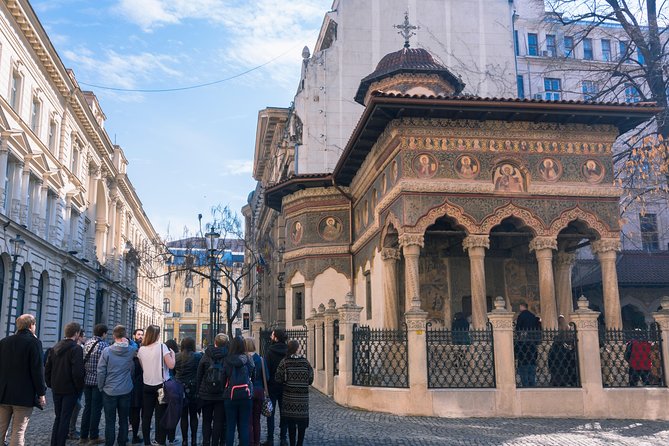
As you move around Old Town, you’ll also see an eclectic collection of landmarks, including the National Bank of Romania, the Stavropoleos Monastery, and the Villacrosse Passage. Those names matter because they aren’t just pretty. They hint at different phases of power, money, religion, and everyday business life.
One drawback to plan for: Old Town is fun, but it can also mean more foot traffic and tighter lanes. If you’re bringing a camera, expect stops to be frequent, but your best shots might depend on timing and light.
The guide factor: why these tours feel personal
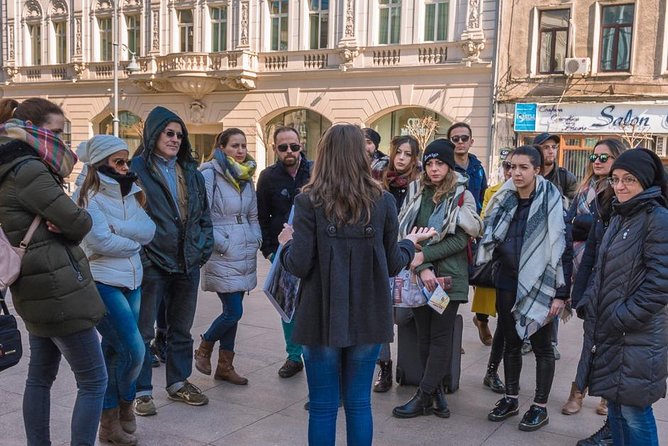
The biggest pattern from the guides connected to this experience is style, not just facts. In practice, the guide is the difference between seeing a statue and understanding what it symbolizes.
Names that show up in past experiences include Stefania, Dana, Maria, Laura, Stefan, and Ioan. Across those different guides, the common thread is storytelling that makes architecture and political events easier to remember. Some guides also use extra tools like large photo aids to help you picture what you’re hearing about.
So when you book, I’d treat this as a Q and A tour as much as a sightseeing tour. Ask about what changed from one era to the next, and ask how power was reflected in city design. That’s the quickest way to turn a walking tour into real understanding.
Price and value: what you pay $24.20 for, and what you should budget for
At $24.20 per person for about 2 hours 30 minutes, you’re paying for three things: a guided route through several major Bucharest areas, English interpretation, and a group format that usually keeps the experience moving without you getting lost.
Inclusions are simple: you get a tourist map of Bucharest. You also get a mobile ticket, which helps reduce the fuss of paper tickets.
Admissions are mostly not a problem because the major stops after the first ticketed item are free. Statuia Ecvestra a Lui Carol I is free, Revolution Square is free, Calea Victoriei is free, and the Old Town segment is free. The clear exception is Ateneul Roman, where admission is not included.
So if you want interior access at Ateneul Roman, you should be ready to pay separately. Budget that extra amount and you’ll avoid the last-minute decision stress.
One more value note: lunch and coffee are not included. That’s not a bad thing. It usually means the tour stays flexible and keeps you out of overpriced fixed stops. Just plan to eat on your schedule.
Who should book this tour, and who might want a different pace
This is a strong fit if you:
- Want a first-time intro to Bucharest across Old Town, Calea Victoriei, and Revolution Square
- Like your sightseeing with context, not just a checklist of sights
- Prefer a small group size (maximum 12) over large bus-tour crowds
- Want an English guide who can answer questions as you walk
You might want a different option if you:
- Really hate walking for long stretches, even at a comfortable pace
- Only want light, entertainment-style sightseeing and would rather skip heavy communist-era material
- Are looking for a stop-and-stay format, since this tour is built around multiple short visits
Should you book this Bucharest Essential Tour?
I think you should book it if you want the clearest overview of Bucharest in a short time. The combination of Revolution Square and the European-looking streets of Calea Victoriei gives you contrast, and that contrast helps you read the city later on your own.
Also, the starting and ending points make it easy to use as a base. You begin in central Bucharest and finish at Hanul lui Manuc, close to Piata Unirii, which is handy if you’re continuing to dinner, bars, or more walking.
My practical advice: bring comfortable shoes, dress for the weather, and be ready to ask questions. If you do that, this tour earns its name as an essential Bucharest experience.
FAQ
How long is the Bucharest Essential Tour?
It runs for about 2 hours 30 minutes.
How much does the tour cost?
The price is $24.20 per person.
Where does the tour start and end?
It starts at Strada Benjamin Franklin 8, 030167 București, Romania. It ends at Str. Franceză 62, 030167 București, Romania, at Hanul lui Manuc, which is close to Piata Unirii.
Is the tour offered in English?
Yes, it is offered in English.
Is admission included for Ateneul Roman?
No. Ateneul Roman is listed with admission ticket not included, while the other stops on the route are listed as free.
What is included in the tour price?
Included items are a tourist map of Bucharest and the tour itself with an English guide. A mobile ticket is also used.
What if the weather is bad or I need to cancel?
The experience requires good weather. If it is canceled due to poor weather, you will be offered a different date or a full refund. You can cancel for a full refund up to 24 hours in advance of the start time.
Recently listed in Bucharest
- Village Museum Bucharest Guided Tour★ 5.0 · 6 reviews
- Wine Tasting and Dinner, including Sommelier★ 5.0 · 3 reviews
- Winery touring & private wine tasting – one day private tour★ 5.0 · 3 reviews
- Bucharest: Dealu Mare Winery Private Trip with Wine Tasting★ 4.9 · 6 reviews
- Transylvania Tour: Dracula’s Castle, Peles Palace & Brasov★ 5.0 · 19 reviews
- Traditions in Bucharest: Village Museum and Wine Tasting★ 5.0 · 8 reviews
- Airport Henri Coanda (Otopeni) to Bucharest – Private Transfer – Driver★ 5.0 · 5 reviews
- Discover Medieval Transylvania Small Group Tour – 7 days★ 5.0 · 4 reviews
Communist History Tours, compared.


Parliament, Ceausescu House & Village Museum Tour
Read our review →
Communism in Bucharest – Landmarks, Museum & Communist Appetizers
Read our review →
Palace of Parliament, Ceausescu House & Village Museum
Read our review →
Browse the lists this tour appears in