
REVIEW · COMMUNIST HISTORY TOURS
The Grand Tour of Communist Ages at Timisoara
Bullet holes, trams, and a city that said no. This tour threads Timisoara’s Communist-era landmarks into a clear story about the Communist Party’s rise and reign in Romania and how the Romanian Revolution took shape. I love the off-the-beaten-track neighborhood time and the comfortable vehicle stops, which let you cover a lot in a half-day. A quick heads-up: some stops are brief, so if you want long, slow visits, you might feel a bit rushed.
For $66.08 per person, you get an English guided experience with a small group size, up to 10 travelers, plus a mobile ticket. It also has a strong reputation, with a perfect 5 rating from 17 reviews and 100% recommendation, which is rare for any themed history tour.
In This Review
- Key Things To Know Before You Go
- Romania’s Communist Past, Told by Places in Timisoara
- Șagului Neighborhood: Seeing Communist-Era Life Up Close
- Muzeul Consumatorului Comunist: Why Objects Matter
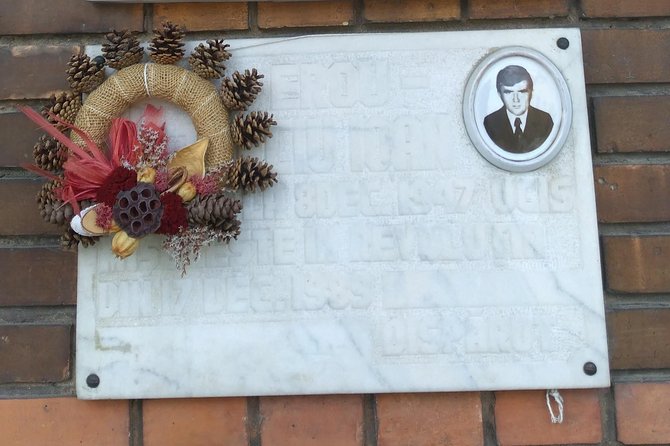
- Reformed Church and December 15 to 16, 1989: The Spark Moment
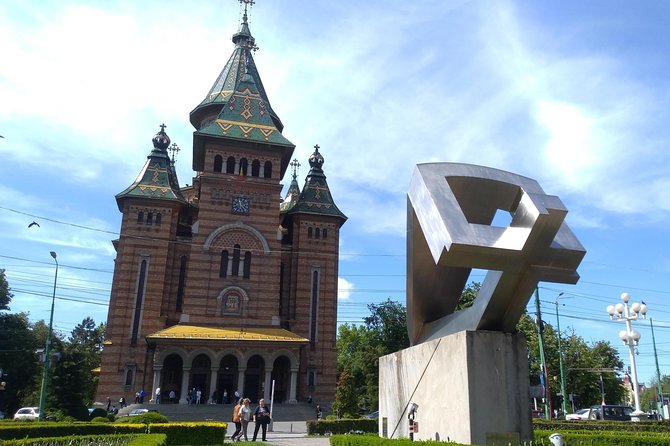
- Timisoara Orthodox Cathedral and the Stairs: Bullet Holes as Evidence
- Piata Victoriei (Victory Square): 150,000 Voices and a Name Change
- The Route Design: How This Half-Day Covers At Least Eight Stops
- Your Guide Matters: Dan and Ludovic’s Style
- Price and Value: What $66.08 Gets You
- Logistics That Affect Your Experience (Without Making It Complicated)
- Who This Tour Suits Best
- Should You Book the Grand Tour of Communist Ages in Timisoara?
- FAQ
- How long is the Grand Tour of Communist Ages?
- What is the meeting point and end point?
- What time does the tour start?
- What language is the tour offered in?
- How many people are in the group?
- How much does it cost?
- Is free cancellation available?
Key Things To Know Before You Go
- Small-group pacing: capped at 10 travelers, so you can actually ask questions.
- At least eight locations: the route is designed to hit key sites without eating up your whole day.
- Șagului neighborhood time: you spend real time seeing what life looked like during the Communist years.
- Muzeul Consumatorului Comunist: a private collection of objects made in Romania during the Communist era.
- 1989 protest sites: you connect the Reformed Church, Orthodox Cathedral, and bullet-hole buildings around Victory Square.
- All admission listed as free: every stop in the itinerary notes free admission, which keeps the trip budget-friendly.
Romania’s Communist Past, Told by Places in Timisoara
This is not a museum-only outing. It’s a guided circuit through the places where the Communist story becomes physical, from ordinary neighborhoods to religious buildings marked by the events of 1989.
What I like about the structure is how it builds momentum. You start with how people lived, then you move into objects and institutions, then into the specific protest moments in December 1989, and finally into the city’s public “we won” memory at Victory Square. The goal is not just facts, but understanding root causes of the Romanian Revolution through the clues left behind in the city.
Also, it’s designed for an efficient timeline. Expect about 3 to 4 hours total, and travel between stops in a comfortable vehicle. That matters because Timisoara’s most important Communist-era reference points are scattered enough that walking-only tours can feel slow.
More Communist History Tours in Timisoara:
- Timisoara: Grand Communism Tour
★ 4.9 · 13 reviews - Bucharest: Communism and History Guided City Walking Tour
★ 4.9 · 918 reviews - The Real tour of Communism
★ 5.0 · 666 reviews
Șagului Neighborhood: Seeing Communist-Era Life Up Close
The day begins in Șagului, one of Timisoara’s neighborhoods, where you’ll spend around two hours. This is the part many themed history tours skip, because it takes time and it isn’t as visually dramatic as bullet holes.
Here, you’re there to understand everyday life during the Communist years. You’ll get context from your guide, and it’s also a good way to orient yourself in the city. When you later stop at the major 1989 sites, you can better connect what you see to the lived reality behind the slogans and protests.
A practical consideration: this is the longest stop in the itinerary. If you’re prone to getting tired during standing-and-walking segments, wear comfortable shoes and plan to stay mentally engaged. The neighborhood time is the foundation for everything else on the route.
Muzeul Consumatorului Comunist: Why Objects Matter
After Șagului, you head to Muzeul Consumatorului Comunist for about 30 minutes. This stop is especially useful because it deals in everyday items, not only monuments.
The tour includes an explanation of the beginnings of the Communist regime in Romania, how it was installed, and how it developed. Then you’re shown a unique private collection of objects made in Romania during the Communist era. That combination is smart. History can feel abstract until you see what people actually used and valued, even in a controlled political climate.
Because the stop is a half-hour, you’ll want to treat it like a focused, guided tasting menu. Listen closely during the explanation, and if you’re the type who loves to ask follow-up questions, this is a good place to do it. You’ll get more out of the visit if you pay attention early rather than saving your curiosity for later.
Reformed Church and December 15 to 16, 1989: The Spark Moment
Next up is Biserica Reformata (the Reformed Church), with about 15 minutes on site. This is framed as where things started, tied directly to 15th and 16th December 1989.
The tour’s story centers on a protest moment involving trams. In the afternoon of 16 December, a young man stopped a tram and his friend climbed the tram to shout for Ceausescu to be removed. It’s the kind of incident that can sound small unless you understand the atmosphere around it, and that’s where the guide’s pacing helps.
One thing to watch: with only 10 to 15 minutes here, you won’t have time for a long, self-guided wander. The value comes from listening to the timeline and focusing on the key details your guide points out. If you’re very sensitive to emotionally heavy history, note that this section is describing a real ignition point that leads toward violence.
A different sort of day out in Romania:
- The Classic Tour of Timisoara
★ 5.0 · 154 reviews - Weekly Guided Tour in English – Tuesday, Thursday, Saturday
★ 5.0 · 84 reviews - Timisoara All in One – Walking and Tram Tour
★ 5.0 · 72 reviews - Weekly Guided Walking Tour – Tuesday, Thursday & Saturday
★ 5.0 · 49 reviews
Timisoara Orthodox Cathedral and the Stairs: Bullet Holes as Evidence
At the Timisoara Orthodox Cathedral, plan on about 10 minutes. This stop is one of the hardest emotionally because the route connects the protests on the cathedral stairs to gunfire.
The tour explains that few young people died while protesting on the stairs, because the army opened fire without warning. You’ll also see bullet holes. That’s why this stop works even if you are not a “history person.” You don’t just hear a lecture, you look at physical marks and connect them to the human cost.
This is also a moment for restraint. I recommend taking a breath, moving slowly, and letting the guide finish the explanation before you start trying to photograph everything. Bullet-hole sites can be tempting for quick snapshots, but the meaning lands better when you give yourself one full minute to really register what you’re seeing.
Piata Victoriei (Victory Square): 150,000 Voices and a Name Change
The final stop on the route is Piața Victoriei, with around 10 minutes. This is where Timisoara’s public memory becomes loud.
The tour describes how on 20 December, 150,000 people shouted Victory when Timisoara was proclaimed the first city in Romania free of Communism. You’ll also learn that the square’s name reflects that moment: before it was called Opera Square, and later it became Victory Square. The route again includes bullet holes on nearby buildings, keeping the theme consistent from protest to aftermath.
This stop is short, but it’s information-heavy in the best way. It helps you see the transformation from fear and suppression into collective defiance, then into official memory. If you’re the kind of traveler who loves signs and symbolism in cities, you’ll probably enjoy how the square name ties directly to the events.
Quick consideration: if you get distracted by crowds or traffic noise, it can be hard to hold onto the historical context. Arrive mentally ready to slow down for those ten minutes.
The Route Design: How This Half-Day Covers At Least Eight Stops
One of the biggest practical strengths here is the way the tour stays efficient without turning into a sprint. The highlights promise at least eight locations, and the timing supports that. You are not spending half the day in transit, and you’re not stuck in a single building either.
Travel between locations is handled in a comfortable vehicle. That’s a big deal in a themed history tour, because you want to spend your mental energy on the stories, not on logistics.
The small group size also changes the tone. With a maximum of 10 travelers, the guide can keep moving while still answering questions, rather than switching into lecture mode for speed.
Your Guide Matters: Dan and Ludovic’s Style
A big part of the tour’s success is the guide. In past groups, people have specifically praised guides such as Dan and Ludovic.
Dan is described as an excellent historian and guide, thorough and comprehensive with answers to questions, and strong at connecting the different aspects of the Communist period and the revolution. Ludovic is praised as passionate and very cultivated, with a route that fits the flow of Communist-era Romania.
Even if your guide is someone else, these notes tell you what the standard feels like: you should expect a real conversational history session, not just a script. If you want to get the most out of the tour, bring your curiosity. Ask what you do not understand, and make the guide earn your attention.
Price and Value: What $66.08 Gets You
At $66.08 per person, this tour is priced as a mid-range guided experience for a themed route. The value comes from three things that stack together.
First, you get guided interpretation across many locations in a short time, including both lived-in places and major protest sites. Second, travel is handled by a comfortable vehicle, which saves you energy and time compared with a do-it-yourself plan. Third, admission is listed as free for the stops in the itinerary, so you do not end up with surprise add-on fees mid-route.
Is it “cheap”? Not in the super-budget sense. But it is a smart use of limited time in Timisoara, especially if you want the Communist-era story connected to specific streets, buildings, and named squares.
Logistics That Affect Your Experience (Without Making It Complicated)
Meeting point: the Three Holy Hierarchs Metropolitan Cathedral on Bulevardul Regele Ferdinand I in Timișoara. Tour start time is 3:00 pm, and you end at Piața Victoriei.
It’s offered in English, and you’ll have a mobile ticket. Confirmation is received within 48 hours of booking, subject to availability. The tour is near public transportation, which matters if you are staying in central areas or plan to connect from another stop.
Also, it allows service animals.
For timing, plan to be on time at the meeting point. With a 3 to 4 hour total duration, the route stays tight once it begins.
Who This Tour Suits Best
This works especially well if you want a focused route that connects Communist rule, the Communist Party era, and the Romanian Revolution through place-based storytelling.
I think it’s a strong fit for:
- History-minded travelers who like their facts tied to real locations
- Students or adults visiting with family who want context for what shaped modern Romania
- Travelers short on time who still want more than a “quick highlights” stroll
It might be less satisfying if:
- You prefer long stays in museums or indoor exhibits
- You get impatient with brief stops and tight pacing
- You are looking for a lighter, purely scenic tour, since this route includes deaths and gunfire details
Should You Book the Grand Tour of Communist Ages in Timisoara?
If you want a practical half-day tour that turns Timisoara’s Communist-era landmarks into a coherent story, I’d book it. The biggest reasons are the small-group feel, the route structure that hits at least eight locations, and the mix of neighborhood life, objects at Muzeul Consumatorului Comunist, and major 1989 protest sites.
You should book it if you’re comfortable with serious subject matter and you’re okay with stops that are sometimes 10 to 15 minutes. If that short timing bothers you, you might still enjoy it, but you’ll likely want to follow up afterward with your own extra time near the sites that stick with you.
FAQ
How long is the Grand Tour of Communist Ages?
The tour lasts about 3 to 4 hours.
What is the meeting point and end point?
It starts at the Three Holy Hierarchs Metropolitan Cathedral on Bulevardul Regele Ferdinand I, Timișoara, and ends at Piața Victoriei, Timișoara.
What time does the tour start?
The start time is 3:00 pm.
What language is the tour offered in?
The tour is offered in English.
How many people are in the group?
The maximum group size is 10 travelers.
How much does it cost?
The price is $66.08 per person.
Is free cancellation available?
Yes. You can cancel up to 24 hours in advance for a full refund.
If you tell me your travel dates and whether you prefer more walking or more vehicle time, I can help you decide if this 3 to 4 hour format matches your plans.
Recently listed in Timisoara
- Bite your way through Timisoara – Timisoara’s Street Food Tour★ 5.0 · 14 reviews
- Timisoara Downtown Dream Tour★ 5.0 · 5 reviews
- The Jewish Heritage Tour of Timisoara★ 5.0 · 9 reviews
- One Day in Transylvania – Departure from Timisoara★ 5.0 · 16 reviews
- Nera Gorge National Park – Private Day Tour from Timisoara★ 4.5 · 4 reviews
- Ecumenical Tour of Timisoara★ 5.0 · 15 reviews
- Day Trip to Turda Salt Mine and Corvin Castle from Timisoara★ 5.0 · 10 reviews
- Timisoara: Private Walking Tour with a Local Guide★ 4.5 · 5 reviews
Communist History Tours, compared.

Parliament, Ceausescu House & Village Museum Tour
Read our review →
Bucharest Essential Tour: Old Town, Calea Victoriei & Communism
Read our review →
Communism in Bucharest – Landmarks, Museum & Communist Appetizers
Read our review →
Palace of Parliament, Ceausescu House & Village Museum
Read our review →Browse the lists this tour appears in