
REVIEW · TIMISOARA TOURS
The Classic Tour of Timisoara
Timisoara tells its story in two hours. This classic walk strings together the squares and buildings you will keep seeing later, with guide notes that go past the guidebook. You also get a chance to stop and think about what Timisoara used to be before you start wandering on your own.
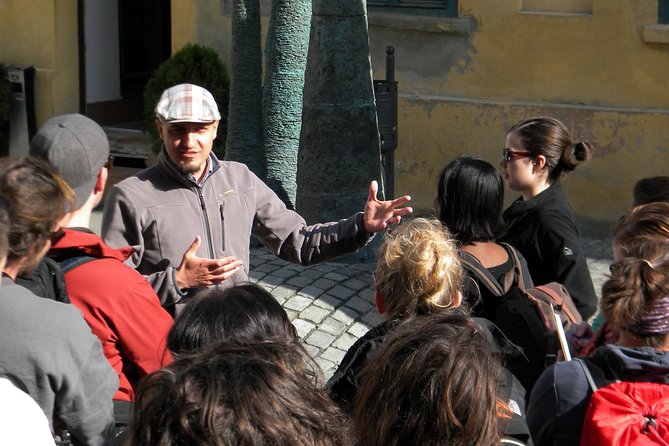
I especially like the tight route for the time, and the way the guide brings the city’s details into plain English. It is the kind of small-group tour where questions feel normal, and you get a feel for how the center fits together.
One thing to plan for: food and drinks cost extra, so budget a little if you want the traditional coffee or beer mentioned on the tour.
In This Review
- Quick hits to know before you walk
- A fast 2-hour orientation walk through Timisoara’s center
- Piata Victoriei: Opera House, Mitropolita Cathedral, and the city after fortifications
- Unirii Square: old downtown energy and the layers you can still feel
- Opera Romana House (built in 1875) and why it is more than a façade
- Libertatii Square: the old administrative center mostly built in the 1700s
- Maria Theresia Bastion: how a bastion defense worked in real terms
- Bruck House and St. Gheorghe Cathedral: quick architecture stops that stick
- Coffee and beer: optional, and worth budgeting for
- The guides behind the best moments
- Timing, weather, and what to wear for a 2-hour walk
- Where it leaves you after the tour
- Should you book the Classic Tour of Timisoara?
- FAQ
- How long is the Classic Tour of Timisoara?
- What language is the tour offered in?
- What is the price per person?
- What is included in the tour price?
- Are food and drinks included?
- Where does the tour start and end?
- How big are the groups?
- What is the cancellation policy if weather is bad or you change plans?
Quick hits to know before you walk
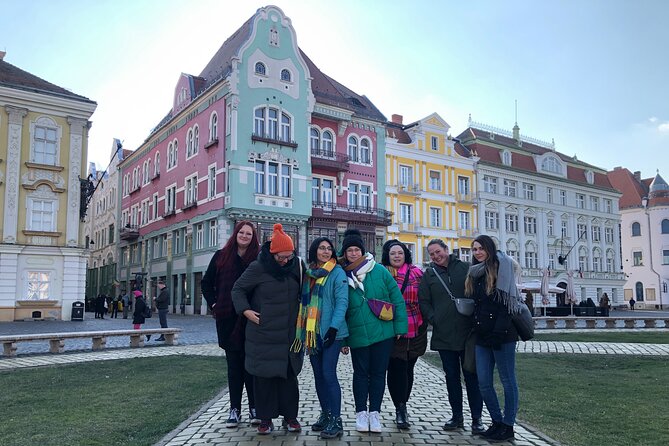
- A simple 2-hour circuit that hits the main public spaces first, so you return to them later with context
- English-led with real Q&A energy, and guides such as Teo, Dan, Sergiu, Marius, Ludovic, and Alex are praised for answering questions clearly
- Architecture first, explanations second, with stops that focus on Opera and cathedral design, plus the Art Nouveau look in the center
- Defense and city growth in one walk, including a bastion that helps you understand why the city was shaped the way it was
- Maximum 20 people, which keeps the pace comfortable and makes it easier to actually hear your guide
- Good-weather dependent, so bring a rain plan for your day in Timisoara
A fast 2-hour orientation walk through Timisoara’s center
Think of this tour as your mental map builder. In about two hours, you cover the kinds of places that most visitors rush through, then you slow down just enough to understand why each one matters. That is what makes the time feel worth it, even if your first day in Timisoara is short.
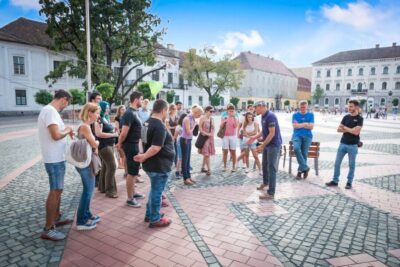
The route also works well if you like structure. You get a start point near Strada Alba Iulia (Timisoara City Tours), and the tour ends back there, which makes the rest of your day easier to plan. With a maximum of 20 travelers and a professional guide, the pacing tends to stay human, not rushed.
Price is about $48.39 per person for an English group tour with a guide. That sounds like a lot until you price the value of a guided walk plus the cost of building your own city context from scratch. If you hate standing around guessing, this is a good shortcut.
More of Timisoara worth a look before you book:
- Weekly Guided Tour in English – Tuesday, Thursday, Saturday
★ 5.0 · 84 reviews - Timisoara All in One – Walking and Tram Tour
★ 5.0 · 72 reviews - Weekly Guided Walking Tour – Tuesday, Thursday & Saturday
★ 5.0 · 49 reviews
Piata Victoriei: Opera House, Mitropolita Cathedral, and the city after fortifications
Piata Victoriei is your big opening scene. This is where the tour connects Timisoara’s older defensive layout to what happened later, when the city grew beyond its fortifications. The guide talks about defortification and the real-estate boom in the early 1900s, which gives you a reason to look up instead of just forward.
As you walk, you will see the Opera House and the Mitropolita Cathedral in the same broader picture, plus Art Nouveau palaces around the square. The point is not to memorize names. The point is to notice patterns: how the city’s power and wealth showed up in buildings, and how that shows up on your modern street level.
A small practical note: this stop lasts around 30 minutes, so it is a good moment to settle into the tour’s rhythm. If you plan to ask questions, this is typically where the guide has the most room to explain the big story.
Unirii Square: old downtown energy and the layers you can still feel
Unirii Square keeps the orientation moving. Here the guide frames it as the city’s older downtown, so you start seeing Timisoara not as one snapshot, but as layers built over time.
This is also a stop where listening pays off. Without context, squares can feel interchangeable. With a good guide, you start spotting details that explain what made this part of the city work when it was developing: the way open space organizes daily life, and how the center stayed relevant as Timisoara changed.
This part of the walk is short and focused (about 30 minutes). It is a good reset between the big architecture and the more specific landmark stops ahead.
Opera Romana House (built in 1875) and why it is more than a façade
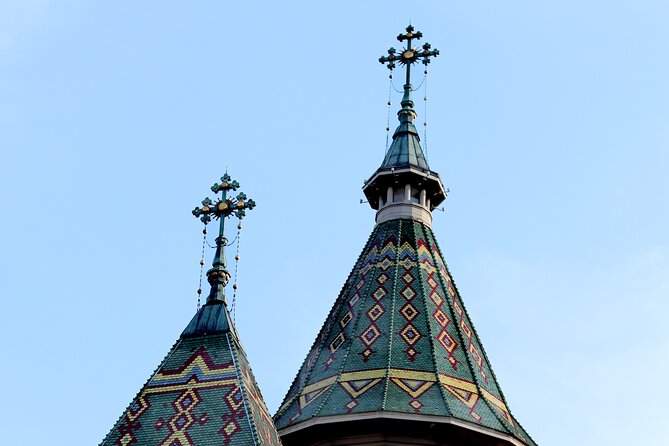
Then you switch to one of Timisoara’s standout cultural markers: Opera Romana House, built in 1875. The stop is brief, around 5 minutes, but it is the kind of quick hit that still sticks.
Why it helps: opera buildings usually look impressive from the street, but most people do not know what to look for. A short guided stop like this gives you a mental hook, so when you pass the building again later, you will remember the timeline and the cultural weight.
If you are the type who likes to photograph buildings, this is a nice moment to do it deliberately. Capture the frontage, then keep moving so the tour does not turn into standing in one spot too long.
A different sort of day out in Romania:
- Day trip to Corvin Castle and Sibiu (and back) from Timisoara
★ 5.0 · 30 reviews - Timișoara Highlights – Walking Tour
★ 5.0 · 28 reviews - Danube Gorge & Banat Waterfalls
★ 5.0 · 27 reviews - Timisoara: Classic Walking Tour
★ 5.0 · 26 reviews
Libertatii Square: the old administrative center mostly built in the 1700s
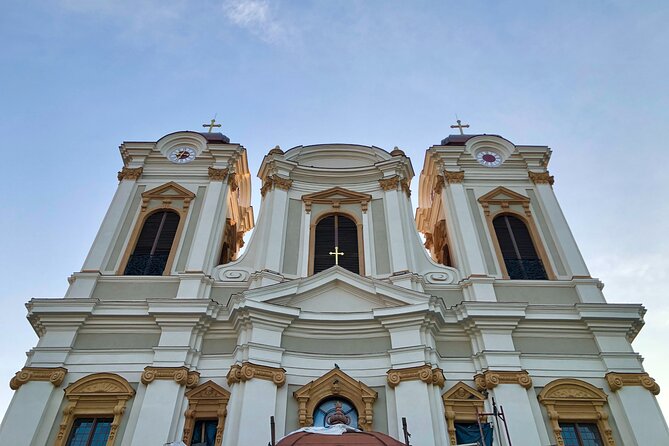
Libertatii Square is where the tour shifts from cultural icons to civic power. The guide treats it as the old administrative center, built mostly in the 1700s, which is a key detail. It tells you that this square is tied to governance and planning, not just spectacle.
Expect to spend about 20 minutes here, long enough to notice how the layout and architecture support a serious, official feel. This stop is valuable if you want to understand how Timisoara functioned, not only how it looked. In Central European cities, squares like this often explain where decisions were made and where people naturally gathered.
It is also one of the stops that can help you later while you explore on your own. After Libertatii Square, you tend to recognize the logic of where the city’s major institutions cluster.
Maria Theresia Bastion: how a bastion defense worked in real terms
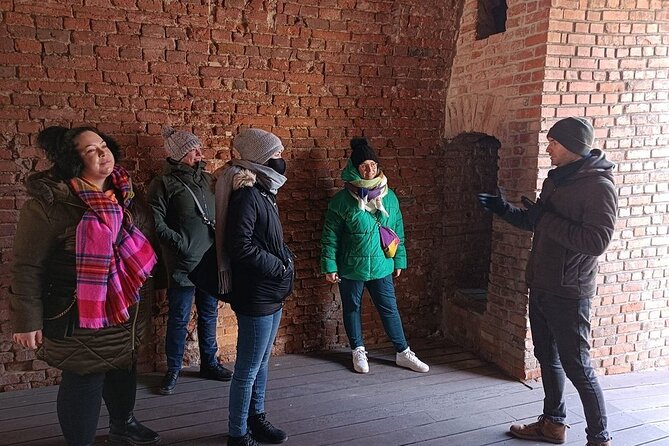
Now you get into the defense story. Maria Theresia Bastion is presented as one of the largest of the nine bastions that once existed in Timisoara. Instead of treating fortifications like trivia, the guide explains how a fortification of this kind worked, which changes how you view the city walls and open spaces nearby.
This stop lasts about 15 minutes. It is enough time to understand the basic idea without turning the walk into a history lecture. Even if you are not a military-history person, the practical value is clear: you start connecting the city’s shape to why it developed in the way it did.
This is also a helpful mental bridge between the older structures and the later urban growth explained earlier around Piata Victoriei.
Bruck House and St. Gheorghe Cathedral: quick architecture stops that stick
Two quick landmarks close out the visual part of your tour.
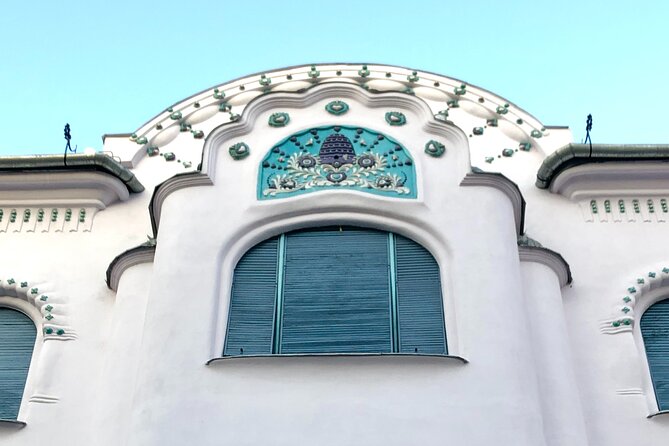
First is Bruck House, described as one of the most beautiful buildings in Timisoara. The stop is around 5 minutes, but it functions like a snapshot moment. You get a guided cue for what to notice, and you move on.
Next comes Catedrala Sfantul Gheorghe, a typical Baroque cathedral for Central Europe. This is another 5-minute stop, short but useful. Baroque churches can feel similar if you only glance. With a guide’s framing, you start noticing the types of details that give each church its character.
If you like architectural variety, these last stops deliver contrast. In just a couple minutes each, you move from dramatic design to a different kind of Central European religious presence, then you are back near your start point.
Coffee and beer: optional, and worth budgeting for
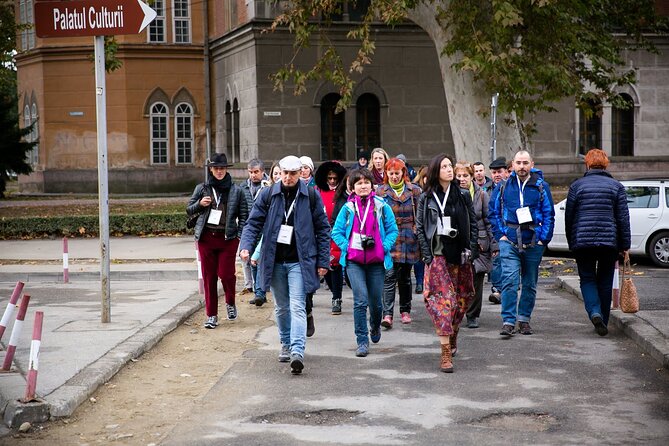
Traditional coffee and beer are part of the experience, but only on your own expense. That is not a downside, but it is a real planning point.
If you want to try something local, bring a little extra cash or card flexibility. If you do not, no problem. The tour still works as a learning experience without buying anything.
I also like that the tour does not push the food component. It keeps your walking focus on the city itself, not on a consumption schedule.
The guides behind the best moments
The biggest strength here is the guide quality. The tour format keeps moving, but the storytelling is what people rave about. Guides such as Teo, Dan, Sergiu, Marius, Ludovic, and Alex are repeatedly praised for making the city understandable fast, while still adding fun, specific detail.
What you should look for in a tour like this is simple: will the guide answer your questions, and will you learn something you could not easily spot by yourself? The consistent praise is that guides do both, and their English gets singled out as excellent.
Another practical benefit: the groups are small enough that Q&A stays realistic. If you want to know which direction to explore after the tour, or how the architecture connects across stops, this is one of the better formats to ask without feeling awkward.
Timing, weather, and what to wear for a 2-hour walk
This is a roughly 2-hour walking tour. That means your comfort matters. Plan for a solid walk around central areas, with multiple short stops and a couple longer ones.
It also requires good weather. If weather is poor, you will either be offered a different date or receive a full refund. So it is worth checking the forecast the day before and dressing accordingly.
For your own comfort, go with shoes you can walk in for an extended stretch. When tours are only a couple hours, you do not get many chances to rest, so you want your feet to feel good.
Where it leaves you after the tour
By the end, you have something most first-time city visits lack: direction with meaning. You will likely return to the main squares and landmark facades later, but now you will understand why they are there and what changed over time.
That is especially useful in Timisoara because the center has strong architecture and clear street “logic.” When you know the story behind Piata Victoriei, Unirii Square, and Libertatii Square, your exploring turns from random walking into focused wandering.
And because the tour ends back at the meeting point, you are not stuck figuring out a new starting location for your next activity.
Should you book the Classic Tour of Timisoara?
Book it if you want an efficient first-date-with-the-city plan. This is the right choice when you have limited time, want an English guide, and you like learning stories that explain what you are seeing outside, not just reading about it later.
Skip it if you only want a self-guided stroll with no structure. This tour gives you interpretation, not just photo stops. Also keep in mind that food and drinks are not included, and the tour depends on good weather.
If you do book, do one smart thing: come with one question. Ask about why the city’s layout changed or what to prioritize next in the center. With guides like Teo, Dan, Sergiu, Marius, Ludovic, and Alex repeatedly praised for answering questions, you will get more out of the walk than just the must-see sights.
FAQ
How long is the Classic Tour of Timisoara?
It runs for about 2 hours.
What language is the tour offered in?
The tour is offered in English.
What is the price per person?
The price is $48.39 per person.
What is included in the tour price?
A professional guide is included.
Are food and drinks included?
No. Food and drinks are not included, though traditional coffee and beer are mentioned as available at your own expense.
Where does the tour start and end?
It starts at Timisoara City Tours, Strada Alba Iulia no. 7, Timișoara 300077, Romania, and ends back at the meeting point.
How big are the groups?
There is a maximum of 20 travelers per tour.
What is the cancellation policy if weather is bad or you change plans?
You can cancel for a full refund up to 24 hours in advance. If the tour is canceled due to poor weather, you will be offered a different date or a full refund.
Recently listed in Timisoara
- Bite your way through Timisoara – Timisoara’s Street Food Tour★ 5.0 · 14 reviews
- Timisoara Downtown Dream Tour★ 5.0 · 5 reviews
- The Grand Tour of Communist Ages at Timisoara★ 5.0 · 17 reviews
- The Jewish Heritage Tour of Timisoara★ 5.0 · 9 reviews
- One Day in Transylvania – Departure from Timisoara★ 5.0 · 16 reviews
- Nera Gorge National Park – Private Day Tour from Timisoara★ 4.5 · 4 reviews
- Ecumenical Tour of Timisoara★ 5.0 · 15 reviews
- Day Trip to Turda Salt Mine and Corvin Castle from Timisoara★ 5.0 · 10 reviews
Timisoara Tours, compared.
Weekly Guided Tour in English – Tuesday, Thursday, Saturday
Read our review →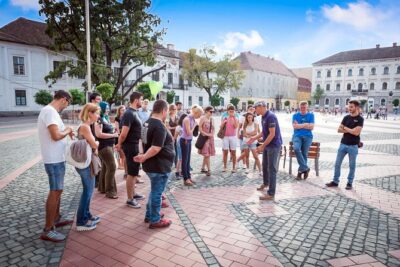
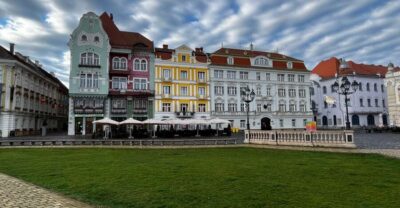
Weekly Guided Walking Tour – Tuesday, Thursday & Saturday
Read our review →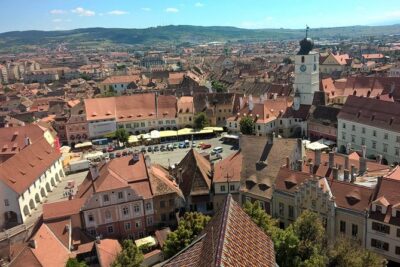
Day trip to Corvin Castle and Sibiu (and back) from Timisoara
Read our review →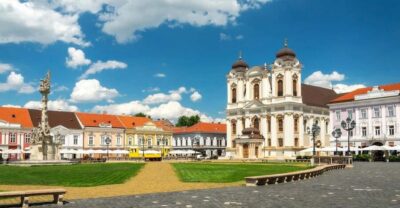
Browse the lists this tour appears in