
REVIEW · WALKING TOURS
Timisoara: Jewish Heritage Walking Tour
Jewish stories, and you can walk them. This Timisoara Jewish Heritage Walking Tour focuses on the city’s Jewish community and uses local buildings as your classroom, from the historic center to the Fabrikstadt neighborhood. I especially liked how the route spotlights the Moorish Synagogue, turning architecture into something you can actually picture while you walk.
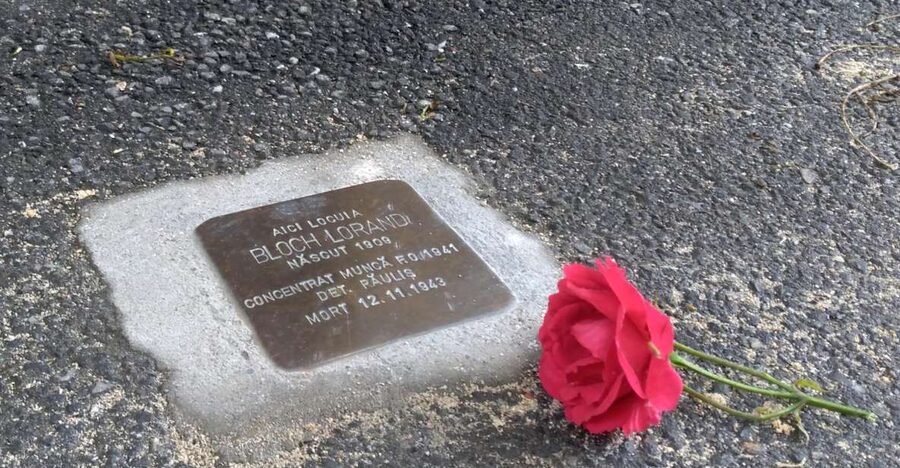
I also really enjoyed the emotional punch of the tour’s Stolperstein stop, the small iron or copper “stumbling stone” monuments engraved with names and life dates of Holocaust victims. The guide ties those sites to both past and more recent events, so you are not just looking at facades.
One possible drawback: admission tickets are not included, so if you want synagogue interiors or any paid stops, you’ll need to budget extra. And the Jewish cemetery visit at the end is only possible depending on availability, so plan for that not to happen.
In This Review
- Key highlights worth marking on your map
- Where the tour starts on Strada Alba Iulia, and what to bring
- Timisoara’s small Jewish Quarter: history you can see in the street plan
- The Moorish Synagogue stop: architecture explained like a real guide should
- Fabrikstadt and the Status Quo Synagogue: a neighborhood story with real specifics
- Jewish townsmen and the buildings they shaped across Timisoara
- The Stolperstein stop: a small memorial with heavy context
- What you actually get in 2.5 hours, and what you should not expect
- English or Romanian, and who this walking tour makes the most sense for
- Price and value: is $70 per person worth it?
- Should you book the Timisoara Jewish Heritage Walking Tour?
- FAQ
- Where do I meet the guide for the Timisoara Jewish Heritage Walking Tour?
- How long is the walking tour?
- How much does the tour cost?
- Is the tour private, or is it part of a larger group?
- What languages is the guide available in?
- Are admission tickets to attractions included in the price?
- Is the Jewish cemetery visit included?
- Can I cancel for a refund?
Key highlights worth marking on your map
- Moorish Synagogue in the city center, presented as living history, not just a photo stop
- Status Quo Synagogue in Fabrikstadt, with story and architecture explained on site
- Small Jewish Quarter walk that helps you understand where community life actually concentrated
- Romania’s only Stolperstein stop, with context around Nazi-era crimes during WWII
- Jewish-financed buildings across Timisoara, showing how influence spread through the city
- 2.5-hour pace that works well if you want meaning without a full day commitment
Where the tour starts on Strada Alba Iulia, and what to bring
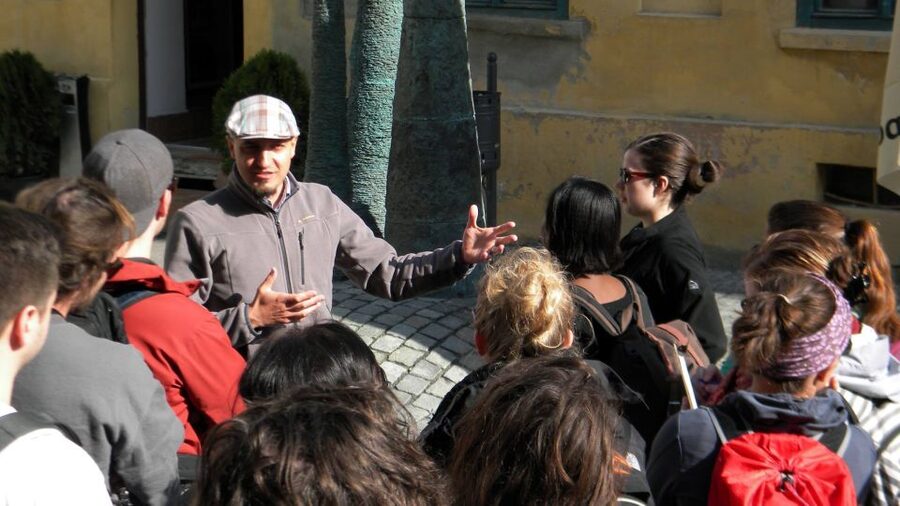
The meeting point is straightforward: meet your guide in front of the Tourist Information Center at Strada Alba Iulia 2, Timisoara 300077. This matters because it keeps you from hunting around the center at the last minute. If you like arriving early, I’d aim for 10 to 15 minutes, just to get your bearings and settle in.
Bring comfortable shoes. This is a walking tour, and even if the route is not described as super long, your feet will still do the heavy lifting for 2.5 hours. Also bring a curious mindset. The whole point here is that you are learning history through buildings, streets, and specific memorial objects.
If you are the type who likes to ask questions, you’ll probably enjoy this format. It’s a live guide experience in English and Romanian, and the tour is built around interpretation, not just sightseeing.
More History Tours in Timisoara:
- The Jewish Heritage Tour of Timisoara
★ 5.0 · 9 reviews - Bucharest: Communism and History Guided City Walking Tour
★ 4.9 · 918 reviews - Bucharest: 3-Hour Dark History Tour with a Local
★ 4.9 · 301 reviews
Timisoara’s small Jewish Quarter: history you can see in the street plan
You’ll spend time exploring Timisoara with a focus on the Jewish community, and the early portion centers on the small Jewish Quarter in the city center. The value of that is simple: when you keep the geography compact, the stories make more sense. Instead of scattering across town, the tour helps you connect events and people to a walkable area.
As you move through this part of Timisoara, you are not only looking at synagogues. You’re also hearing how the city’s past unfolded for Jewish residents, and how that history connects to what you can still observe today. This is one reason walking tours work when they are done well. You start to understand how a community’s landmarks relate to everyday movement.
I also like that the tour does not frame Jewish heritage as a single era. It specifically mentions both past and current events, which helps you avoid the classic problem of seeing history as frozen in time.
The Moorish Synagogue stop: architecture explained like a real guide should

The Moorish Synagogue is one of the tour’s big visual anchors. You’ll see it in the city center, and the guide connects the building to the wider story of Jewish life in Timisoara.
What I like about this stop is how it turns architecture into a clue. Even if you don’t know the vocabulary for styles, a good guide can point out what to notice: the overall feel of the structure, how it fits the surrounding area, and why it matters to the community that built and used it. The tour’s emphasis on both story and place is exactly what you want for a synagogue visit, because it helps you understand function, identity, and history in the same glance.
Also, if you are the type who gets museum fatigue, this helps. You are outdoors, moving, and learning in short bursts, with a specific target in front of you.
Fabrikstadt and the Status Quo Synagogue: a neighborhood story with real specifics

Next you shift to Fabrikstadt, where you’ll visit the Status Quo Synagogue. The tour description highlights that you’ll learn the story and architecture of this impressive synagogue, which is great because it prevents the visit from becoming only a “look how beautiful it is” moment.
Why Fabrikstadt matters here is that it expands the map of Jewish heritage beyond the city center. When the tour includes another neighborhood, it reminds you that communities grow and spread. Jewish life in Timisoara was not limited to one street or one corner, and this stop supports that.
One practical note: because admission tickets are not included, your experience inside any buildings may depend on what is available and whether entry requires payment. That’s not a reason to skip the tour, but it is smart to keep in mind. If synagogue interiors are a priority for you, you’ll want to be ready to cover tickets separately.
More Walking Tours in Timisoara:
- Timisoara All in One – Walking and Tram Tour
★ 5.0 · 72 reviews - Weekly Guided Walking Tour – Tuesday, Thursday & Saturday
★ 5.0 · 49 reviews - Timișoara Highlights – Walking Tour
★ 5.0 · 28 reviews - Timisoara: Classic Walking Tour
★ 5.0 · 26 reviews
Jewish townsmen and the buildings they shaped across Timisoara

This tour also includes the idea that some of Timisoara’s stunning buildings were financed and designed by Jewish townsmen. That detail can feel broad at first, but on a walking tour it becomes useful. Instead of keeping “Jewish heritage” locked to synagogue visits alone, you see influence in everyday urban form.
I like this approach because it changes your mental picture. It’s easy to think of heritage tours as lists of landmarks. This one nudges you toward a more grounded view, how people in a community helped build the city you are standing in now.
If you enjoy walking with context, this portion can stick with you long after the tour ends. You might start noticing patterns in architecture and realizing that the city’s story has more than one set of hands behind it.
The Stolperstein stop: a small memorial with heavy context
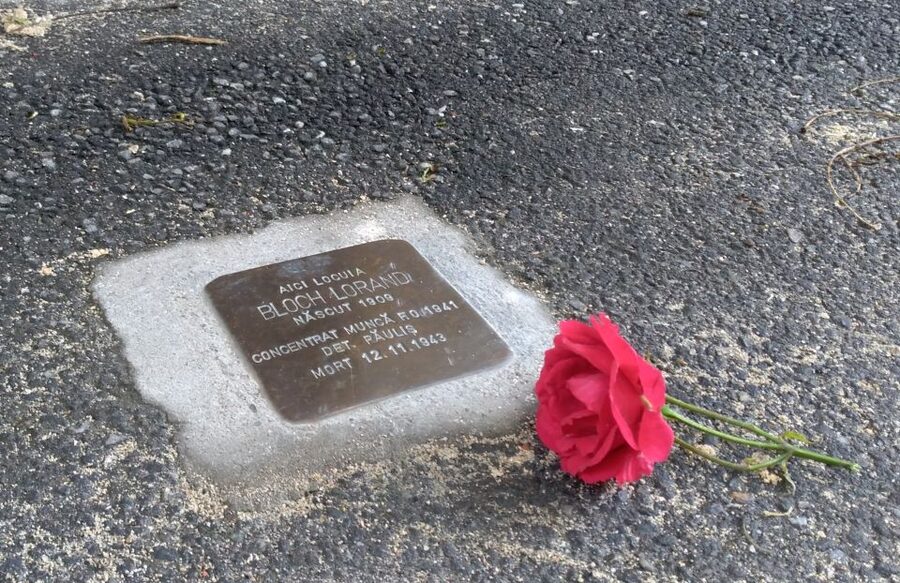
Then comes the emotional center of the tour: the only Stolperstein in Romania. You’ll learn why these stones are often called stumbling stones, and what they represent.
Here are the key points you should know before you see it:
- These are small monuments made of iron or copper
- They are engraved with a person’s name and life dates
- They serve as one of the few reminders of crimes committed under the Nazi regime during World War II
This stop is powerful because it turns history into an individual-level reminder. Instead of abstract numbers, you face a named life. And because the object is physically in the street-level world, it connects memory to ordinary movement through a city.
For me, that’s the moment where the tour stops being only about architecture and becomes a lesson about human cost. Even if you already know some WWII history, the presence of this specific type of memorial, and the guide’s explanation of its purpose, can hit harder than a larger monument.
What you actually get in 2.5 hours, and what you should not expect

The tour lasts 2.5 hours, which is an ideal length for travelers who want depth without losing an entire afternoon. It is long enough to move between the city center and Fabrikstadt, and short enough that you can still plan other things afterward.
It also matters that this is a private group. Even without knowing exact group size, private simply changes the feel. You typically get a more flexible conversation and a guide who can respond to questions instead of racing through a fixed script for a big crowd.
Here’s what to keep expectations grounded on:
- The tour includes a guide, but admission tickets are not included
- You’ll visit key landmarks like the Moorish Synagogue, the Status Quo Synagogue, and the Stolperstein
- A Jewish cemetery visit may be possible at the end, but it is not guaranteed
So if cemetery access is important to you, I’d treat it as a bonus. Plan your day so you are happy either way.
English or Romanian, and who this walking tour makes the most sense for
The tour is offered with a live guide in English and Romanian. If you want a shared language experience rather than relying on apps and signs alone, this is the kind of tour that pays off.
This also fits well for people who:
- Like walking tours that teach something specific, not generic highlights
- Want Jewish heritage in Timisoara explained through real places
- Care about how architecture and community history connect
- Prefer a focused 2.5-hour commitment
It may be less ideal if you want a pure sightseeing loop with minimal talking. This is history-forward, and it leans into context and interpretation, especially around the Stolperstein stop.
Price and value: is $70 per person worth it?
At $70 per person for a 2.5-hour walking tour, you are paying for two things: time and interpretation. You are not just buying access to landmarks, you are buying a guide who can explain story, architecture, and why these specific sites matter.
The catch is that admission tickets to attractions are not included. That means your total cost may go up if you want paid entry into any synagogue spaces or other ticketed stops. Still, for many travelers, $70 can feel fair because the tour includes more than one major site and includes the only Stolperstein in Romania, which is hard to replicate on your own.
The best way to judge value is to ask yourself one question: do you want to understand what you’re seeing? If yes, this price starts to make sense, because the tour is built around guided meaning, not just photos.
Should you book the Timisoara Jewish Heritage Walking Tour?
I’d book it if you want a walkable, focused way to understand Jewish heritage in Timisoara, with stops that mix architecture and memory. The Moorish Synagogue, the Status Quo Synagogue in Fabrikstadt, and the Stolperstein stop give you variety in a short time, and the guide-led context is what makes those places connect.
I would hesitate only if you are chasing an itinerary that guarantees specific interior access with no extra spending, since admission tickets are not included and the Jewish cemetery visit is not guaranteed. If that’s your priority, you can still book, just be ready for separate ticket costs or a cemetery that might not happen.
If you want a meaningful walking tour that respects both beauty and history, this one is a strong match.
FAQ
Where do I meet the guide for the Timisoara Jewish Heritage Walking Tour?
Meet your guide in front of the Tourist Information Center at Strada Alba Iulia 2, Timișoara 300077.
How long is the walking tour?
The tour lasts 2.5 hours.
How much does the tour cost?
It costs $70 per person.
Is the tour private, or is it part of a larger group?
The tour is listed as a private group.
What languages is the guide available in?
The tour offers live guiding in English and Romanian.
Are admission tickets to attractions included in the price?
No. Admission tickets to attractions are not included.
Is the Jewish cemetery visit included?
It may be possible to visit the Jewish cemetery of Timisoara at the end of the tour, but it is not guaranteed.
Can I cancel for a refund?
Yes, free cancellation is available up to 24 hours in advance for a full refund.
Recently listed in Timisoara
- Bite your way through Timisoara – Timisoara’s Street Food Tour★ 5.0 · 14 reviews
- Timisoara Downtown Dream Tour★ 5.0 · 5 reviews
- The Grand Tour of Communist Ages at Timisoara★ 5.0 · 17 reviews
- The Jewish Heritage Tour of Timisoara★ 5.0 · 9 reviews
- One Day in Transylvania – Departure from Timisoara★ 5.0 · 16 reviews
- Nera Gorge National Park – Private Day Tour from Timisoara★ 4.5 · 4 reviews
- Ecumenical Tour of Timisoara★ 5.0 · 15 reviews
- Day Trip to Turda Salt Mine and Corvin Castle from Timisoara★ 5.0 · 10 reviews
Walking Tours, compared.




Ghost Stories & Romanian Mythology Walking Tour
Read our review →
Browse the lists this tour appears in