
REVIEW · COMMUNIST HISTORY TOURS
Life in Communism
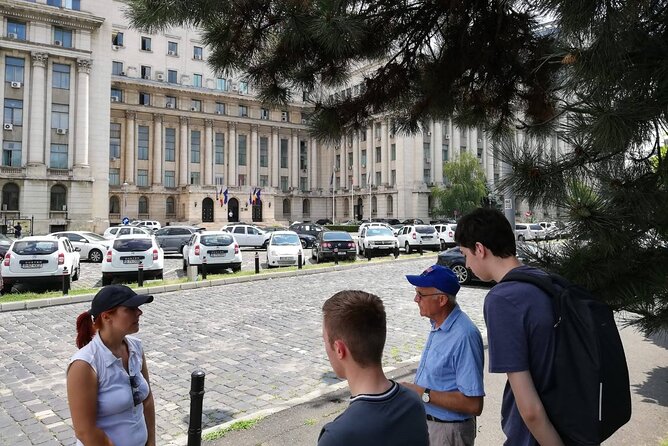
Communist Bucharest is written in plain sight. This 3-hour walk connects the dots between Communist policies and the city you see today, with about 15 stops and a small group that stays easy to talk with. You get an English guide and a simple route that starts at the Patriarchal Cathedral and ends back where you began.
What I like most is the way the guide turns big subjects into street-level details, so you do not just memorize dates. I also like the small-group size (max 15), which makes it easier to ask questions and get clear explanations as you move from one site to the next. The included Communist-type snacks are a nice bonus during the mid-tour pause.
One consideration: you are on your feet for about 3 hours with a moderate walking pace, so if cold weather or long stretches wear you down, plan for comfort and warm layers.
In This Review
- Key highlights to expect
- Communism in Bucharest, why this walk makes the city click
- The easy start at Patriarchal Cathedral (and why the meeting point matters)
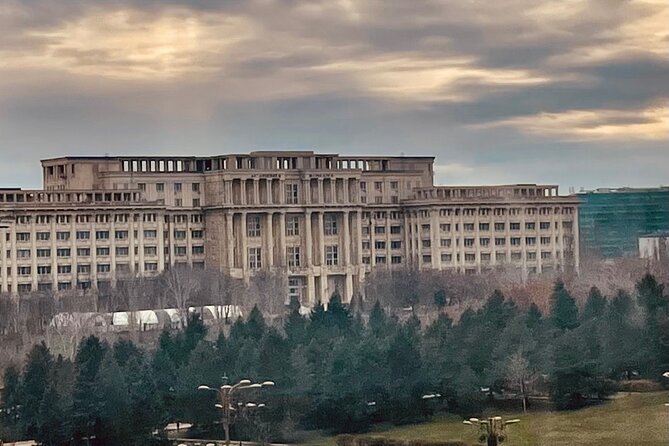
- Stop 1: Palace of Parliament, where power becomes architecture
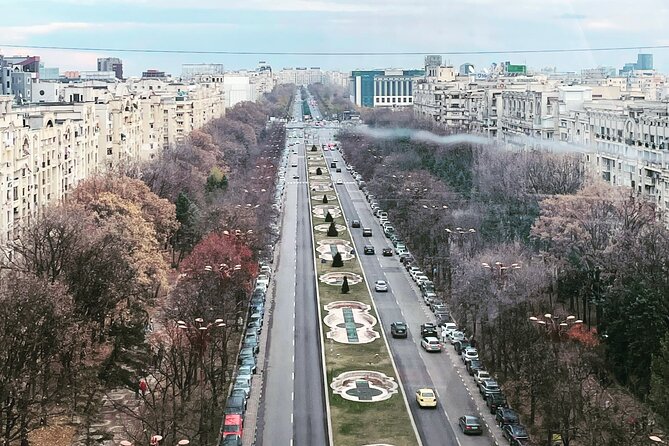
- Calea Victoriei, the boulevard where stories travel
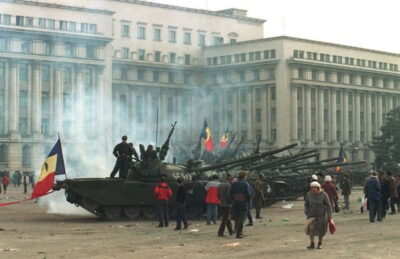
- Piaka Revolukiei, a central point in the story
- The other stops you will feel in your legs, about 15 in total
- Guides like Daniela and Andreea, why the narrative feels human
- The included Communist-type snacks and the mid-tour break
- Price and timing: what $31.24 buys you in real value
- Who this tour suits best (and who might want a different plan)
- Practical logistics that affect your comfort
- Should you book Life in Communism in Bucharest?
- FAQ
- How long is the Bucharest Life in Communism walking tour?
- What is the price per person?
- How many stops are included?
- What language is the tour offered in?
- How big is the group?
- Where does the tour start and end?
- Are snacks included?
- Are drinks included?
- Is the tour suitable for people with moderate fitness?
- Is free cancellation available?
- Are mobile tickets used?
Key highlights to expect
- About 15 communist-era stops that map policy changes to architecture and everyday life
- Small group (max 15) for better back-and-forth with the guide
- Real timeline focus, covering themes like nationalization, secret police, and demolitions
- Mid-tour break, with warm-up time and self-paid drinks
- Included Communist-type snacks so you are not chasing food while walking
Communism in Bucharest, why this walk makes the city click

There is a special feeling you get when you walk a city and start seeing patterns. On this tour, the pattern is Communist rule, and how it left visible marks on Bucharest, from buildings and squares to the way people talk about the past.
This is not a museum tour where everything stays behind glass. You are outside, moving through the areas tied to the Communist timeline, so you can connect what the regime did with what you still notice today. You will hear how nationalization reshaped ownership, how the secret police created fear and control, and how demolitions changed neighborhoods.
And because it is a small group with a guide speaking English, you can ask follow-up questions as the story unfolds. Guides here, including Daniela and Andreea, are noted for clear explanations and a friendly tone that keeps the pace comfortable.
More Communist History Tours in Bucharest:
- Bucharest: Communism and History Guided City Walking Tour
★ 4.9 · 918 reviews - The Real tour of Communism
★ 5.0 · 666 reviews - Life under Communism
★ 5.0 · 358 reviews
The easy start at Patriarchal Cathedral (and why the meeting point matters)
The tour begins at the Patriarchal Cathedral, at Aleea Dealul Mitropoliei 25, Bucharest, and it ends back at the same spot. That matters more than it sounds. You are not stuck guessing how to get to a far-off meeting place, and the end point gives you a simple way to continue your day.
The cathedral area also gives you a natural contrast. You start in a place that feels rooted and lasting, then walk toward sites tied to the regime era and its rapid, forceful changes. Even if you already know some history, that contrast helps you understand why people experienced Communist rule as a rupture, not a slow evolution.
Practically, the meeting location is also described as near public transportation. So if you are using transit to get around the city, you should be able to reach the start without too much friction. If you are traveling with a service animal, the tour allows service animals.
Stop 1: Palace of Parliament, where power becomes architecture
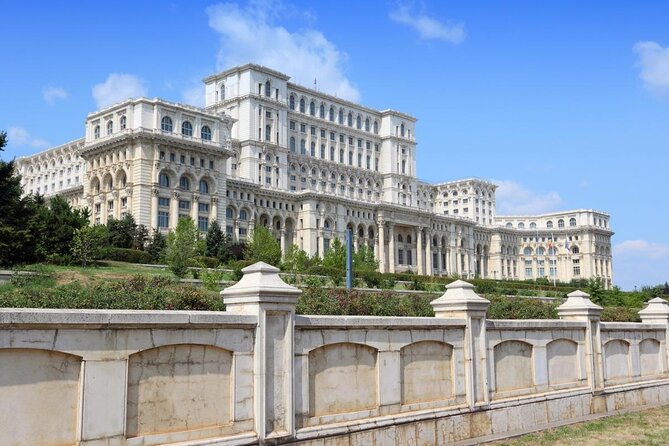
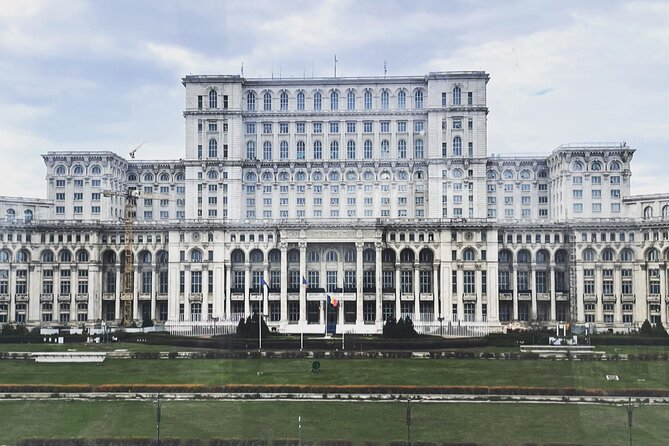
You kick off with the Palace of Parliament, one of the most striking landmarks tied to Communist-era symbolism in Romania. The key value of this stop is not just that the building is big. It is what the building communicates, power made visible in stone and scale.
On this tour, the guide connects sites like this to the Communist timeline, helping you understand why the regime favored dramatic, state-centered projects. You get a sense of how architecture became a tool, meant to show strength, control, and permanence.
What to look for: pay attention to how monumental the space feels, and think about how that kind of state display affects ordinary people in a country under strict rule. If you like understanding the psychology behind public spaces, this is a strong first anchor.
Calea Victoriei, the boulevard where stories travel
Next is Calea Victoriei, a major street that helps you see how Communist influence interacted with the city’s everyday movement. This is where the tour becomes more than a single landmark. You start to connect history to roads, walking routes, and how the city functions.
A big reason I like this stop is the way it shifts your brain from one-off sights to the lived experience of a city. Communist policies did not exist only in the abstract. They shaped what got built, what got moved, and what got erased, and those decisions show up in the way people travel through the city.
The guide also ties the walk back to core themes from the regime, including the idea that control could be felt in daily routines, not only at courts or prisons. So even if the street itself looks ordinary to you at first glance, it becomes a path you can read as history on the move.
A different sort of day out in Romania:
- Bucharest: Dracula’s Castle, Peles Castle, & Brasov Old Town
★ 4.5 · 17,858 reviews - Bucharest: Dracula Castle, Peles Castle & Brasov Old Town
★ 4.6 · 10,891 reviews - Bucharest: Dracula’s Castle, Peleș Castle & Brașov Day Trip
★ 4.4 · 6,100 reviews - Bucharest: Palace of Parliament Tickets and Guide
★ 4.3 · 3,182 reviews
Piaka Revolukiei, a central point in the story
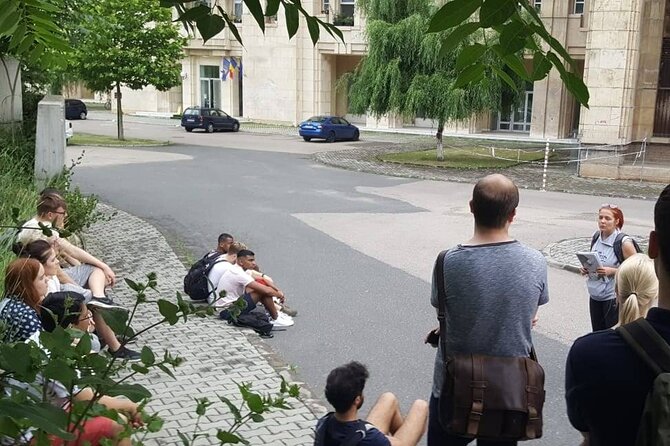
You then reach Piaka Revolukiei, another major stop in the tour’s Communist-era route. This is where the tour’s timeline feel can sharpen, because it is not only about what the regime built or enforced, it is also about the moment the story turned.
The value of this stop on a walking tour is timing. After earlier stops tied to power and control, you are ready to hear how dramatic change hit the streets and how the city’s meaning shifted afterward. A square is a perfect stage for that kind of explanation, since squares are where crowds form and where people can gather, protest, or react.
I would approach this stop with one question in mind: how do public spaces help a society express fear, anger, or hope? You will get enough historical framing during the tour to make that question worth asking.
The other stops you will feel in your legs, about 15 in total

The itinerary is described as roughly 15 objectives tied to the Communist regime timeline. Only three stops are named in the summary, but the tour is clearly set up as a chain. You see how different policies connect to visible outcomes across the city.
Here is what those mid-route stops tend to emphasize, based on the tour description:
- Nationalization, and how it changed who owned what and what that meant for everyday life
- Secret police, and the idea of surveillance and intimidation shaping behavior
- Demolitions, and the way physical destruction reorganized neighborhoods
- Major changes Communism brought to architecture and people, not just politics
Because you are walking between sites, those themes land differently than they would in a classroom. You notice the city layout, the spacing between landmarks, and how redevelopment can rewrite a memory. It is also easier to keep your mental timeline straight when the guide sets it up stop by stop.
If you like tours that build a story rather than throwing facts at you, this format should work well.
Guides like Daniela and Andreea, why the narrative feels human
The strongest reviews point to guides who do more than recite history. Daniela is repeatedly praised for being very knowledgeable and friendly, and for giving excellent detail at each stop that paints a clear picture of what life felt like under the Communist regime. Augustin is praised for a nuanced view and careful research, with a narration that keeps people enthralled.
Other guides also get singled out for personal touches. John is mentioned for sharing stories from his own experience, which adds a different layer to the official timeline. Andreea or Andrea is praised for passion about the subject, for English that is easy to follow, and for keeping a refreshing perspective in the way topics are explained.
What this means for you: you are more likely to leave with a sense of the emotional reality, not only the political facts. That is what turns a walk through landmarks into a story you can replay later while you explore on your own.
The included Communist-type snacks and the mid-tour break
About halfway through, there is a short break. Drinks during the break are self supported, and it is suggested that you bring cash. That means the break is helpful for warmth and rest, but you should be ready to handle your own drink.
Snacks are included, described as Communist type snacks. Even if you do not know what that means until you are there, I see this as a value win. A snack keeps energy steady on a 3-hour walk, especially if you come from a morning of sightseeing or you are walking in colder weather.
A small, practical tip: if you are sensitive to cold, treat the break as your time to reset. One review notes using the break to heat up from the cold, and that advice makes sense.
Price and timing: what $31.24 buys you in real value
At $31.24 per person for about 3 hours, this tour sits in a very workable range for Bucharest. The value comes from the combination: a small group, English-speaking guide, about 15 stops, and snacks included.
Three things you are effectively paying for here:
- Your guide’s ability to connect policies to buildings and streets
- Time saved on figuring out where to go and how to structure the story yourself
- The included snack, which reduces one small cost and keeps the walk smoother
It is also a popular choice, with an average booking window of 22 days in advance. That does not mean you must book months ahead, but it does suggest you should not wait until the last minute if your dates are flexible or you travel during peak seasons.
Who this tour suits best (and who might want a different plan)
This tour is a great match if you want to understand Romania’s recent history in a practical, street-level way. It fits especially well for visitors who plan to explore Bucharest afterward, because the tour is explicitly meant to help you get your bearings and understand why the city looks the way it does today.
You will also enjoy it more if you like walking tours where the guide keeps a clear structure, stop by stop. The reviews highlight excellent detail and a clear picture of life under Communism, so this is not a vague overview.
If you are not interested in Communist-era history, or if you prefer light, purely scenic sightseeing, you might find the theme heavy. Also, since you need moderate physical fitness for a 3-hour walk, it is not ideal if you want a fully seated experience.
Practical logistics that affect your comfort
A few practical notes can make your day easier:
The tour is in English, which is a big deal for historical context, because nuance matters when you talk about policies like nationalization and secret police. The tour is offered with mobile tickets, so you should not need to hunt for printed vouchers.
The group size maximum is 15 travelers, which helps keep the walk comfortable and the explanations audible. The tour also allows service animals.
Finally, keep in mind the walking time is about 3 hours. If you pace yourself, wear comfortable shoes, and dress for the weather, it will feel like a focused sightseeing block rather than a grind.
Should you book Life in Communism in Bucharest?
I think you should book this tour if you want your Bucharest sightseeing to have a backbone. The promise here is not just to see famous places, it is to understand why those places matter in the Communist timeline, and how that era changed architecture, people, and daily life.
Book it if you value:
- A guided timeline through the city
- A small-group feel where you can ask questions
- A narrative strong enough that you can reuse it when you explore later
Skip it or consider another option if you want mostly scenic walking, or if long stretches in cold or uneven outdoor conditions are a deal breaker for you.
If your goal is to leave Bucharest with your eyes turned on, not off, this is the kind of tour that makes the city make sense fast.
FAQ
How long is the Bucharest Life in Communism walking tour?
It lasts about 3 hours.
What is the price per person?
The price is $31.24 per person.
How many stops are included?
You will see roughly 15 stops around the city, tied to the Communist regime timeline.
What language is the tour offered in?
The tour is offered in English.
How big is the group?
The maximum group size is 15 travelers.
Where does the tour start and end?
It starts at the Patriarchal Cathedral, Aleea Dealul Mitropoliei 25, Bucharest, and ends back at the meeting point.
Are snacks included?
Yes. Communist-type snacks are included.
Are drinks included?
Alcoholic beverages are not included. During a short break, drinks are self supported, ideally with cash.
Is the tour suitable for people with moderate fitness?
The tour asks for a moderate physical fitness level.
Is free cancellation available?
Yes, you can cancel for a full refund up to 24 hours in advance of the experience start time. Confirmation is received at booking, and the cutoff is based on local time.
Are mobile tickets used?
Yes, the tour includes a mobile ticket.
Recently listed in Bucharest
- Village Museum Bucharest Guided Tour★ 5.0 · 6 reviews
- Wine Tasting and Dinner, including Sommelier★ 5.0 · 3 reviews
- Winery touring & private wine tasting – one day private tour★ 5.0 · 3 reviews
- Bucharest: Dealu Mare Winery Private Trip with Wine Tasting★ 4.9 · 6 reviews
- Transylvania Tour: Dracula’s Castle, Peles Palace & Brasov★ 5.0 · 19 reviews
- Traditions in Bucharest: Village Museum and Wine Tasting★ 5.0 · 8 reviews
- Airport Henri Coanda (Otopeni) to Bucharest – Private Transfer – Driver★ 5.0 · 5 reviews
- Discover Medieval Transylvania Small Group Tour – 7 days★ 5.0 · 4 reviews
Communist History Tours, compared.

Parliament, Ceausescu House & Village Museum Tour
Read our review →
Bucharest Essential Tour: Old Town, Calea Victoriei & Communism
Read our review →
Communism in Bucharest – Landmarks, Museum & Communist Appetizers
Read our review →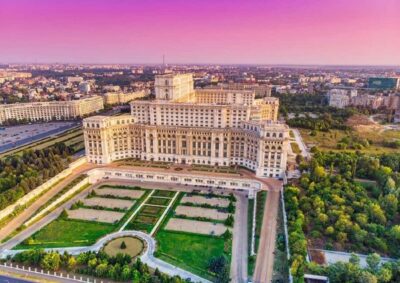
Palace of Parliament, Ceausescu House & Village Museum
Read our review →Browse the lists this tour appears in