
REVIEW · COMMUNIST HISTORY TOURS
Contrasts of Communism – Small Group Walking Tour in Bucharest
Communism in Bucharest has real street corners. This 3-hour walk gives you the story behind the 1989 revolution and the day-to-day imprint it left behind, guided by Elena with a small group feel.
I like that it mixes major landmarks with quieter places, so you see how ideology touched both power and ordinary life. I also like the pace and the talk, since you’re encouraged to ask questions and actually connect the dots with what you’re seeing. One thing to consider, though: this is moderate walking, and you’ll want comfy shoes and a calm attitude toward history that can feel heavy.
Key Highlights
- A guide who talks, not just points, with Elena bringing historical photos to help you visualize the changes.
- Small group (max 8) means slower stops and room for your questions.
- Working-class neighborhood + street art, a real contrast to the big monuments and slogans.
- Memorial Cemetery time, quiet paths and personal stories, not just dates.
- Public transit included, so you see more of Bucharest than a straight line on foot.
In This Review
- Why This Bucharest Tour Feels Personal, Not Lecture-Style
- Revolution Square and University Square, 1989 in Plain Sight
- Eroii Revolutiei and the Cemetery: The City’s Everyday Side of Communism
- Parcul Carol I, the Palace of Parliament, and Unirii Boulevard
- Price and Value: What $42.05 Buys You in Real Time
- Logistics That Actually Help: Meeting Point, Transit, and Walking Prep
- Who Should Book This, and Who Might Want a Different Style
- Should You Book Contrasts of Communism in Bucharest?
- FAQ
- How long is the Contrasts of Communism small group walking tour?
- What is the price per person?
- Is the tour offered in English?
- How many people are in the group?
- Where does the tour start and end?
- Are any ticket admissions included?
- Does the tour use public transportation?
- What happens if the weather is bad?
- What is the cancellation policy?
Why This Bucharest Tour Feels Personal, Not Lecture-Style
Bucharest can look like a maze at first. This tour is a guided way to read the city, from the stage where the communist regime tried to hold control, to the neighborhoods where the system lived in daily routines. You get context, but you also get places, so it stops being abstract.
The standout for me is how human the whole experience feels. Elena doesn’t just recite facts. She connects the political story to what life may have meant for people, including the cult of personality and the lingering impact after the fall. And because it’s a small group, you do not get lost in the crowd. Questions land. Answers feel relevant.
The other reason it works is the structure. You move through a sequence of symbols, then into quieter ground, then up for views, then back toward the center. It’s not random, and it’s not rushed. You end with a post-communist sight that functions like a visual punchline, the dancing fountains near Unirii Boulevard.
The one drawback is also the most practical: you should assume real walking time. The tour is about 3 hours, and the stops are spread out. If you’re sensitive to hills, plan for it, especially around the Carol I area.
Revolution Square and University Square, 1989 in Plain Sight
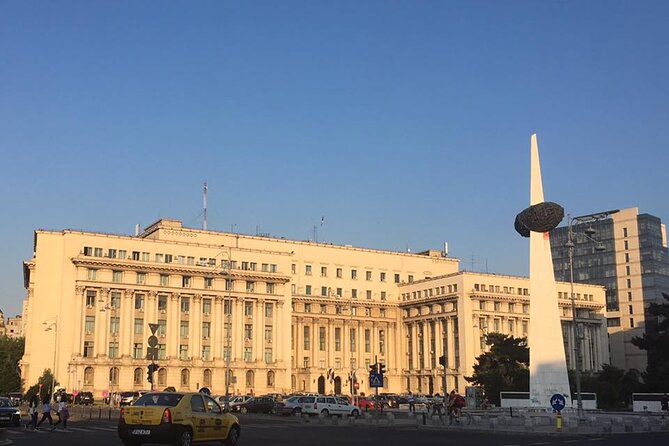
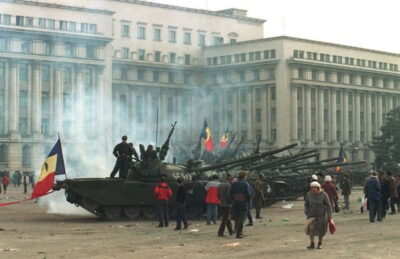
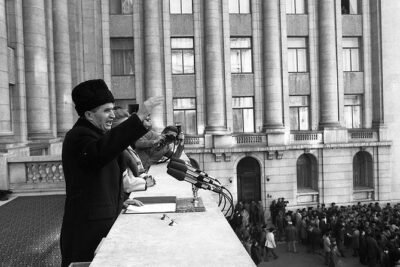
You start at Revolution Square, in a spot tied to Nicolae Ceausescu’s final speech in 1989. This is one of those places where the physical setting matters. Standing there, you’re not just learning that something happened, you’re seeing the kind of open space where public power tried to perform itself. Elena’s job here is to walk you through the rise and fall of the dictatorship, but in a way that stays grounded in what the city was like when it turned.
Next is University Square. This stop centers on KM0 of Romanian freedom of speech, and the date that marks it, December 21, 1989, when the first heroes died for liberty in Bucharest. Even if you think you already know the basic revolution timeline, this is where the meaning gets sharpened. The conversation shifts toward the current political climate in Romania, so the story does not end at 1989.
What I love about these first two stops is the contrast. You go from the final performance of the regime to the point where free speech became dangerous in real time. And because Elena keeps the tone conversational, you do not feel like you’re being graded on your political science vocabulary. You’re just trying to understand how people moved, protested, and paid for it.
Quick practical tip: if you want good photos, keep your camera ready early. Early stops can have clear lines of sight before the day gets busy.
More Walking Tours in Bucharest
- Bucharest: City Highlights Guided Walking Tour
★ 4.9 · 1,482 reviews - Bucharest: Communism and History Guided City Walking Tour
★ 4.9 · 918 reviews - Bucharest Highlights Walking Tour
★ 5.0 · 469 reviews
Eroii Revolutiei and the Cemetery: The City’s Everyday Side of Communism
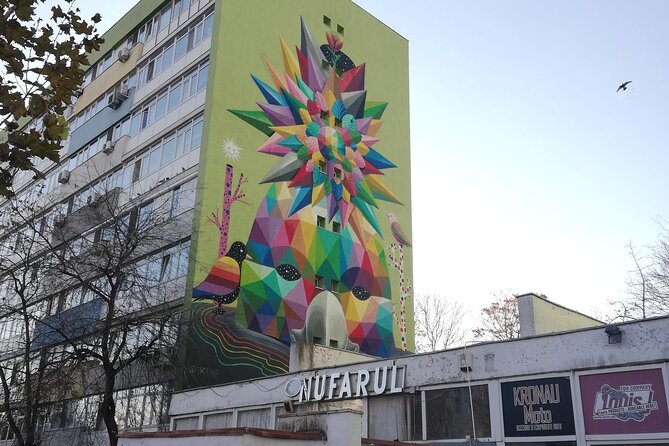
After the big political squares, the tour turns toward a working-class neighborhood, using public transportation off the beaten path. Stop 3, Eroii Revolutiei, is a visual reset. You’re in an area linked to 1970s grey communist apartment blocks, but the story is not frozen in time. Instead, you see how those buildings are getting reinvented through colorful street art. It’s a reminder that the communist era did not only create monuments. It shaped housing, streets, and how people spent their lives.
This is also one of the more balanced parts of the tour. You get to feel the city’s creativity rather than only its scars. Street art is not a magic eraser for history, but it shows how residents and artists take back space. Elena’s commentary helps you read that change as more than decoration.
Then you head to Cimit. Eroilor Revolutiei, the Memorial Cemetery for the Heroes killed in the 1989 revolution. If you’re expecting a loud, touristy stop, the tone here is different. The paths are quiet, and the focus becomes personal stories, not just official dates. Walking through this kind of place forces a slower pace. It also helps you understand why the revolution mattered at a human level, not only as a national turning point.
This section is one of the reasons I think this tour beats the usual history walk. It includes both the bold and the tender moments. You see the propaganda era on one side, then the aftermath and memory work on the other.
Wear shoes that can handle uneven paths. The cemetery part is calm, but you still cover ground.
Parcul Carol I, the Palace of Parliament, and Unirii Boulevard
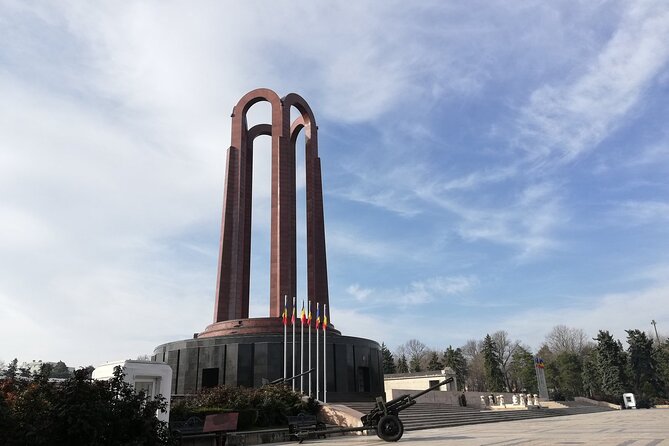
Now comes the big symbolism. At Parcul Carol I, you get a unique view from one of the highest hills in Bucharest. The viewpoint matters because it changes your scale. You can see how a city plans itself, and how later rulers wanted visibility and control. From here, you also learn about the Monument of the Heroes for the Freedom of the Motherland, built in honor of communist party leaders. That phrase may sound patriotic, but Elena helps you interpret it through the reality of who commissioned the message and why.
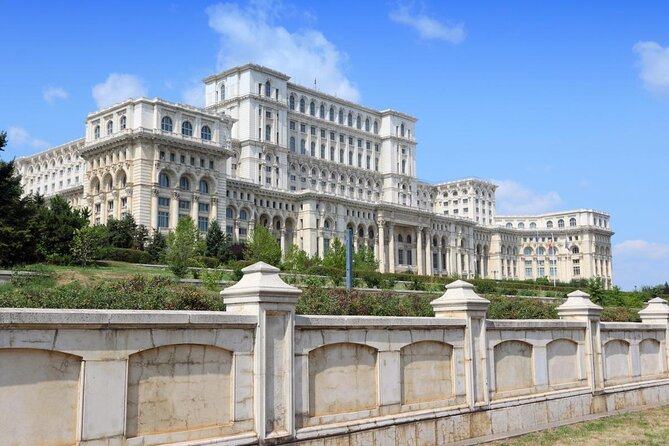
From the hill, the tour returns to the city center with a stop at the Palace of Parliament. This building is described as the second-largest administrative building in the world, and it’s framed here as one of Ceausescu’s last whims. You stand in front of it and get context, but the admission ticket is not included.
This is a key planning detail. If you want to go inside the Palace of Parliament, you’ll likely need to arrange that separately. The tour still works well from the outside, but if your priority is interior spaces, budget extra time and money.
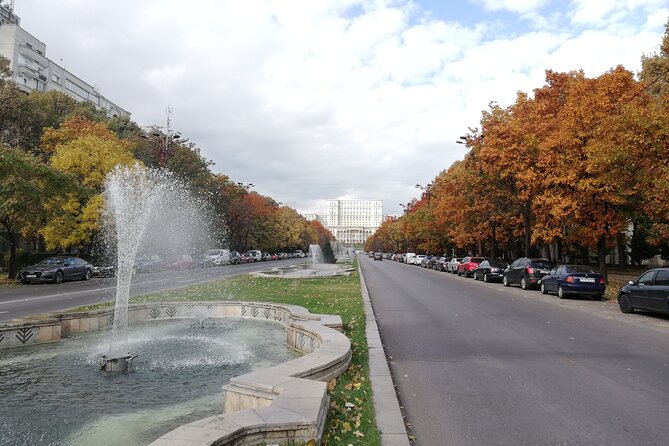
Then you finish on Bulevardul Unirii near the dancing fountains. It’s a strange, fitting end, like walking out of a museum into a city party. The fountains are designed as a home-court advantage to humble world leaders, which is exactly the kind of statement communist-era power used to make. Ending here helps you feel the shift from rule by ideology to rule by spectacle and tourism energy.
By the time you reach the fountains, you’ll probably understand why Elena put the “everyday and memory” stops between the grand squares and the grand architecture.
Price and Value: What $42.05 Buys You in Real Time
At $42.05 per person for about 3 hours, this tour is priced in the range where you’re buying time with a local expert. The real value comes from what you avoid wasting: confusion, guesswork, and straight-up missing the context that makes Bucharest make sense.
Most stops include free admission tickets, and that matters. You’re not paying extra at each location to access the moments that connect the story. The exception is the Palace of Parliament, where admission is not included.
Also, small groups are not just a comfort perk. They change the information quality. In a group of up to 8, Elena can react to your questions and adjust the pace. That means you spend more time on the parts you actually care about, like how dictatorship reshaped daily life or why post-communist politics still feels shaped by that past.
The tour also includes public transportation segments. That sounds minor until you realize what it saves you. You get to cover more city without turning the day into a trudge, and you learn how the route pieces fit together spatially.
If you’re wondering whether this is worth it versus piecing it together on your own, the answer is usually yes if history is part of why you’re in Bucharest. If you only want quick photo stops and no political context, you might prefer a lighter walking route.
More Communist History Tours in Bucharest:
- The Real tour of Communism
★ 5.0 · 666 reviews - Life under Communism
★ 5.0 · 358 reviews - 3-Hour Guided Tour of Communist Bucharest
★ 4.9 · 303 reviews - Bucharest: Parliament, Ceausescu House & Village Museum Tour
★ 5.0 · 208 reviews
Logistics That Actually Help: Meeting Point, Transit, and Walking Prep
The tour starts at boteca13, Strada Boteanu 3, București 010027, and ends on Bulevardul Unirii near Parliament and the old town area, with the finish point at Bulevardul Unirii 25.
You’ll get a mobile ticket. Confirmation is typically received within 48 hours, subject to availability, so it’s smart to book with enough flexibility in your schedule.
Language is English. Service animals are allowed, and the tour is near public transportation, which helps if you need to catch up to the group or break your day into other activities.
Now, the one prep point I’m glad the tour keeps obvious: eat breakfast. One of the most practical comments I’ve seen about this experience is exactly that. Between walking and a few transit hops, you will feel it. If you’re the type who skips meals and relies on adrenaline, plan to change that.
Bring:
- Comfortable shoes
- Water
- A charged phone for photos and maps
If you’re doing this on your first morning, you’ll likely appreciate how quickly you get your bearings. The route gives you a mental map of where power sat, where memory lives, and where the city shows its reinvention.
Who Should Book This, and Who Might Want a Different Style
This tour fits best if you want to understand Romania’s communist period and its aftermath without turning your day into a checklist. You should book it if you like guided conversation, like seeing both major monuments and less obvious neighborhoods, and like walking through history with someone who can explain why it still matters.
It also works well for solo travelers who want structure. The small group size keeps it from feeling like a forced group lecture. You can ask questions and get answers tailored to what you’re noticing.
Skip it, or consider something lighter, if:
- You strongly dislike political history, even when it’s handled thoughtfully
- You need a very slow pace
- You want mostly scenic stops with minimal context
One more consideration is the mood. Revolution sites and memorial cemeteries can be emotionally heavy. If you like historical topics but want your day lighter, you might not get what you want from the theme.
That said, Elena’s style seems built for balance. People come away understanding both the public events and the personal consequences.
Should You Book Contrasts of Communism in Bucharest?
If your goal is to understand Bucharest beyond its photos, book it. The experience gives you a clear line from 1989 revolution moments to the present city, including working-class areas, memorial ground, and the architecture of power. The small group size and Elena’s photo-backed, question-friendly style are a big part of why it feels more meaningful than the typical walk.
If you’re traveling with someone who prefers quick sightseeing, you might split the difference by suggesting a shorter day elsewhere. But if you want one guided experience that makes Bucharest’s past click, this is a strong choice.
Book this one when you have energy for walking and enough time to let history breathe.
FAQ
How long is the Contrasts of Communism small group walking tour?
It runs for about 3 hours.
What is the price per person?
The price is $42.05 per person.
Is the tour offered in English?
Yes, it is offered in English.
How many people are in the group?
The maximum group size is 8 travelers.
Where does the tour start and end?
It starts at boteca13, Strada Boteanu 3, București 010027, and ends near Bulevardul Unirii 25.
Are any ticket admissions included?
Admission is free for several stops. The Palace of Parliament is listed as not included, so you may need to arrange that separately if you want to go inside.
Does the tour use public transportation?
Yes, it includes travel off the beaten path by public transportation.
What happens if the weather is bad?
The tour requires good weather. If it is canceled due to poor weather, you will be offered a different date or a full refund.
What is the cancellation policy?
Cancellation is free up to 24 hours in advance for a full refund, based on the experience’s local time. If you cancel less than 24 hours before, the amount paid is not refunded.
Recently listed in Bucharest
- Village Museum Bucharest Guided Tour★ 5.0 · 6 reviews
- Wine Tasting and Dinner, including Sommelier★ 5.0 · 3 reviews
- Winery touring & private wine tasting – one day private tour★ 5.0 · 3 reviews
- Bucharest: Dealu Mare Winery Private Trip with Wine Tasting★ 4.9 · 6 reviews
- Transylvania Tour: Dracula’s Castle, Peles Palace & Brasov★ 5.0 · 19 reviews
- Traditions in Bucharest: Village Museum and Wine Tasting★ 5.0 · 8 reviews
- Airport Henri Coanda (Otopeni) to Bucharest – Private Transfer – Driver★ 5.0 · 5 reviews
- Discover Medieval Transylvania Small Group Tour – 7 days★ 5.0 · 4 reviews
Communist History Tours, compared.

Parliament, Ceausescu House & Village Museum Tour
Read our review →
Bucharest Essential Tour: Old Town, Calea Victoriei & Communism
Read our review →
Communism in Bucharest – Landmarks, Museum & Communist Appetizers
Read our review →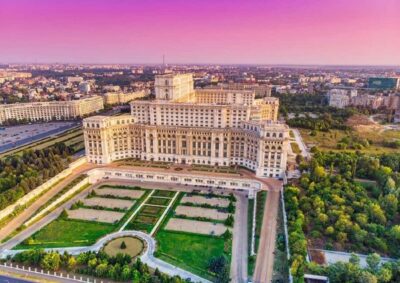
Palace of Parliament, Ceausescu House & Village Museum
Read our review →Browse the lists this tour appears in