
REVIEW · COMMUNIST HISTORY TOURS
Communist Era Bucharest Tour
Communism in Bucharest feels close-up and real. This private, English-led walking tour threads together the city’s biggest landmarks and the stories behind them, from Unirii Square to the Revolution Square spotlight. You can also pick a morning or afternoon slot, so it fits cleanly into a day of sightseeing.
I especially love the personal pace. It’s just your group, and guides like Alina and Claire have been praised for sharing both the official history and what daily life felt like, with clear, animated explanations and lots of chances to ask questions.
One thing to keep in mind is that this is an opinionated subject, and not every style of storytelling will match your preferences. If you’re expecting a very harsh, single-tone take on the Communist period, you may find the framing more balanced than you hoped.
In This Review
- Key things I’d plan around
- Why Bucharest’s Communist Lines Still Shape Your Walk
- Private, English, and paced for real street time
- Manuc’s Inn, the meeting point, and why it’s a smart anchor
- Piața Unirii: where a planned center becomes a city stage
- Bulevardul Unirii: the Socialist Victory Avenue, turned seasonal
- Casa Poporului (Palatul Parlamentului): the building that makes scale feel political
- Victoria Avenue and the “banks of the system”
- University Square, the InterContinental Hotel (1971), and the theater that kept changing
- Revolution Square: the 1989 turn you can photograph
- Iuliu Maniu’s statue and the name you’ll remember after the tour
- The Memorial of Rebirth and the scale of remembrance
- How to get the most from a political walking tour without burning out
- Value check: is this tour worth about $30.72?
- Should you book this Communist Era Bucharest tour?
- FAQ
- How long is the Communist Era Bucharest tour?
- Is this tour private?
- Is pickup included?
- What language is the tour in?
- Do you need admission tickets for the stops?
- Where is the meeting point?
- Is a mobile ticket used?
- What if I need to cancel?
Key things I’d plan around
- Private group feel in a 3-hour walking route, not a big-bus rush
- Morning or afternoon departure option to match your energy level
- Big photo stops around Revolution Square, including Ceaușescu’s final balcony area
- Architectural contrast, from regenerated public spaces to the scale of Casa Poporului
- Banks, theaters, and universities explained as part of how power showed up in everyday life
- Guides with strong engagement, including Alina and Claire, who’ve earned standout praise for clarity and passion
Why Bucharest’s Communist Lines Still Shape Your Walk
Bucharest is one of those cities where old plans still steer your feet. Even when the buildings look different than they did decades ago, the “why” remains visible in the axes of streets, the grand civic spaces, and the way major institutions were placed.
That’s what makes this tour more than a checklist. You’re walking through the physical language of the Eastern Bloc, then seeing how the city repurposes parts of it now. You get a sense of how power, design, and daily routines were linked.
If you like history you can point at, this works. You’ll see squares, avenues, and landmark facades, then connect them to the human story behind them. And because the format is guided, you’re not stuck trying to decode everything alone.
More Communist History Tours in Bucharest:
- Bucharest: Communism and History Guided City Walking Tour
★ 4.9 · 918 reviews - The Real tour of Communism
★ 5.0 · 666 reviews - Life under Communism
★ 5.0 · 358 reviews
Private, English, and paced for real street time
This is built for a private group. That matters, because Communist-era topics often spark questions, and you’ll want time to ask them without feeling rushed.
The tour runs about 3 hours on foot. Comfortable walking shoes are a must, and the route suits travelers with a moderate physical fitness level. It’s not a crawl through museums, but it’s not a sit-and-smile trolley ride either.
You can also choose either a morning or afternoon excursion. I’d use that flexibility like this: if you get tired from talking, pick an earlier start and then save your later hours for cafés and museums. If you’re freshest later in the day, go afternoon and linger at photo spots while the light is nicer.
Pickup is part of the experience, with meeting details centered around the Old Centre. That means you spend less time figuring out where to be and more time seeing what you came for.
Manuc’s Inn, the meeting point, and why it’s a smart anchor
The tour starts and ends back at Manuc’s Inn (Hanul lui Manuc), at Strada Franceză 62 in the Old Centre. Using a landmark like this as the anchor is practical. You get a clear, easy starting reference point and a natural place to return to when your walk ends.
Manuc’s Inn is also a nice way to remind yourself that Bucharest’s story didn’t begin with Communism. It’s older, local, and still very much part of the city’s everyday rhythm. By the time you’ve walked through symbols of the Communist era, this kind of “normal city landmark” helps everything feel grounded.
If you like taking a break, you’ll also be glad you’re ending near the center again. It’s easier to grab food or transit afterward without planning a new route from scratch.
Piața Unirii: where a planned center becomes a city stage
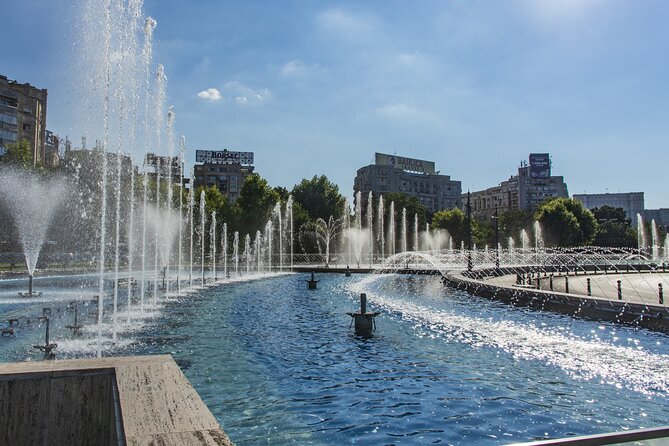
Your first stop is Piața Unirii, described as the heart of Bucharest that grew from Communist planned modernization, now regenerated into a modern, lively center. The big visual hook here is the newly restored Unirii fountains.
This is a useful start because it sets up a theme for the whole walk: the city changes, but it doesn’t fully erase. The square looks like a functional public place now, yet it carries the imprint of how the Communists organized big urban space.
It’s also a great moment to get your bearings. Once you understand where the city’s “center of gravity” sits today, the rest of the route makes more sense as you move along the avenues and civic buildings.
A different sort of day out in Romania:
- Bucharest: Dracula’s Castle, Peles Castle, & Brasov Old Town
★ 4.5 · 17,858 reviews - Bucharest: Dracula Castle, Peles Castle & Brasov Old Town
★ 4.6 · 10,891 reviews - Bucharest: Dracula’s Castle, Peleș Castle & Brașov Day Trip
★ 4.4 · 6,100 reviews - Bucharest: Palace of Parliament Tickets and Guide
★ 4.3 · 3,182 reviews
Bulevardul Unirii: the Socialist Victory Avenue, turned seasonal
Next comes Bulevardul Unirii, the former Boulevard of Socialist Victory. The tour points out this avenue as Bucharest’s “Champs-Élysées,” but with a very local twist: 17 artesian fountains, decorated to represent the four seasons.
This is the kind of detail you’ll appreciate in person. Instead of thinking only about the political slogans, you see how the regime tried to build a daily-life stage: public water features, civic art, and the idea that major avenues were for everyone.
The practical benefit is simple. You’ll get a readable, memorable landmark that’s easy to photograph and easy to talk about later, even if you only half-tracked every historical note on the first stop.
Casa Poporului (Palatul Parlamentului): the building that makes scale feel political
Then you hit the biggest visual statement on the route: Nicolae Ceaușescu’s massive Parliament Palace, also called Casa Poporului. The tour frames it as the house of the people, and it’s hard not to feel the contrast between that phrase and the reality of how enormous the structure is.
You’ll hear that it’s the heaviest building in the world. Even if you ignore superlatives, you still get the key point: scale was used as power. A project like this doesn’t just serve a government role, it broadcasts a worldview.
This stop is valuable because it’s architectural history with consequences. In cities like Bucharest, you can often learn a lot about a regime by studying what it chose to build, what it chose to dominate, and what it aimed to symbolize.
Victoria Avenue and the “banks of the system”
The walk continues along part of Victoria Avenue, lined with shops. Here the focus is less on a single monument and more on how the Communist era shaped the city’s commercial and institutional landscape.
Then you get two banks, each with a different kind of significance:
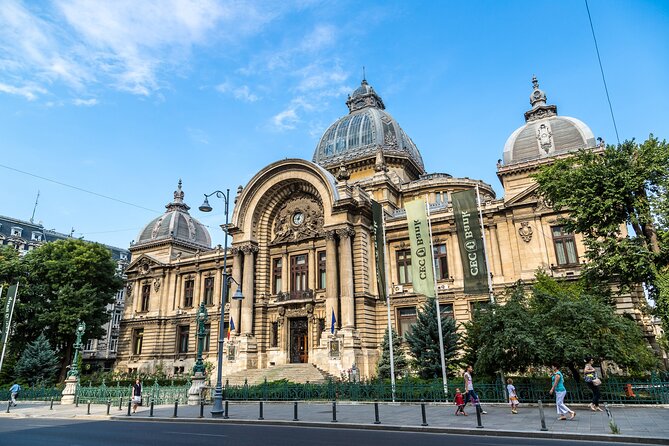
- CEC Bank, described as the people’s bank during Communist years
- Romania’s National Bank, for its grandeur and history
If you’re the type who likes seeing how politics shows up in daily life, these stops click. Banks are where everyday routines meet power. You can think of them as the regime’s financial vocabulary, written in stone and ceremony.
It’s also a good pacing change. Instead of only looking at squares and palaces, you shift your attention to the civic institutions that helped govern movement, savings, and economic identity.
University Square, the InterContinental Hotel (1971), and the theater that kept changing
At University Square, you’ll see the oldest and largest university in Bucharest, and you’ll hear about the InterContinental Hotel Bucharest, completed and opened in 1971. This pairing matters. It shows how different types of institutions, education and hospitality, were shaped inside the same broader city plan.
A few steps later, you’ll pass by the National Theatre of Bucharest. The tour emphasizes how the building’s design changed over time, and that’s a subtle but helpful idea: regimes and governments change, but buildings keep evolving with them.
This section is where you’ll likely appreciate the guide most. Multiple stops like these can feel like a blur if you’re just scanning facades. With a good English commentary, you’ll connect what you’re seeing to how culture, prestige, and public life were managed.
Revolution Square: the 1989 turn you can photograph
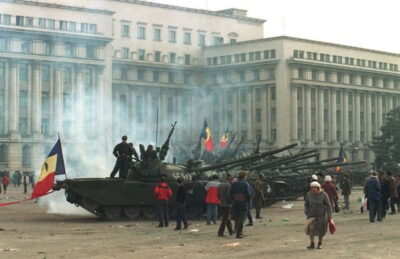
Next is Piața Revoluției (Revolution Square). This is the emotional center of the tour because it connects Communist-era authority to the events that overturned it in 1989.
The route includes memorials and key linked sites such as:
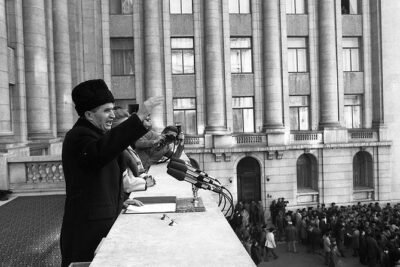
- the balcony where Nicolae Ceaușescu made his final speech
- the former headquarters of the Communist party
- the Monument of National Rebirth
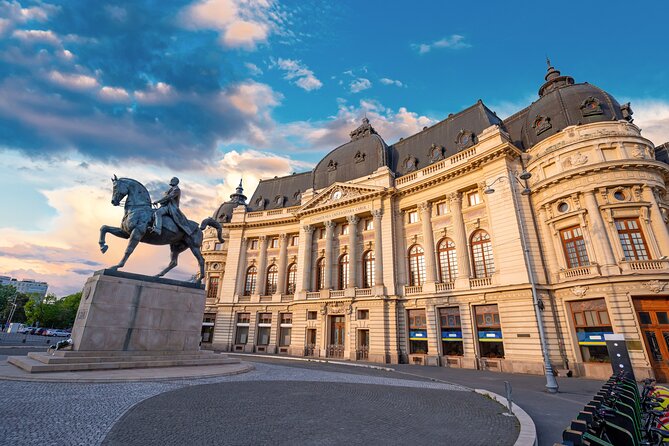
- King Carol I’s equestrian statue
- the university library and other commemorations
The tour highlights excellent photo opportunities here, and you’ll understand why once you’re there. This is a space built for public memory, and the composition of monuments makes it easy to frame meaningful images.
Even if you know the basics of 1989, walking this area with commentary gives you a stronger sense of how the revolution unfolded and how Bucharest marks that turning point in stone, bronze, and sightlines.
Iuliu Maniu’s statue and the name you’ll remember after the tour
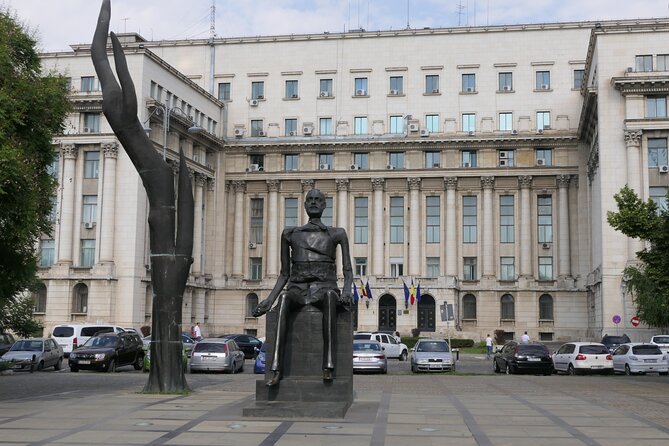
Before the final memorial stop, you’ll see the Iuliu Maniu Statue, with context about his struggle in the early years of Communism. It’s a shorter segment, but it adds an important counterweight.
Memorials sometimes tell only one side of the story. Names like Iuliu Maniu help you connect the big events to the people who resisted, survived, or pushed back when the world around them was being reorganized.
If you like history that includes individuals, this is one you’ll take home.
The Memorial of Rebirth and the scale of remembrance
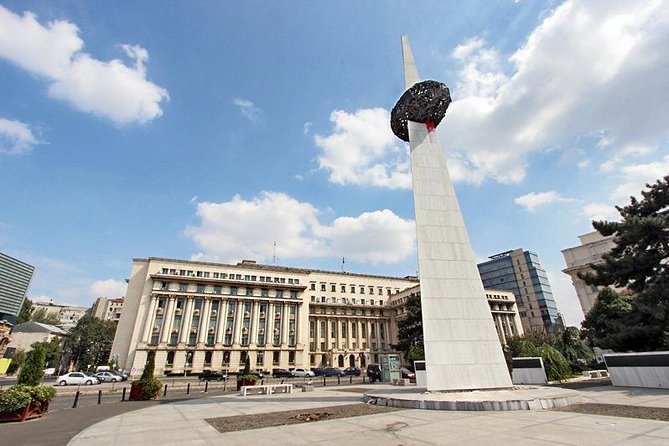
Your next major moment is the Memorial of Rebirth, a 25-meter structure commemorating the struggles and victims of the Romanian Revolution of Christmas 1989.
A 25-meter memorial is hard to ignore in real life. It gives you a physical benchmark for grief and commemoration. Even if you’re not deeply emotional on day one, you’ll feel the intention of the space.
The tour also includes a stop with a description of a historical building built over 100 years ago, made for the people of Bucharest by the people of Bucharest, plus beautiful gardens and excellent photo opportunities. Since your tour begins and ends at Manuc’s Inn, this part fits the rhythm of returning to a classic Old Centre landmark after the heavier Revolution Square material.
How to get the most from a political walking tour without burning out
A tour like this works best when you treat it like a conversation, not like a script. Ask questions when something feels unclear. In multiple reviews, guides like Alina and Claire have been praised for being willing to expand on topics and clarify points, including personal questions about life under Communism. That sort of interaction can turn a “historical overview” into something you actually remember.
Also, pacing matters. You’ll be on your feet for about three hours, and you’ll want to keep your energy stable. Bring water if you’re easily thirsty, and wear shoes you trust on uneven sidewalks.
One more practical thought: one review notes some difficulty understanding the guide’s delivery. If accents or fast speech are your weak point, do a simple thing, ask for repetition, and get back on track quickly. A good guide can usually slow down.
Value check: is this tour worth about $30.72?
At $30.72 per person for about 3 hours, this is positioned as an excellent value for a private, English-led walking tour. The private format is a big part of the value equation. You’re not splitting the guide attention among many strangers, and the guide can adjust to your curiosity.
You’re also getting pickup, and the tour uses a mobile ticket. Those small logistical pieces matter in practice, especially if your schedule is tight and you don’t want to waste time finding meeting points.
Finally, the route mixes big-name sights with “supporting actors” that help the story click: fountains with seasonal design, the two banks, University Square, and the theater. If you only wanted one monument, you could do that alone. The point here is the connective tissue, and that’s what you’re paying for.
Should you book this Communist Era Bucharest tour?
I’d book it if you want history that’s visible on the street. You’ll get a tight, guided route that links architecture and public space to how people lived, worked, and built a daily identity during Communism, then how Bucharest marks the turning point in 1989.
You should also book if you like a guide who explains context, not just dates. Reviews put a lot of emphasis on guides like Alina and Claire being thorough, passionate, and willing to clarify, and that style is a big reason this tour stays highly rated.
I’d be a little cautious if you’re extremely sensitive to the way political history is framed. One review felt the Communist period was presented with less negativity than other tours. That doesn’t make the tour “wrong,” but it does mean you should treat the tour as interpretation, not a courtroom verdict.
If that sounds like your kind of learning, this is a smart, low-friction way to experience Bucharest beyond its postcards. You’ll leave with the city’s symbols decoded, and with Revolution Square and Casa Poporului sticking in your memory for all the right reasons.
FAQ
How long is the Communist Era Bucharest tour?
It lasts about 3 hours.
Is this tour private?
Yes. It’s a private tour/activity, and only your group participates.
Is pickup included?
Pickup is offered. You meet at the meeting point or a centrally located hotel, and the tour begins at Manuc’s Inn.
What language is the tour in?
It’s offered in English.
Do you need admission tickets for the stops?
The tour notes free admission for specific stops like Unirii Square and Bulevardul Unirii, and Revolution Square is also listed with free admission in the route details.
Where is the meeting point?
Meet at Manuc’s Inn (Hanul lui Manuc), Str. Franceză 62, București, outside the main entrance.
Is a mobile ticket used?
Yes. A mobile ticket is provided.
What if I need to cancel?
You can cancel for a full refund up to 24 hours before the experience starts.
Recently listed in Bucharest
- Village Museum Bucharest Guided Tour★ 5.0 · 6 reviews
- Wine Tasting and Dinner, including Sommelier★ 5.0 · 3 reviews
- Winery touring & private wine tasting – one day private tour★ 5.0 · 3 reviews
- Bucharest: Dealu Mare Winery Private Trip with Wine Tasting★ 4.9 · 6 reviews
- Transylvania Tour: Dracula’s Castle, Peles Palace & Brasov★ 5.0 · 19 reviews
- Traditions in Bucharest: Village Museum and Wine Tasting★ 5.0 · 8 reviews
- Airport Henri Coanda (Otopeni) to Bucharest – Private Transfer – Driver★ 5.0 · 5 reviews
- Discover Medieval Transylvania Small Group Tour – 7 days★ 5.0 · 4 reviews
Communist History Tours, compared.

Parliament, Ceausescu House & Village Museum Tour
Read our review →
Bucharest Essential Tour: Old Town, Calea Victoriei & Communism
Read our review →
Communism in Bucharest – Landmarks, Museum & Communist Appetizers
Read our review →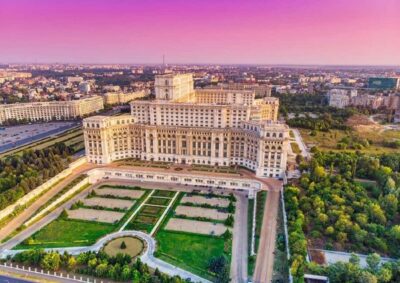
Palace of Parliament, Ceausescu House & Village Museum
Read our review →Browse the lists this tour appears in