
REVIEW · COMMUNIST HISTORY TOURS
Communism Walking Tour from Lenin to Ceausescu in Bucharest
Communism in Bucharest leaves big clues in plain sight. I like how this 2.5-hour walking tour connects big ideology to real streets, and I especially like the free-entry stops that make the history feel hands-on. One heads-up: if your English is still a work in progress, the storytelling can move quickly, and translation apps may not catch everything.
You’ll meet at Bulevardul Unirii 5 at 10:30 am and finish near Revolution Square, with a small group capped at 25. It runs in English with a mobile ticket, and you get a local guide who turns architecture and political slogans into understandable cause and effect.
In This Review
- Key things that make this walk worth your time
- Why Lenin to Ceaușescu fits Bucharest so well
- Palace of Parliament: the megalomaniac project you see first
- Manastirea Antim and the idea of a city reshaped
- Palatul Patriarhiei: Paris inspiration, Romanian politics
- Piața Unirii and the 1980s Socialist Victory Boulevard vibe
- Old Town: when the old symbol goes quiet
- University’s Square: where many victims were shot
- Royal Palace, then Palace of the Republic
- Ateneul Roman and why you see it in your pocket
- Revolution Square: the end of a speech in front of the people
- Price and timing: what $24 really buys you
- How the guide shapes the whole experience
- What this tour is best for
- Who might want to adjust expectations
- Should you book this Lenin to Ceaușescu walk?
- FAQ
- How much does the Bucharest communism walking tour cost?
- How long is the tour?
- Where does the tour start and end?
- What time does the tour start?
- Is the tour offered in English?
- What is included in the ticket price?
- Is there a cancellation option if plans change?
- What group size should I expect?
Key things that make this walk worth your time

- Street-level history at the Palace of Parliament: see the scale first, then get the context second
- A stop at Revolution Square: understand why last speeches happened in public space
- Free admission at every listed stop: more sightseeing, less extra cost
- Old city threads like Manastirea Antim: the past pushed aside, then partially preserved
- A clear route through 1980s-era landmarks: Socialist Victory Boulevard becomes the storyline
Why Lenin to Ceaușescu fits Bucharest so well
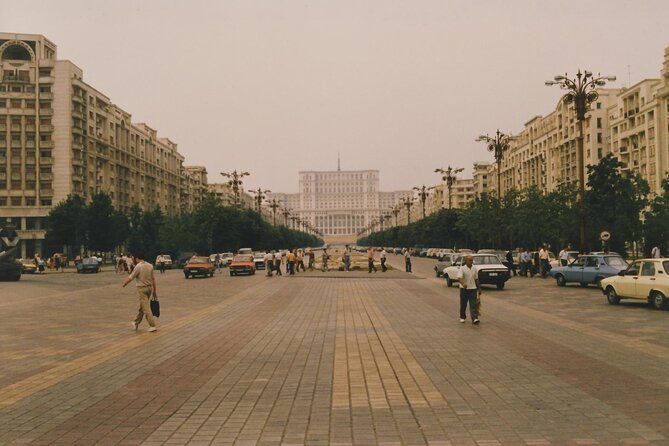
Bucharest is one of those cities where politics shows up in bricks. On this walk, you do not just look at buildings, you learn how leaders used monumental projects and central squares to shape daily life, public mood, and memory.
I like that the tour stays practical. You’re moving across key areas with short stops, so you can keep your energy and still cover a lot of ground. And because the stops you visit have free entry, you do not get stuck paying for detours that only half match your interests.
One more thing I appreciate: the tone is balanced. The tour doesn’t reduce communism to one-note propaganda. It treats the era as a system with consequences you can still read in the city layout.
More Walking Tours in Bucharest
- Bucharest: City Highlights Guided Walking Tour
★ 4.9 · 1,482 reviews - Bucharest: Communism and History Guided City Walking Tour
★ 4.9 · 918 reviews - Bucharest Highlights Walking Tour
★ 5.0 · 469 reviews
Palace of Parliament: the megalomaniac project you see first
You begin at the Palace of Parliament, right in front of the second biggest administrative building in the world. Even if you know nothing else, the sheer mass of the place hits you. It is the kind of architecture that forces attention, the kind that says power should be unavoidable.
The tour frames it as part of the last megalomaniac communist project, which matters because it changes how you interpret the building. You stop looking at it like a single landmark and start seeing it as a message built into stone: who mattered, who controlled space, and what the state wanted citizens to feel.
The stop is about 20 minutes, and admission is free. That time is usually enough to get a good orientation, plus the stories your guide ties to the larger communist “idea” behind it. The only drawback is that the Palace is so dominant that photos can tempt you to linger too long. I’d treat the first minutes as your “read the place” moment, then keep the pace.
Manastirea Antim and the idea of a city reshaped
Next you visit Manastirea Antim, a church connected to Bucharest’s older layers. It’s a sharp contrast to the Palace of Parliament, because here the story is not just about grandeur. It’s about what got threatened when planners pushed forward with a new socialist vision.
The tour points out that the church was almost demolished to make space for the Socialist Victory Boulevard. That detail is useful. It turns a simple sight into a real lesson about how regimes can rewrite a city, even when the structures existed long before the political slogan.
This stop runs about 15 minutes with free admission. It’s also a good break in the walk. When you’re dealing with heavy themes, a shorter, human-scaled stop helps your brain reset.
Palatul Patriarhiei: Paris inspiration, Romanian politics
At Palatul Patriarhiei, you get a fun and slightly uncomfortable idea: communist-era style did not always start with pure local tradition. The building is described as inspired by Garnier Opera from Paris, and the tour connects it to two storylines, democracy and the start of the communist movement.
That double connection is what makes this stop click. You see how style, institutions, and political movements can overlap in ways that are not obvious from the street. The guide’s job here is important because architecture alone can look like “just a building” unless someone helps you read the signals.
Plan for about 20 minutes. Since admission is free, you’re not paying extra for a short stop, which makes this a strong “time to meaning” ratio on the itinerary.
More Communist History Tours in Bucharest:
- The Real tour of Communism
★ 5.0 · 666 reviews - Life under Communism
★ 5.0 · 358 reviews - 3-Hour Guided Tour of Communist Bucharest
★ 4.9 · 303 reviews - Bucharest: Parliament, Ceausescu House & Village Museum Tour
★ 5.0 · 208 reviews
Piața Unirii and the 1980s Socialist Victory Boulevard vibe
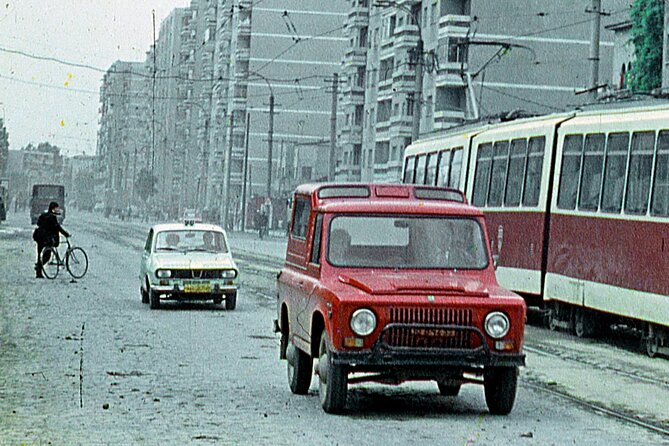
Then you move to Piața Unirii, built during the 1980s as part of the Socialist Victory Boulevard. This is where the walk shifts from symbolic buildings to how big planning projects can shape the way people cross a city.
The landmark here is described through its Dancing Fountains. That detail matters because it shows how even public spectacle can be part of a political environment. State design can mean entertainment, but it can also mean visibility and control, the kind that makes public life feel directed.
This is a 20-minute stop with free admission. It’s a good moment to step back and ask yourself what you’re seeing: did the space feel built for citizens, or for the image of the state? You do not need to answer immediately. The tour builds that understanding gradually.
Old Town: when the old symbol goes quiet
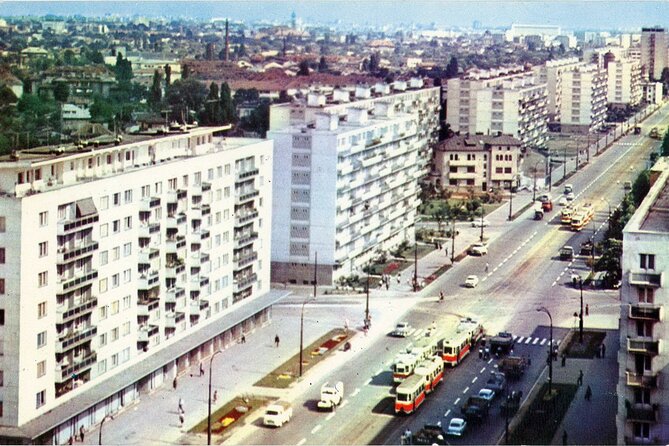
Old Town is presented as a symbol of the old regime, and it became abandoned during the communist era. That’s a powerful way to look at a city center. Instead of treating the area like it’s always been “less used,” you connect changes in life to policy choices.
This stop is about 15 minutes with free admission. It’s not about hunting for one perfect photo spot. It’s about observing how an area’s energy can change when a political system deprioritizes it.
The potential drawback: if you’re expecting a lively, restored “old town” experience, you might feel a mismatch. But if you enjoy reading cities like historical documents, this is exactly the point.
University’s Square: where many victims were shot

One of the most serious stops is University’s Square. The tour frames it as part of Romania’s uniquely bloody end to communist rule among countries in the communist block, with many victims shot here.
Even though the stop is only about 15 minutes, it’s the kind of place where you should slow your pace mentally. Your guide’s stories help transform the space from a simple name on a map into something heavier and more specific. You’ll likely find this is where the walk becomes emotionally honest, not just informational.
Admission is free, which keeps the focus on interpretation rather than ticketed attractions. If you are sensitive to intense political history, it’s worth knowing this stop is part of the emotional core of the experience.
Royal Palace, then Palace of the Republic
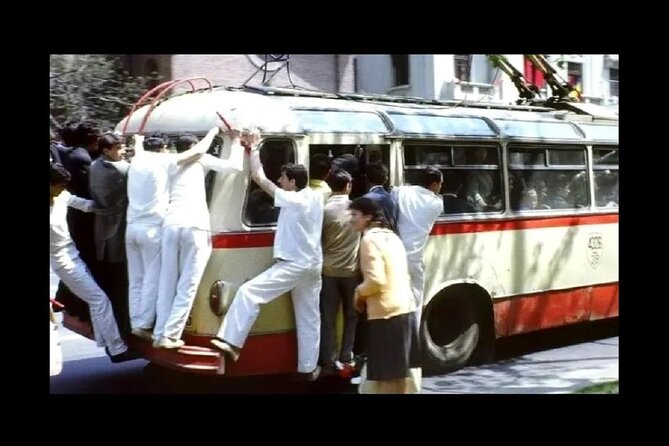
Next is Palatul Regal, now the National Art Museum. During the early years of communism, the tour describes it as becoming the Palace of the Republic, plus a protocol building.
This is one of the smartest stops in the route because it shows continuity through repurposing. The physical structure changes names and roles, but the function of power stays. The state still needs a stage. The palace just gets recast for the next political audience.
This stop is about 15 minutes with free admission. It’s long enough to see how the building anchors multiple eras, and short enough that you can keep your feet moving without burning time on museum details you might not have asked for.
Ateneul Roman and why you see it in your pocket
Ateneul Roman is one of Bucharest’s most representative buildings, and the tour adds a detail that makes it stick: it appears on the 5 lei bill. That’s a great way to connect a landmark to everyday life.
This stop is brief, about 5 minutes with free admission. That brevity can feel almost too quick, but it works as a palate cleanser. After heavier sites, you get something more cultural and recognizable, something tied to how people carry the country with them in their wallets.
If you’re the type who likes to make mental anchors, this is one of those quick stops that helps your day make sense.
Revolution Square: the end of a speech in front of the people
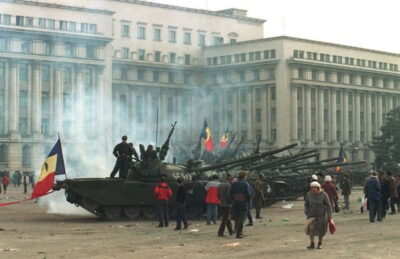
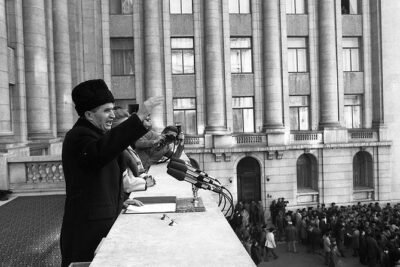
The walk closes at Piața Revolukiei, with Revolution Square as the end point. The tour explains that the main building in this square was the Central Committee of the Communist Party, and it notes that Nicolae Ceausescu held his last speech in front of the Romanian people.
That context changes everything. You stop viewing the square as “just a big plaza” and instead see it as a stage designed for mass audiences and political messaging. It also helps explain why power often chooses the most visible places when it wants to control the narrative.
This is the longest stop on the closing segment at about 25 minutes with free admission. I’d treat it as your final “connect the dots” moment. The earlier stops train you to think in themes, and Revolution Square is where those themes snap into place.
Price and timing: what $24 really buys you
At $24 per person for about 2 hours and 30 minutes, this tour is priced like a solid city activity rather than a premium museum day. Since the listed stops all have free admission, you are mostly paying for interpretation, not entry fees.
You also get a small-group format, with a maximum of 25 travelers, which usually helps the guide manage the pace and answer questions. The fact that it’s commonly booked around 50 days in advance is a good sign. It implies people find value in this format, not just the “name recognition” of communist history.
One practical detail that matters for your day: it starts at 10:30 am. If you like your sightseeing early, great. If you prefer late starts, this one may feel a bit structured, because it’s designed to fit into a half-day schedule.
How the guide shapes the whole experience
The biggest strength is the guiding. In the feedback I’ve read, guides such as Alex and Lucia get praise for storytelling, humor, and the ability to connect major buildings and ideas into one understandable narrative.
That storytelling quality is not just entertainment. It changes how you remember what you saw. Instead of separate landmarks, you leave with a storyline about how regimes use architecture and public space.
You’ll also want to consider language. One person noted an English challenge even with Google Translate, so if English is not your comfort zone, plan for it. You can still enjoy the walk, but your best outcome comes when you’re able to follow spoken explanations even if you miss a few details.
What this tour is best for
You’ll like this if you want a city walk that explains why the places look the way they do. If you enjoy comparing old and new city layers, this route gives you that contrast quickly, from churches and old-regime symbols to 1980s planning and monumental administrative architecture.
It also suits groups and mixed ages. One of the guide mentions in the feedback described a multi-generation group enjoying the same content together. That’s a good sign that the pacing and explanation can work across different comfort levels with history.
Who might want to adjust expectations
If you’re hoping for museum-like depth at every stop, this may feel brief. Most stops are around 15 to 20 minutes, so you get a guided hit of context rather than hours inside one major site.
Also, if you dislike political history, you’ll feel the topic weight in multiple stops, especially University’s Square and Revolution Square. This is a “read the city through communism” experience, not a light sightseeing sampler.
Should you book this Lenin to Ceaușescu walk?
I think you should book it if you want an efficient, affordable way to understand how communism left visible marks on Bucharest. The route is strong, the stops are free to enter, and the guide-led storytelling seems to be the thing that makes people leave feeling it all clicked.
Skip or choose something else if you only want quiet, purely scenic sightseeing, or if you need slow, museum-level time at major sites. For most people who like walking and context, though, this is a smart use of half a day.
If you do book, bring comfortable shoes and keep your phone charged for photos. Then let the guide do the connecting, especially at Palace of Parliament and Revolution Square, where the city stops being background and starts being evidence.
FAQ
How much does the Bucharest communism walking tour cost?
The price is $24.00 per person.
How long is the tour?
The tour lasts about 2 hours 30 minutes.
Where does the tour start and end?
The meeting point is Bulevardul Unirii 5, București 040101, Romania, and the tour ends at Revolution Square, Piața Revoluției, București, Romania.
What time does the tour start?
The start time is 10:30 am.
Is the tour offered in English?
Yes, it is offered in English.
What is included in the ticket price?
A local guide is included. The stops listed have admission tickets free.
Is there a cancellation option if plans change?
Yes. You can cancel for a full refund up to 24 hours in advance of the experience start time.
What group size should I expect?
The tour has a maximum of 25 travelers.
Recently listed in Bucharest
- Village Museum Bucharest Guided Tour★ 5.0 · 6 reviews
- Wine Tasting and Dinner, including Sommelier★ 5.0 · 3 reviews
- Winery touring & private wine tasting – one day private tour★ 5.0 · 3 reviews
- Bucharest: Dealu Mare Winery Private Trip with Wine Tasting★ 4.9 · 6 reviews
- Transylvania Tour: Dracula’s Castle, Peles Palace & Brasov★ 5.0 · 19 reviews
- Traditions in Bucharest: Village Museum and Wine Tasting★ 5.0 · 8 reviews
- Airport Henri Coanda (Otopeni) to Bucharest – Private Transfer – Driver★ 5.0 · 5 reviews
- Discover Medieval Transylvania Small Group Tour – 7 days★ 5.0 · 4 reviews
Communist History Tours, compared.
Parliament, Ceausescu House & Village Museum Tour
Read our review →
Bucharest Essential Tour: Old Town, Calea Victoriei & Communism
Read our review →
Communism in Bucharest – Landmarks, Museum & Communist Appetizers
Read our review →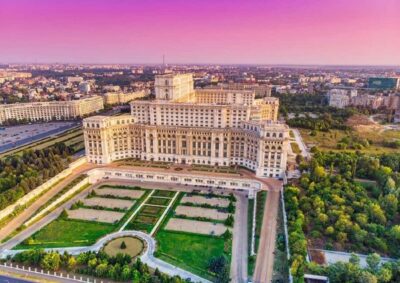
Palace of Parliament, Ceausescu House & Village Museum
Read our review →Browse the lists this tour appears in