
REVIEW · COMMUNIST HISTORY TOURS
Bucharest Under Communism: Life, Terror & Hope
Communism in Bucharest leaves visible scars. This focused walking tour connects 45 years of rule to real places you can still see, from dictator Nicolae Ceaușescu’s grand plans to the street protests that helped end the system. You also get a clear thread through how everyday life got shaped, tightened, and then broke open in 1989.
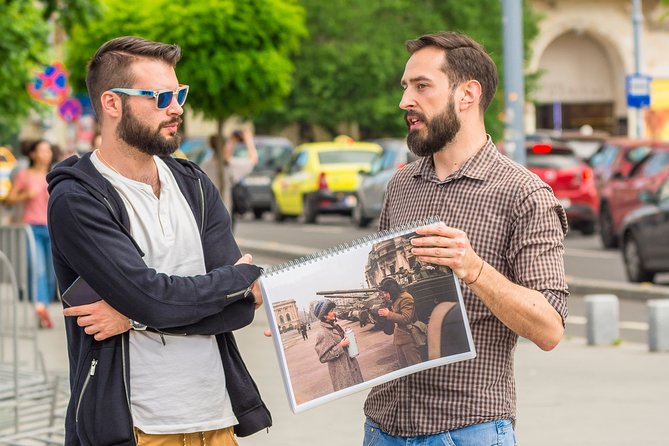
I love that it is paced for learning without turning into a lecture. Two things I liked a lot are the way your guide builds context with historical photos and the fact you actually visit the big symbols, not just hear about them.
One drawback to consider: this is heavy subject matter. If you prefer light sightseeing only, the themes of terror, persecution, and the violent aftermath may feel intense for a walking outing.
In This Review
- Key highlights you will feel fast
- Where Bucharest’s Communist Story Comes Alive on Foot
- Unirii Square: The Plan Behind the Postcards
- The Palace of the Parliament: A Monument to Cost and Control
- Mihai Voda Monastery: When Religion Survived by Hiding
- Revolution Square: The Places Where Power Talked, Then Broke
- University Square: When Protesters Paid the Highest Price
- Timing, pacing, and what to expect from 3.5 hours
- Price and value: what $23.22 buys you in real life
- Who should book this tour, and who might want to skip it
- Should you book Bucharest Under Communism: Life, Terror and Hope?
- FAQ
- How long is the tour?
- What time does the tour start?
- Where is the meeting point and where do I end?
- Is the tour private, and how many people can join?
- Are admission tickets included?
- Is the ticket mobile?
- What happens if the weather is poor?
- Can I cancel for a full refund?
Key highlights you will feel fast
- Small group size with a private guide capped at 15 people, so questions do not get lost
- Unirii Square and the Socialist Boulevard show how planning became propaganda
- Palace of the Parliament views explain how the building was tied to shortages in the 1980s
- Mihai Voda Monastery reveals how some churches survived when others were destroyed
- Revolution Square connects the start and end of the 1989 uprising with specific Ceaușescu landmarks
- University Square protests in 1989 zeroes in on the cost of demanding freedom
Where Bucharest’s Communist Story Comes Alive on Foot
Bucharest can feel like a city of layers, but this tour helps you read the layers in order. You start in central squares and end in the heart of the revolution sites, so the geography becomes part of the lesson instead of a distraction.
The best part is that the guide ties power to physical space. When you stand near a monument or along a grand avenue, you start to understand the goal behind it: control. Then you also see the counterpoint, the places where crowds pushed back.
Your guide experience can vary by person, but the tone from the guides named here is consistent. Laura and Tamar, for example, are described as funny in the way they keep things moving, and serious in the way they answer questions. One common theme is that they use photos to help you visualize what you are looking at now.
More Communist History Tours in Bucharest:
- Bucharest: Communism and History Guided City Walking Tour
★ 4.9 · 918 reviews - The Real tour of Communism
★ 5.0 · 666 reviews - Life under Communism
★ 5.0 · 358 reviews
Unirii Square: The Plan Behind the Postcards
Unirii Square is the first big stop, and it is a strong start because it sets the “why” before you get into the “what.” This square was designed during the last phase of communism in Romania, so it is not just old city design. It is late-stage messaging.
Look around and you will feel the scale. The square is known for its fountains, and it sits along what used to be called the Victory of Socialism Boulevard, Bucharest’s biggest avenue. In practical terms, that matters because it shapes how the city moves and where people gather.
Your guide will help you connect the dots between architecture and dictatorship. Standing by the boulevard is a way to grasp Ceaușescu’s megalomaniac vision, not as a slogan but as a lived street plan. The point is not to admire it like a monument. The point is to understand how grand design can be used to overwhelm ordinary people.
This is also one of the stops where admission is free, so you can spend your energy on the storytelling.
The Palace of the Parliament: A Monument to Cost and Control
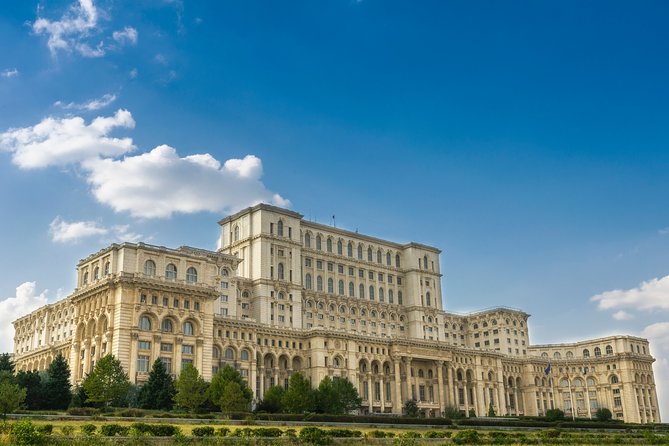
The Palace of the Parliament is the star of the skyline and, for this tour, the star of the moral argument too. You learn it is the second largest building in the world after the Pentagon and also the most expensive administrative building. Those facts matter because they explain why the regime needed massive effort and why the results look so extreme.
What hits hardest is the linkage to human strain. Your guide frames the building as something made through heavy resources and labor, including shortages of all kinds during the 1980s. In other words, the palace is not just architecture. It is a record of what the regime demanded from people.
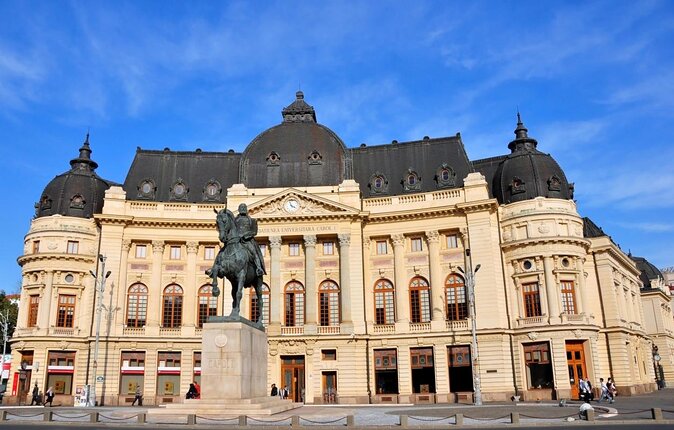
You also get a useful comparison building across the way, the Academia Română. The tour explains that it was built in a similar style and that it was intended for the use of Ceaușescu’s wife, Elena Ceaușescu. That detail makes the whole area feel more coherent, like you are standing inside the regime’s private bubble made public.
A practical note: admission is not included for the Palace of the Parliament. So if you want interior time, plan for that additional cost. If you mostly care about viewpoints and context, you can still get a lot from the exterior angles your guide points out.
Mihai Voda Monastery: When Religion Survived by Hiding
This stop shifts the tone in a smart way. After you have seen state power expressed in huge projects, Mihai Voda Monastery gives you the smaller, stubborn side of life under communism.
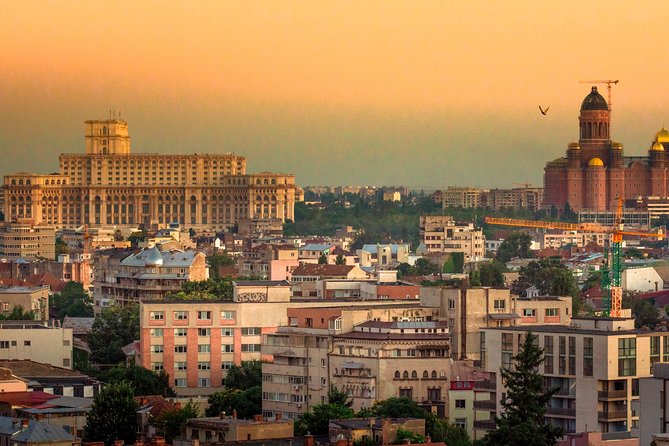
Your guide will point out something visually striking: the way some churches were destroyed while others survived. The detail that really sticks is how some religious spaces ended up hidden behind utilitarian buildings, which shows how the Communist Party handled religion, not by eliminating it everywhere, but by controlling visibility.
Mihai Voda Church itself is described as a Middle Ages religious place that survived the demolition frenzy. That makes it more than an old church. It becomes a time capsule of what Bucharest looked like before the system reshaped the city.
You will get about 30 minutes here, and admission is free. That combination is practical: you can absorb a lot without feeling rushed, and you are not paying extra for each stop.
A different sort of day out in Romania:
- Bucharest: Dracula’s Castle, Peles Castle, & Brasov Old Town
★ 4.5 · 17,858 reviews - Bucharest: Dracula Castle, Peles Castle & Brasov Old Town
★ 4.6 · 10,891 reviews - Bucharest: Dracula’s Castle, Peleș Castle & Brașov Day Trip
★ 4.4 · 6,100 reviews - Bucharest: Palace of Parliament Tickets and Guide
★ 4.3 · 3,182 reviews
Revolution Square: The Places Where Power Talked, Then Broke
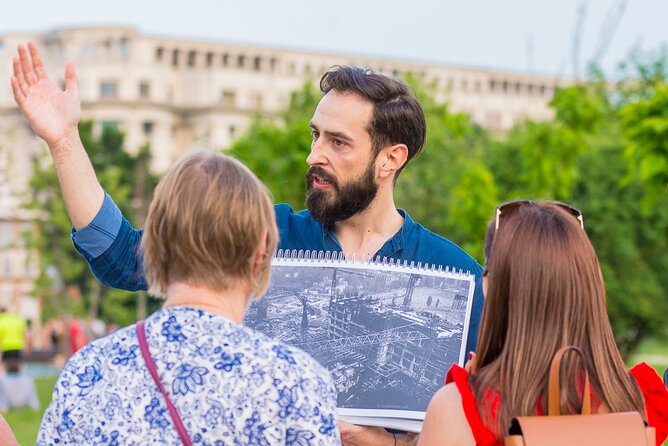
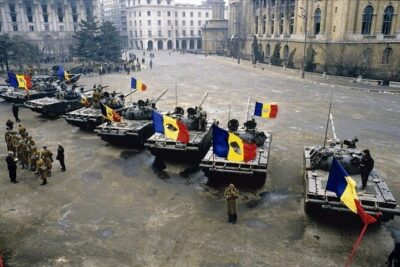
Revolution Square is where the tour turns from history lesson into cause-and-effect. This is one of the key symbolic spaces, because it connects the communist regime’s beginnings to the protests that helped end it in 1989.
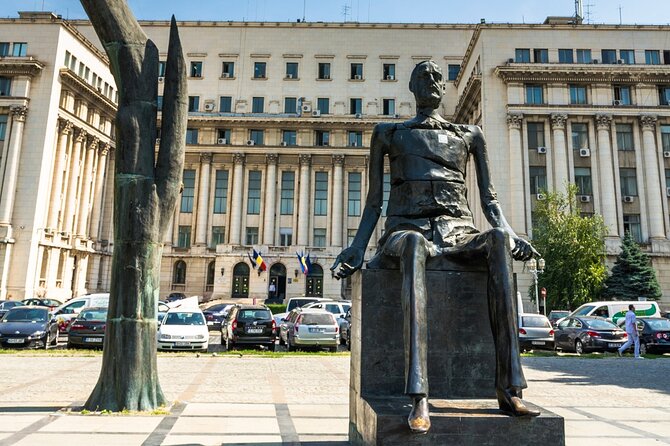
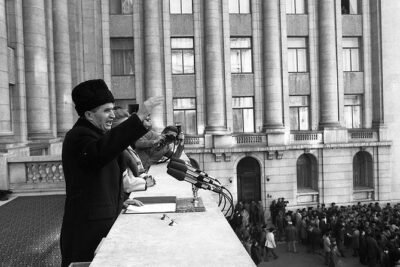
Your guide helps you read multiple scenes in one place. You will see the building that housed Ceaușescu’s office, plus the balcony where the dictator had his last speech. Those details matter because they turn an abstract timeline into specific architecture.
Then the tour also brings in the crowd story. You learn about the places that saw the first mass demonstration in Bucharest, and you hear what happened to demonstrators who opposed totalitarianism, plus the story behind the monument dedicated to them. The goal is to make the square feel like a timeline you can walk through, not a single landmark.
Another practical plus is that admission is listed as free at this stop. So you can spend your time listening and looking instead of planning extra ticketing.
University Square: When Protesters Paid the Highest Price
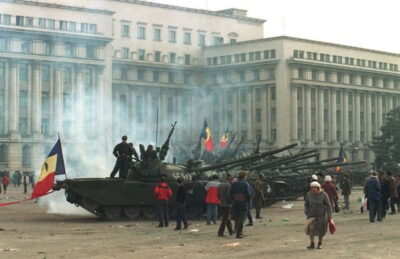
The final major stop is University Square, also tied directly to 1989. This is where the main protests against communism took place, with hundreds massacred for their belief in a free society.
That is the moment where the tour stops being about buildings and becomes about consequences. Your guide keeps the focus on what people risked, and why that risk mattered. If you pay attention here, you leave with a more serious understanding of what regime collapse actually cost in human terms.
Admission is included at this stop. You should still come prepared for an emotional topic, because the square’s meaning is not subtle.
The time you spend here is about 30 minutes, which is long enough to hear the explanation but short enough that you are not stuck in a heavy scene longer than you need to be.
Timing, pacing, and what to expect from 3.5 hours
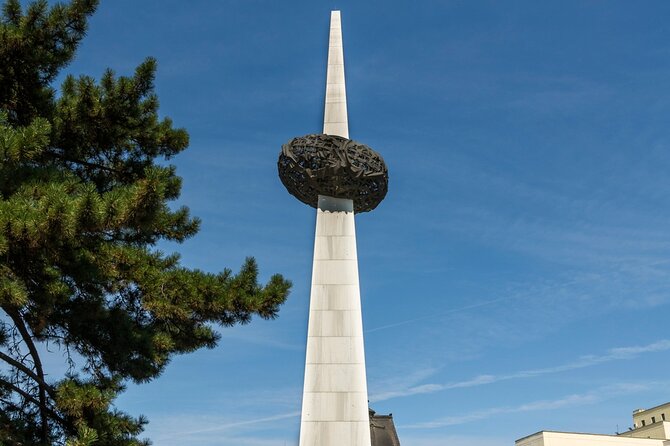
This tour runs about 3 hours 30 minutes. Since it is a walking format, you get a natural rhythm: short blocks of explanation, quick shifts between squares and monuments, then pauses where your guide highlights key visual cues.
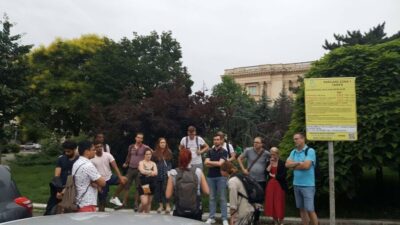
The group size is capped at 15, which helps keep the experience from feeling like a moving classroom. The guides described here also seem to stay open to questions, including additional history and architecture details, and that is often what makes a tour feel worth your time. You are not just checking boxes. You are building a mental map.
Your meeting point is in central Bucharest at Piața Sfântul Anton 64, București 030167, Romania. The tour starts at 4:00 pm, and you end at Revolution Square, Piața Revoluției. The end point is listed as about 5 minutes from Old Town, which is perfect for continuing your evening with dinner and a slower walk.
One small travel tip: because you are outside and walking between major sites, wear comfortable shoes. Also, bring a layer. Even when the day is fine, squares and wide avenues can feel cooler in the evening.
Price and value: what $23.22 buys you in real life
At $23.22 per person, this is positioned as a straightforward, budget-friendly way to understand modern Romanian history through the city you can see.
Where the value shows up:
- You get a dedicated guide experience focused on one theme, instead of scattering information across general sightseeing.
- You visit major sites tied to the story: Unirii Square, the Palace of the Parliament, Mihai Voda Monastery, Revolution Square, and University Square.
- Several stops have free admission listed (Unirii Square, Mihai Voda Monastery, Revolution Square), and one stop has admission included (University Square).
Where you should think ahead:
- Palace of the Parliament admission is listed as not included. If you want interior access, budget extra.
- The time is only about 3.5 hours, so if you want deep museum time or extra entry tickets everywhere, you might still want to plan a separate day.
Also, the ticket is mobile. That keeps things simple on arrival, especially if you are juggling other plans that day.
Who should book this tour, and who might want to skip it
This tour is a great fit if you want real context for Bucharest’s biggest communist-era landmarks. It is also ideal for first-time visitors who want to get their bearings fast and learn the meaning behind what looks like “just big buildings.”
It also works well if you like guided storytelling that mixes architecture with human stories. The named guides here, Laura and Tamar, are repeatedly described as both entertaining and very prepared, and that balance is exactly what makes heavy history easier to follow.
I would think twice if you want only upbeat sights. You are walking through memorial spaces and learning about violent repression and the aftermath of 1989. That can be meaningful, but it is not a casual stroll.
Should you book Bucharest Under Communism: Life, Terror and Hope?
If your goal is to understand Bucharest as a political city, not just a pretty one, I think you should book it. The structure is tight, the stops are central, and the guide focus on symbols plus consequences makes the experience feel coherent from the first square to the final one.
Just be ready for serious themes, and if Palace of the Parliament interior access matters to you, plan for extra admission since it is not included. Do that, bring comfortable shoes, and you will leave with a much clearer picture of how power reshaped streets, buildings, and lives in communist Romania.
FAQ
How long is the tour?
The tour lasts about 3 hours 30 minutes.
What time does the tour start?
The start time is 4:00 pm.
Where is the meeting point and where do I end?
You meet at Piața Sfântul Anton 64, București 030167. The tour ends at Revolution Square, Piața Revoluției, București, and this area is listed as about 5 minutes from the Old Town.
Is the tour private, and how many people can join?
It includes a private guide, and the tour has a maximum of 15 travelers.
Are admission tickets included?
Admission is free for Unirii Square, Mihai Voda Monastery, and Revolution Square. University Square includes admission. Palace of the Parliament admission is not included.
Is the ticket mobile?
Yes, the tour uses a mobile ticket.
What happens if the weather is poor?
The experience requires good weather. If it is canceled due to poor weather, you will be offered a different date or a full refund.
Can I cancel for a full refund?
Free cancellation is available. You can cancel up to 24 hours in advance for a full refund. Canceling less than 24 hours before the start time does not provide a refund.
Recently listed in Bucharest
- Village Museum Bucharest Guided Tour★ 5.0 · 6 reviews
- Wine Tasting and Dinner, including Sommelier★ 5.0 · 3 reviews
- Winery touring & private wine tasting – one day private tour★ 5.0 · 3 reviews
- Bucharest: Dealu Mare Winery Private Trip with Wine Tasting★ 4.9 · 6 reviews
- Transylvania Tour: Dracula’s Castle, Peles Palace & Brasov★ 5.0 · 19 reviews
- Traditions in Bucharest: Village Museum and Wine Tasting★ 5.0 · 8 reviews
- Airport Henri Coanda (Otopeni) to Bucharest – Private Transfer – Driver★ 5.0 · 5 reviews
- Discover Medieval Transylvania Small Group Tour – 7 days★ 5.0 · 4 reviews
Communist History Tours, compared.
Parliament, Ceausescu House & Village Museum Tour
Read our review →
Bucharest Essential Tour: Old Town, Calea Victoriei & Communism
Read our review →
Communism in Bucharest – Landmarks, Museum & Communist Appetizers
Read our review →
Palace of Parliament, Ceausescu House & Village Museum
Read our review →Browse the lists this tour appears in