
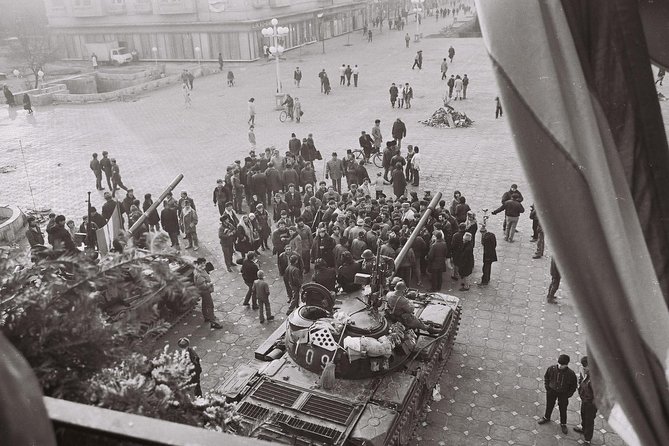
REVIEW · COMMUNIST HISTORY TOURS
Bucharest: Communist Bike Tour
Communist Bucharest moves fast on two wheels. This 4-hour ride strings together the big turning points of the era, from the first Romanian parliament to Revolution Square, with stops that make the politics feel real. I especially like how it uses cycling to connect landmarks you would otherwise see as separate photos. One drawback to plan for: it is not a fit for limited mobility, and you do need to be comfortable riding in busy city traffic.
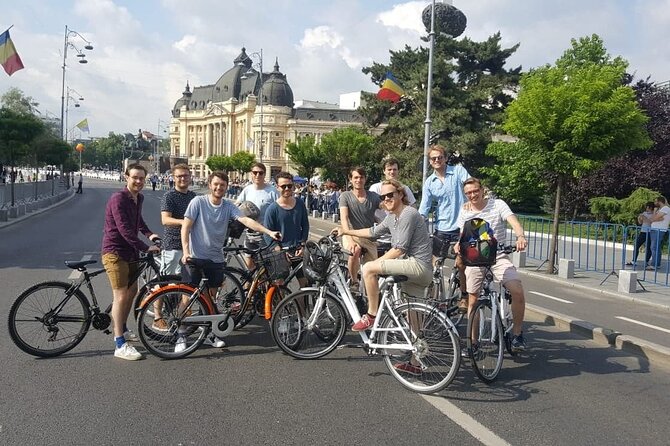
What makes this tour work is the human detail in the storytelling. The guides, like Horia and Alex, tend to explain context in plain language, not just dates, and that helps the whole route click into place. You also get the practical stuff handled for you: bikes, helmets, and bike locks are included, so you can focus on the streets and the sights.
In This Review
- Communist Bike Tour: The Stops That Actually Make Sense
- Setting Off From Hanu’ Berarilor And Getting Oriented
- Old Town Framing: Why Communism Hit the Historic City Hard
- Coral Temple And Early 1920s Politics You Might Not Expect
- From the Bomb Attack Site To the First Romanian Parliament
- Stalin-Era Elite Housing And Soviet Occupation on Two Wheels
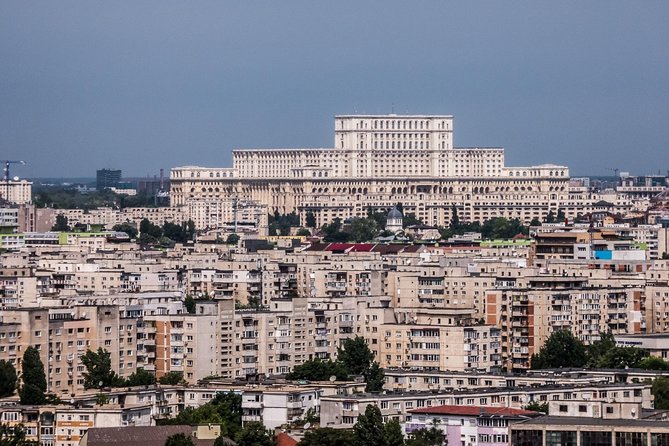
- Casa Radio: The Biggest Unfinished Communist Urban Project
- Revolution Square, Ceaușescu, And the Moment the Story Turned
- National History Museum: What Reshaping Looks Like Up Close
- Biking Comfort, Traffic Reality, and the Value of 4 Hours
- Who This Tour Fits Best, and Who Should Skip It
- Should You Book the Bucharest Communist Bike Tour?
- FAQ
- How long is the Bucharest Communist Bike Tour?
- What is the price per person?
- Where does the tour meet?
- Is the tour guide available in English?
- Are helmets, bikes, and bike locks included?
- Is food or drinks included?
- Is the tour suitable for people with limited mobility?
Communist Bike Tour: The Stops That Actually Make Sense
Old town framing before you start pedaling
You begin in Bucharest’s old center with a guide setting the tone about how the communist era harmed parts of the historic city.
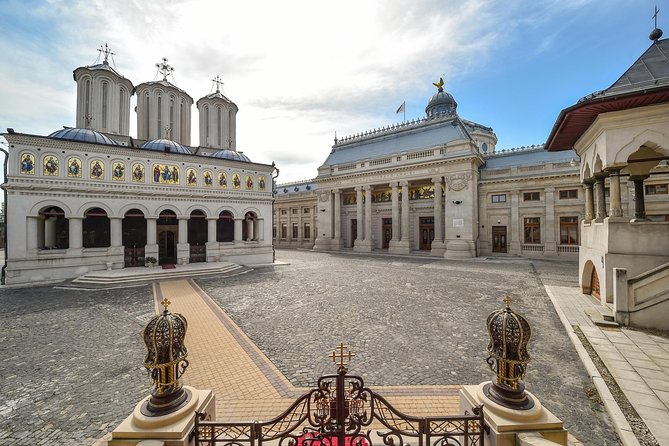
Coral Temple as a political clue, not just a building
The Jewish community links to early 1920s communist momentum come up right after the first orientation.
The bomb attack site and the first Romanian parliament
You cycle to the location tied to the communist attack against the democratic Romanian government, then continue to the parliament site.
Stalin-era elite housing neighborhood
After the communist movement, the route shifts to the Soviet-occupation period and the neighborhood where Russian army generals lived.
Casa Radio and the unfinished megaproject feeling
You pass by the biggest unfinished communist urban project, Casa Radio, and it lands differently when you see it from street level.
Revolution Square and the Central Committee finale
You end at the political heart of the uprising area, where Ceaușescu gave his last speech and the revolution began in December 1989.
Setting Off From Hanu’ Berarilor And Getting Oriented
Your tour meets just across from Hanu’ Berarilor (Casa Oprea Soare). It is a handy landmark, because once you spot it, you can get your bearings fast before the group rolls out.
You’ll start in the old city center. The first minutes matter here. The guide doesn’t treat communism as distant history, instead they point out how the era damaged the historic fabric of Bucharest, and that sets you up to notice what you see later. The route then becomes a kind of moving timeline, not a random grab bag of monuments.
Practical note: you’ll want comfortable shoes. Even though you are biking, there are still moments when you step off the bike to look, listen, and take in scale.
More Bike Tours in Bucharest
- Bucharest: Half Day Bike Tour
★ 4.9 · 379 reviews - Bucharest Half a Day Bike Tour
★ 5.0 · 325 reviews - Bucharest: 2-Hour City Highlights Bike Tour
★ 4.8 · 269 reviews
Old Town Framing: Why Communism Hit the Historic City Hard
One reason I think this tour is worth your time is that it starts with the question of place. Bucharest is not just a backdrop. The guide explains the major role the communist era played in ruining parts of the historic area, and suddenly the rest of the stops feel less like separate sites and more like a single cause-and-effect story.
As you pedal, you get an added advantage that walking tours can’t always deliver. Movement forces you to keep scanning the street-level details, where the shape of the city tells you what was prioritized. You’ll also get a feel for how far apart the big decision points are, and how much urban power can change a city’s layout.
If you are hoping for a purely relaxed ride, temper expectations. This is an interpretive history tour, and you’ll spend time paying attention.
Coral Temple And Early 1920s Politics You Might Not Expect
Next up is Coral Temple. The stop is not just there because it is a notable building. The guide brings in a specific angle: the Jewish community were among the initiators of the communist movement in the early 1920s.
That detail changes the lens. It nudges you away from a simple good-versus-bad story and toward how political movements actually grow from people and networks in the real world. Even if you already know Romania’s twentieth-century history in broad strokes, this kind of connecting thread helps you understand why different communities were pulled into the same currents.
This is also a good moment to listen closely. The tour moves quickly after this, so if you want to understand the logic of the route, the Coral Temple stop is one of your best chances.
From the Bomb Attack Site To the First Romanian Parliament
You then continue to the site tied to a communist bomb attack against the democratic Romanian government. It is one of those stops where the street feels normal, but the story underneath is not.
From there, you cycle to the first Romanian parliament. This is a highlight for a reason. Parliament is the symbol of decision-making and legitimacy, and when you place it in sequence after the attack, you can feel the era’s pressure, and you see how violence and politics were tangled together.
The bigger value here is context. Guides like Horia and Alex tend to explain not just what happened, but the historical, economic, and political background around it. That matters because otherwise the route risks becoming a set of plaques you glance at and move on.
The drawback to consider is time and attention. The tour covers a lot of ground in only 4 hours, so you’ll want to be ready to absorb facts while still moving.
More Communist History Tours in Bucharest:
- Bucharest: Communism and History Guided City Walking Tour
★ 4.9 · 918 reviews - The Real tour of Communism
★ 5.0 · 666 reviews - Life under Communism
★ 5.0 · 358 reviews - 3-Hour Guided Tour of Communist Bucharest
★ 4.9 · 303 reviews
Stalin-Era Elite Housing And Soviet Occupation on Two Wheels
After the communist movement, the tour shifts into the post–World War II period, when Romania ended up under Soviet occupation for 12 years. The route then passes through a neighborhood where Russian army generals who were in charge of ruling lived during that time.
This section works because it turns abstract occupation into something you can picture. You are not just hearing about power. You are cycling through the built environment that supported it.
You’ll likely notice how different “elite” neighborhoods feel compared to other parts of the city. Even without measuring anything, scale and street design tend to give you clues about who those spaces were meant for. And because you cover distance by bike, you can compare neighborhoods in a way that feels more immediate than reading alone.
If you have only limited experience riding in traffic, take this seriously. The tour assumes you can ride comfortably through dense city traffic.
Casa Radio: The Biggest Unfinished Communist Urban Project
Then comes one of the most visually striking parts of the route: Casa Radio, described as the biggest unfinished communist urban project. Unfinished buildings carry a specific kind of message. They suggest ambition interrupted, resources redirected, and plans that outlived the people who started them.
From a practical traveler perspective, this is also a smart stop. You can look at the structure while still staying in motion. You get to understand it as part of the city’s texture, not a distant landmark you have to schedule a separate trip for.
If you enjoy seeing how political systems show up in architecture, this stop is a keeper. Even if you know the name, seeing it within the tour’s storyline makes the “why it never finished” feel like more than trivia.
There can be a little waiting around viewpoints, depending on traffic and the group pace. It is normal, but if you prefer constant movement, this is the part where you might feel the rhythm slow briefly.
Revolution Square, Ceaușescu, And the Moment the Story Turned
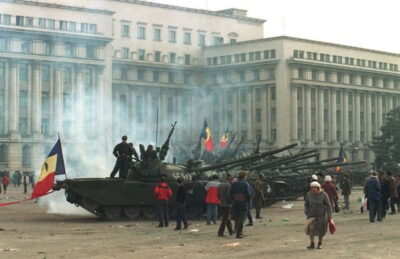
The tour includes Revolution Square, a key highlight for anyone trying to connect the communist era to the end of it. This is where the narrative shifts from occupation and control to revolt and change.
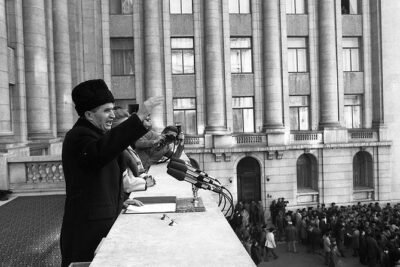
Later, the route brings you to the Communist Central Committee area. The guide tells you that Ceaușescu held his last speech there and that the revolution began in December 1989.
This is one of those endings that can hit harder than you expect, even if you came expecting history trivia. The guide’s job is to connect symbolism to sequence: speeches, power centers, and how quickly the story can flip.
From the bike saddle, you also get a sense of how visible power was meant to be. These places were built to project authority. Seeing them in the context of a street route makes that message feel less like a theory.
National History Museum: What Reshaping Looks Like Up Close
The last major sight you cycle past is the National History Museum. It is described as the biggest unfinished communist building, with buildings that were reshaped by the communist regime during its flourishing times.
What I find useful here is the idea of “reshaping.” This is not only about what was built. It’s about what was changed, and what that change tried to communicate. The museum’s story, as presented on the tour, becomes a physical record of the regime’s priorities.
You don’t need to be an architecture expert to get something from it. When you’re riding the streets and the guide explains what the regime did to these spaces, you start reading the city differently. The buildings stop being background and become evidence.
One thing to keep in mind: since you’re on a bike tour, you may not spend as long inside any museum spaces, if any are accessed at all. This experience is about seeing and understanding from the street and in sequence, not doing a full museum visit.
Biking Comfort, Traffic Reality, and the Value of 4 Hours
The tour is 4 hours and priced at $53 per person. That sounds straightforward, but the real value is in the mix. You get a live English-speaking guide, a bike, a helmet, and a bike lock. Those items add up, and they also remove hassle so you can spend your energy on the route.
What you are buying is efficient coverage plus context. You’ll visit major communist-era landmarks that are spread out enough that a taxi plan would feel wasteful and a walking plan would be too slow. Cycling is the middle path, and the stops were chosen to tell a continuous story.
For best results, you should be:
- Comfortable riding a bike in city streets
- Ready to listen for history and politics while moving
- Interested in Romania’s twentieth-century shifts and how they show up in neighborhoods and architecture
If you have mobility limitations, or you are worried about managing getting on and off the bike, this is not the right match.
Also, food and beverages are not included. Bring your own water plan. If you need a snack, you’ll want to handle it separately, or plan to eat before and after so the tour stays smooth.
Who This Tour Fits Best, and Who Should Skip It
This tour fits travelers who want more than postcard sightseeing. If you like your history tied to real places, this route gives you a strong backbone: old city damage, communist rise, Soviet occupation, elite neighborhoods, unfinished projects, and the revolution’s climax.
It also fits people who want a strong start to a Bucharest visit. One review called it a great way to learn enough about the city to handle the rest of your trip, and I agree with the logic. After this, you’ll recognize what you are seeing when you walk around on your own.
Skip it if you:
- Need accessibility-friendly pacing or routes, because it is not recommended for people with limited mobility
- Prefer slower, quieter sightseeing where you are not sharing road space with traffic
- Want a food-focused experience, since there is no food included
If you meet the basics, you’ll likely leave with a clearer mental map. More importantly, you’ll understand the city not as one era, but as layers competing with each other.
Should You Book the Bucharest Communist Bike Tour?
Yes, if you want a compact, high-impact way to understand Bucharest’s communist-era footprint. The price is reasonable for what you get, and the bike format helps you cover big sites without turning the day into a logistics headache.
I’d especially book it if you care about how politics becomes architecture and neighborhoods. Stops like Coral Temple, the first Romanian parliament area, Casa Radio, the National History Museum, and the Central Committee finale form a route that makes cause-and-effect feel tangible.
I would not book it if traffic comfort is a concern or if mobility is limited. This tour is made for active travelers who can ride, listen, and look without needing frequent rest stops or step-by-step accessibility support.
FAQ
How long is the Bucharest Communist Bike Tour?
It lasts 4 hours.
What is the price per person?
The price is $53 per person.
Where does the tour meet?
Meet just across from the restaurant Hanu’ Berarilor (Casa Oprea Soare).
Is the tour guide available in English?
Yes, the live tour guide is English.
Are helmets, bikes, and bike locks included?
Yes. Bikes, helmets, and bike locks are included in the ticket price.
Is food or drinks included?
No, food and beverages are not included.
Is the tour suitable for people with limited mobility?
It is not recommended for people with limited mobility, and it is not suitable for people with mobility impairments.
Recently listed in Bucharest
- Village Museum Bucharest Guided Tour★ 5.0 · 6 reviews
- Wine Tasting and Dinner, including Sommelier★ 5.0 · 3 reviews
- Winery touring & private wine tasting – one day private tour★ 5.0 · 3 reviews
- Bucharest: Dealu Mare Winery Private Trip with Wine Tasting★ 4.9 · 6 reviews
- Transylvania Tour: Dracula’s Castle, Peles Palace & Brasov★ 5.0 · 19 reviews
- Traditions in Bucharest: Village Museum and Wine Tasting★ 5.0 · 8 reviews
- Airport Henri Coanda (Otopeni) to Bucharest – Private Transfer – Driver★ 5.0 · 5 reviews
- Discover Medieval Transylvania Small Group Tour – 7 days★ 5.0 · 4 reviews
Communist History Tours, compared.


Parliament, Ceausescu House & Village Museum Tour
Read our review →
Bucharest Essential Tour: Old Town, Calea Victoriei & Communism
Read our review →
Communism in Bucharest – Landmarks, Museum & Communist Appetizers
Read our review →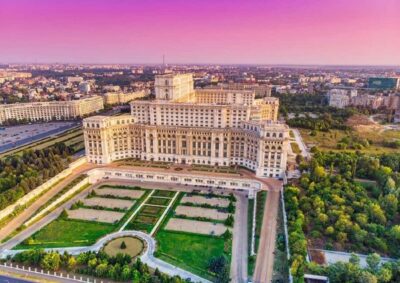
Palace of Parliament, Ceausescu House & Village Museum
Read our review →Browse the lists this tour appears in