

REVIEW · COMMUNIST HISTORY TOURS
Bucharest Communism: From Lenin to Ceausescu
Concrete, slogans, and secrets line the streets. This is a focused walk through Bucharest’s Communist Victory axis where I like how the story pins big ideology to real damage, including the demolition of three neighborhoods and 40,000 households, right at the Palace of the Parliament. I also like the payoff, with the route steering you to Revolution Square for the end of Nicolae Ceausescu’s reign, including the revolution, trial, and execution.
One thing to consider: it is not a casual sightseeing loop. You’ll cover repression, prison, the secret police, and life under a dictatorship, plus entrance tickets are not included, so if you want inside access at certain stops you may need to pay separately.
In This Review
- Key points before you go
- Bulevardul Unirii start, and why the route choices matter
- Palace of the Parliament: scale, propaganda, and the bill that came due
- Lenin to Ceausescu: the ideology timeline built for real understanding
- Antim Monastery and Patriarchal Cathedral: where faith and power collide on the same streets
- Bucharest fountains, Piata Unirii, and Old Town: the city’s everyday face
- University Square, Royal Palace, and the Romanian Athenaeum: culture under political pressure
- Revolution Square finale: the end game at the place people still remember
- Food rationing and daily life: the numbers make the system feel real
- Price and value at $23 for a 2.5-hour guided walk
- Who this tour fits best, and who should think twice
- Should you book? My take on booking this communist walk
- FAQ
- How long is the tour?
- How much does it cost?
- Where does the tour start and where does it end?
- Where exactly is the meeting point?
- What is included in the price?
- Are entrance tickets included?
- What languages is the tour offered in?
- What should I do before the tour starts?
- Can I get a refund if I cancel?
- Is there a reserve and pay later option?
Key points before you go
- Second-largest administrative building: the Palace of the Parliament explained as a political machine, not just a landmark
- A hard number story: three demolished neighborhoods and 40,000 households put human cost on the megalomania
- Ceausescu’s rise, in sharp facts: 4 classes, 6 years in prison, then 25 years of dictatorship
- From ideology to street life: Lenin to Ceausescu, with rationing and the secret police in the mix
- Revolution Square finale: a guided walkthrough of the end game, including trial and execution
- Guides praised for delivery: many guests highlight clear, funny storytelling, with guides such as Horia or Alex often singled out
Bulevardul Unirii start, and why the route choices matter
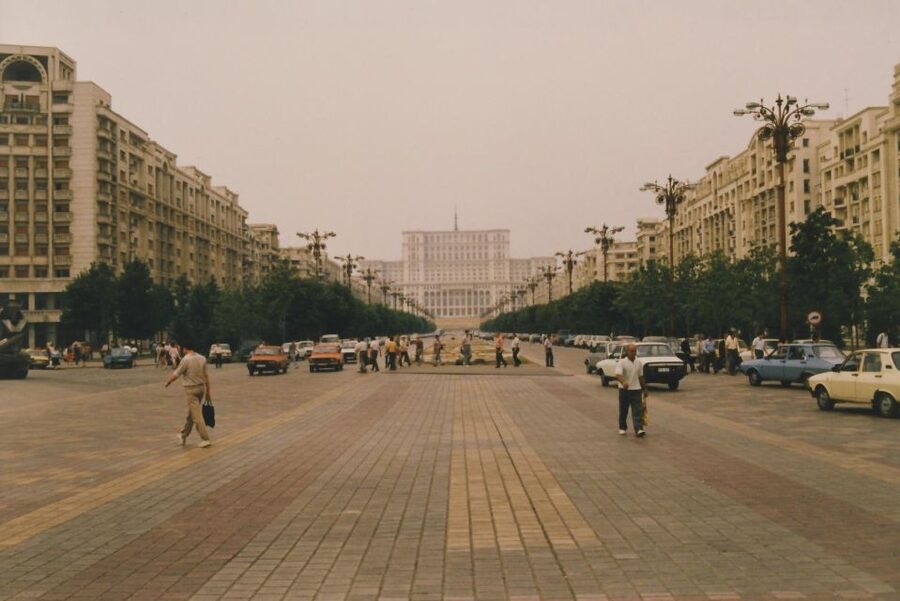
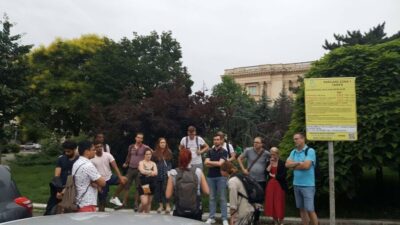
The tour starts at Bulevardul Unirii 5, meeting next to The Coffee shop Constitutiei. You’ll want to show up about 10 minutes early, because the whole point is to start on time and keep the momentum. The first stretch sets the tone: this isn’t just a history lecture, it’s a walk where the guide uses what you can see outside to explain what the regime tried to build inside people’s heads.
The route is built on contrast. You begin near the political core of communist Bucharest, where broad avenues and monumental scale were meant to signal power. Then the tour weaves toward older landmarks, churches, and cultural sites, so you can feel how communism tried to reorganize public life while the city’s earlier identity stayed visible.
Even if you’re new to Romanian history, this structure helps you keep the big timeline straight. You’re not just hearing that dictatorship happened, you’re shown how the regime used architecture and space as propaganda, and how later political events took shape in the same city streets.
More Communist History Tours in Bucharest:
- Bucharest: Communism and History Guided City Walking Tour
★ 4.9 · 918 reviews - The Real tour of Communism
★ 5.0 · 666 reviews - Life under Communism
★ 5.0 · 358 reviews
Palace of the Parliament: scale, propaganda, and the bill that came due
If you’ve seen photos of Bucharest’s Palace of the Parliament, you know it looks unreal. On this tour, I’d focus less on the wow-factor and more on the message the building carries. You’ll get a guided look at the Chamber of Deputies Palace, and the story behind it is the point.
This building is often described as the second largest administrative building in the world, and the tour treats that size as political language. The guide explains how the project aimed to turn the city into a stage for the regime, starting with grand planning and ending with forced erasure. One of the tour’s most striking elements is the account of the demolition of three neighborhoods and 40,000 households. That isn’t background trivia. It’s the reason many people come away feeling unsettled, because the concrete has a receipt.
A practical note: the itinerary gives you only about 20 minutes at this stop for the guided portion and sightseeing time. That’s enough to get the main ideas, but it also means you should not plan to linger on details that are not covered. If you love architecture and want deeper time inside, you may want to pair this tour later with extra time on your own.
Lenin to Ceausescu: the ideology timeline built for real understanding
The tour title promises a sweep from Lenin to Ceausescu, and it works best when you remember this is not a pure academic timeline. I like the way the guide connects events and ideas to what the people on the ground actually experienced. You start with the ideology backdrop, then the story narrows until Ceausescu’s Romania looks like a specific system, not a vague chapter in history.
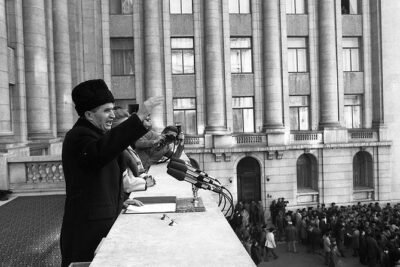
Nicolae Ceausescu’s rise is framed with blunt biographical details: 4 classes, 6 years in prison, and then 25 years of dictatorship. Those are the kind of facts that help you understand why the regime’s leadership style mattered. The tour also points to his “poor background” as part of the rise-to-power narrative, then builds from there into how the system functioned.
You’ll also hear comparisons made to other hereditary-style totalitarian dynasties, with the tour describing Ceausescu’s regime as among the most oppressive in the Eastern Bloc. The guide’s angle is to show how Romania’s dictatorship felt structurally different, not just harsh in general.
One standout approach, based on what many guests praised, is that some guides start with philosophy and ideology before moving into practical outcomes. For example, guests have mentioned lessons that begin with Hegel, Marx, and Engels, then connect the dots to the feudal backdrop of Eastern Europe and the Bolshevik revolution. That kind of setup helps when the rest of the tour gets heavy, because you can see how ideas were turned into institutions.
Antim Monastery and Patriarchal Cathedral: where faith and power collide on the same streets
After the Palace, the tour turns you toward places that feel older, quieter, and more human. You’ll visit Antim Monastery (about 10 minutes) and then the Patriarchal Cathedral (about 20 minutes), with guided time and short walks between viewpoints.
These stops matter because the story of communism is not just about what the regime promoted. It’s also about what it tried to control or reshape. Churches in Bucharest are not just religious sites here. They are landmarks of continuity, so when the guide talks about state pressure and the secret police, you can better grasp the stakes of public life.
There’s also a pacing benefit. In a tour that includes prison time, oppression, and executions, you need pauses where the city’s older texture shows through. Monastery stone, cathedral scale, and the surrounding neighborhood streets give your brain somewhere to rest before you move back into the political storyline.
A different sort of day out in Romania:
- Bucharest: Dracula’s Castle, Peles Castle, & Brasov Old Town
★ 4.5 · 17,858 reviews - Bucharest: Dracula Castle, Peles Castle & Brasov Old Town
★ 4.6 · 10,891 reviews - Bucharest: Dracula’s Castle, Peleș Castle & Brașov Day Trip
★ 4.4 · 6,100 reviews - Bucharest: Palace of Parliament Tickets and Guide
★ 4.3 · 3,182 reviews
Bucharest fountains, Piata Unirii, and Old Town: the city’s everyday face
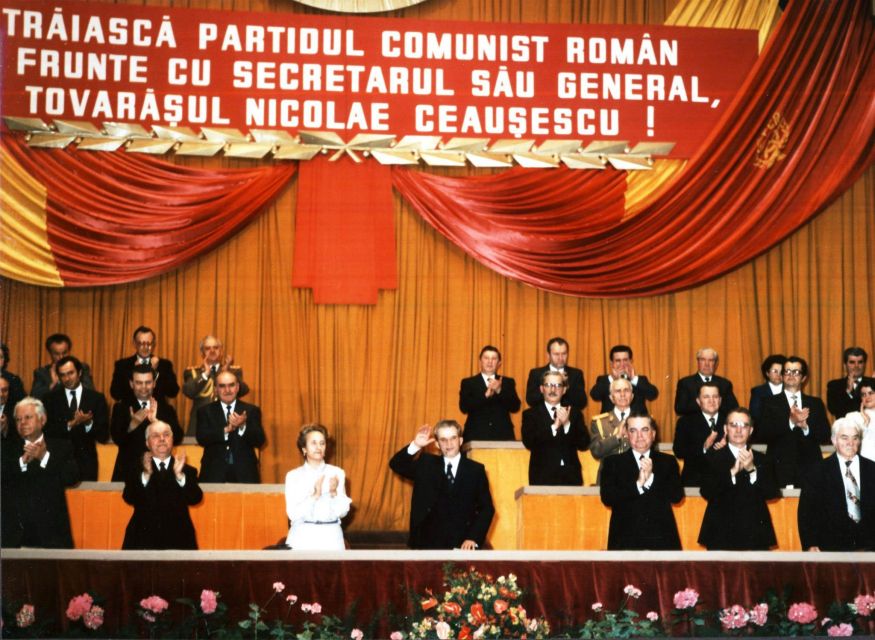
The tour includes a quick stop for Bucharest Fountains (about 5 minutes), then Piața Unirii (also about 5 minutes), before moving into Old Town (about 15 minutes). These short segments can feel like “in-between” on paper, but they actually do important work in the tour’s storytelling.
First, fountains and plazas are how regimes often project normalcy. Even when the political message is harsh, public space still has to look like life goes on. Second, the old streets help you ground the story. A dictatorship can feel abstract until you see how it sits on top of daily routines, markets, and neighborhood routes.
In Old Town, the guide’s strength is typically the way they connect architecture and street layout to political control. You’re not just hearing what communism did. You’re noticing how the city’s layers overlap.
University Square, Royal Palace, and the Romanian Athenaeum: culture under political pressure
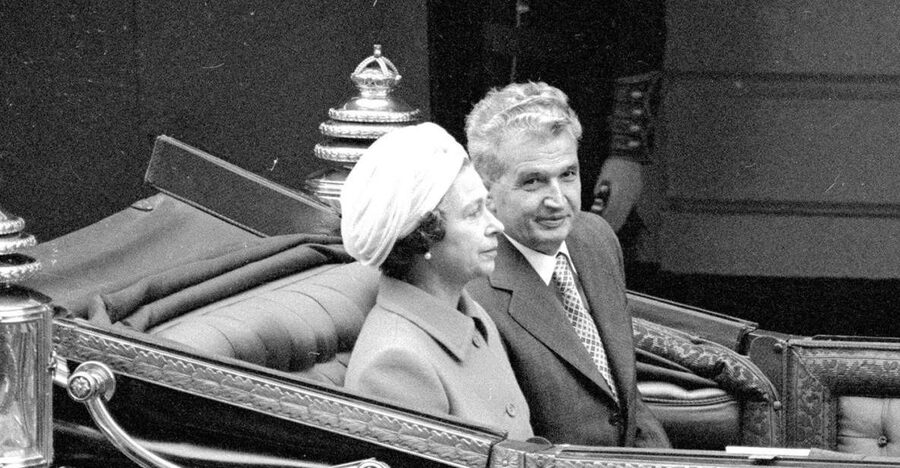
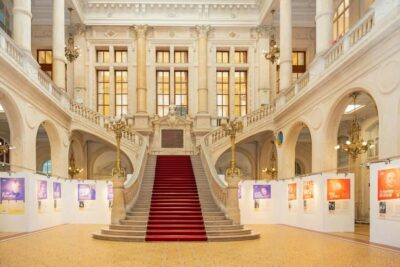
Next you’ll pass through a zone that represents Bucharest’s cultural and institutional identity. The itinerary includes University Square (about 5 minutes), the Royal Palace of Bucharest (about 10 minutes), and the Romanian Athenaeum (about 10 minutes).
Here’s what you should watch for mentally: communism did not only need factories and police. It also needed legitimacy. That means controlling what gets funded, what gets celebrated, and which past gets emphasized. When the guide talks about society being shaped before communist rule and then reshaped again afterward, these landmarks become proof of the tug-of-war.
The Royal Palace and Athenaeum in particular are excellent for this kind of interpretation because they symbolize older civic identity. You can compare them to the later “monumental project” logic of the Palace of the Parliament, and you start to see how different regimes tried to tell different stories about what Romania should be.
Time is short at each stop, so you’ll mostly take away the big thread: how cultural institutions fit into power structures. If that is your kind of history, you’ll leave with stronger context for the rest of Bucharest.
Revolution Square finale: the end game at the place people still remember
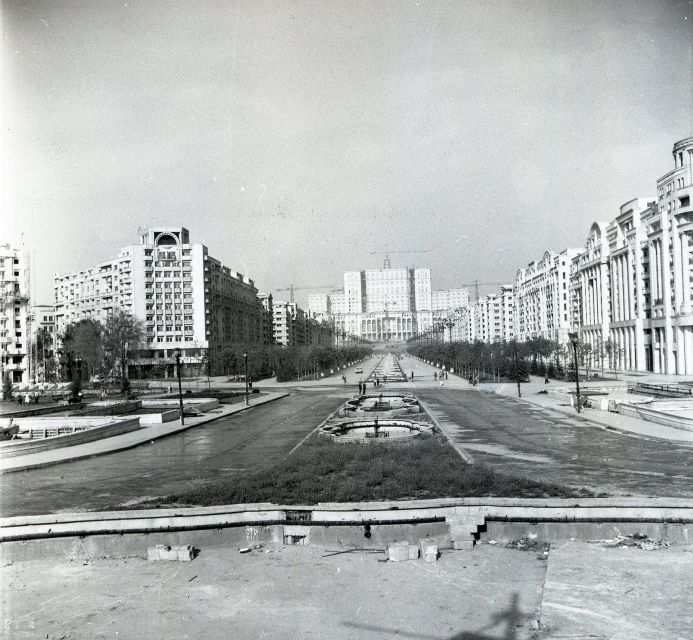
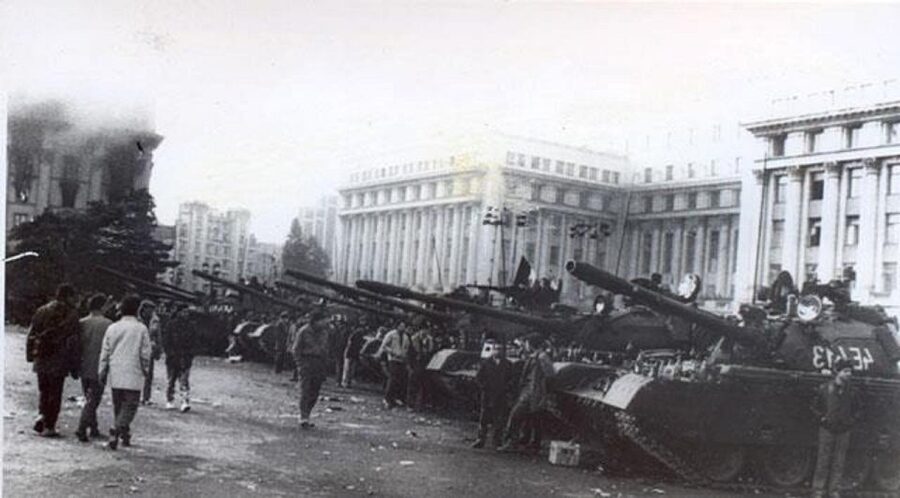
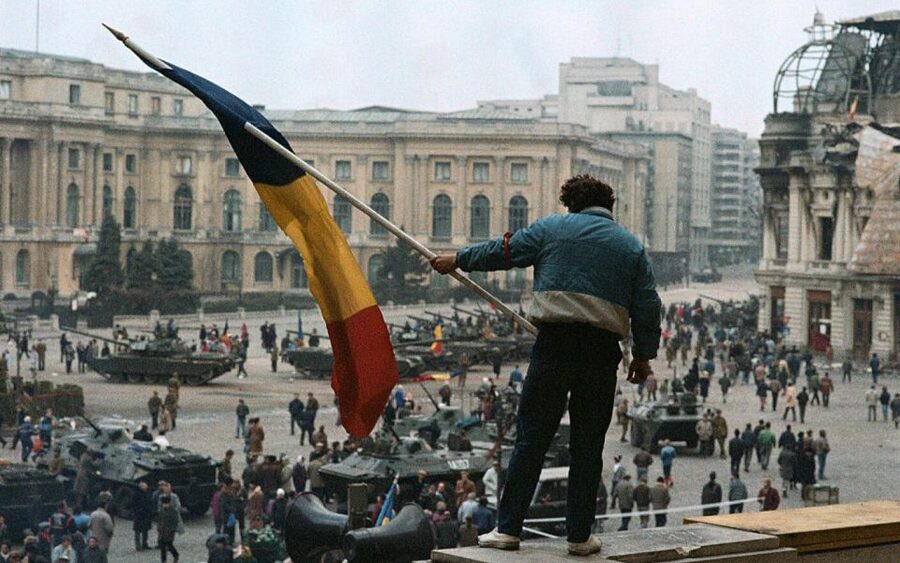
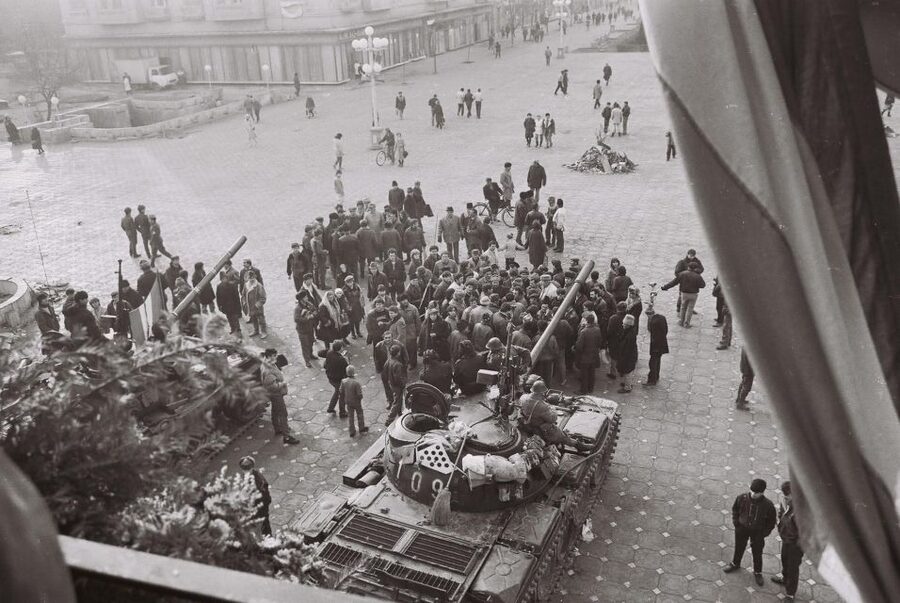
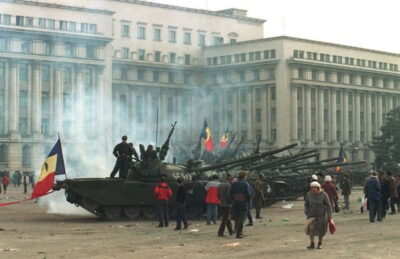
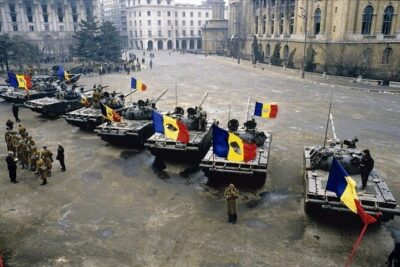
The last stop is Revolution Square (about 20 minutes), and you also finish there. This is where the tour shifts from “how the system worked” to “how it broke.” The guide covers Ceausescu’s last days, the revolution, the trial, and the execution, and the story ends with the idea of agitators plotting the regime’s fall.
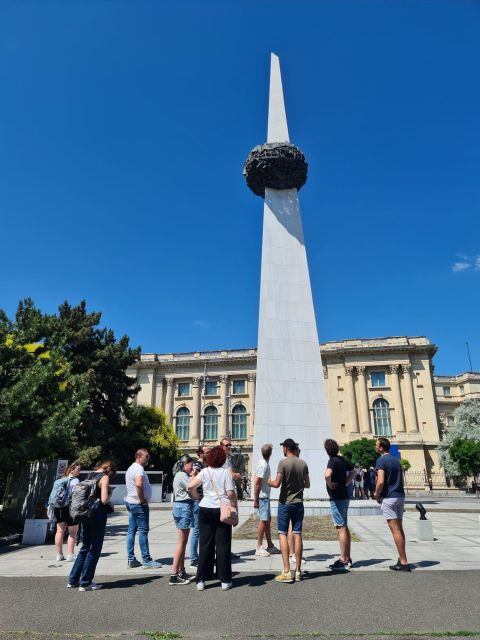
Even if you’re not emotionally invested in political history, Revolution Square can hit hard because it is where modern Romania’s public memory concentrates. You can feel how a place becomes symbolic after events, not just during them.
This is also where the guides’ presentation style matters most. Multiple guests praised the end segment as a clear, engaging explanation. That matters because trial and execution details are easy to mangle if they are presented in a dry timeline. The better guides slow down, focus on cause and effect, and help you connect the revolution to what had already been happening under repression.
Food rationing and daily life: the numbers make the system feel real
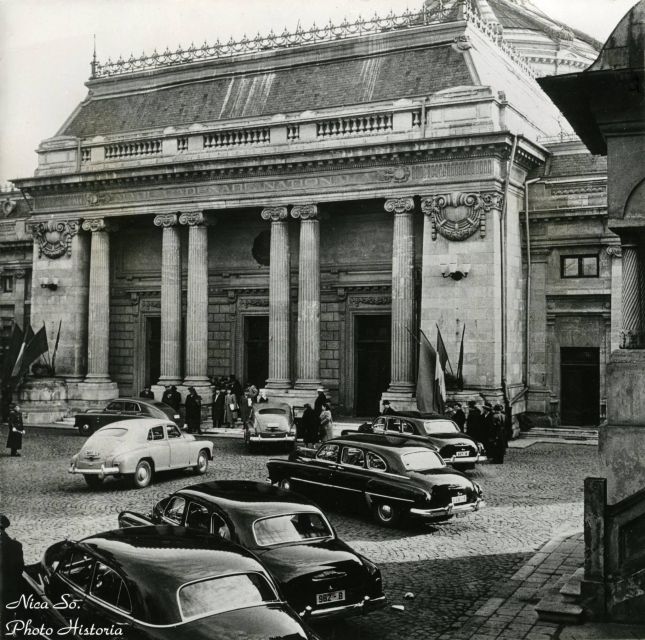
One of the tour’s listed highlights is life under communism, including food rationing and the role of the secret police. This can sound like generic “dictatorship facts” until the guide adds the specific numbers.
For example, the tour includes a striking ration reference: 2000 calories/day, described with 500 g of cheese, 10 eggs, and 1.5 kg of meat per month. Even if you immediately question how that math was presented or justified, the point is to show how the regime talked about consumption and scarcity. It’s not only what people got, it’s how the system explained it and enforced it.
When the guide ties rationing to surveillance, you get a clearer picture of how control worked beyond the courtroom. Secret police power is not just about arrests, it’s about fear shaping behavior, silence shaping communities, and shortages shaping decisions.
Be ready for this part to feel uncomfortable. That’s normal. Just make sure you go with the mindset that discomfort is part of understanding, not a reason to shut down.
Price and value at $23 for a 2.5-hour guided walk
At $23 per person for 2.5 hours, you’re paying mostly for interpretation and access to context, not for paid museum time. The tour includes a local guide, which is where the value really shows. Many guests highlighted that guides like Horia and Alex keep people engaged, use humour well, and handle questions with confidence. If you’ve ever walked Bucharest with no explanation, you know how quickly monuments turn into background.
One caution on value: entrance tickets are not included. So if you care about stepping inside for the fullest experience, plan for possible extra costs at sites that require them. The itinerary includes visits and sightseeing, but not everything may be fully covered without an additional ticket.
Still, for the money, this tour is a solid deal if your goal is orientation and understanding. You cover key Bucharest zones in a compact time window, and you get a guided narrative from ideology to dictatorship to revolution, ending where the story closes.
Who this tour fits best, and who should think twice
This is a strong match if you:
- Want a guided route through major Bucharest landmarks tied to 20th century political reality
- Like history with cause and effect, including how ideology becomes everyday life
- Prefer a structured walk of about 2.5 hours instead of a scattered self-guided day
- Are comfortable with heavy topics like prison, repression, and execution
It may not be the best fit if you want a light, purely architectural stroll. This tour spends time on oppressive realities, and the route is designed to make those realities feel tangible.
If you’re traveling with limited time in Bucharest, this kind of “political spine” tour can also be an excellent first step. It gives you language for what you’ll see later on your own.
Should you book? My take on booking this communist walk
I’d book it if you’re curious about how Bucharest’s big spaces were used to control people, and you want the Ceausescu story explained in a way that connects to what you can actually see on the street. At $23 for 2.5 hours with a live local guide, it’s good value, especially since guides are praised for humour, engagement, and answering questions.
I’d hesitate if you want only cheerful sightseeing, or if you strongly prefer tours that include all entrance fees. With the tour’s focus on dictatorship and the note that entrance tickets are not included, you’ll need to be okay with both the tone and the practical add-ons.
FAQ
How long is the tour?
The tour duration is 2.5 hours.
How much does it cost?
The price is $23 per person.
Where does the tour start and where does it end?
It starts at Bulevardul Unirii 5 and finishes at Revolution Square.
Where exactly is the meeting point?
Meet next to The Coffee shop Constitutiei.
What is included in the price?
A local guide is included.
Are entrance tickets included?
No. Entrance tickets are not included.
What languages is the tour offered in?
The tour is offered in English and Romanian.
What should I do before the tour starts?
Please arrive 10 minutes before the activity starts.
Can I get a refund if I cancel?
Yes, you can cancel up to 24 hours in advance for a full refund.
Is there a reserve and pay later option?
Yes, you can reserve now and pay later.
Recently listed in Bucharest
- Village Museum Bucharest Guided Tour★ 5.0 · 6 reviews
- Wine Tasting and Dinner, including Sommelier★ 5.0 · 3 reviews
- Winery touring & private wine tasting – one day private tour★ 5.0 · 3 reviews
- Bucharest: Dealu Mare Winery Private Trip with Wine Tasting★ 4.9 · 6 reviews
- Traditions in Bucharest: Village Museum and Wine Tasting★ 5.0 · 8 reviews
- Transylvania Tour: Dracula’s Castle, Peles Palace & Brasov★ 5.0 · 19 reviews
- Airport Henri Coanda (Otopeni) to Bucharest – Private Transfer – Driver★ 5.0 · 5 reviews
- Discover Medieval Transylvania Small Group Tour – 7 days★ 5.0 · 4 reviews
Communist History Tours, compared.
Parliament, Ceausescu House & Village Museum Tour
Read our review →
Bucharest Essential Tour: Old Town, Calea Victoriei & Communism
Read our review →
Communism in Bucharest – Landmarks, Museum & Communist Appetizers
Read our review →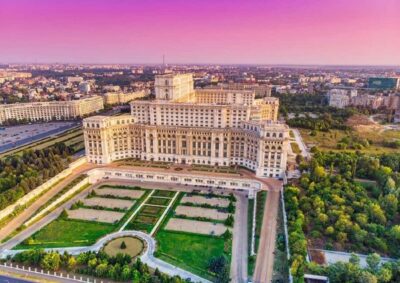
Palace of Parliament, Ceausescu House & Village Museum
Read our review →Browse the lists this tour appears in