
REVIEW · 7-DAY EXPERIENCES
Transylvanian week
Transylvania is a drive you feel in your bones. This private tour strings together Sibiu, Sighisoara, Brasov, and Dracula-country stops with a licensed guide, so the places make sense fast. I especially like the included rhythm: guided walking time in the cities, then real fortress and castle stops that connect to the region’s layered cultures.
Two things that are genuinely good value for your time: you get 6 nights in 3-star superior hotels or guesthouses with breakfast, and you travel by air-conditioned private vehicle between stops so you are not juggling trains, timetables, or transfers. One consideration: the itinerary is packed with driving and site time, so it is not a slow, pick-your-own-adventure pace.
In This Review
- Key highlights to know before you go
- How This Bucharest-Based Route Keeps Transylvania Simple
- What a Licensed Guide Adds at Cozia, Corvin, and Vlad’s Footsteps
- Day-by-Day: From Cozia Monastery to Sibiu’s Squares and Council Tower
- Day 1: Cozia Monastery, then Sibiu old town
- Potential drawback for Day 1
- Day 2: Corvin Castle and Alba Iulia Fortress, Where Medieval Power Shows
- Castelul Corvinilor (Corvin Castle) and John Hunyadi’s legacy
- Alba Iulia fortress and Saint Michael Cathedral
- Night in Sibiu again
- Day 3: UNESCO Fortress Churches and Sighisoara at Late Afternoon
- Biertan Fortified Church
- Malancrav fortified Lutheran Church frescoes
- Sighisoara Clock Tower and UNESCO citadel
- Day 4: Saschiz, Viscri, Prejmer, then Brasov’s Rope Street
- Saschiz fortified church on the way out
- Lunch in Viscri with Prince Charles ties
- Prejmer fortified church, one of seven UNESCO Saxon sites
- Brasov historical center after check-in
- Day 5: Poiana Brasov Cable Car, Bran Castle, Rasnov, and the Black Church
- Poiana Brasov and the cable-car view
- Bran Castle and Dracula legend
- Rasnov fortress from afar
- Black Church in Brasov
- Day 6: Peleș Castle in Sinaia, then Stavropoleos Monastery in Bucharest
- Peles Castle in the Prahova Valley
- Stavropoleos Church and guided Bucharest time
- Price and Value: What $2,166.68 Is Really Covering
- Comfort, Timing, and the Reality of a Long Route
- Who Should Book This Transylvanian Week Tour
- Should You Book Transylvanian Week?
- FAQ
- Where does the tour start and end?
- How long is the experience?
- What is the price?
- Is pickup included?
- What is included in the trip price?
- What kind of accommodation is included?
- Are admission tickets included?
- What meals are included besides lunch?
- Is there a cancellation fee or refund?
- What should I do about accessibility and pets?
Key highlights to know before you go
- Licensed guide storytelling for castles, fortified churches, and Vlad the Impaler legends
- UNESCO-listed Saxon fortified churches plus medieval citadel views at golden hour
- Six nights with breakfast in 3-star superior places, so you sleep without hunting for rooms
- Air-conditioned private transportation between Bucharest, Sibiu, Sighisoara, Brasov, and back
- Day trips built around iconic sites like Corvin Castle, Bran Castle, Black Church, and Peles Castle
How This Bucharest-Based Route Keeps Transylvania Simple
Starting in Bucharest is smart if you want maximum sightseeing with minimum planning. Your days are set up around three big zones: first the Sibiu area, then the UNESCO fortified church circuit around Sighisoara, and finally Brasov and the Dracula-meets-mountains section, ending with a calm return to Bucharest.
What you are really buying here is time and decision fatigue. You do not need to plan routes, book accommodations across multiple towns, or figure out which castle is worth the effort on which day. The tour handles the travel sequence, which matters in Transylvania, where distances add up and road time can shape your whole mood.
More of Bucharest worth a look before you book:
- Bucharest: Dracula’s Castle, Peles Castle, & Brasov Old Town
★ 4.5 · 17,858 reviews - Bucharest: Dracula Castle, Peles Castle & Brasov Old Town
★ 4.6 · 10,891 reviews - Bucharest: Dracula’s Castle, Peleș Castle & Brașov Day Trip
★ 4.4 · 6,100 reviews
What a Licensed Guide Adds at Cozia, Corvin, and Vlad’s Footsteps
Transylvania gets marketed as spooky castles, but the best part of this kind of trip is how the guide ties the sites to people and power. You are not just seeing stone, you are learning why it was built that way and what it meant to the people living there.
The itinerary specifically flags history and legends tied to Vlad the Impaler, and it does that through real places you can stand in front of. Even in towns like Sibiu, the tour does not treat you like a camera on a stick. It points you to the view from the Council Tower stairs, then connects the old-city layout to the mix of communities that shaped the region.
A nice plus from past groups: the guide team has a reputation for being practical and adaptable. One review praised Gelu (Gelu Trandafir) for keeping the trip moving while also helping with personal requests, even stepping outside the script when guests wanted something specific like shopping. That is not a guarantee, but it tells you the guidance style tends to be flexible, not rigid.
Day-by-Day: From Cozia Monastery to Sibiu’s Squares and Council Tower
Day 1: Cozia Monastery, then Sibiu old town
You start with an easy win: Cozia Monastery, founded in 1388 by Mircea the Elder, who was a Wallachian prince and the grandfather of Vlad the Impaler. It is a good first stop because it sets the tone, religious architecture plus a direct link to the story you will keep hearing all week.
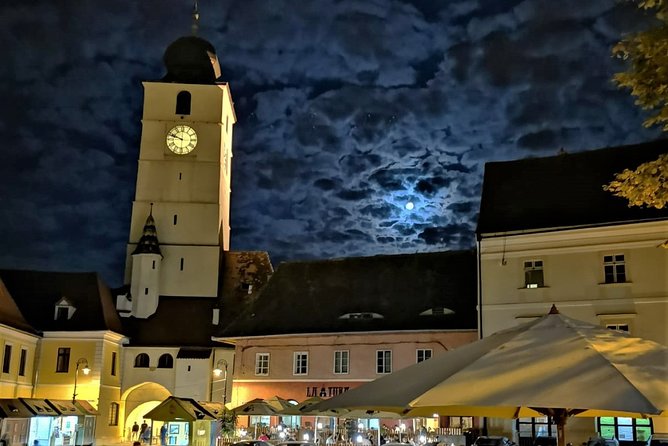
Then it is on to Sibiu, where the tour adds a bit of effort for a big payoff. You walk old streets and key plazas, including Grand Square, Small Square, and Albert Huet Square (dating to the 12th century). You also get a guided look at both the Orthodox Cathedral and the Evangelical Church.
The best part, practically, is the Council Tower viewpoint. Climbing the medieval stairs is the kind of effort that pays back immediately because Sibiu’s rooftops and layout open up below you, and you get your bearings for the rest of the evening.
A different sort of day out in Romania:
- Bucharest: Palace of Parliament Tickets and Guide
★ 4.3 · 3,182 reviews - Bucharest: Day Trip to Dracula Castle, Peles Castle & Brașov
★ 4.4 · 3,049 reviews - Bucharest to Dracula Castle, Peles Castle and Brasov Guided Tour
★ 4.5 · 2,933 reviews - Bucharest: Palace of Parliament Tickets and Guided Tour
★ 4.4 · 1,877 reviews
Potential drawback for Day 1
Sibiu is best when you have energy. If you arrive exhausted after your travel into Romania, you may feel rushed during the first city segment. Bring comfortable shoes and plan on a steady pace, not a long linger.
Day 2: Corvin Castle and Alba Iulia Fortress, Where Medieval Power Shows
Castelul Corvinilor (Corvin Castle) and John Hunyadi’s legacy
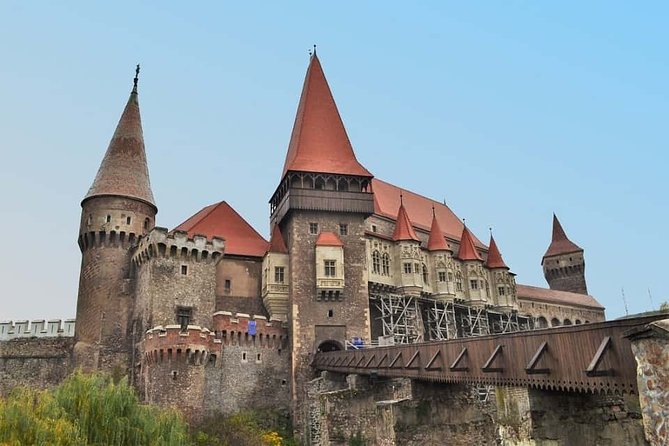
Day 2 is all about military leaders and political shifting. The tour focuses on John Hunyadi, connected to Corvin Castle and the larger story of medieval Hungary and Wallachia. You learn how Voicu (Vojk) received the castle, and how Voicu was the father of John Hunyadi, who later became regent of Hungary and fought against the Ottoman empire.
This works because you are not stuck in generic narration. You walk into places tied to specific names, dates, and conflicts, and the guide points out how those stories created the kind of fortifications you see.
Alba Iulia fortress and Saint Michael Cathedral
Next comes Cetatea Alba Iulia (Alba Carolina), where John Hunyadi is laid to rest. The impressive Saint Michael Cathedral matters here for one key reason: the construction started in 1004, so you are seeing a church with roots that go far beyond the medieval legends people associate with it.
You also visit the Orthodox Coronation Cathedral and the ruins of a Roman castrum tied to the 13th Gemina Roman Legion. That Roman layer is useful if you care about Romania’s long timeline, not just Dracula-era vibes.
Night in Sibiu again
Returning to Sibiu for a second overnight makes sense. It reduces the number of hotel changes you deal with and lets you settle in rather than packing and repacking every single day.
Day 3: UNESCO Fortress Churches and Sighisoara at Late Afternoon
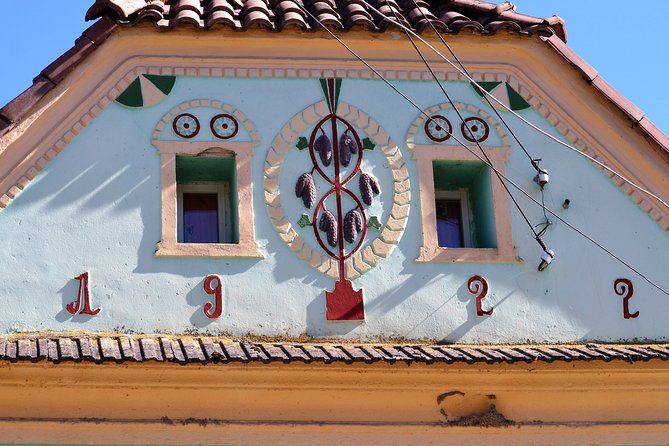
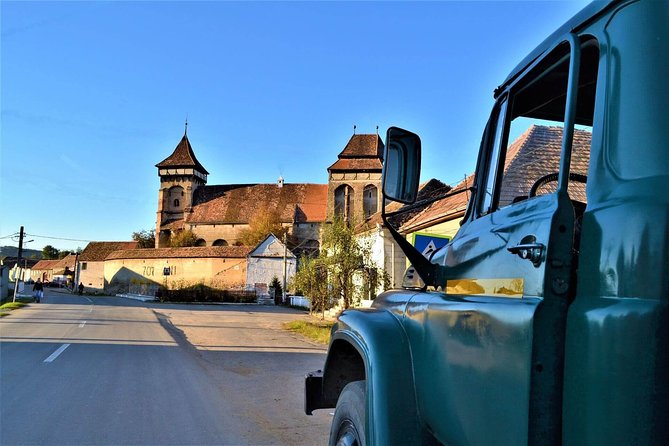
Day 3 is where Transylvania becomes unmistakably Transylvania, because you are circling the fortified church system that UNESCO recognizes. These are not just pretty churches. They were built for defense, with stonework designed to protect communities.
Biertan Fortified Church
From Sibiu, you head toward Sighisoara via the Hartibaciu Valley, crossing old Saxon villages and passing through deep forests. Biertan fortified church is a strong stop because it anchors that Saxon chapter of the region, and because it is exactly the kind of place where you can see how architecture served practical needs.
Malancrav fortified Lutheran Church frescoes
Malancrav village brings a different kind of wow. You visit the Fortified Lutheran Church, known for the largest Gothic church fresco in Transylvania. The tour notes that these frescoes were discovered during 1914 restoration work, under chalk paint applied after the Lutheran reform.
What I like about this stop for your mindset: it reminds you that religious change was not tidy or simple. People covered art, and time preserved it until restoration revealed it again.
Sighisoara Clock Tower and UNESCO citadel
You end the day in Sighisoara, a UNESCO site and the setting for the Vlad the Impaler connection. You spend time exploring the citadel and pay attention to the Sighisoara Clock Tower.
Late afternoon and evening are the right time for this. The fortress streets feel more human when the day softens, and the tour plan gives you that exact window rather than forcing you to rush through before it gets dark.
Day 4: Saschiz, Viscri, Prejmer, then Brasov’s Rope Street
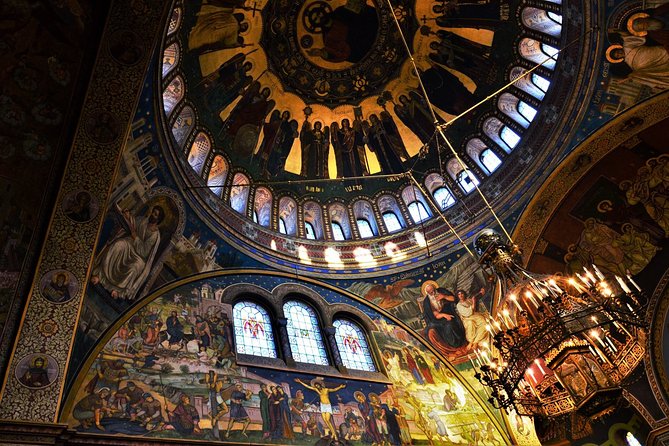
Saschiz fortified church on the way out
On the way from Sighisoara to Brasov, you pause at Saschiz fortified church, another UNESCO World Heritage monument. The tour highlights its tower and compares the feel to Sighisoara’s Clock Tower. This kind of stop is useful if you want continuity, because you start noticing patterns across the Saxon fortification network.
Lunch in Viscri with Prince Charles ties
Viscri is a favorite-style stop, because it is not just a viewpoint. You have lunch in the remote village Prince Charles fell in love with. The tour mentions his affection for a specific Saxon house, no. 163, the blue house built in 1753.
You do not need to be a royal trivia fan to like this stop. It is a practical break in the middle of a travel-heavy day, and it gives you a sense of how the fortified church landscape sits within everyday village life.
Prejmer fortified church, one of seven UNESCO Saxon sites
Prejmer is one of those places you can take slow. The tour explains the Teutonic Knights role in defending the region against Tatars coming from the east, then how Saxon settlers finished key parts after a conflict.
What makes Prejmer special is that it is part of UNESCO’s seven Saxon fortifications in Transylvania list. It is the kind of detail that helps you understand why UNESCO cares. You are not seeing one lucky church, you are seeing a system.
Brasov historical center after check-in
Once you reach Brasov, you check in, then tour the medieval fortress area: fortifications, bastions, towers, and the Rope Street, described as one of the narrowest in Europe.
For me, the best value here is time efficiency. Brasov gets big pretty quickly, so having a structured first look saves you from wandering in circles your first evening.
Day 5: Poiana Brasov Cable Car, Bran Castle, Rasnov, and the Black Church
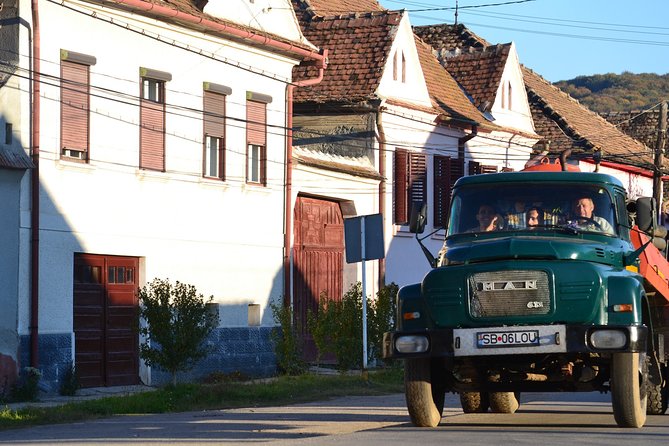
Poiana Brasov and the cable-car view
Day 5 shifts the mood upward, literally. You go to Poiana Brasov resort and take a cable-car ride up to around 1,727 m near Postavaru Peak. The tour notes that if weather is fine, you get stunning views over the Carpathians and the Transylvanian plateau.
Important practical note: weather matters here. If fog rolls in, the cable-car still moves you fast, but the view payoff might be reduced. Still, it is a good way to break up the week’s fortress focus with mountain scenery.
Bran Castle and Dracula legend
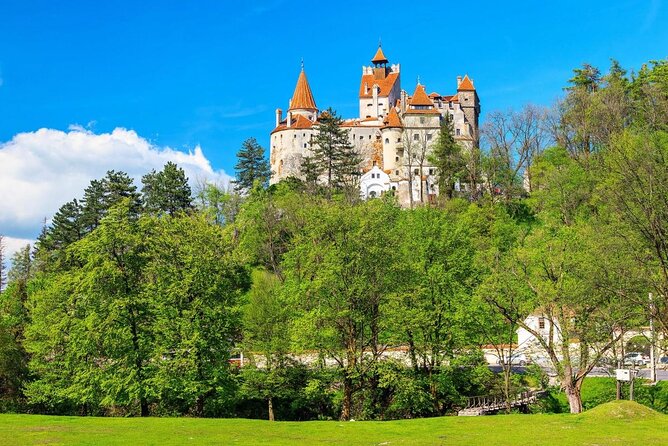
Then you head to Bran Pass, above Bran Castle, where the tour ties in the Dracula legend. Bran Castle was built in the 14th century to guard a strategic commercial route between Wallachia and Transylvania, and it is described as having three sides that were quite impregnable due to its rock setting.
The key is to treat Bran Castle as both a fortress stop and a pop-culture magnet. If you came for Vlad the Impaler stories, the tour uses Bran to clarify the link people make, while still keeping the conversation rooted in what the castle was built to do.
Rasnov fortress from afar
Coming back to Brasov, you admire Rasnov fortress from afar. This is a nice middle ground if you do not want another long walk that day, but you still want the sense of more medieval defense on the horizon.
Black Church in Brasov
To end Day 5, you visit Biserica Neagra, the imposing Gothic Black Church. It is an excellent final stop for this day because it is a change of pace from castles, and it is visually strong even if you are not a church-architecture specialist.
Day 6: Peleș Castle in Sinaia, then Stavropoleos Monastery in Bucharest
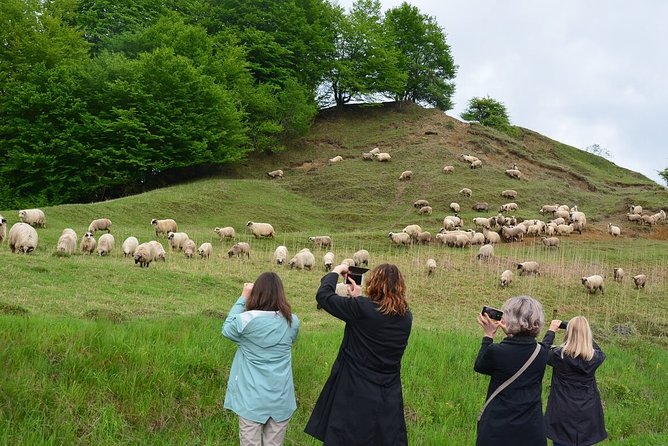
Peles Castle in the Prahova Valley
Your last day runs south from Brasov to Bucharest through the Prahova Valley and includes a stop at Sinaia. You visit Peleș Castle, built in the late 19th century, with the tour pointing out the contrast between the flamboyant castle and its founder Carol I of Hohenzollern-Sigmaringen.
This stop is valuable because it gives you Romania’s modernizing era, not only medieval defense and legends. The tour also references Carol I’s long rule and emphasizes his approach to modern Romania, with Queen Elisabeth described as saying he wore the crown even while sleeping. It is a vivid way to understand why the castle exists when it does.
Stavropoleos Church and guided Bucharest time
In the afternoon, you arrive back in Bucharest and check in. The tour includes a guided Bucharest segment focused on Stavropoleos Church, a monastery built in 1724 in the heart of the city.
This is a good landing. After a week of stone fortresses and hilltop views, Bucharest feels like the final chapter where you can slow down, digest, and place the Romania you saw into a single urban context.
Price and Value: What $2,166.68 Is Really Covering
At about $2,166.68 per person for roughly six days, you are paying for more than admissions. The big value is that you get:
- 6 nights in 3-star superior hotels or guesthouses with breakfast
- Lunch included
- Air-conditioned private transportation between regions
- All fees and taxes listed as included
- Private experience for your group only
Where you might still spend extra: the tour data says meals are not included (other than lunch) and photo fees are not included. Flights are also not included, so your total trip cost depends on where you are flying from.
Is it worth it? If you would otherwise spend time stitching together transport, hotels, and a guide, this price becomes easier to justify. If you already have the logistics lined up and prefer to travel independently, you may find a cheaper route. But if you want the Transylvania highlights with a steady pace and zero planning stress, this structure is built for you.
Comfort, Timing, and the Reality of a Long Route
The tour runs within set hours, and it starts with meeting at your hotel in Bucharest or the airport. The schedule window is listed from 8:00 AM to 8:00 PM.
Because the itinerary moves across multiple towns, expect a day-to-day rhythm of car time plus walking blocks. You will likely want:
- Comfortable shoes for towers and old streets
- Water and small snacks in case you feel a gap between lunch and evening
- A light layer for hills and cable-car weather shifts
Also, if you love photos, build time for viewpoints, but remember photo fees are not included, so some stops might add costs at the door.
Who Should Book This Transylvanian Week Tour
This tour fits best if you:
- Want a licensed guide to connect names like Vlad the Impaler and John Hunyadi to what you see
- Prefer a “highlights without logistics headaches” style of trip
- Like medieval architecture, fortified churches, and castle settings
- Value included lodging for a multi-town route
It might not be the best fit if you want a very flexible pace, because the plan is structured day by day. And if you strongly dislike Dracula-related stops, you should know Bran Castle is part of the storyline here, even though the tour also ties it back to strategic medieval purpose.
Should You Book Transylvanian Week?
If you want Transylvania that is organized, story-driven, and easy to execute, I think this is a solid pick. You get strong coverage across UNESCO fortified churches, castles tied to real historical figures, and a clean finish back in Bucharest with Stavropoleos.
If you are the type who hates car time and prefers solo control, you might feel the pace. But if your goal is to see the big sites in one coherent week with a guide who can adapt and keep things moving, this tour earns a confident yes.
FAQ
Where does the tour start and end?
It starts in Bucharest, Romania. On the final day, you return to Bucharest and enjoy a guided tour there after check-in.
How long is the experience?
The duration is listed as 6 days (approx.).
What is the price?
The price is $2,166.68 per person.
Is pickup included?
Pickup is offered. You meet at your hotel in Bucharest or at the airport.
What is included in the trip price?
Included items are lunch, 6 nights accommodation in a double room with breakfast, an air-conditioned vehicle, all fees and taxes, and private transportation.
What kind of accommodation is included?
You stay for 6 nights in 3-star superior hotels or guesthouses, with breakfast included.
Are admission tickets included?
Some stops list admission ticket free, while others list admission ticket included. The tour also states that all fees and taxes are included.
What meals are included besides lunch?
The tour includes lunch, while meals are otherwise listed as not included.
Is there a cancellation fee or refund?
The experience is non-refundable and cannot be changed for any reason.
What should I do about accessibility and pets?
Most travelers can participate. Service animals are allowed. The meeting area is near public transportation.
Recently listed in Bucharest
- Wine Tasting and Dinner, including Sommelier★ 5.0 · 3 reviews
- Winery touring & private wine tasting – one day private tour★ 5.0 · 3 reviews
- Village Museum Bucharest Guided Tour★ 5.0 · 6 reviews
- Bucharest: Dealu Mare Winery Private Trip with Wine Tasting★ 4.9 · 6 reviews
- Transylvania Tour: Dracula’s Castle, Peles Palace & Brasov★ 5.0 · 19 reviews
- Traditions in Bucharest: Village Museum and Wine Tasting★ 5.0 · 8 reviews
- Airport Henri Coanda (Otopeni) to Bucharest – Private Transfer – Driver★ 5.0 · 5 reviews
- Discover Medieval Transylvania Small Group Tour – 7 days★ 5.0 · 4 reviews
7-Day Experiences, compared.
4×4 Driving Experience at Flying Altitudes – 7 Days
Read our review →
7-Day Private Tour of Transylvania from Bucharest
Read our review →
Amazing Romania – Seven day private tour from Bucharest
Read our review →
7 days Private Romania Grand Tour from Bucharest
Read our review →
7 Days Private Guided Tour in Romania from Bucharest
Read our review →
Discover Medieval Transylvania Small Group Tour – 7 days
Read our review →
7 Day Best of Transylvania Motorcycle Tour from Cluj
Read our review →
7-Day Dracula Tour in Romania from Bucharest including ‘The Ritual of Killing of a Living Dead’
Read our review →Browse the lists this tour appears in