
REVIEW · CITY TOURS
Cluj – walking city tour
Cluj moves fast, but this walk gives it structure. You’ll get a licensed guide leading you through the Old Town’s key landmarks, with stories that connect buildings to people and politics. I especially like the way the route is paced, with short stops that let you look up, ask questions, and still keep moving. Another plus is the flexibility, since the tour can be adjusted if you care more about one site than another. One thing to consider: most stops are outside-focused, and you should expect limited or no paid interior time since ticketed entries are not part of what’s included.
For a little over two hours, this is a straightforward way to get oriented in Cluj-Napoca without the stress of navigating alone. The tour also caps at 15 people, so it’s not a cattle-car city walk. The main drawback I’d flag is weather: it requires good conditions, so you may need a backup day if skies turn bad.
In This Review
- Key things that make this Cluj walk worth your time
- Starting at Carolina Obelisk and Museum Square
- Museum Square, Franciscan church, and the Carolina Obelisk
- Matia Corvin House, the oldest civilian building
- St Michael’s Catholic Church, a medieval anchor
- Piarist church, the Baroque surprise
- City Walls of Cluj, walking the 15th century line
- Babeș-Bolyai University, institutions beyond monuments
- Reformed Church, organ concerts and coat of arms collections
- Turnul Croitorilor, guild power in a preserved defense tower
- Avram Iancu Square and the climb into the 19th century feel
- Metropolitan Cathedral, interior decoration of an Orthodox church
- Price and value: what $28.94 buys you in Cluj
- What the guide quality looks like in real life
- Timing, pace, and logistics that matter day-of
- Who this tour suits best
- Tips to get more out of each stop
- Should you book this Cluj walking tour?
Key things that make this Cluj walk worth your time
- Small-group size (up to 15) keeps the guide interaction real, not rushed
- Licensed English/French guide who can answer questions as you go
- Old Town focus with major landmarks like St Michael’s Catholic Church and the City Walls
- Short, efficient stops so you see a lot in about two hours
- Flexible ending point at the Metropolitan Cathedral area, depending on what you want
- No ticketed interior sightseeing included, which can affect how much inside time you get
Starting at Carolina Obelisk and Museum Square
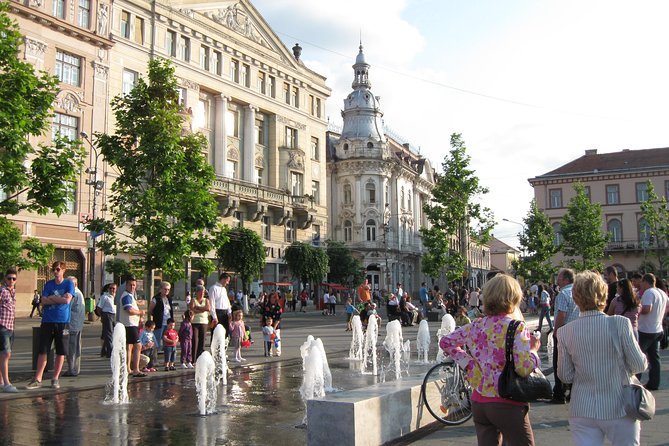
Most walking tours start at a random corner. This one starts with purpose. You meet at Carolina Obelisk in Piața Muzeului (Museum Square), and right away you’re in the oldest-sense-of-place part of town.
Museum Square is a good first stop because it sets a visual “map” for everything else. You can orient by sight lines and nearby landmarks, and you’ll quickly understand how Cluj-Napoca grew around public squares and institutions. If you’re the type who likes context before photos, this start works.
What I like: the first stop includes a church presence and a monument, so you aren’t just looking at one isolated building. Potential drawback: because it’s early in the tour, you might want to wait until later for your best photos once you’ve seen more angles.
More Walking Tours in Cluj-Napoca
- Cluj-Napoca: 2.5-Hour Guided Walking Tour
★ 4.8 · 104 reviews - Cluj-Napoca: 2.5-Hour Guided Walking Tour
★ 4.5 · 29 reviews - Cluj-Napoca Walking City Tour
★ 4.5 · 16 reviews
Museum Square, Franciscan church, and the Carolina Obelisk
At Museum Square, you’ll admire the Franciscan church and the Carolina Obelisk, with time to absorb how the space feels and what it signals about the city’s layered identity. The obelisk and surrounding architecture give you a “timeline anchor,” which helps when you hit older walls and medieval churches later.
This is also where you can start forming the right questions for the guide. Ask how Cluj changed over time, or what the square meant for daily life when it was the city’s earliest center. A good guide can turn a monument into a story you can remember.
Practical tip: if you’re sensitive to standing still, use the 20 minutes here to do a quick loop of the square, then settle for photos. You’ll get more out of the time.
Matia Corvin House, the oldest civilian building
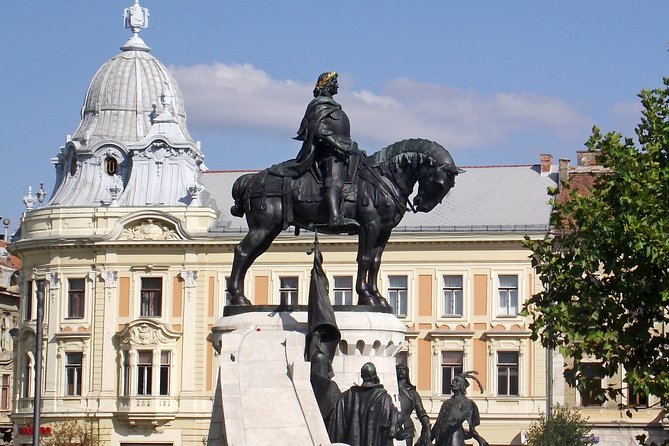
Next comes Memorial Matia Corvin House, a stop that shifts the tone from grand religious architecture to civilian life. You learn about what’s considered the oldest civilian building in Cluj, and the story connects to Matthias Corvinus, one of the best-known kings associated with Hungarian history.
This matters because Cluj isn’t only churches and fortifications. It’s also people, homes, and civic life. That’s what makes this stop valuable: it helps you see the city as more than scenery.
One consideration: the stop is brief. If you want time for closer details, keep your camera ready but also listen, since the interesting parts are mostly in the guide’s narration.
St Michael’s Catholic Church, a medieval anchor
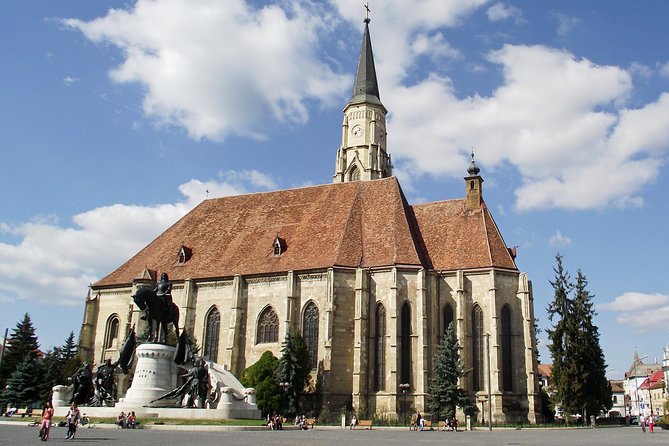
Then you reach Catedrala Sfântul Mihail (St Michael’s Catholic Church), one of the big medieval churches of Transylvania. This stop is a real mood changer. Even when you’re only seeing it in a walking-tour time window, the scale and style make it clear why this building would matter to generations.
St Michael’s is also useful for learning. It gives you a chance to notice how medieval design shows up in real, lived space, not just in textbooks. The guide’s explanations can help you connect the church to the wider cultural mix you’re seeing throughout the walk.
What to watch for: because you don’t have guaranteed paid interior access here, plan to focus on exterior viewpoints and facade details. Those are still rewarding if you slow down for a moment.
More City Tours in Cluj Napoca:
- Corvin Castle and Sibiu Fortified City day tour from Cluj
★ 5.0 · 7 reviews - Cluj-Napoca Walking City Tour
★ 5.0 · 5 reviews - Cluj: Private City Walking Tour
★ 4.4 · 4 reviews - Bucharest: City Highlights Guided Walking Tour
★ 4.9 · 1,482 reviews
Piarist church, the Baroque surprise
A short hop takes you to Biserica Romano-Catolică Sfânta Treime Cluj-Napoca (Piaristă), described as the first Baroque church built in what is now Romania. The stop is quick, but don’t treat it as filler.
Baroque architecture often feels dramatic even from the outside, and you get a nice contrast after the medieval weight of St Michael’s. It’s like changing musical tracks within the same playlist. This stop helps you see how Cluj’s artistic and religious influences shifted over time.
Potential drawback: only around 10 minutes are set aside. If Baroque detail is your thing, you might want to linger a few extra minutes on your own after the tour if you still have energy.
City Walls of Cluj, walking the 15th century line
Now you get your medieval bones: the City Walls of Cluj. This part of the walk uses small, narrow streets to lead you to a feeling that’s hard to fake. You’re not just looking at a landmark, you’re moving through the neighborhood way the city probably guided movement centuries ago.
You’ll see the 15th century walls and learn how they shaped defense and urban growth. The value here is that the walls are a physical boundary. They help explain why certain streets and building patterns exist.
Practical note: this is also where comfortable shoes matter. You’re on foot for the whole tour, but walls sections tend to involve uneven stone or tighter street layouts.
Babeș-Bolyai University, institutions beyond monuments
After the walls, you pass by Universitatea Babeș-Bolyai din Cluj-Napoca, the headquarters of a major university in Romania, active for over 100 years. This stop is brief, but it gives the city a modern pulse.
It also helps you balance your mental picture of Cluj. When most people do quick sightseeing, they focus on churches and fortifications. Here, the guide reminds you that Cluj is also an education center, and those institutions influence how the city feels today.
If you’re a student or bookish type: this stop might spark questions about student life, cultural events, and how older parts of town coexist with modern use.
Reformed Church, organ concerts and coat of arms collections
Next is the Reformed Church, a 15th century church where organ concerts are organized in the city. This is a great “listen with your eyes” stop. Even if you aren’t hearing an organ in that moment, the fact that concerts happen here makes the building feel active, not museum-like.
The stop also highlights one of the biggest coat of arms collections in this part of Europe. That detail is a gift for travelers who enjoy symbols, not just structures.
What I’d do: take 30 seconds to find a coat of arms detail you can recognize or remember, then ask the guide what the symbols represent. It turns a quick stop into something you’ll actually recall.
Turnul Croitorilor, guild power in a preserved defense tower
Then you hit Turnul Croitorilor, one of the few preserved defense towers from the medieval fortifications. But the real point here is what the tower represents: the importance of guilds in the development of the city.
This stop is short, yet it connects defense and industry. Medieval walls protected a city, but guilds shaped how that city functioned daily. If you’ve ever wondered how work, politics, and neighborhoods connect, this is the kind of moment that gives you the answer.
Consideration: it’s only about 5 minutes. Make sure your camera is ready, but focus most on the guide’s explanation.
Avram Iancu Square and the climb into the 19th century feel
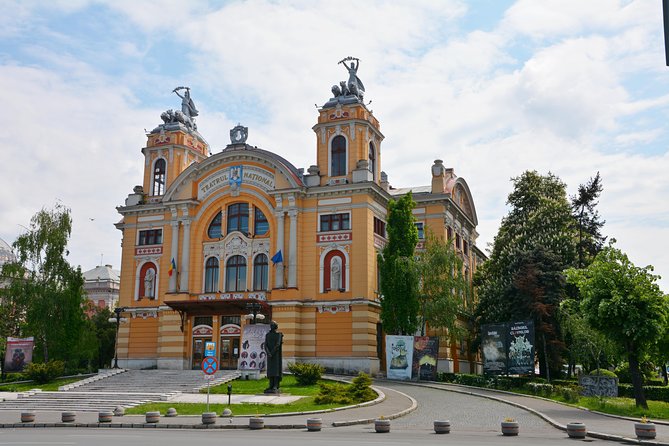
After the tower area, you reach Avram Iancu Square, where many buildings, including the National Theatre, were built starting at the end of the 19th century. This is a useful shift because you’re moving away from medieval defense logic and into a different kind of city identity.
Squares like this also help you understand scale and civic ambition. Even if you don’t go inside the theater during the tour, you’ll get a clear sense that Cluj had a modernizing push.
Practical tip: if you want a perfect photo, stop for one minute longer here. Avram Iancu Square is where your eyes start to see the city as a whole, not a series of isolated stops.
Metropolitan Cathedral, interior decoration of an Orthodox church
The tour ends at Dormition of the Mother of God Metropolitan Cathedral in Piața Avram Iancu. This is an Orthodox church, and the focus is on the interior decoration. The time given here is about 15 minutes.
This final stop is smart because it closes the loop. You started with early civic space and multiple church styles, and you end with something visually different. It helps you finish with a sense of Cluj’s cultural mix, not just an old-town checklist.
There’s also a nice touch of flexibility. The tour normally finishes at the cathedral, but the ending point is adjustable if you have another place you want to reach.
Potential drawback: if you’re expecting long interior time, the schedule is tight. Use the 15 minutes to look slowly, not take it like a quick scan.
Price and value: what $28.94 buys you in Cluj
At $28.94 per person, for about 2 hours, you’re paying for something that can be hard to DIY: a licensed guide who can connect architecture to stories. You’re also paying for a smooth pace, since the stops are organized and time-boxed so you don’t spend your day wandering.
Is it cheap? Not really a bargain price. But it can be good value if you like context and you’re new to Cluj. Two hours is long enough for a guide to add meaning, short enough that you won’t feel stuck if you’re tired or not feeling it.
Also, the tour includes a mobile ticket and you can often use a group discount if you’re booking with others. The maximum group size of 15 helps keep the experience personal enough that you’ll feel like your questions matter.
Key tradeoff: entry tickets are not included, and you shouldn’t count on lots of paid interior visits. If your goal is heavy museum-style ticket spending, this may feel lighter than you hoped. If you’re there for the walking, the architecture, and the guide’s explanations, it fits well.
What the guide quality looks like in real life
The biggest strength I’d pay attention to is the guide. In the notes shared from the experience, Joseph is specifically named as an extremely knowledgeable and passionate person, with guides who can adapt the route based on your interests. One reroute example given was when the group included Jewish descent, and the tour was adjusted accordingly.
That kind of flexibility is more than nice customer service. It changes what you remember later. If you care about certain communities or themes, a guide who can pivot makes the city feel less like a scripted loop.
So if you want a tour where the guide actually answers your questions and not just walks ahead of you, this setup is promising.
Timing, pace, and logistics that matter day-of
This is a morning-start style tour, with a 10:00 am start. At 2 hours, it fits well on a day when you also want lunch, a museum, or a long afternoon stroll.
Because it’s near public transportation, it’s easier to reach and easier to build into your schedule. Still, it’s a walking tour, so you’ll want comfortable shoes and a small water plan, even though meals and drinks aren’t included.
The tour also works best when the weather is cooperative. If it’s canceled due to poor weather, you’ll be offered a different date or a full refund. So you can book with confidence, but keep your plans flexible.
Who this tour suits best
This tour fits you if:
- You want Old Town highlights in a short window
- You enjoy learning stories behind buildings, not just taking photos
- You prefer a small group and a guide who can answer questions
It might not be ideal if:
- You want long, ticket-required interior time at multiple sites
- You dislike walking, even at a moderate pace
Tips to get more out of each stop
Use these tricks and you’ll feel like you paid attention even after the tour ends.
- At Museum Square and St Michael’s, look first, then ask questions. Your brain remembers images better when you pause.
- At the Reformed Church, focus on symbols. The coat of arms collection is the kind of detail that becomes interesting once you know what to look for.
- Near the City Walls and Turnul Croitorilor, slow your pace slightly. Defense architecture makes more sense when you see the shapes in motion.
- At the cathedral, let yourself sit with the interior decoration for the whole time. Short looks make it feel busy. Longer looks make it feel purposeful.
Should you book this Cluj walking tour?
I’d book it if you’re in Cluj for a short stay and you want a guided route that covers the city center without chaos. The strongest reason is the combination of a licensed guide, a logical Old Town flow, and time at major landmarks like St Michael’s Catholic Church, the City Walls, and the Metropolitan Cathedral.
I’d skip it only if your main goal is heavy paid interior access at many sites. Since ticketed entries are not included, you’ll get the best value when you enjoy architecture from the outside and stories from inside the guide’s explanations.
If your schedule is tight and you want an efficient start to understanding Cluj, this one is a smart use of two hours.
More Walking Tours in Cluj Napoca
- Cluj : Must-See Attractions Walking Tour
★ 4.8 · 8 reviews - Cluj : Private Walking Tour with A Guide ( Private Tour )
★ 5.0 · 7 reviews - From Cluj: Winter Walking Trip on the Great Mountain
★ 5.0 · 5 reviews - Cluj-Napoca: Communist Era Walking Tour
★ 5.0 · 4 reviews
Recently listed in Cluj Napoca
- Private tour to Turda Salt Mine, Rimetea and Alba Iulia★ 4.8 · 5 reviews
- Turda Salt Mine, Gorge & Rimetea Village (private from Cluj)★ 5.0 · 5 reviews
- Turda salt mine and Corvin Castle day tour from Cluj★ 5.0 · 9 reviews
- CLUJ ADVENTURE TOUR ! ZIP LINE and HIKE★ 5.0 · 15 reviews
- Discover Apuseni Mountains – Scarita Summit,Sipote Waterfall and Dumesti Village★ 5.0 · 17 reviews
- Two days tour to Bucovina & UNESCO Painted Monasteries★ 5.0 · 3 reviews
- Turda Gorge, salt mine and Rimetea village private tour★ 5.0 · 12 reviews
- Day Trip To Turda Salt Mine, Rimetea Village & Coltesti Fortress★ 5.0 · 25 reviews
City Tours, compared.

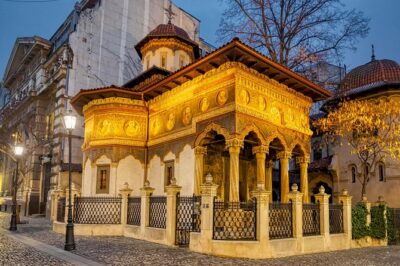
Bucharest Panoramic Sightseeing – Private City Tour
Read our review →
SB01 – City Tour Sibiu: Exploring the Heart of Transylvania
Read our review →Browse the lists this tour appears in