
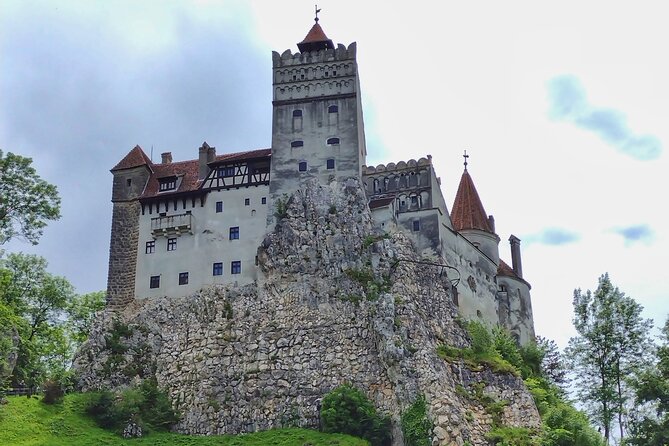
REVIEW · PAINTED MONASTERY TOURS
Bucovina Painted Monasteries & Transylvania Tour: 4-Day Private
Painted monasteries in private comfort. This Bucovina and Transylvania private tour pairs efficient private transport with one-on-one guide attention, so the long road between churches and cities feels smooth. One possible drawback to plan for: not every entrance fee is included, and a couple of stops also have extra charges for things like interior access or photos.
I like that you get three nights in three-star hotels plus breakfast, which matters when your days start early and your schedule stays packed. You also get a practical dose of context, why these monasteries were built, who sponsored them, and what changed in the artwork over time.
In This Review
- Key highlights you should know
- What This 4-Day Route Really Delivers
- Price and Logistics: What $1,356.43 Really Buys
- Day 1 in Neamț County: Agapia and Văratec’s Painted Nunnery Life
- What I’d watch for
- Day 2 in Bucovina: Sucevita, Moldovița, and Voroneț’s Fresco Stories
- The Voroneț effect
- Day 3 in Transylvania: Sighișoara, Viscri Fortified Church, and Brașov
- How to enjoy this day without tiring out
- Day 4 in Romania’s City Icons: Black Church and Peleș Castle
- A note about entrances
- Why the Private Guide Matters (and how Toni Tatar and Marius show up)
- What to ask your guide for
- Photo and Dress Etiquette at Orthodox Monasteries
- Who This Tour Fits Best
- Should You Book This Painted Monasteries and Transylvania Private Tour?
- FAQ
- How long is the tour?
- Where does the tour start and end?
- Is hotel pickup included?
- What language is the tour offered in?
- Does the price include hotel stays and breakfasts?
- Are entrance fees included?
- Do I need a head covering or specific clothing?
- What fitness level is required?
- Is the tour affected by weather?
Key highlights you should know
- Three nights with breakfast in a comfortable 3-star base, so you are not scrambling for meals every day
- Bucovina’s painted monasteries in a tight, logical sequence, from nunnery life to the most famous blue fresco work
- UNESCO old towns and churches on Day 3, including Sighișoara and Viscri
- Gothic and royal grandeur on the final day, with Brașov’s roots and the Black Church plus Peleș Castle
- Real guide support, including calm help when someone in the group gets sick, as shown on past departures
What This 4-Day Route Really Delivers
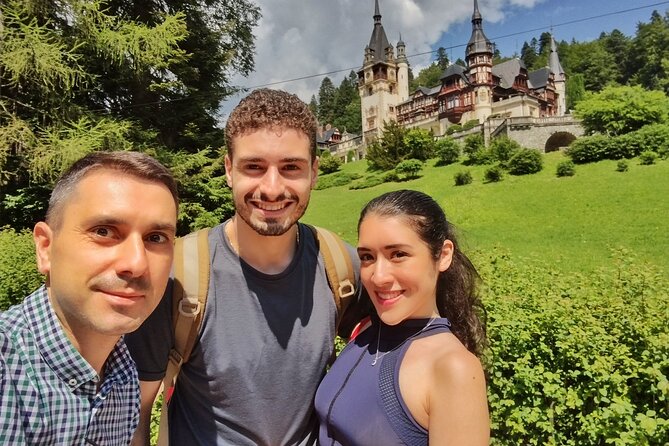
This tour is built for people who want more than a photo run. You are moving through regions that overlap in language, faith, and power, and the guide’s job is to connect the dots for you as you go. That is why the painted monasteries feel less like random stops and more like chapters.
You also get a clear “story arc.” Day 1 starts with major monastic centers, where the setting is living, not just historical. Days 2 and 3 bring the famous fresco churches and then pivot to Saxon Transylvania towns, so your brain shifts from icon-and-faith art to fortified and civic history.
The private format is the big value here. Your pace is adjustable, you can ask questions without feeling rushed, and you are not stuck with a one-size-fits-all group rhythm.
More Transylvania Tours in Bucharest
- Transylvania and Dracula Castle Full Day Tour from Bucharest
★ 4.5 · 1,589 reviews - Castles of Transylvania: Private Day Trip from Bucharest
★ 4.5 · 248 reviews - 2-Day Medieval Transylvania with Brasov,Sibiu and Sighisoara Tour from Bucharest
★ 4.5 · 145 reviews
Price and Logistics: What $1,356.43 Really Buys
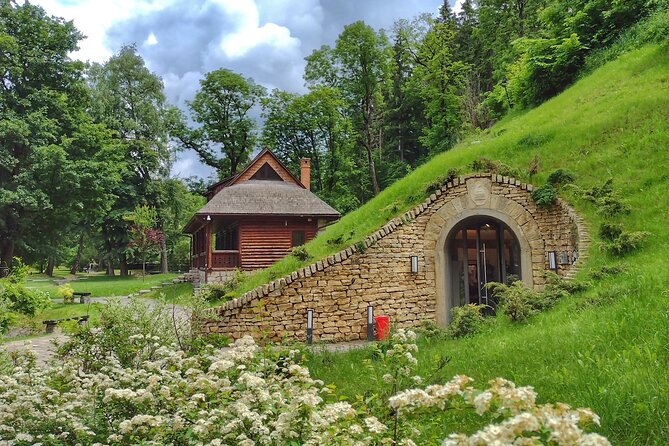
At $1,356.43 per person, you are paying for a lot of “invisible” comfort. The tour includes hotel pickup and drop-off in Bucharest, private transport, and three nights in three-star accommodations with breakfast. That is a meaningful chunk of cost that you would otherwise piece together yourself.
Entrance fees are split. Some entrance tickets are included for specific stops, but inside-visit entrance fees are not included at every site. The tour notes say tickets can be purchased on the spot, with amounts shown around EUR 30 per person or €25 per person, depending on the wording. My advice: treat entrance fees as a likely extra line item, not an exception.
The schedule is also weather-dependent. Painted churches and old-town walking are easier when conditions are good, so if you see forecast trouble, be ready for date flexibility or a refund offer on change of plans.
Day 1 in Neamț County: Agapia and Văratec’s Painted Nunnery Life
Day 1 is a smart opening because it introduces you to the monasteries as communities, not museum pieces. You start at Agapia Monastery, a Romanian Orthodox nunnery about 9 km west of Târgu Neamț in Agapia Commune. It was built between 1641 and 1643 by hetman Gavriil Coci, and the church paintings were done by Nicolae Grigorescu between 1858 and 1861.
Agapia is also huge by nunnery standards, with an ongoing community of about 300 to 400 nuns. The practical payoff for you is the atmosphere: you are not just staring at frescoes, you are seeing how religious life continues around the artwork. That context makes the paintings feel purposeful rather than decorative.
Next is Văratec Monastery, located in Văratec village in the same Agapia Commune area. It is the largest nun monastery in Romania, with more than 400 nuns living there. The scale alone gives you a sense of why these sites became major spiritual centers.
What I’d watch for
These stops are still active religious sites, so dress matters. Plan on long pants or a long skirt for access to grounds, and bring something that covers your shoulders if you can. Even when a head covering is not required, you may still feel more comfortable if you are prepared.
If you care about photos, keep expectations flexible. One past visitor noted that exterior photos may have a small fee and that interior photography may be restricted, so I recommend you plan to ask on arrival what applies that day.
More painted monastery trips:
- 11-Day Romania Tour from Bucharest with Transylvania & Bucovina
★ 5.0 · 6 reviews - Transylvania & Bucovina Private Tour – 6 days
★ 5.0 · 3 reviews - Bucovina Painted Monasteries Day Tour
★ 5.0 · 83 reviews - 1-Day Bucovina Painted Monasteries tour from Suceava – English
★ 5.0 · 33 reviews
Day 2 in Bucovina: Sucevita, Moldovița, and Voroneț’s Fresco Stories
Day 2 is where the tour delivers its headline art. You begin at Sucevita Monastery, whose church architecture blends Byzantine and Gothic elements with styles typical to the painted churches of northern Moldavia. Both the interior and exterior walls are covered in mural paintings, with scenes drawn from biblical episodes from the Old and New Testament.
Sucevita’s murals are not just about beauty. They are about storytelling, and the guide’s job is to point out how the scenes are arranged and what they are meant to communicate to worshippers. If you like religious art, you will probably find yourself slowing down here.
Then you go to Moldovița Monastery, in Vatra Moldoviței in Suceava County. It was founded in 1532 by Petru Rareș, the illegitimate son of Stephen III of Moldavia. Moldovița was also set up as a protective barrier against Ottoman expansion from the East, so the church has a political backdrop as well as a spiritual one.
That combination helps you understand why these monasteries were built the way they were. The art was not only expression, it also helped communicate identity and authority during tense times.
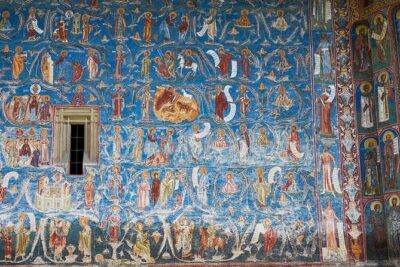
Finally, you reach Voroneț Monastery, arguably the most famous of the painted churches in southern Bukovina. It was constructed by Stephen the Great in 1488, reportedly completed in 3 months and 3 weeks to commemorate the victory at the Battle of Vaslui. Voroneț is often called the Sistine Chapel of the East, and the frescoes feature the famous “Voroneț blue,” an intense shade of blue known locally by that name.
The Voroneț effect
Voroneț tends to land differently than the other sites. Even if you have seen painted churches before, the scale and the distinctive blue tone can make your eyes do a double take. I love how the guide can explain what you are seeing, layer by layer, instead of treating it as a single wow moment.
A practical note: these fresco sites can feel strict about access and rules. Keep cash on hand for small site fees that may come up, and be patient if photo rules vary by day.
Day 3 in Transylvania: Sighișoara, Viscri Fortified Church, and Brașov
Day 3 shifts from Moldavia to Transylvania’s Saxon heritage, and it does so in a way that keeps your history brain switched on. First stop is Centrul Istoric Sighișoara, the medieval citadel and old town that is UNESCO listed. Sighișoara is famous for its preserved walled layout, and you get enough time to understand why people built and stayed inside these defenses.
After that comes Viscri Fortified Church, another UNESCO World Heritage Site. This site is a well-preserved Saxon fortified church, and it helps you see medieval architecture in a smaller setting than the larger cities. It also gives your route a “walk through history” feeling because you are not just looking at a single building, you are understanding how the community defended itself.
Then you finish the day in Brașov Historical Center. Brașov was the regional capital for the Transylvanian Saxons of the Burzenland administrative area, and it was also an important commercial hub between East and West. Another neat fact: Brașov is linked to Romanian cultural history as the birthplace of the national anthem.
How to enjoy this day without tiring out
This is the day where you will feel the walking potential, even if it is not a marathon. Wear supportive shoes and treat the time on foot as part of the experience, not an afterthought. If you start to feel rushed, tell your guide, and you can usually adjust your pace in a private setup.
Day 4 in Romania’s City Icons: Black Church and Peleș Castle
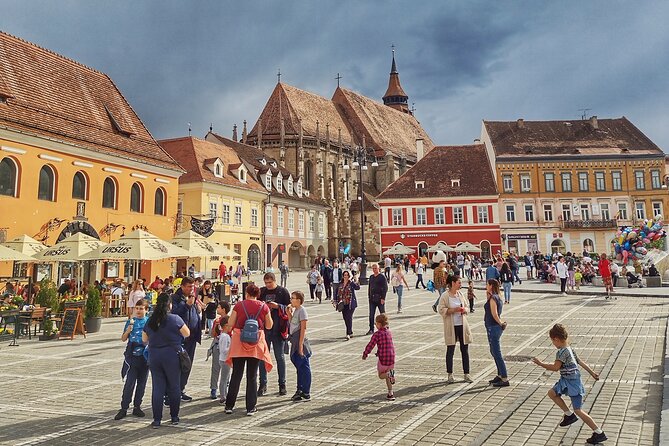
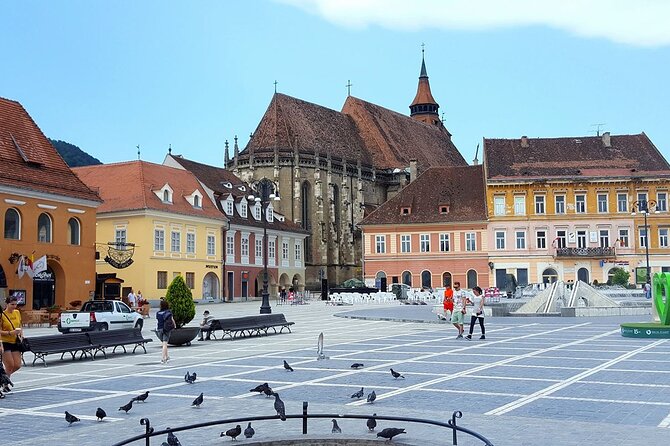
Day 4 brings two big “destination energy” stops, starting in Brașov again with the Black Church. The Black Church was built by the German community in the city and is the country’s main Gothic style monument. It is also one of the most important Lutheran places of worship in the region, tied to the Evangelical Church of Augustan Confession.
The practical value of starting here is variety. After days of monastery art, you get a different visual language: stained glass, Gothic forms, and a major Lutheran heritage site.
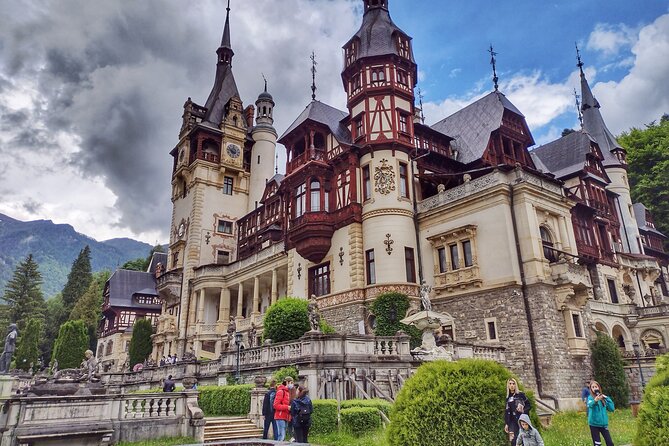
You then head to Peleș Castle near Sinaia in the Carpathian Mountains. This is the summer royal residence of King Carol I, and it is described as a Neo-Renaissance castle. It was built between 1873 and 1914, with inauguration in 1883, and you go to see how Romania’s monarchy expressed itself architecturally.
A note about entrances
At least for the listed stops on Day 4, some entrance fees are not included. So plan for tickets at the castles and churches that charge admission. If you have a ticket-on-the-spot system you prefer, keep some cash and a card handy, because amounts can differ.
Peleș is the kind of place where you can overfill your day if you rush. Give yourself a little patience, and let the guide point out the details that make it more than a pretty facade.
Why the Private Guide Matters (and how Toni Tatar and Marius show up)
A painted church is about more than paint. A good guide connects what you are seeing to why it exists, who funded it, and what symbols meant to the people who commissioned it. That is where the best departures feel different.
Crafted Tours Romania has guides who bring that relationship to life, including Toni Tatar and Marius, who have both been praised for being professional, kind, and thorough. In past experiences described by visitors, the guides also handled real-life problems with calm, including help when a group member became ill and needed emergency support.
Even if you never need that kind of assistance, the broader point still matters. When the guide can manage pacing and details, you stop feeling like you are just following a checklist.
What to ask your guide for
If you want the tour to feel extra meaningful, ask two questions at each monastery:
- Who built it, and what problem were they solving? (protection, patronage, identity)
- What are the most important visual themes in the paintings you see today?
This turns your time into an actual learning loop, not only sightseeing.
Photo and Dress Etiquette at Orthodox Monasteries
Orthodox monasteries often have strict expectations even when they look serene. You can show up and still enjoy the visit, but you should follow basics: long skirt or long trousers for entry to grounds, and modest clothing that covers shoulders if you can.
In one detailed note from a past visitor, photography rules included a small fee for taking photos outside and restrictions inside. That means you should treat any photo policy as “ask first.” A polite question to staff or your guide at the start of your visit can save you frustration later.
Also, respect how the sites are used. If you see areas where silence is expected, follow that lead. The peaceful feeling these monasteries create is part of the point.
Who This Tour Fits Best
This tour fits best if you want structured cultural stops with enough guidance to make the art and architecture click. It is especially good for you if:
- You like churches, fresco art, and the stories behind them
- You want UNESCO sites without the stress of planning connections
- You prefer private pacing over group chaos
It might be less ideal if you hate early mornings or if you want long open-ended free time in each town. The route is designed to cover several major cultural sites in a short window, so you are trading spontaneity for depth.
The tour also notes a moderate fitness level. If you can handle walking through historic centers and monastery grounds at a calm pace, you should be fine.
Should You Book This Painted Monasteries and Transylvania Private Tour?
If your priority is painted church art plus real Transylvania history, this is a strong pick. The private transport, one-on-one guide attention, and included pieces like hotel nights and some entrance tickets make it feel like you are paying for fewer hassles, not just more sights.
I would book it if you want a route that stays tight but not chaotic, and if you enjoy learning what you are looking at. I would hesitate only if you are on a strict budget for entrances and extras, since some sites will require additional payment, including potential photo-related fees.
If you want Romania that feels organized, human, and historically grounded, this tour is the kind you will remember long after the photos stop loading.
FAQ
How long is the tour?
The tour lasts about 4 days.
Where does the tour start and end?
It starts and ends in Bucharest, Romania.
Is hotel pickup included?
Yes. Pickup is offered in Bucharest, and the tour includes hotel pickup and drop-off.
What language is the tour offered in?
The tour is offered in English.
Does the price include hotel stays and breakfasts?
Yes. You get 3 nights in 3-star hotels and breakfast each morning (3 breakfasts total).
Are entrance fees included?
Some entrance tickets are included for specific stops, but entrance fees for inside visits are not included at every location. Tickets can be purchased on the spot.
Do I need a head covering or specific clothing?
At Orthodox sites, plan for modest dress. You may need long trousers or a long skirt to access grounds, and you may want something to cover your head just in case.
What fitness level is required?
The tour requires a moderate physical fitness level.
Is the tour affected by weather?
Yes. The experience requires good weather, and if it is canceled due to poor weather, you will be offered a different date or a full refund.
Recently listed in Bucharest
- Village Museum Bucharest Guided Tour★ 5.0 · 6 reviews
- Wine Tasting and Dinner, including Sommelier★ 5.0 · 3 reviews
- Winery touring & private wine tasting – one day private tour★ 5.0 · 3 reviews
- Bucharest: Dealu Mare Winery Private Trip with Wine Tasting★ 4.9 · 6 reviews
- Transylvania Tour: Dracula’s Castle, Peles Palace & Brasov★ 5.0 · 19 reviews
- Traditions in Bucharest: Village Museum and Wine Tasting★ 5.0 · 8 reviews
- Airport Henri Coanda (Otopeni) to Bucharest – Private Transfer – Driver★ 5.0 · 5 reviews
- Discover Medieval Transylvania Small Group Tour – 7 days★ 5.0 · 4 reviews
Painted Monastery Tours, compared.

1-Day Bucovina Painted Monasteries tour from Suceava – English
Read our review →
Day trip from Iasi to the UNESCO Painted Monasteries in Bucovina
Read our review →
11-Day Romania Tour from Bucharest with Transylvania & Bucovina
Read our review →
Two days tour to Bucovina & UNESCO Painted Monasteries
Read our review →Browse the lists this tour appears in