
REVIEW · PAINTED MONASTERY TOURS
11-Day Romania Tour from Bucharest with Transylvania & Bucovina
Romania feels like three trips in one. This private 11-day route strings together Bucharest, Transylvania’s fortified towns, and Bucovina’s painted monasteries with Maramures wooden churches. I like how the pace is guided but not rushed, so you can actually look closely instead of just snapping photos and sprinting.
Two things I really appreciate: the free hotel pickup and drop-off that cuts down stress on day one and day eleven, and the English-speaking licensed guide who helps make sense of what you’re seeing. One potential drawback is the admissions reality check, since many sights list admission as not included, plus meals and drinks are on you.
In This Review
- Why this route works so well for first-time Romania visitors
- Key highlights you’ll feel from day one
- Bucharest in one calm day, Parliament Palace and Lipscani
- Sinaia and Peles Castle, then Brasov’s mix of gothic and baroque
- Bran Castle plus Rasnov Citadel, Dracula’s legend meets real fortifications
- Biertan and Sighișoara, UNESCO Transylvania you can feel walking
- The road from Transylvania to Bucovina: Bicaz Gorge and Red Lake
- Voroneț and the Painted Monasteries style: why the color matters
- Humor, Sucevita, Moldovița, Marginea pottery, and the Painted Eggs workshop
- Maramureș wooden churches: Barsana, Rozavlea, and Ieud
- Mocănița steam train and Sapânta’s Merry Cemetery, with a UNESCO-tall church
- Cluj-Napoca and Sibiu, the Transylvania cities you can walk without stress
- Curtea de Argeș: a Wallachia stop with painted church touches
- How the tour logistics actually feel: comfort, timing, and what to budget
- Price and value: what $2,367.30 buys you on an 11-day private road trip
- Should you book this private 11-day Romania tour?
- FAQ
- Is this a private tour or a group tour?
- What time does the tour start, and is pickup included?
- Are breakfast and meals included?
- Are entrance tickets included for the sights?
- What documents do I need to travel?
- Can I get a full refund if I cancel?
Why this route works so well for first-time Romania visitors
This itinerary is built like a story, not a checklist. You start in Bucharest, shift into Transylvania with castles and UNESCO fortified churches, then head north to Bucovina for the famous painted monasteries, and finish with Maramures where wood and faith run the show.
What makes it practical is that you’re not juggling maps, timing, and ticket lines across multiple regions. You’re also not stuck in one type of stop. A day can include big city sights, medieval towns, mountain scenery, and handcrafted folk culture.
On the value side, you’re paying for a private, guided road trip that includes ten nights of accommodation plus round-trip airport transfers and breakfast. The trade-off is that you’ll still want a separate budget for entrance fees and your own lunch and dinner plans.
Key highlights you’ll feel from day one
- Hands-on guide time in both major cities and smaller UNESCO sites, so you understand what you’re looking at
- Bucharest with context, including the colossal Palace of Parliament and the Old Town’s Lipscani area
- Transylvania beyond Dracula, with Bran and Rasnov plus fortified churches and Saxon towns like Sighișoara
- Bucovina’s Painted Monasteries, including Voroneț and other UNESCO sites, plus Marginea pottery and an eggs museum
- Maramureș wooden churches and folk traditions, capped by Sapânta’s Merry Cemetery and a steam train ride
More Transylvania Tours in Bucharest
- Transylvania and Dracula Castle Full Day Tour from Bucharest
★ 4.5 · 1,589 reviews - Castles of Transylvania: Private Day Trip from Bucharest
★ 4.5 · 248 reviews - 2-Day Medieval Transylvania with Brasov,Sibiu and Sighisoara Tour from Bucharest
★ 4.5 · 145 reviews
Bucharest in one calm day, Parliament Palace and Lipscani
Day one sets the tone with big sights and easy walking. You’ll go first to the Palace of Parliament, built under Nicolae Ceaușescu by the Communist Party leadership. It’s the second largest administrative building in the world after the Pentagon, and the interior is seriously showy, with crystal chandeliers, mosaics, oak paneling, marble, gold leaf, stained-glass windows, and carpeted floors.
Next comes a much more human scale: the Village Museum in Herăstrău Park. It’s an outdoor museum created by royal decree in 1936, and it sprawls across roughly 30 acres. You see about 50 buildings representing rural Romanian architecture and living patterns. If you like wandering without feeling rushed, this is one of the better stops for slowing down.
To finish, you get a guided walk through Old Town Bucharest, especially the Lipscani area between Calea Victoriei and the Dâmbovița River. It’s an old neighborhood that’s still changing, so you’ll notice the contrast between historic street plans and newer, more upscale uses.
Practical note: at least some of these stops list admission as not included, so plan to pay entry fees as you go. The upside is that you’re not locked into a rigid ticketing schedule all day.
Sinaia and Peles Castle, then Brasov’s mix of gothic and baroque
Sinaia is your morning reset. You visit the Orthodox monastery Manastirea Sinaia, also called the Cathedral of Bucegi Mountains. It’s a late-17th-century religious site, and it’s short enough that it works even if you’re still waking up.
Then you move to Peles Castle, often described as one of the most beautiful castles in Europe. It sits against the Carpathian backdrop and is a German Renaissance masterpiece. Plan for real time here. The stop is listed at about 1 hour 30 minutes, which feels about right if you want to look at details rather than just admire from the gate.
In the afternoon, you’re in Brașov, where the guide-style overview focuses on major town landmarks: the Black Church, the Citadel of Brașov, Ecaterina’s Gate, the White Tower and Black Tower, plus Council Square and the City Hall area.
The payoff in Brasov is the blend. You’re not only seeing one era. You’re seeing gothic, baroque, and renaissance architecture living side by side with a very walkable street layout.
Bran Castle plus Rasnov Citadel, Dracula’s legend meets real fortifications
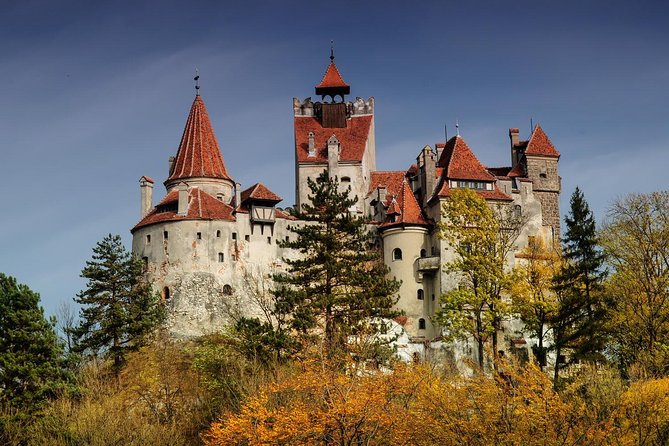
Day three is pure Transylvania mood. You visit Bran Castle, the famous Dracula connection point. The castle itself is a medieval dwelling from the 14th century, but what the guide will help you connect is how the story of Dracula relates to Vlad Țepeș, Vlad the Impaler. The legend takes inspiration from Vlad’s era and his reputation for harsh rule and defense against Ottoman pressure.
Just keep it balanced in your own head: it’s Dracula tourism, but it’s also a gateway into understanding why Vlad mattered to Romanians and why fortresses and authority mattered in the region.
After Bran, you head to Râșnov Citadel, a 14th-century fortress built to defend local people during frequent invasions. It’s placed for views and for practicality. During war periods, locals would retreat with cattle into the fortress, which gives the whole place a lived-in logic instead of feeling like a museum set.
Admission tickets are often not included for castles and citadels, so budget a little extra for this day.
More painted monastery trips:
- Bucovina Painted Monasteries & Transylvania Tour: 4-Day Private
★ 5.0 · 6 reviews - Transylvania & Bucovina Private Tour – 6 days
★ 5.0 · 3 reviews - Bucovina Painted Monasteries Day Tour
★ 5.0 · 83 reviews - 1-Day Bucovina Painted Monasteries tour from Suceava – English
★ 5.0 · 33 reviews
Biertan and Sighișoara, UNESCO Transylvania you can feel walking
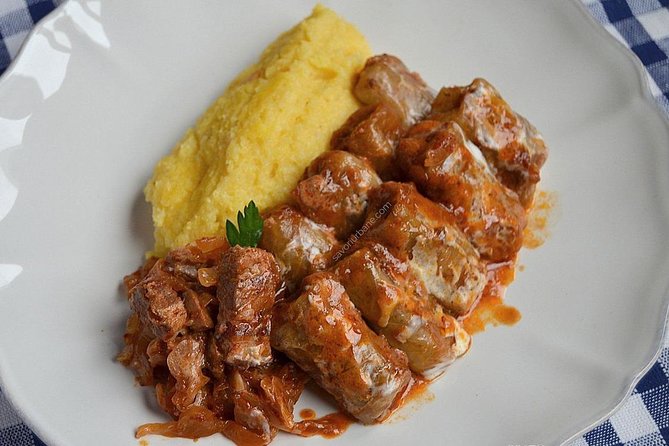
If you want UNESCO that doesn’t feel distant, this is where it starts clicking.
First is Biertan Fortified Church, a UNESCO World Heritage site. What makes it special is that the ensemble preserved original substance from the late 15th century into the early 16th century. The setting also matters, because the church and its components line up harmoniously, not like random buildings dropped into a village.
Then you move to Sighișoara, a small fortified medieval town tied to Transylvania’s Saxon history. The guide route covers the Clock Tower and History Museum, the Church on the Hill, the House of Dracula, and the Central Square. You’ll also walk past distinctive features like the covered stairways, including the pupils roofed stairways.
Sighișoara tends to feel less like a day trip and more like a town you could return to. That’s partly because it’s compact. It also helps that the guided highlights are focused on what you can actually see in a walk.
The road from Transylvania to Bucovina: Bicaz Gorge and Red Lake
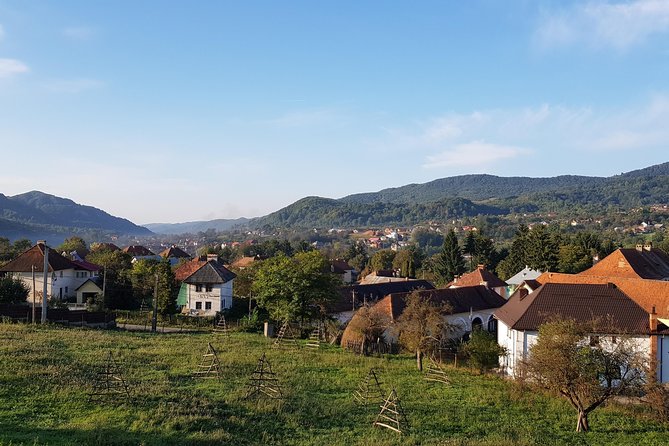
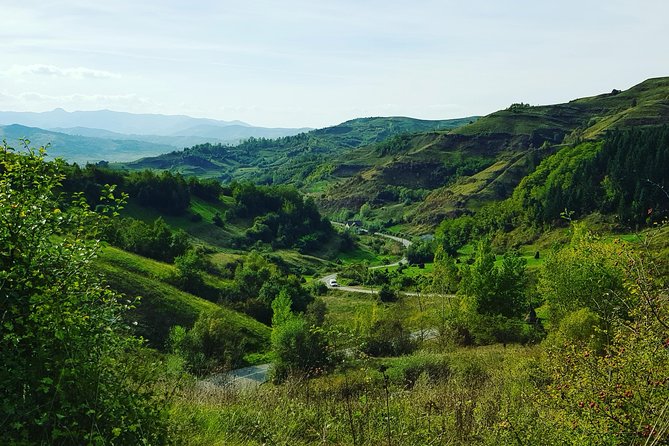
Then the scenery ramps up. Day five starts with a drive through Bicaz Gorges, cutting the route from Transylvania into Bucovina. This is one of Romania’s signature mountain drives, with tight twists and steep climbs through limestone cliffs that rise roughly 1,000 feet. You’ll have a short photo stop arranged by the guide, which is exactly what you want here.
After the mountains, you reach Red Lake, near Gheorgheni. It’s a natural dam lake at the foot of the Hasmașu Mare Mountains, and the name comes from reddish alluvia deposited by Red Creek. The lake feels dark and dramatic, with stumps sticking out, which is part of why it has that slightly eerie look.
Lunch here is built in: you enjoy a meal at a small restaurant with a view. Then you get time to walk, and yes, you can feed ducklings if you have bread.
This is a nice change from constant medieval stone. It’s still a guided stop, but your body gets a break. You’re outdoors, breathing mountain air, and not trying to squeeze in three more interiors.
Voroneț and the Painted Monasteries style: why the color matters
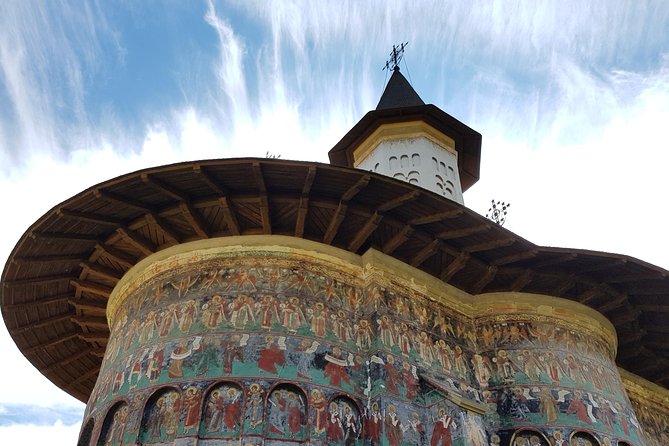
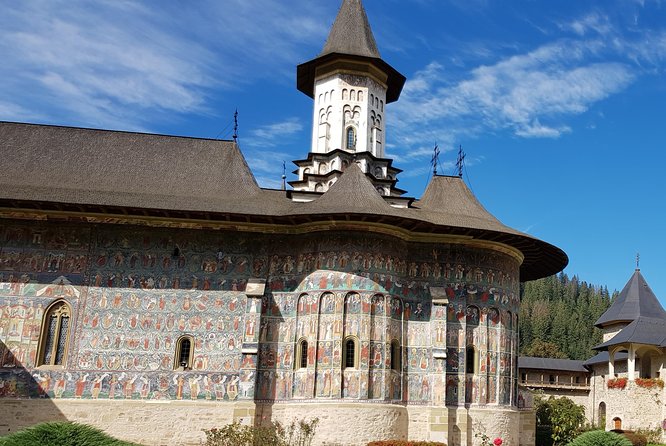
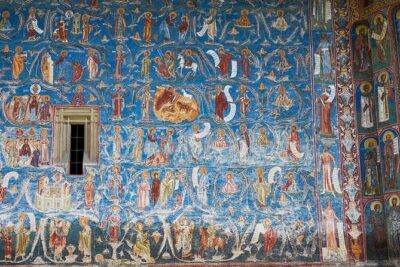
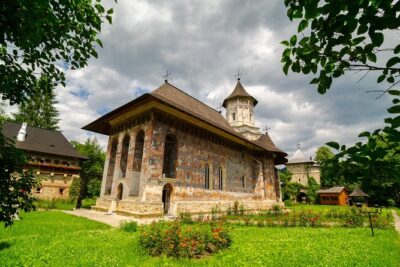
In the afternoon, you visit Manastirea Voronet, one of the most famous Painted Monasteries of Bucovina. It’s UNESCO, and the guide highlights the most recognizable feature: the Last Judgment fresco on the exterior façade. People talk about Voroneț for a reason. The famous blue paint is known as Voroneț blue, and the key point is that it has reportedly never faded in the way you might expect.
That’s what makes this stop more than a photo wall. When you see the exterior fresco at the scale of a building front, the story is readable, and the artistry feels less like a small relic and more like a public message.
You’ll want to keep your expectations practical. The stop time is listed at about 40 minutes, so come with a light pace, not a plan to read every icon like it’s a textbook.
Humor, Sucevita, Moldovița, Marginea pottery, and the Painted Eggs workshop
Day six is an art-and-craft day, with a strong UNESCO backbone.
You’ll visit Humor Monastery and Sucevita Monastery, both UNESCO painted monasteries. Then you add Moldovița Monastery, also UNESCO. Each one is on the shorter side, about 30 minutes, so the guide’s job becomes key: pointing out what to look for, and helping you understand the symbolism without turning it into a lecture.
Between monastery stops, you shift gears to Ceramica neagra from Marginea. Marginea is known for black pottery, with roots dating back to around 1500. The village still produces the pottery, and you can pick up a piece as a souvenir. This is where the trip becomes more tangible. You’re not only seeing traditions preserved in stone. You’re seeing crafts made now.
Then comes one of the most distinctive add-ons on this whole route: Letitia Orsivschi’s Egg Museum. The collection includes over 3,000 painted eggs, and the museum is designed to explain traditions and symbols. In the workshop, you can see how the painted-egg craft is created, and you learn meanings behind the symbols used in Bucovina egg design.
The museum also lists a wide range of eggs in the collection, including rare types like emu and rhea, plus very small eggs. Even if you’re not the egg-collecting type, it’s a memorable way to understand how a culture turns symbols into objects.
Maramureș wooden churches: Barsana, Rozavlea, and Ieud
Day seven is for timber and patience.
You start the journey toward Maramureș, which is often described as the heart of rural Romania because the region has kept medieval-style village life and traditions in place. The route focuses on wooden churches, and the contrast with earlier stone sites is striking. Here, craftsmanship is the main character.
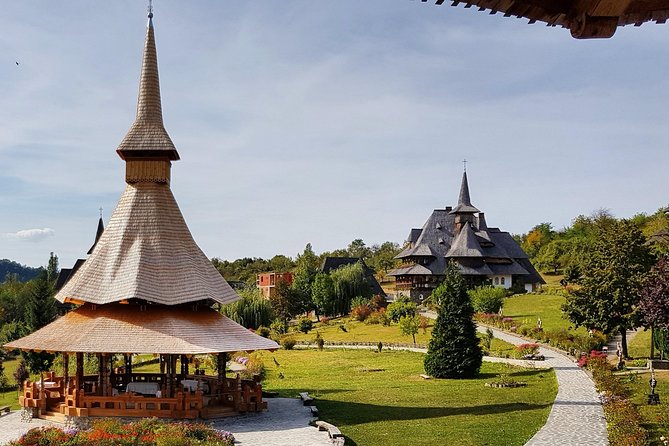
You’ll visit Barsana Monastery, including its two-level wooden church. Then you stop at Rozavlea Wooden Church, a UNESCO site. Finally, you visit Ieud, including its UNESCO wooden church said to date to the 14th century.
These stops work best if you let them take time in your mind. The same way you notice different brush strokes in painting, you can notice different construction styles in wooden churches. And yes, you will likely want to step back and look at how the church sits in the village.
Mocănița steam train and Sapânta’s Merry Cemetery, with a UNESCO-tall church
Day eight is the playful day, but it’s still rooted in Maramureș tradition.
First you ride the Mocănița Maramureș steam train. It’s a narrow-gauge railway running along a scenic route for about 30 miles behind an old steam engine. The ride connects settlements in a way roads can’t match, and during stops you’ll watch workers load firewood and take water from mountain streams.
The train ride also includes a human touch. The itinerary notes that on the way back down, the driver whistles for brakemen to stop the train, sometimes to pick up or drop off passengers, sometimes to pause for mushroom foraging.
Then you head to Sapânta for the Merry Cemetery, where the local approach to death comes through in art. Blue wooden crosses have carved scenes and humorous verses for the people buried there. Even without reading the verses closely, you’ll likely notice the sculptor’s style and the way the cemetery treats memory as part of daily life.
After that, you visit Sapânta-Peri Monastery, which the itinerary describes as hosting the tallest wooden church in the world and being included in UNESCO patrimony. The stop is shorter, about 30 minutes, but it’s a strong capstone to the day.
Cluj-Napoca and Sibiu, the Transylvania cities you can walk without stress
Day nine shifts back to city pacing with a Transylvania flavor that’s distinct from castle-and-fortress days.
In Cluj-Napoca, you get a guided city tour: Union Square, St. Michael’s Church, the Opera House, the historical center, and the Orthodox Cathedral Dormition of the Theotokos. The center area is shaped by buildings from the 18th and 19th centuries, while St. Michael’s Church gives you a gothic anchor.
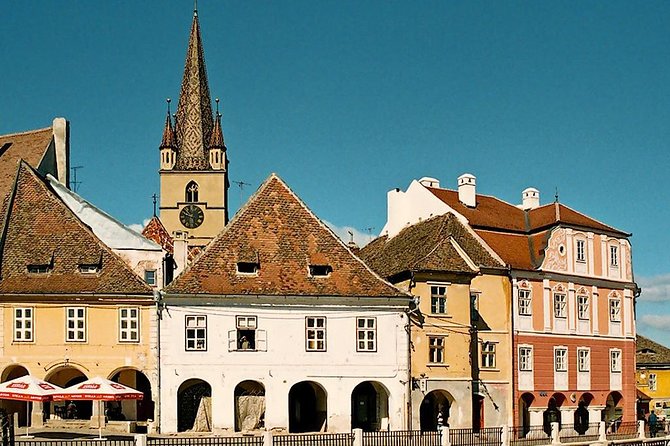
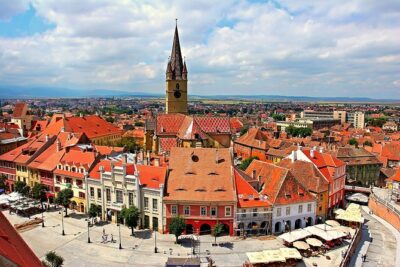
Then you go to Sibiu, where the old town keeps a Germanic feeling. You walk through narrow streets with steep-roofed 17th-century buildings, and you hit major squares like Great Square and Little Square. Highlights include the Evangelical Church, the Bridge of Lies, the Stairs Passage, the Bridge of Lies area, and the Brukenthal Museum and shopping streets.
If you like wandering, Sibiu is a good reward after days that required more ticket-based visiting.
Curtea de Argeș: a Wallachia stop with painted church touches
Day ten takes you into Wallachia with Curtea de Argeș. This place has a name that literally refers to the court on the Argeș, tied to its status as a former capital of Wallachia.
You take a walking tour focusing on the Princely Church and Old Court ruins, plus the Episcopal Church. You also see Olari Church, a painted church from Moldavia found on Wallachian grounds. The itinerary lists the stop at about two hours, so it’s not a quick photo hit. It’s enough time for a real walk.
How the tour logistics actually feel: comfort, timing, and what to budget
This is a private tour, so you only travel with your own group. You meet at 9:00 am, and you have round-trip airport transfers. Transportation is in a comfortable air-conditioned car or van, which matters a lot when you’re crossing between regions like Transylvania and Bucovina.
The guide is English-speaking and licensed, with a driver as part of the team. You also get assistance during the trip, which helps when the day includes multiple stops and you want everything to flow.
The budget reality: breakfast is included for 10 days, but food and drinks are not included. Many stops list admission tickets as not included, though a few are listed as free. So if you want no surprises, keep a separate fund for castle and church entrances plus your lunches and dinners.
One more small practical tip: a review note indicates the Village Museum can be closed on certain days, so if that specific stop matters to you, ask your guide to confirm the day’s operating schedule in advance.
Price and value: what $2,367.30 buys you on an 11-day private road trip
At $2,367.30 per person, this is not a budget backpacking tour. But the value makes sense if you compare it to the cost of building a similar route yourself with private guiding.
You’re paying for:
- Ten nights of accommodation
- Round-trip airport transfers
- Private transportation by air-conditioned car or van
- An English-speaking licensed guide and driver
- Breakfast included for 10 days
- Structured stops that cover Bucharest, Transylvania UNESCO sites, Bucovina painted monasteries, and Maramureș wooden churches and culture
A big part of the value is time saved. You’re visiting UNESCO sites across multiple regions without spending days sorting routing, local logistics, and ticket strategy. And you’re not choosing between comfort and “seeing the good stuff,” because the plan mixes city walks, interior visits, and scenic drives.
The main cost add-ons are admission tickets and meals. If you plan for that, the price starts to feel fair for the amount of ground you cover privately.
Should you book this private 11-day Romania tour?
Book it if you want an organized route that shows you more than one style of Romania. You’ll get a strong UNESCO hit rate, from fortified churches and painted monasteries to wooden churches, plus a few story-driven stops like Bran and the Vlad Țepeș connection.
I’d hesitate only if you want full freedom every day, with no guide schedule and no set order. Private tours like this trade spontaneity for smooth flow, and the itinerary does assume you’re okay with lots of driving between regions.
One smart way to decide is to ask yourself what you want most. If you want castles and medieval towns plus Bucovina’s painted exteriors plus Maramureș wooden churches and folk culture, this route fits together like it was made for that combo.
FAQ
Is this a private tour or a group tour?
This is a private tour/activity. Only your group will participate.
What time does the tour start, and is pickup included?
The start time is 9:00 am. The tour includes free hotel pickup and drop-off, plus a round-trip airport transfer.
Are breakfast and meals included?
Breakfast is included for 10 days. Food and drinks are not included.
Are entrance tickets included for the sights?
Admission tickets are listed as not included for many stops, while some stops are marked free. You should expect to pay many entrance fees separately.
What documents do I need to travel?
A current valid passport is required on the day of travel.
Can I get a full refund if I cancel?
You can cancel up to 3 days in advance of the experience for a full refund. For a full refund, you must cancel at least 3 full days before the experience’s start time.
Recently listed in Bucharest
- Village Museum Bucharest Guided Tour★ 5.0 · 6 reviews
- Wine Tasting and Dinner, including Sommelier★ 5.0 · 3 reviews
- Winery touring & private wine tasting – one day private tour★ 5.0 · 3 reviews
- Bucharest: Dealu Mare Winery Private Trip with Wine Tasting★ 4.9 · 6 reviews
- Transylvania Tour: Dracula’s Castle, Peles Palace & Brasov★ 5.0 · 19 reviews
- Traditions in Bucharest: Village Museum and Wine Tasting★ 5.0 · 8 reviews
- Airport Henri Coanda (Otopeni) to Bucharest – Private Transfer – Driver★ 5.0 · 5 reviews
- Discover Medieval Transylvania Small Group Tour – 7 days★ 5.0 · 4 reviews
Painted Monastery Tours, compared.
1-Day Bucovina Painted Monasteries tour from Suceava – English
Read our review →
Day trip from Iasi to the UNESCO Painted Monasteries in Bucovina
Read our review →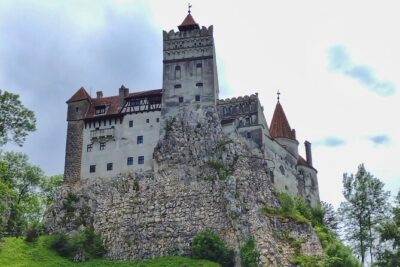
Bucovina Painted Monasteries & Transylvania Tour: 4-Day Private
Read our review →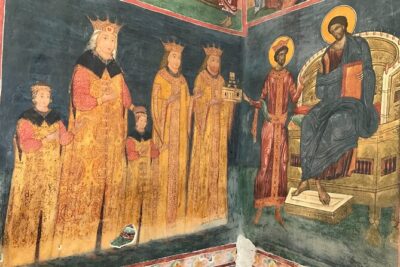
Two days tour to Bucovina & UNESCO Painted Monasteries
Read our review →Browse the lists this tour appears in