
REVIEW · WALKING TOURS
Walking tour of Bucharest
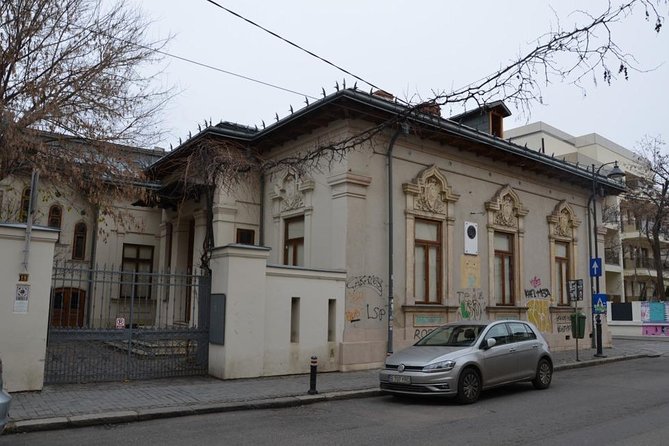
Four stops, one smart walking circuit. This Bucharest walking tour is all about cultural landmarks close together, with clear commentary and mostly free entry, beginning at the French Institute in Romania. I like that it mixes parks and architecture, so you get more than photo stops, you get the story of how this part of the city grew.
Second, I’m a fan of the professional guide style here. The tone is described as passionate, very knowledgeable, and often funny, with strong language skills from guides like Mihnea Toncescu and Mihai, who impressed with excellent French and good humor. If you like learning while you walk, this format fits.
One consideration: it’s a morning street walk with short stops, so if you’re looking for long indoor time or a break for food, you’ll want to plan that outside the tour window.
In This Review
- Key things to know before you go
- Starting at the French Institute in Romania (Bulevardul Dacia 77)
- Parcul Ion Voicu and the neighborhood timeline you can see
- Gradina Icoanei and the Ioanid Park area, two parks with different angles
- Biserica Icoanei: a lesser-known church worth learning the why
- Guide energy, pace, and group size that keeps it enjoyable
- Price and value: why $24.19 makes sense here
- Logistics that matter in Bucharest mornings
- Who this tour suits best
- Should you book this Bucharest walking tour?
- FAQ
- Where does the Bucharest walking tour start?
- When does the tour meet?
- How long is the tour?
- How much does the tour cost?
- What is included in the ticket price?
- Are entrance tickets included?
- What languages is the tour offered in?
- How big is the group?
- Can service animals join, and is the tour near public transportation?
- What is the cancellation policy?
Key things to know before you go
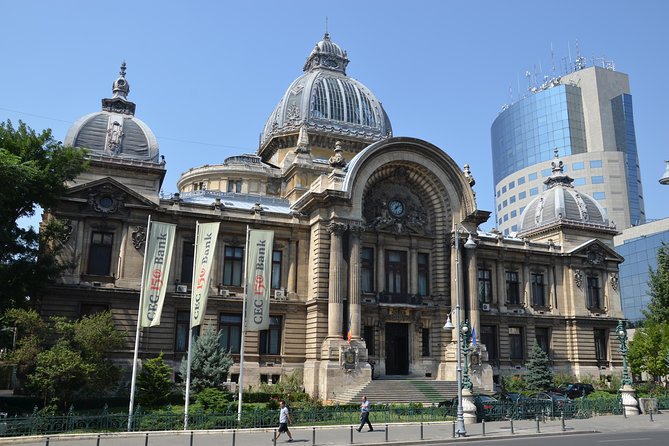
- French Institute reception hall visit if it’s a working day, with a look inside the reception area and often exhibitions
- Parcul Ion Voicu + surrounding neighborhood growth explained through the late 19th to early 20th century urbanization
- Two nearby park stops in the Ioanid Park area, including Gradina Icoanei with a different feel
- Biserica Icoanei as the church that was once the area’s most important, with architecture worth lingering over
- Small-group experience by walking standards, with a max of 50 people
- English-led option, with the possibility of a multi-lingual guide depending on operations
Starting at the French Institute in Romania (Bulevardul Dacia 77)
The tour kicks off at the French Institute in Romania, Bulevardul Dacia 77, and the timing is set for 10:00 am. That’s a smart starting point because it instantly signals the vibe of the route, cultural, civic, and grounded in the city’s institutions.
If it’s a working day for the institute, you get a chance to look inside the reception hall. It may not sound like a big deal from the outside, but reception halls are where you often find the most honest, everyday sense of how an institution presents itself. If exhibitions are running, you’ll see that layer too. Even when there’s no big event, the stop is still useful, because it gives your guide a clean entry into the bigger theme of Bucharest’s European influences.
Practical tip: wear shoes that handle sidewalks well. This kind of tour is built for steady walking, not strolling with lots of long pauses.
More Walking Tours in Bucharest
- Bucharest: City Highlights Guided Walking Tour
★ 4.9 · 1,482 reviews - Bucharest: Communism and History Guided City Walking Tour
★ 4.9 · 918 reviews - Bucharest Highlights Walking Tour
★ 5.0 · 469 reviews
Parcul Ion Voicu and the neighborhood timeline you can see
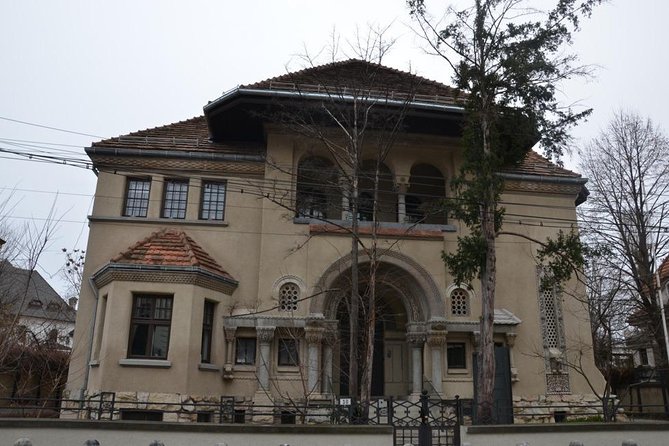
Next comes Parcul Ion Voicu, and here the guide’s job shifts from “here’s the place” to “here’s what changed.” The commentary centers on how urbanization in this part of Bucharest began around the end of the 19th century and into the early 20th century. That matters because Bucharest doesn’t feel uniform when you’re walking. Buildings, street rhythm, and architectural choices show up like layers.
The stop is short, but the payoff is in how you’re taught to look. You’ll be directed toward the kinds of houses around you and the interesting histories attached to them. Instead of treating the area as a postcard, you start connecting architecture to a time period. That makes your walk feel more like a guided conversation than a checklist.
What I like about this approach is that it helps first-time visitors get their bearings fast. You start to understand what to notice: the style shifts, the scale, and how a neighborhood developed when the city was expanding. Even if you can’t identify every architectural detail, the guide gives you a mental framework.
Possible drawback: if you want a deeper dive into a single site, this stop may feel like “enough to understand the idea,” not “enough to study for an hour.” For most people, that’s a good trade-off because the schedule keeps moving.
Gradina Icoanei and the Ioanid Park area, two parks with different angles
After Parcul Ion Voicu, you’ll head into Gradina Icoanei, described as next to Ioanid Park but distinctly different. That’s one of the better ways to use parks on a walking tour. You don’t just get greenery, you get contrast. One park can feel like a pause, while the other gives you a different kind of atmosphere or layout, and your guide points out those differences.
This is one of the shorter segments, so don’t expect a long break. Think of it as a mental reset that also supports the theme of the day: Bucharest’s city fabric. Parks help you see how built-up streets transition into open space, and they give context for the neighborhood around them.
If you’re the type who likes taking in the city with all senses, this segment can be pleasant. Even with limited time, you can notice how people use the paths and edges. Then you carry that feeling forward when you return to architecture with the church stop.
Biserica Icoanei: a lesser-known church worth learning the why
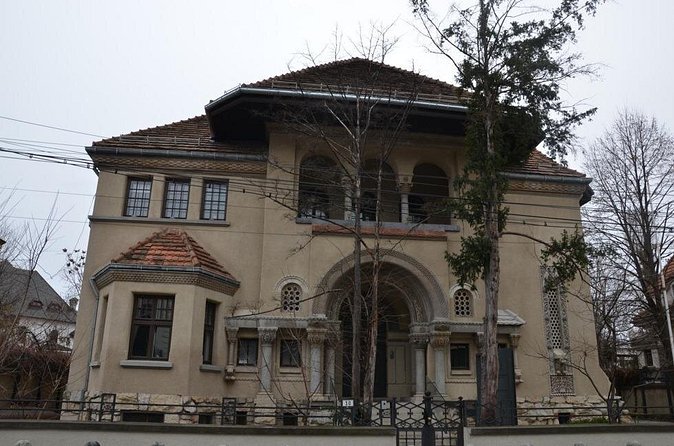
The route then focuses on a smaller, less famous church with an interesting history, and the named highlight here is Biserica Icoanei. The key takeaway is simple and powerful: this church was once the most important church of the area. When you hear that, the building stops being just a pretty stop and turns into a marker of who mattered, where life gathered, and how communities formed.
You’ll spend about 10 minutes here, but the emphasis is on architecture in context. Instead of just pointing at features, the guide ties the church to the area’s past importance. That approach makes it easier to remember what you saw. You leave knowing why it mattered, not just that it looked old.
Even if churches are not your main interest, I think this stop earns its place because it rounds out the walk. A city is not only streets and buildings, it’s also where people gathered for shared rituals, identity, and belonging. This segment gives you that human angle without taking over the day.
One more thought: bring a quick, respectful look at the exterior details first, then listen to the story. The order helps. You’ll understand what you’re seeing while the guide explains.
A different sort of day out in Romania:
- Bucharest: Dracula’s Castle, Peles Castle, & Brasov Old Town
★ 4.5 · 17,858 reviews - Bucharest: Dracula Castle, Peles Castle & Brasov Old Town
★ 4.6 · 10,891 reviews - Bucharest: Dracula’s Castle, Peleș Castle & Brașov Day Trip
★ 4.4 · 6,100 reviews - Bucharest: Palace of Parliament Tickets and Guide
★ 4.3 · 3,182 reviews
Guide energy, pace, and group size that keeps it enjoyable
The itinerary is built for a 3 to 4 hour walk, with multiple brief stops. That pacing works well when your goal is orientation plus context. You’re not spending the whole morning stuck in one location, but you also aren’t sprinting. It’s a rhythm that makes it easier to absorb stories without getting overloaded.
The group size cap is up to 50 travelers, which is large for a private experience but still reasonable for a walking tour where the guide can keep control. You’ll also be dealing with a very “human scale” format. You’ll hear the commentary, then immediately see what it’s talking about. That’s usually the best way to learn in a city like Bucharest.
On languages: this tour is offered in English, and it may be operated by a multi-lingual guide. If you’re comfortable listening for a mix of languages, that can be fun. In practice, the experience is described as strongly guided, with hosts known for humor and strong command of languages like French.
What you should do as a participant: be ready to listen. This is a walking tour where the real value is the commentary and how it changes your reading of the buildings.
Price and value: why $24.19 makes sense here
At about $24.19 per person for a 3 to 4 hour guided walk, the value is largely in the guide and the format. You’re paying for professional narration, a tight route, and time saved figuring out what to notice in the first place.
Entrance tickets are a key part of the math here. The tour notes that entry tickets are free where applicable, and for the French Institute stop you’re specifically told admission is free. That means you’re not spending extra time or money on paid attractions mid-walk. The tour is also clear that food and drinks are not included, so your cost stays predictable.
Here’s how I’d plan it for best value:
- Budget for water and a snack before or after the tour.
- Wear comfortable shoes so you can actually enjoy the walking time.
- If the institute reception hall visit is available on your day, you get an extra perk without added ticket costs.
Is it a bargain? For a first-time orientation walk with guided context and multiple major types of stops, yes, it’s strong value. If you’re already deeply versed in Bucharest’s architecture and church history, you might not need this. But for most visitors, it’s a great way to start.
Logistics that matter in Bucharest mornings
This tour ends back at the meeting point, so you’re not dealing with a long transfer. You start at French Institute in Romania at 10:00 am, which is a good time for a walking tour because the city is active but you’re not yet dealing with peak late-day crowds.
It’s also close to public transportation, which is helpful if you’re staying outside the core or plan to connect to other parts of your day afterward. And you’ll receive confirmation at booking time, with a mobile ticket option. Mobile tickets are useful in cities where check-in can be quick and details matter.
Accessibility note in plain terms: service animals are allowed, and most travelers can participate. Still, if you have mobility constraints, the walking format is the main thing to consider. This is a street-based tour with multiple short segments.
Who this tour suits best
This walking route is ideal if:
- You’re visiting Bucharest for the first time and want context fast
- You like culture that you can actually see while walking, parks plus architecture
- You want a guided experience with a lively host and strong explanation
- You’re interested in how neighborhoods develop over time, not only famous monuments
It may not be perfect if:
- You want a long museum-style visit with lots of indoor time
- You prefer free roaming without a structured route
- You hate walking, even when the stops are only about 10 to 25 minutes
Should you book this Bucharest walking tour?
Yes, I’d book it if your goal is smart orientation with a guide who talks in a clear, engaging way. The strongest selling points are the guide quality and the way the route teaches you how to notice Bucharest, from the institute interior stop to Parcul Ion Voicu’s neighborhood story and into Biserica Icoanei’s architectural importance.
If you’re on the fence, use this quick checklist:
- You like learning while walking: check.
- You want mostly free stops: check.
- You can handle a few short segments outside: check.
- You’re okay adding your own meal plans, since food and drinks aren’t included: check.
Given the price and the guided route built around context, this is the kind of tour that helps your whole trip feel more connected.
FAQ
Where does the Bucharest walking tour start?
It starts at French Institute in Romania, Bucharest, at Bulevardul Dacia 77, București 020051, Romania.
When does the tour meet?
The start time is 10:00 am.
How long is the tour?
The duration is about 3 to 4 hours.
How much does the tour cost?
The price is $24.19 per person.
What is included in the ticket price?
A professional guide is included.
Are entrance tickets included?
Entrance tickets are not included where applicable, but the stops listed are free to enter as described.
What languages is the tour offered in?
The tour is offered in English, and it may be operated by a multi-lingual guide.
How big is the group?
The tour has a maximum of 50 travelers.
Can service animals join, and is the tour near public transportation?
Service animals are allowed, and the tour is near public transportation.
What is the cancellation policy?
Free cancellation is available. You can cancel up to 24 hours in advance for a full refund. If you cancel less than 24 hours before the start time, you do not get a refund.
Recently listed in Bucharest
- Wine Tasting and Dinner, including Sommelier★ 5.0 · 3 reviews
- Winery touring & private wine tasting – one day private tour★ 5.0 · 3 reviews
- Village Museum Bucharest Guided Tour★ 5.0 · 6 reviews
- Bucharest: Dealu Mare Winery Private Trip with Wine Tasting★ 4.9 · 6 reviews
- Transylvania Tour: Dracula’s Castle, Peles Palace & Brasov★ 5.0 · 19 reviews
- Traditions in Bucharest: Village Museum and Wine Tasting★ 5.0 · 8 reviews
- Airport Henri Coanda (Otopeni) to Bucharest – Private Transfer – Driver★ 5.0 · 5 reviews
- Discover Medieval Transylvania Small Group Tour – 7 days★ 5.0 · 4 reviews
Walking Tours, compared.

Ghost Stories & Romanian Mythology Walking Tour
Read our review →
Browse the lists this tour appears in