
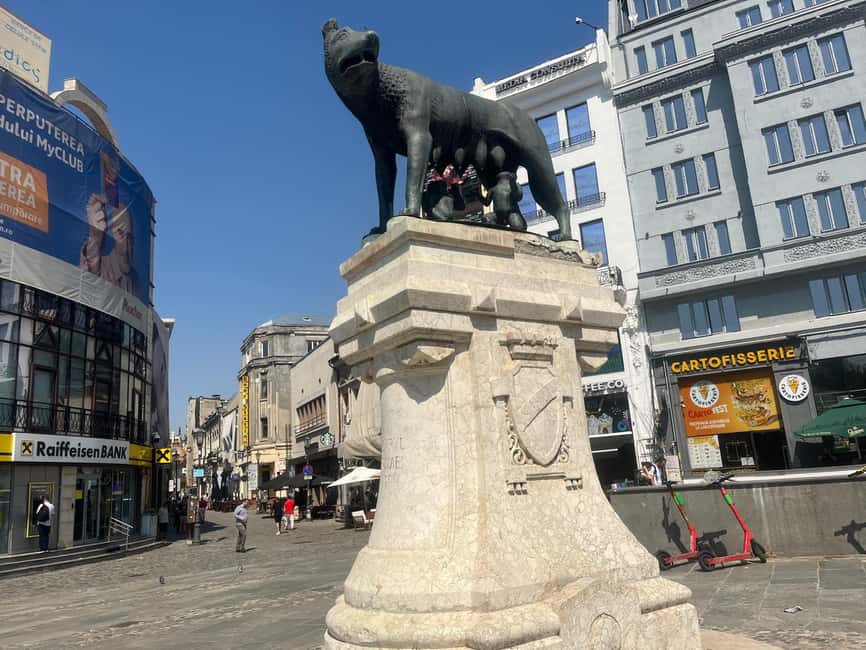
REVIEW · WALKING TOURS
Bucharest: Walking tour with Italian speaking guide for small groups
Bucharest is best understood on foot. This 3-hour Italian speaking small-group tour strings together the city’s big stories and surprising details, moving from historic streets to grand boulevards and back again. I like the way the guide turns landmarks into real context, not just photo spots.
Two things I really value here are the small group size and the guide style. In past runs, names like Filippo Di Cataldo and Giuseppe came up in reviews for being friendly, well prepared, and very human, with history explained through anecdotes that make the neighborhoods easier to remember. One drawback to consider is that it is a walking tour, so you’ll want comfortable shoes if you’re not used to steady city pace.
In This Review
- Key things to know before you go
- Bucharest on foot: where the city’s past and future touch
- Meeting at Caru’ cu Bere, and why the start point matters
- Lipscani and Old Town: monasteries, inns, and street-level stories
- Stavropoleos Orthodox Monastery
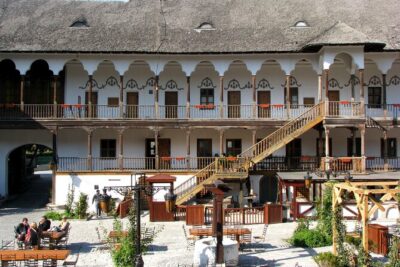
- Manuc’s Inn
- Old Town guided walk and the fast street-reading skill
- Cărturești Carusel and Umbrellas Street: quick photos, real atmosphere
- Cărturești Carusel
- The Umbrellas Street photo stop
- National Bank of Romania and Pasajul Villacrosse: power and passageways
- National Bank of Romania
- Pasajul Villacrosse
- Revolution Square and the Romanian Athenaeum: the story behind the grandeur
- Why the square-to-Athenaeum combo works
- Price and value: is $35 for 3 hours worth it?
- What the small-group format really changes
- Who should book this tour, and who might skip it
- My take: book it if you want Bucharest to make sense fast
- FAQ
- Where does the tour start?
- How long is the walking tour?
- What language is the guide?
- Is the tour wheelchair accessible?
- What stops and areas does the tour include?
- Does the tour include food or drinks?
- Is there time for photos?
- Are audio recordings allowed?
- Is it allowed to bring alcohol or drugs?
- Who is the tour not suitable for?
Key things to know before you go
- Italian guide with a talk-and-walk rhythm, so you learn while you move, not in one long lecture
- Old Town culture around Lipscani, with standout stops like Stavropoleos Monastery and Manuc’s Inn
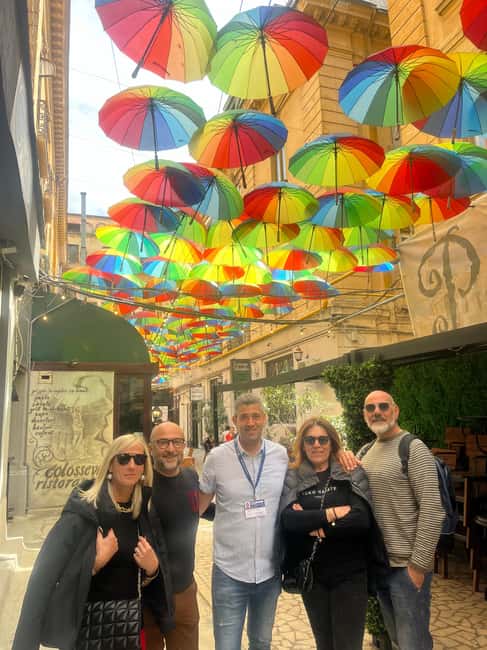
- Photo moments built in, including Cărturești Carusel and Umbrellas Street
- Revolution Square context, linking the end of Ceausescu’s regime to the architecture around it
- Big, walkable highlights like National Bank buildings and Pasajul Villacrosse
- 3 hours is tight but manageable, with multiple short guided segments instead of one marathon
Bucharest on foot: where the city’s past and future touch
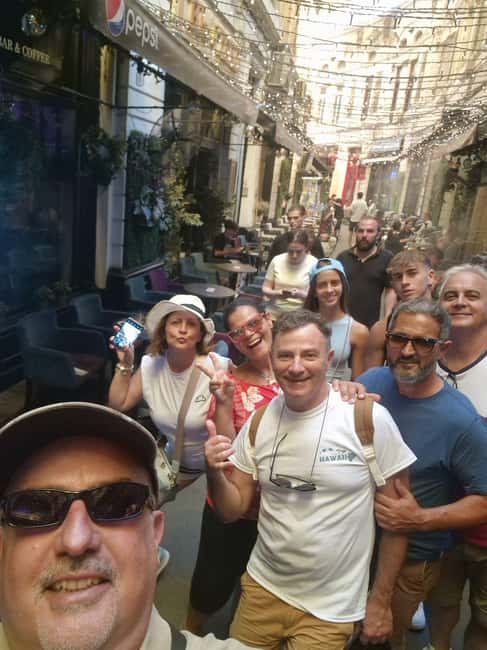
Bucharest can feel split in two, old world on one street and polished city ambition on the next. What I like about this tour is that it doesn’t treat those contrasts like a trivia game. You learn the logic of the city, so when you see a square, a monastery, a passageway, or a grand concert hall, you know what era shaped it and why the story matters.
You also get a guided lens on the places that tourists rush through. Even when you’re just stepping into a small street, the tour helps you read the signs of history: changing architecture styles, the purpose of a building, and the way certain streets became social centers over time. That’s what makes walking tours useful here, you’re not just collecting sights, you’re building a mental map.
And yes, the pacing stays friendly. The tour is built around lots of short stops, including several quick guided sections, so you stay engaged without feeling trapped in one location too long.
More Walking Tours in Bucharest
- Bucharest: City Highlights Guided Walking Tour
★ 4.9 · 1,482 reviews - Bucharest: Communism and History Guided City Walking Tour
★ 4.9 · 918 reviews - Bucharest Highlights Walking Tour
★ 5.0 · 469 reviews
Meeting at Caru’ cu Bere, and why the start point matters
You meet in front of Caru’ cu Bere, at Stravopol(e)os Street 5, with the guide holding a professional identification card. This is a clever starting choice because Caru’ cu Bere sits right in the historical gravity of central Bucharest, near the streets people associate with nightlife and old-city energy.
From the beginning, you’re already in the right mood for the tour. The walk is not about hiding the city’s character, it’s about showing you how the area around Lipscani became a gathering place over time. Starting at a well-known landmark also helps you orient fast, especially if it’s your first time in Bucharest.
Practical note: if you’re the type who likes to arrive early and skim nearby streets, this is one of those tours where you can do that. Then you fall in with the group and the guide’s commentary fills in the missing pieces.
Lipscani and Old Town: monasteries, inns, and street-level stories
The Old Town portion is where you really feel Bucharest’s personality. The tour focuses on a mix of religious history, old commercial life, and the layered street feel of the city center, including several quick guided segments so you can keep moving without losing the meaning.
Stavropoleos Orthodox Monastery
One of the first stops is Stavropoleos Orthodox Monastery, with a short visit. Even in a brief stop, you should expect atmosphere and architectural clues that explain why this kind of site mattered in earlier Bucharest. Monasteries are not only spiritual places here, they connect to the city’s wealth patterns, community life, and changing eras.
A good guide helps you look past the obvious and notice the details that reflect Romanian religious and artistic tradition. If you like architecture that feels lived-in rather than museum-clean, this stop is worth your attention.
A different sort of day out in Romania:
- Bucharest: Dracula’s Castle, Peles Castle, & Brasov Old Town
★ 4.5 · 17,858 reviews - Bucharest: Dracula Castle, Peles Castle & Brasov Old Town
★ 4.6 · 10,891 reviews - Bucharest: Dracula’s Castle, Peleș Castle & Brașov Day Trip
★ 4.4 · 6,100 reviews - Bucharest: Palace of Parliament Tickets and Guide
★ 4.3 · 3,182 reviews
Manuc’s Inn
Next comes Manuc’s Inn, again with a short visit. An inn sounds ordinary until you learn what inns meant historically in trading cities. These buildings often hosted travelers, business deals, and information flow, which means you can think of an inn as an information hub of its time, not just a place to sleep.
This is where the guide’s anecdotes matter. In reviews, Filippo Di Cataldo and Giuseppe were praised for making the history feel approachable, so you’re not stuck translating dates in your head.
Old Town guided walk and the fast street-reading skill
After those visits, you get a guided stretch through Bucharest Old Town. This is a key part of the tour because it teaches you how to “read” streets quickly, you learn what to notice next time you wander on your own. That includes how neighborhoods shift from one mood to another over just a few blocks.
Cărturești Carusel and Umbrellas Street: quick photos, real atmosphere
Not all the best moments here are long. Two stops are built as photo breaks, and they work because they sit in the flow of the walk.
Cărturești Carusel
At Cărturești Carusel, the tour includes a photo stop. This is an easy moment to step aside, take pictures, and reset your legs. It also helps you understand a modern Bucharest detail: the way older central areas mix with today’s culture and retail energy.
If you tend to miss these “in-between” spots when you travel alone, this stop gives you permission to enjoy them without rushing.
The Umbrellas Street photo stop
Then there’s Umbrellas Street, with another short photo opportunity. It’s the kind of street detail you might not hunt down yourself on a first visit. The guide’s value here is not the photo itself, it’s the context, how these small visual things fit into the city’s identity as a whole.
National Bank of Romania and Pasajul Villacrosse: power and passageways
The tour also gives you two very different looks at central Bucharest, a major institutional building and a covered passage that feels like stepping into another rhythm.
National Bank of Romania
The National Bank of Romania stop is a guided segment. Financial institutions are often the backbone of a city’s modernization story, and Bucharest is no exception. A good guide will help you connect the building’s prominence with the role of banking and governance in Romania’s changing history.
Even if you’re not a museum person, take this as a “how power looks in architecture” moment. You’ll come away with a clearer sense of why certain areas of town grew more grand over time.
Pasajul Villacrosse
Next is Pasajul Villacrosse, with guided explanation. Passageways like this are a Bucharest specialty for street wanderers, because they mix shopping, movement, and a slower indoor pace. It’s one of those places where the route matters as much as the destination, you understand the city by how it funnels you through these semi-hidden spaces.
If you like photos with depth, look for views down the passage and angles that show the ceiling and storefront rhythm. The guide’s short commentary helps you appreciate it beyond the novelty.
Revolution Square and the Romanian Athenaeum: the story behind the grandeur
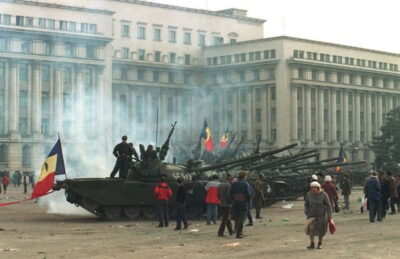
If there’s one section that gives the tour extra weight, it’s Revolution Square. You get a longer guided visit there, with time to absorb the surrounding buildings that represent different historical periods. This matters because you’re not only learning what happened in December 1989, you’re also learning how the square became an architectural record of Romania’s shifting eras.
When you stand in a place like this, it’s easy to treat it like scenery. The guide helps you avoid that mistake by linking the buildings around you to the idea of political change and identity. You’ll also get pointed context on the Romanian Athenaeum, which comes next with a guided segment.
Why the square-to-Athenaeum combo works
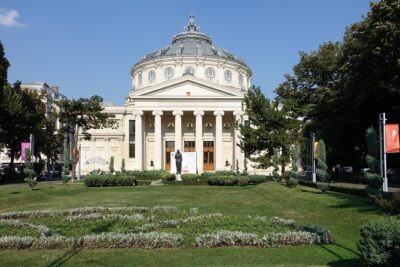
Putting Revolution Square next to the Romanian Athenaeum is smart. The square gives you the political turning point, and the Athenaeum adds the cultural lens, the kind of national self-image that gets expressed through art, music, and public prestige.
It’s also the emotional arc of the tour. Earlier stops focus on everyday life, while this part forces you to slow down and see how big moments leave physical marks.
Price and value: is $35 for 3 hours worth it?
At $35 per person for about 3 hours, this tour is positioned for travelers who want first-visit orientation without splurging on private guiding. In practical terms, the value comes from how much you cover and how the guide ties it together.
You’re getting:
- A live Italian speaking guide for the walking time
- Multiple guided stops that explain what you’re seeing, not just where to stand
- Small-group benefits, which typically means questions are more likely and the guide can keep the pace comfortable
If you’re traveling with limited time in Bucharest, three hours is a sweet spot. It’s long enough to cover Old Town, major central architecture, and a major political-cultural anchor, but short enough that you can still explore the rest of the city afterward on your own.
If you already know Bucharest deeply, you might skip this and do a self-guided loop. But if you’re new, or you want the city to make sense faster, the price is hard to argue with for what you get.
What the small-group format really changes
Small-group tours can feel like marketing words until you experience the difference. Here, the format matters because the route is a mix of quick stops and short guided segments. That only works well if the group moves smoothly.
The best part, according to the guides praised in reviews, is that the guide keeps the experience easy to follow. Filippo Di Cataldo and Giuseppe were specifically praised for being prepared and also very approachable, with explanations that are clear and anecdotes that keep things human. That blend is what helps you enjoy a walking tour even if you’re not trying to memorize everything.
You also benefit from the route’s tempo. You’re constantly switching environments, Old Town to grand boulevard energy and then to significant squares. A larger group usually slows down or crowds certain areas. Here, you’re more likely to keep momentum.
Who should book this tour, and who might skip it
This is a great choice for:
- First-time visitors who want a guided map of Bucharest
- Travelers who like architecture and want the stories behind it, not just street names
- Anyone who prefers small-group comfort over being one of many
It may not be the best fit if:
- You dislike walking or have limited mobility even though the tour is wheelchair accessible
- You need a hearing-impaired friendly format, since it is not suitable for hearing-impaired people based on the provided information
- You’re traveling with very young children, since it is not suitable for children under 2, 3, or babies under 1
Also, be mindful of the rules: audio recording is not allowed, and the tour does not permit alcohol or drugs. If you enjoy documenting heavily with your phone, you can still take photos, but keep recording tools in check.
My take: book it if you want Bucharest to make sense fast
I like this tour because it gives you what you need on day one: a route that connects Bucharest’s identity from Old Town streets to big public spaces. The guide role is central here. When the person leading the walk is friendly and organized, the city clicks into place.
If you’re the kind of traveler who reads a plaque, then immediately forgets it, this tour is built to fix that. You’re taught how to connect each stop to the bigger story, so you don’t just move through the city, you start understanding it.
Should you book? If you have about half a day and want an Italian-guided overview that stays practical and grounded, yes, this is a solid buy.
FAQ
Where does the tour start?
The guide waits in front of Caru’ cu Bere, located at Stavropoleos Street 5, 030081, Bucharest, and you’ll be able to recognize the guide by a professional identification card.
How long is the walking tour?
The duration is 3 hours.
What language is the guide?
The tour is led by a live guide speaking Italian.
Is the tour wheelchair accessible?
Yes, the tour is listed as wheelchair accessible.
What stops and areas does the tour include?
The walk includes Old Town sights such as Lipscani Street, Stavropoleos Monastery, Manuc’s Inn, Cărturești Carusel, the National Bank of Romania, Pasajul Villacrosse, Umbrellas Street, and Revolution Square and the Romanian Athenaeum.
Does the tour include food or drinks?
No. Personal expenses and food and beverages are not included.
Is there time for photos?
Yes. There are photo stops, including at Cărturești Carusel and The Umbrellas Street.
Are audio recordings allowed?
No, audio recording is not allowed.
Is it allowed to bring alcohol or drugs?
No. Alcohol and drugs are not allowed.
Who is the tour not suitable for?
It is not suitable for children under 2 years, children under 3 years, babies under 1 year, and hearing-impaired people (based on the provided information).
Recently listed in Bucharest
- Village Museum Bucharest Guided Tour★ 5.0 · 6 reviews
- Wine Tasting and Dinner, including Sommelier★ 5.0 · 3 reviews
- Winery touring & private wine tasting – one day private tour★ 5.0 · 3 reviews
- Bucharest: Dealu Mare Winery Private Trip with Wine Tasting★ 4.9 · 6 reviews
- Transylvania Tour: Dracula’s Castle, Peles Palace & Brasov★ 5.0 · 19 reviews
- Traditions in Bucharest: Village Museum and Wine Tasting★ 5.0 · 8 reviews
- Airport Henri Coanda (Otopeni) to Bucharest – Private Transfer – Driver★ 5.0 · 5 reviews
- Discover Medieval Transylvania Small Group Tour – 7 days★ 5.0 · 4 reviews
Walking Tours, compared.


Ghost Stories & Romanian Mythology Walking Tour
Read our review →
Browse the lists this tour appears in