REVIEW · GUIDED
Bucharest: Romanian Athenaeum Guided Tour
Bucharest has a surprise inside this hall. The Romanian Athenaeum tour pairs classic neoclassical architecture with guided stories that make the building feel like more than a pretty façade, all led by Iana at 1.5 to 2 hours.
I especially like two parts: first, the exterior walkthrough that explains the six Ionic columns and the 19th-century Give a leu for the Athenaeum campaign that helped bring the monument to life. Second, I love how the guide connects the panoramic fresco with what it depicts about Romania, not just what it looks like.
One consideration: photography is allowed, but no flash, so bring your camera habits (and patience) for a slower, detail-focused visit.
In This Review
- Key things you’ll notice on this tour
- Romanian Athenaeum Facade: Six Ionic Columns and the Give a Leu Campaign
- Inside the Circular Vestibule: Marble Floors and a Dome Built for Sound
- Horseshoe Concert Hall for Nearly 800: Where the Acoustics Story Clicks
- Costin Petrescu Panoramic Fresco: Romanian History in One Sweeping View
- George Enescu Philharmonic: Why This Venue Matters Beyond the Tour
- Iana Bradu’s Tour Style: More Than Facts, Better Focus
- Practical Tips: Meeting Point, Flash-Free Photos, and Timing for Rehearsals
- Price and Value: What $44 Buys You in the Athenaeum
- Should You Book the Romanian Athenaeum Guided Tour?
- FAQ
- How long is the Romanian Athenaeum guided tour?
- Where do I meet the guide?
- Is the tour private?
- What languages are available?
- Is flash photography allowed inside?
- What should I bring?
- Is it suitable for young children?
- Can I cancel for a refund?
Key things you’ll notice on this tour
- Six Ionic columns explained as more than decoration, tied to meaning and symbolism
- Give a leu for the Athenaeum history, showing how the public backed a cultural project
- Horseshoe-shaped concert hall with seating for nearly 800 people, plus the acoustics story
- Costin Petrescu fresco in the 1930s, used as a timeline of Romanian history
- George Enescu Philharmonic context, so you understand why the venue matters today
- English and Romanian guide support with a strong emphasis on answering questions
Romanian Athenaeum Facade: Six Ionic Columns and the Give a Leu Campaign
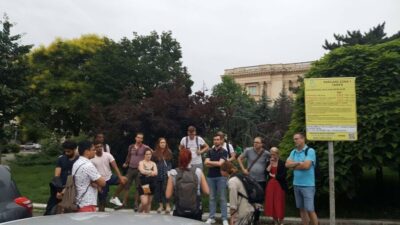
Start at the side entrance on the right, beside the front steps. This is the artists’ entrance, and Iana waits outside so you can begin without wandering.
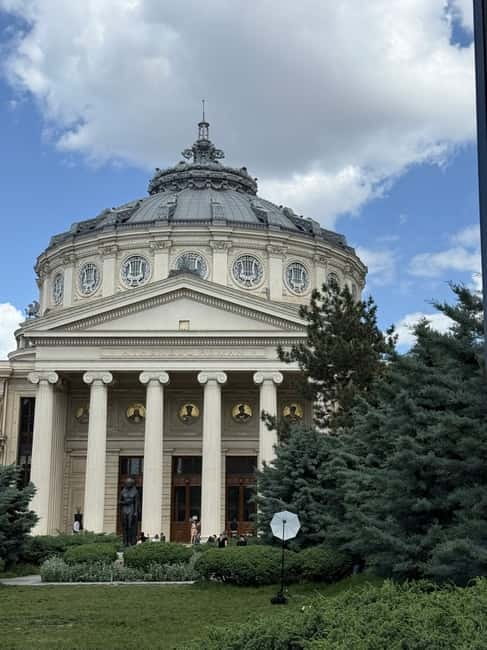
From the moment you see the grand façade, you get what makes this place a symbol in Bucharest. The tour emphasizes the six Ionic columns, modeled on ancient Greek temple design. The guide doesn’t treat this as art trivia. You’ll hear how those classical forms were chosen to project ideas like balance and artistic wisdom, the kind of message you’d expect from a “temple” for music.
Then comes the real hook, the 19th-century campaign called Give a leu for the Athenaeum. The story centers on everyday people supporting the building, not only elites or institutions. When you understand that fundraising effort, the monument changes from a backdrop to a national project. It’s one of those details that makes a tourist stop feel earned.
If you’ve walked Bucharest before, you’ll appreciate the contrast here. The Athenaeum feels intentional and focused, like it was built to carry a message forward. And with a guide, you won’t just see clean lines. You’ll also understand why people wanted those lines in the first place.
A few more Bucharest trips worth weighing up
- Bucharest: Palace of Parliament Tickets and Guide
★ 4.3 · 3,182 reviews - Bucharest to Dracula Castle, Peles Castle and Brasov Guided Tour
★ 4.5 · 2,933 reviews - Bucharest: Palace of Parliament Tickets and Guided Tour
★ 4.4 · 1,877 reviews
Inside the Circular Vestibule: Marble Floors and a Dome Built for Sound
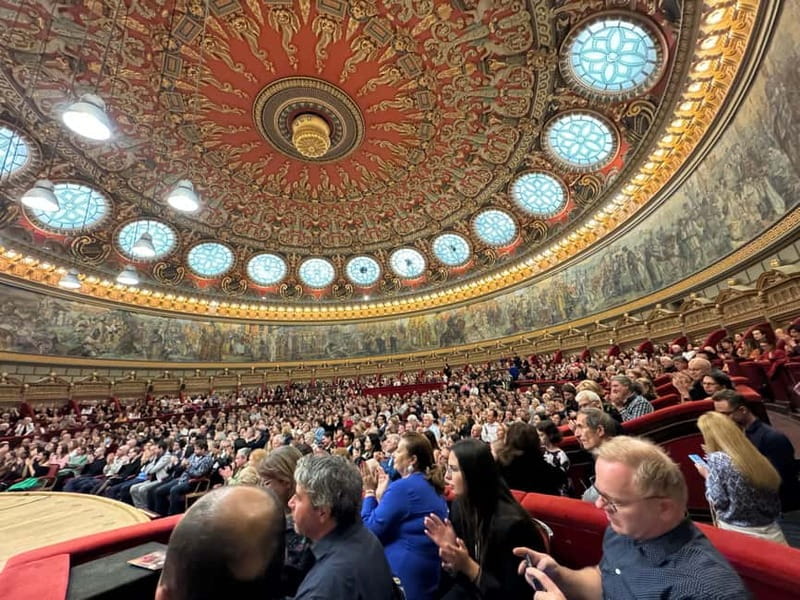
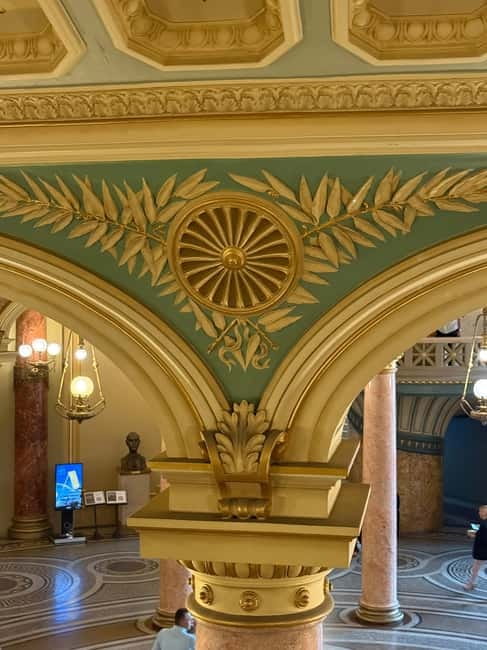
Next you step inside into the luminous circular vestibule. The guide points out the marble flooring and the way the space is designed so it feels bright rather than dark and echo-y.
The dome is the next big visual. It’s more than an impressive ceiling, because the tour frames it as part of why the building sounds the way it does. If you like architecture, this is where you’ll start connecting the shapes to the function.
You’ll also get a sense of pacing. The visit isn’t about rushing past photo spots. You’ll be encouraged to look closely at details the building would otherwise hide in plain sight. You’ll notice how the architecture supports a concert experience, not just a sightseeing one.
Practical note: wear comfortable shoes. You’ll be standing and moving enough to feel it after. The tour is short, 1.5 to 2 hours, so your body will help you match the guide’s attention to detail.
Horseshoe Concert Hall for Nearly 800: Where the Acoustics Story Clicks
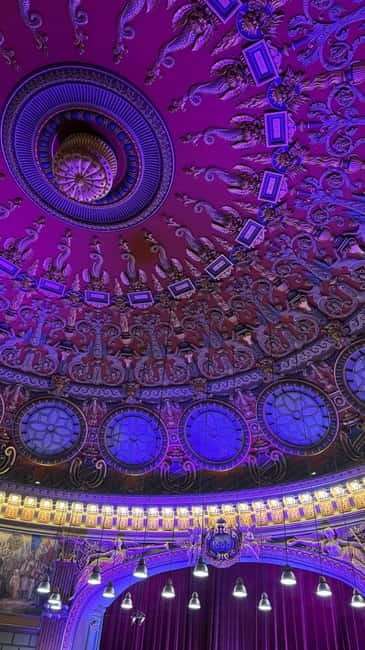
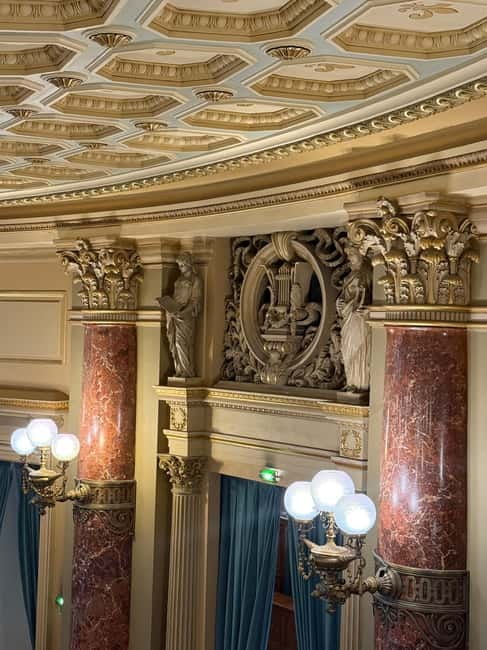
The concert hall is the main event. It’s horseshoe-shaped, and it seats nearly 800 people. The guide spends time on why that shape matters, and you’ll learn how the hall has earned a reputation for excellent acoustics.
Even if you’re not a music expert, you can still follow the logic. When the guide explains acoustics through materials, geometry, and how sound travels, the room becomes a living instrument. It’s the kind of explanation that makes you want to clap once, just to see if your timing works.
There’s also a chance you’ll hear something live. Some guests have been lucky enough to experience a rehearsal or an orchestra warm-up during their visit. That isn’t guaranteed, but when it happens, it turns the tour into a sound check you didn’t know you needed. Either way, the guide gives you the meaning behind the design, so you leave understanding why this hall is treated seriously.
Costin Petrescu Panoramic Fresco: Romanian History in One Sweeping View
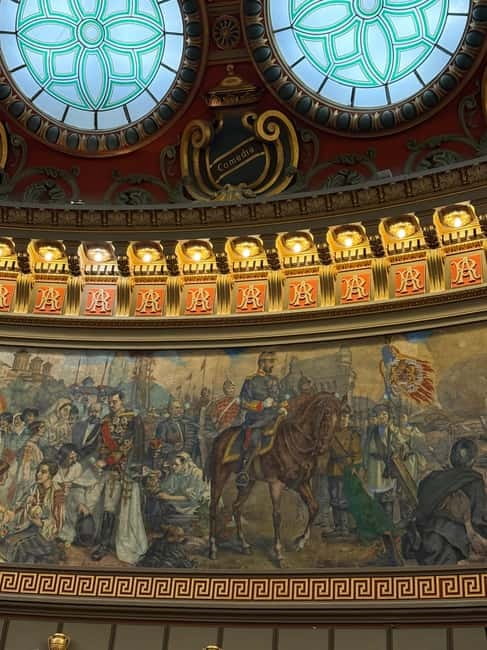
Then you get to the panoramic fresco by Costin Petrescu, painted in the 1930s. This is not presented as background decoration. The guide treats it like a visual history lesson you can read with your eyes.
You’ll follow the big storyline scenes, from the Roman conquest through medieval times and onward to the Great Union of 1918. The guide explains how each segment fits into a larger national timeline and what the symbols are trying to say.
What I like most here is that it gives you a way to remember the country’s history without memorizing dates. You’ll see continuity. You’ll also notice how art can function like a national memory device, built into the architecture itself.
If you’ve visited museums elsewhere in Europe, you’ll recognize the approach, but the Athenaeum does it in a uniquely theatrical way. The fresco sits in a cultural setting tied to music, so the whole experience blends the emotional sides of history with the technical side of building design.
A different sort of day out in Romania:
- Bucharest: Dracula’s Castle, Peles Castle, & Brasov Old Town
★ 4.5 · 17,858 reviews - Bucharest: Dracula Castle, Peles Castle & Brasov Old Town
★ 4.6 · 10,891 reviews - Bucharest: Dracula’s Castle, Peleș Castle & Brașov Day Trip
★ 4.4 · 6,100 reviews - Bucharest: Day Trip to Dracula Castle, Peles Castle & Brașov
★ 4.4 · 3,049 reviews
George Enescu Philharmonic: Why This Venue Matters Beyond the Tour
The Athenaeum isn’t just a historic structure you walk through. It’s tied directly to Romanian cultural life as the home of the George Enescu Philharmonic Orchestra.
During the tour, the guide brings in what that means in practice. You learn how this venue has hosted major concerts and cultural events that helped shape artistic life in Romania, and how it has also made an international impact.
This context matters because it changes your takeaway. Without it, you might treat the Athenaeum like a beautiful shell. With it, you understand why the building continues to work. It’s a cultural machine still running, with music inside the architecture the campaign set out to create.
If you care about classical music, you’ll appreciate the direct connection to Enescu. If you don’t, the guide’s explanation still helps you see why locals value the space.
Iana Bradu’s Tour Style: More Than Facts, Better Focus
A big part of the success here is the guide. Iana is consistently described as warm and engaging, with strong English and an ability to explain architecture and history without getting lost in jargon.
You’ll likely notice how she handles questions. The pace stays calm, and she makes space for you to take photos, look longer at decorative features, and ask follow-ups. Many guests mention that the tour never feels rushed, which is exactly what you want in a place like this.
I also like that she tends to connect themes. Some guests have noted that she talks about how the art scene was shaped during communism, and she may share extra nearby context around Bucharest’s cultural life. That doesn’t replace the main focus on the Athenaeum, but it adds texture to the experience.
And there’s a small bonus that shows up in a few accounts: a guide might offer additional recommendations after the tour, sometimes including websites and specific pointers for what to see next. If you’re the type who likes a plan, that sort of handoff is genuinely useful.
Practical Tips: Meeting Point, Flash-Free Photos, and Timing for Rehearsals
A few details will help you enjoy the tour without friction:
- Meeting point: side entrance on the right, beside the front steps of the Athenaeum, the artists’ entrance. Iana waits outside.
- What to bring: comfortable shoes, a camera, and water.
- Photography rules: you can take photos without flash. That’s important, because flash can be distracting in a concert venue setting.
- Language: the tour runs in English, with Romanian also available.
- Who it suits: it’s best for adults and older kids. It is not suitable for children under 6.
About timing: the tour is designed to fit into a short window, 1.5 to 2 hours. That makes it easier to slot into a packed Bucharest day. If you’re hoping for rehearsal moments, you might get lucky depending on what’s scheduled at the time, and some visitors have reported being able to hear rehearsals or warm-ups.
One more tip: go with a “slow looking” mindset. The Athenaeum rewards attention to the small design choices, and your guide will point them out. If you try to speed through like it’s only a quick photo stop, you’ll miss what makes the tour worthwhile.
Price and Value: What $44 Buys You in the Athenaeum
At $44 per person for a private guided visit, the value is less about the ticket as a single admission fee and more about what you gain from interpretation.
You’re paying for:
- a live guide who can connect architecture, history, and music culture
- focus on the big set pieces like the Ionic columns, the vestibule and dome, the hall seating around 800, and the Costin Petrescu fresco
- a way to understand the meaning behind symbolism like the Give a leu fundraising campaign
If you’re traveling with time constraints, the guided format helps you get the story in a tight window. If you enjoy self-guided museums more than guided talks, you might feel the price is less of a bargain. But if you like learning as you look, this tour is one of those deals where the guide turns the building into a coherent experience, not a checklist.
Also, private or small-group options matter. Smaller groups usually mean more chance to ask questions and linger without the tour feeling squeezed.
Should You Book the Romanian Athenaeum Guided Tour?
Book this tour if you want Bucharest to make sense through one of its most important cultural buildings. You’ll get the neoclassical architecture explained in human terms, the fresco turned into a readable story, and the George Enescu Philharmonic connection that gives the place real weight.
Don’t book it if you only want a fast exterior photo. This experience works best when you’re willing to slow down for details, respect the flash-free rules, and treat the concert hall and fresco as the main event.
If you’re deciding between “see the building” and “understand the building,” this is the second option, done in a focused 1.5 to 2 hours.
FAQ
How long is the Romanian Athenaeum guided tour?
The tour lasts about 1.5 to 2 hours.
Where do I meet the guide?
Meet at the side entrance on the right, beside the front steps of the Romanian Athenaeum, known as the artists’ entrance. The guide Iana waits outside.
Is the tour private?
It is offered as private or small groups.
What languages are available?
The live tour guide offers English and Romanian.
Is flash photography allowed inside?
No flash photography is allowed. Photography without flash is permitted.
What should I bring?
Bring comfortable shoes, a camera, and water.
Is it suitable for young children?
It is not suitable for children under 6 years.
Can I cancel for a refund?
Yes, free cancellation is available up to 24 hours in advance for a full refund.
Recently listed in Bucharest
- Winery touring & private wine tasting – one day private tour★ 5.0 · 3 reviews
- Village Museum Bucharest Guided Tour★ 5.0 · 6 reviews
- Wine Tasting and Dinner, including Sommelier★ 5.0 · 3 reviews
- Bucharest: Dealu Mare Winery Private Trip with Wine Tasting★ 4.9 · 6 reviews
- Transylvania Tour: Dracula’s Castle, Peles Palace & Brasov★ 5.0 · 19 reviews
- Traditions in Bucharest: Village Museum and Wine Tasting★ 5.0 · 8 reviews
- Airport Henri Coanda (Otopeni) to Bucharest – Private Transfer – Driver★ 5.0 · 5 reviews
- Discover Medieval Transylvania Small Group Tour – 7 days★ 5.0 · 4 reviews
Guided, compared.

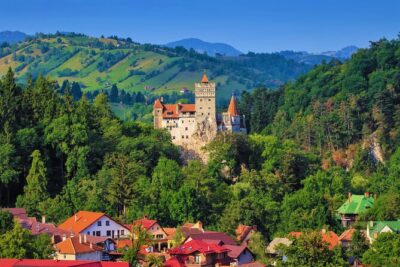
Bucharest to Dracula Castle, Peles Castle and Brasov Guided Tour
Read our review →

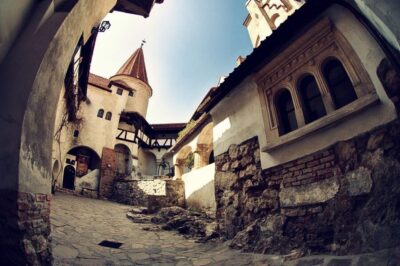
Dracula Castle, Peles Castle & Brasov Guided Tour
Read our review →