
REVIEW · CITY TOURS
Bucharest City Tour 2 hours – by Car with a Private Guide
Bucharest can feel like a speed run, so this tour is a smart way in. You get a private car and an English guide to cover the big, meaningful sights without wasting time. I especially like that the tour is built around how Bucharest got shaped by communism and the people who kept Romanian identity alive.
The second thing I like: everything on the road is handled. Taxes, parking, tolls, and gas are included, and you can request different starting times to fit your day. That makes the price easier to judge because you are not mentally adding extra costs.
One possible drawback is simple: 2 hours is short. You will see a lot from the outside, and food is not included, so plan a meal before or after to keep the day feeling relaxed.
In This Review
- Key highlights worth planning for
- A tight 2-hour loop by private car, built for real schedules
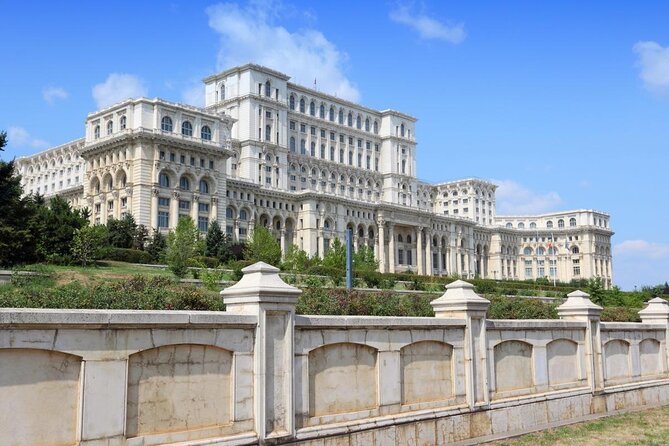
- Palace of Parliament, People’s House, and the scale lesson communism built
- National Village Museum: tradition you can recognize fast
- Senate Palace and the December 1989 revolution start point
- Ceaușescu Mansion: where private living met public control
- Arc of Triumph, plus a chance to see exhibits
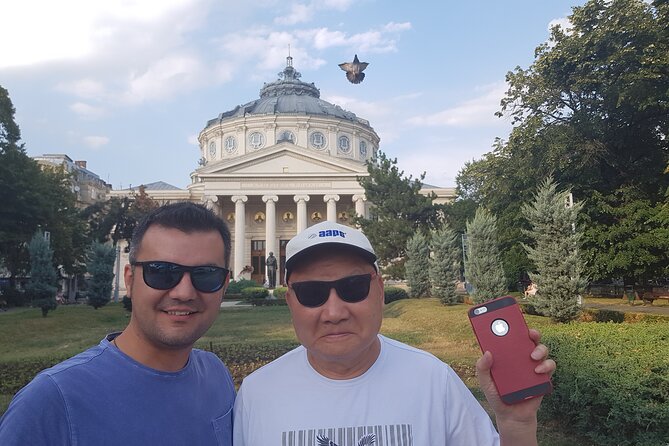
- Romanian Athenaeum: Bucharest culture in stone and sound
- Old-town style sights, where the story keeps going
- Price and logistics: is $123.91 per person good value?
- Getting the most from the guide, especially if you want stories
- Should you book this Bucharest city tour?
- FAQ
- What’s the duration of the Bucharest City Tour?
- Is the tour private or shared?
- Do I get pickup in Bucharest?
- Is the guide available in English?
- What is included in the price?
- Are food and drinks included?
- Is the tour ticket mobile?
- Can I cancel for a full refund?
Key highlights worth planning for
- Private car for your group, with pickup arranged by your provided address and time
- English-speaking licensed guide/driver, speaking for the full tour time
- Compostitional sights of communism and revolution, focused and explained clearly
- National Village Museum stop, built to show traditional Romanian houses, churches, and symbols
- Arc of Triumph included, with a chance to view exhibits if open
- Romanian Athenaeum stop, a must-see cultural landmark that anchors Bucharest’s identity
A tight 2-hour loop by private car, built for real schedules
This is a practical Bucharest intro: short, structured, and flexible. You ride in a car just for your group, so you are not standing around waiting for other people or losing time to slow logistics. If you only have one day, or you just want the essentials without getting overwhelmed, this kind of route makes a lot of sense.
Pickup is offered, and the operator asks you to tell them your pickup time and address. That matters because Bucharest can take time to cross, depending on traffic and where you are staying. Having the tour start with you saves the most painful part of city sightseeing, the part where you scramble for transport and direction.
The other scheduling win is flexibility. The tour description notes you can change the daily itinerary even after it starts. In real life that can mean adapting around what you see from the road, or adjusting so your guide can spend more time on the stops that interest your group most.
More City Tours in Bucharest
- Bucharest: City Highlights Guided Walking Tour
★ 4.9 · 1,482 reviews - Bucharest: Communism and History Guided City Walking Tour
★ 4.9 · 918 reviews - Bucharest: 2-Hour City Highlights Bike Tour
★ 4.8 · 269 reviews
Palace of Parliament, People’s House, and the scale lesson communism built
The tour centers part of its story at the Palace of Parliament, also called the People’s House. This stop is designed to make you feel the weight of a totalitarian regime, not just read about it. The scale alone can be the point: you get to stand near the second-largest administrative building on the planet, after the Pentagon.
The way this is framed is also useful. Your guide is set up to explain why the opulence is not just architectural trivia, but the kind of megalomania that can damage a country for generations. If you are the type who wants context, this stop is the anchor for everything that follows.
Practical note: this is the kind of place that often demands a bit of patience for viewpoints and movement. Since the tour is only about 2 hours total, your best move is to keep your questions ready and focus on the main story your guide is telling, rather than trying to do everything independently in the middle of the loop.
National Village Museum: tradition you can recognize fast
After the big, heavy communist-era buildings, the tour shifts to the National Village Museum. This is a smart contrast, because it shows Romania’s traditions in a setting that lets you understand them quickly. The museum is described as an embodiment of Romanian traditions in one place, including what Romanian villagers built in their own backyard.
What I like about this stop is the emphasis on sustainability and daily life. The tour description highlights an ecological and sustainable environment, plus a lifestyle in social and spiritual harmony with surroundings. That is a more human angle than a pure monument tour, and it helps you understand culture as something lived, not only displayed.
You will also see traditional house styles across regions, including wooden and adobe homes, plus stone structures. Even the smaller details you might notice, like national symbols such as a mill or a wooden church, fit the larger message: how these cultural treasures helped keep Romanians united over thousands of years without needing to invade other nations.
If you are traveling with kids, or with people who get tired of heavy political stops, this is the moment that can feel like a breath of fresh air. It is also a great photo stop because the shapes and materials are varied, so your pictures look different instead of repeating the same wide-stone facade.
Senate Palace and the December 1989 revolution start point
Back in the realm of political history, the tour moves to the Senate Palace area. The description is very direct about why it matters: this is where the Central Committee of the Romanian Communist Party used to be, and where the Revolution of December 1989 started.
This is the kind of stop where a good guide can turn a building into a story you actually remember. The tour framing focuses on Ceausescu being removed from power through human force and sacrifice, which gives the moment gravity instead of turning it into a dry timeline.
You also get a mention of the secrets and controversies surrounding Ceausescu after he was ousted, including offshore accounts. That is not the full history lesson, but it sets up the bigger theme the tour is chasing: how power distorts systems, and how the truth can come with messy leftovers.
Practical consideration: political sites can feel repetitive if you have already done a museum day. Here, the tour uses this stop as part of a connected route, so it works best if you let your guide build the chain of events in order.
A different sort of day out in Romania:
- Bucharest: Dracula’s Castle, Peles Castle, & Brasov Old Town
★ 4.5 · 17,858 reviews - Bucharest: Dracula Castle, Peles Castle & Brasov Old Town
★ 4.6 · 10,891 reviews - Bucharest: Dracula’s Castle, Peleș Castle & Brașov Day Trip
★ 4.4 · 6,100 reviews - Bucharest: Palace of Parliament Tickets and Guide
★ 4.3 · 3,182 reviews
Ceaușescu Mansion: where private living met public control
One of the most striking parts of the tour is the Ceaușescu Mansion, the private residence of Nicolae and Elena Ceaușescu and their children. It is described as their home for a quarter century, from 1965 to 1989. Even without going deep into rooms or interiors, the idea of a family living in protected luxury while a country was under pressure can be hard to forget.
I like that this stop is not presented as scandal for its own sake. It is used to highlight the contrast between private comfort and the consequences of a regime that treated society like an extension of the ruler’s will.
If your group prefers human-scale history over big speeches, this stop can land well. It makes the story feel personal, because you are thinking about real people, not just ideologies.
Arc of Triumph, plus a chance to see exhibits
The tour also includes the Arc of Triumph, a monument built to mirror the feeling of major European triumphal arches, compared to the Arc de Triomphe from Paris. The description calls out the height, 27 m, which is about 16 times a person’s average height, making it a visual anchor on the drive.
What makes this stop more than a photo moment is the potential for exhibits. The tour notes that with luck you may be able to admire four exhibits: The Great War for the Unification of Romania, The Heraldry of the Great Boyar Families, The Arch of Triumph in Pictures, and The Great Union of 1918.
Even if you do not get the exhibits, the tour framing helps you look at the monument as a piece of national identity, not only a landmark. If your group likes symbolism and identity stories, this is one of the best places to spend a little extra attention.
Romanian Athenaeum: Bucharest culture in stone and sound
Then you reach the Romanian Athenaeum, presented as one of Romania’s most representative culture symbols, and often a Bucharest symbol too. The tour description points out that it is part of the European Heritage list, which helps explain why it is such a big deal in terms of recognition.
This stop also works as a mood shift. After communism, revolution, and power, the Athenaeum brings you back to art, music, and civic pride. Even if you do not go inside, the building’s role as a cultural beacon is the point.
If you like architecture that signals what a city wants to be, the Athenaeum is the right finale on a short day. It gives you something positive and enduring, not only a lesson in how things went wrong.
Old-town style sights, where the story keeps going
The driving loop also touches an area where you can see culture, fashion, history, and the everyday layers of Bucharest in one sweep. The tour highlights a long list of stops you may recognize from photos and maps, including the Royal Palace, the Senate Palace area, the National History Museum (formerly the Post Palace), and the Lady’s Church.
Other named points include the CEC Palace, the Palace of the National Military Circle, Cantacuzino Palace, casinos, cafes, restaurants, and statues. There is also the Central University Library mentioned as a major reference point.
What matters here is that your guide can connect these places to the same overall narrative, communism’s imprint, national identity, and Bucharest’s long habit of mixing old and new. This is where a private car tour actually earns its keep. You get the context fast, without having to research the puzzle yourself.
And if you have a camera, you will likely find plenty of angles. Bucharest has a habit of giving you variety on short distances, but a 2-hour window means you need someone to point you toward the best ones.
Price and logistics: is $123.91 per person good value?
At $123.91 per person for about 2 hours, the real question is what you get for the money. This tour includes a private car, a licensed English-speaking guide/driver for the full time, and it covers all car costs: gasoline, parking, and road tolls, plus taxes. Those inclusions reduce the guesswork that can make city tours feel overpriced.
It is also a good deal when you consider what you would otherwise spend on transport plus guide time. Many people end up paying for taxis or rideshare anyway, then also hiring a guide separately for key stops. Here, the car and guide are part of the same package.
The private format also helps you move efficiently. You can focus on what you care about, and the guide has flexibility to adjust after you start, which is harder to get with group tours.
If you are traveling solo, the cost can feel steep because you are paying for the whole car experience. But if you are traveling with family or friends, the value usually feels better since the private car is shared across your group.
One more detail to keep in mind: food and drinks are not included. That means you should plan a snack or meal around your tour time so you do not feel rushed or hungry halfway through the history stops.
Getting the most from the guide, especially if you want stories
A tour like this works best when you let the guide do what they are trained to do: turn buildings and streets into human stories. The tour is designed for explanation in English throughout the trip, and it leans hard into the idea of how communism damaged a nation, then how Romania preserved identity through traditions.
If your guide is Nicolas Experience Tours guide Nicolas, you can expect more than facts. He is noted for keeping families engaged with humor, and for sharing personal details about life under communism. That storytelling style can be a real advantage on a short schedule, because humor helps the timeline stick.
There is also a practical tip element in his approach. One favorite detail associated with him is a suggestion for a tasty eclair shop snack stop. If you like small local food breaks that feel connected to the guide’s daily life, ask what is nearby after the tour.
Should you book this Bucharest city tour?
Book it if you want a fast, private orientation to Bucharest that explains why key buildings matter, not just where they are. This tour is especially suitable for first-time visitors, or anyone who feels they cannot fit in a long day of museums and wandering.
Skip it or swap expectations if you need deep time in one single museum or want lots of walking. With only about 2 hours, the route is built for breadth and context, not for long independent exploration.
If you want history, symbolism, and Romanian culture in one structured ride, this is a solid choice. The combination of the Palace of Parliament, National Village Museum, revolution-related sites, and the Athenaeum gives you a balanced story arc from power to identity to culture.
FAQ
What’s the duration of the Bucharest City Tour?
The tour lasts about 2 hours.
Is the tour private or shared?
It is private. Only your group participates.
Do I get pickup in Bucharest?
Pickup is offered. You’ll need to provide your pickup time and address.
Is the guide available in English?
Yes. The tour includes a private, licensed English-speaking guide/driver throughout.
What is included in the price?
A private car for your group, the guide/driver, and car expenses such as gasoline, parking, and road tolls are included, along with taxes.
Are food and drinks included?
No. Food and drinks are not included.
Is the tour ticket mobile?
Yes, you receive a mobile ticket.
Can I cancel for a full refund?
Yes, you can cancel up to 24 hours in advance for a full refund, as long as you cancel at least 24 hours before the start time.
Recently listed in Bucharest
- Village Museum Bucharest Guided Tour★ 5.0 · 6 reviews
- Wine Tasting and Dinner, including Sommelier★ 5.0 · 3 reviews
- Winery touring & private wine tasting – one day private tour★ 5.0 · 3 reviews
- Bucharest: Dealu Mare Winery Private Trip with Wine Tasting★ 4.9 · 6 reviews
- Transylvania Tour: Dracula’s Castle, Peles Palace & Brasov★ 5.0 · 19 reviews
- Traditions in Bucharest: Village Museum and Wine Tasting★ 5.0 · 8 reviews
- Airport Henri Coanda (Otopeni) to Bucharest – Private Transfer – Driver★ 5.0 · 5 reviews
- Discover Medieval Transylvania Small Group Tour – 7 days★ 5.0 · 4 reviews
City Tours, compared.
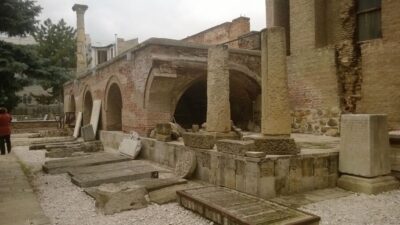
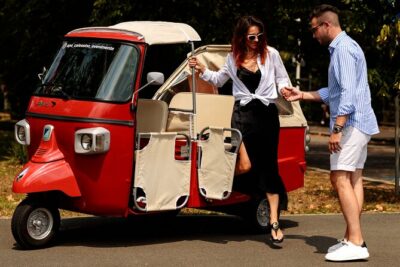
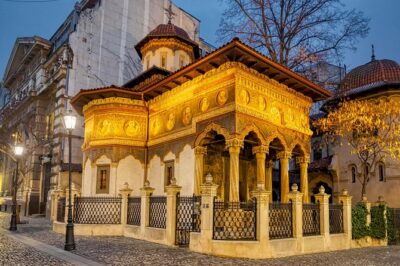
Bucharest Panoramic Sightseeing – Private City Tour
Read our review →
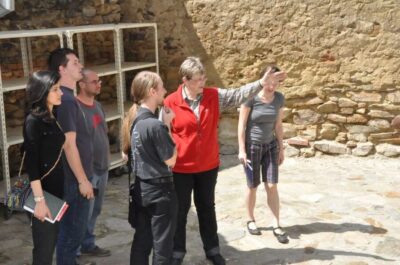
SB01 – City Tour Sibiu: Exploring the Heart of Transylvania
Read our review →Browse the lists this tour appears in