
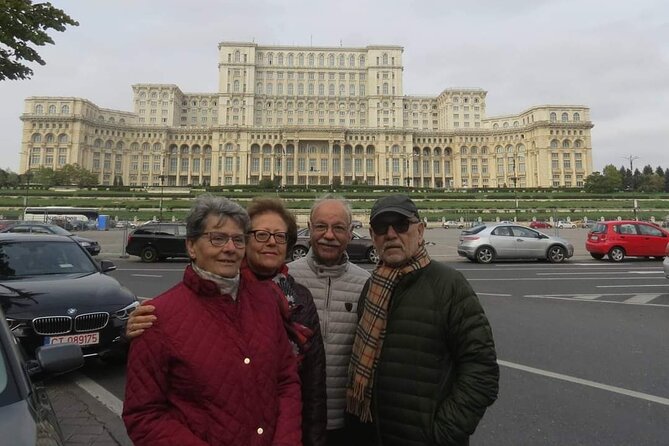
REVIEW · CITY TOURS
Best Walking Tour of Bucharest’s City Center – 2.5 hours
A good first walk beats figuring it out alone. This city-center tour gives you a big-picture route on foot plus detailed stops you can’t get from a bus. I also like that entrance fees for key churches and monasteries are handled for you. One possible drawback: a small number of cancellations or no-shows have shown up in prior feedback, so it pays to confirm the day before.
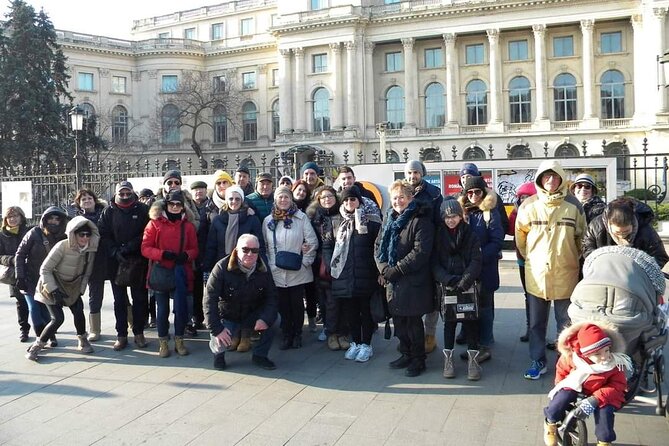
You’ll cover Bucharest’s major layers, from monarchy and Ottoman and Russian-era echoes to the fall of communism, all at a comfortable pace with short photo breaks. The atmosphere is very human too, since the guide does more than point at buildings. With a max group size of 14, it still feels personal rather than crowded.
In This Review
- Key highlights at a glance
- Getting Oriented: The Old Town Walk That Makes Bucharest Make Sense
- Romanian Athaeneum and the Carol Kings: Architecture With Political Weight
- Central University Library and Carol’s Equestrian Statue: Reading the City’s “Who Built It”
- Revolution Square, The Potato Obelisk, and Kilometer 0 of Democracy
- Byzantine Architecture on the Way to the Churches: Orthodox Bucharest in Small Doses
- Stavropoleos Monastery, Sf. Dumitru Posta, and Curtea Veche: Three Ways to Feel the Old Town
- Biserica Sfantul Anton and the Courtyard-Centered Atmosphere
- Manuc’s Inn: A Historic Place to Plan Lunch
- Optional Finishes: Unirii Square Views and the Patriarchal Cathedral
- Walking Time, Group Size, and When This Tour Is Your Best Match
- Price and Value: What You Pay for and Why It Adds Up
- Guides in English: How the Storytelling Makes the Stops Stick
- Should You Book This Bucharest City Center Walking Tour?
- FAQ
- How long is the Bucharest City Center walking tour?
- What is the tour price per person?
- What language is the tour offered in?
- Where do I meet the guide?
- Where does the tour end?
- What attractions are included, and which entrances are covered?
- Are there any optional stops?
- Is there a mobile ticket?
- What is the maximum group size?
- Can I cancel and get a full refund?
Key highlights at a glance
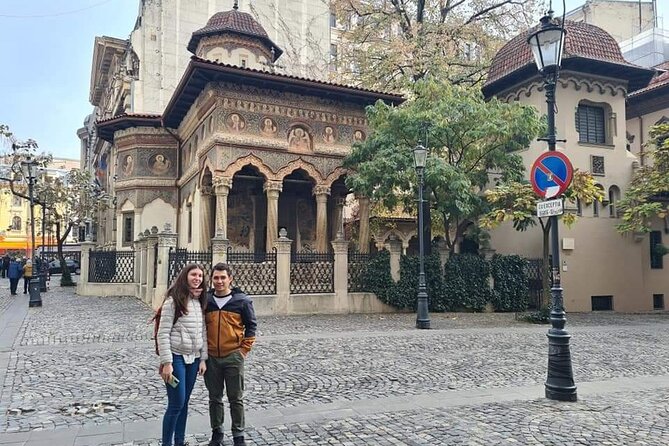
- Aeneul and monarchy stories linked to Carol I, Ferdinand I, Carol II, and Michael I
- Revolution Square stops that connect the 1989 fight with monuments you can actually see
- Byzantine architecture and Orthodox spirituality shown through multiple small churches
- Old Princely Court at Curtea Veche with Vlad the Impaler tied to the site
- Manuc’s Inn built for a lunch plan, not just a photo stop
- English-guided walking with a small group (up to 14)
Getting Oriented: The Old Town Walk That Makes Bucharest Make Sense
If Bucharest is new to you, this is the kind of tour that helps your brain stop map-weeding. You start at Manuc’s Inn, a historic meeting point in the Old Town area, and you gradually work through squares, churches, and museum sites where the city’s “layers” overlap. Instead of waiting to read about it later, you understand it while you’re standing in the right spot.
What makes this work is the pacing. Most stops are short, often 5 to 20 minutes, so you get stories without feeling like you’re stuck in a classroom. And because it’s designed as a walking tour rather than a drive-by loop, you notice the transitions, like when a quiet church lane suddenly opens onto a major boulevard.
The other practical win: you end at the Romanian Athenaeum area. That’s a natural anchor for your next move, whether you’re heading for dinner, museums, or a late coffee walk.
More City Tours in Bucharest
- Bucharest: City Highlights Guided Walking Tour
★ 4.9 · 1,482 reviews - Bucharest: Communism and History Guided City Walking Tour
★ 4.9 · 918 reviews - Bucharest: 2-Hour City Highlights Bike Tour
★ 4.8 · 269 reviews
Romanian Athaeneum and the Carol Kings: Architecture With Political Weight
The tour’s first major stop is the Romanian Athaeneum, widely treated as a symbol of modern Romania. From the outside, the building is known for its French-style architecture, and the guide uses that look to talk about what “modern” meant for the monarchy.
This is where the tour earns its keep if you like context. You won’t just get dates. You’ll hear the palace-era storyline connected to the Romanian kings: Carol I, Ferdinand I, Carol II, and Michael I. The point is not to memorize names. It’s to understand why Bucharest’s most prominent buildings and institutions grew the way they did, and how shifting power shaped what people built and preserved.
One small note for planning: the Athaeneum visit is listed as part of the experience when it’s open, but you may still want to be flexible. Sometimes the best you can do is appreciate the exterior and the story behind it.
Central University Library and Carol’s Equestrian Statue: Reading the City’s “Who Built It”
Right after the Athaeneum, you head to Biblioteca Centrala Universitara, the Central University Library. The guide points out that it was erected by Carol I, the first Romanian king, and you get an immediate visual marker with the Carol equestrian statue out front.
This stop is a quick one, but it teaches you a valuable travel habit: look for who funded, designed, and commissioned what you’re seeing. Bucharest often feels like it’s under conversation with itself, and here the city basically tells you, in stone and bronze, which ruler wanted to project prestige through education.
Also, statues in Bucharest are rarely just decorations. They usually carry political messaging. Seeing the equestrian Carol alongside the library helps you connect the monarchy narrative to real civic infrastructure, not just royal portraits.
Revolution Square, The Potato Obelisk, and Kilometer 0 of Democracy
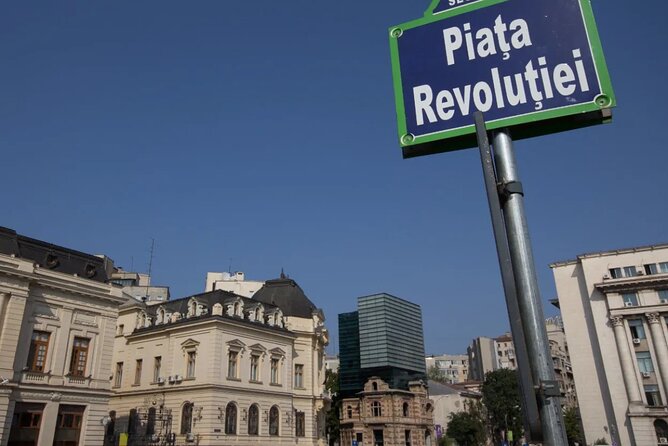
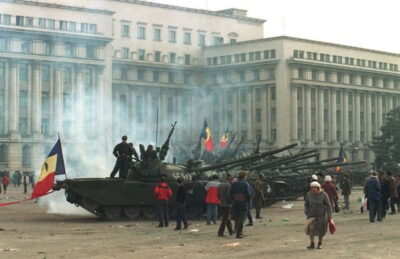
Then the tour turns sharper, moving into Memorialul Renasterii, an obelisk tied to the December 1989 revolution. Locals refer to it as The potato, and it works as a memorable anchor for the story the guide shares about the last days of communism in Romania.
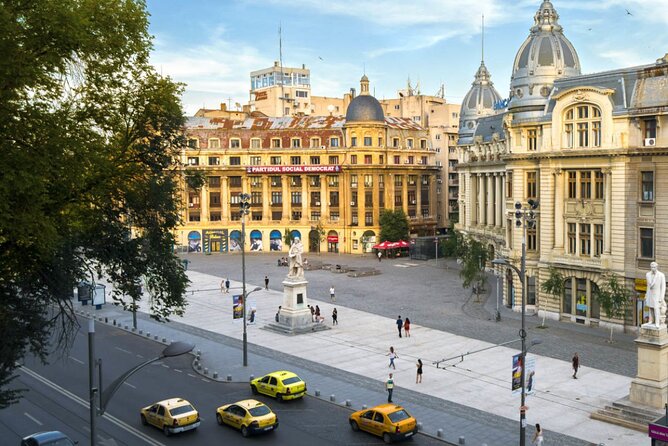
From there, you’re placed right in the Revolution Square context. The tour spotlights how young people fought against the regime, and it also points out that some major figures remain in public memory through their statues in the large square. This makes the architecture and monuments feel less abstract. You can sense why people rallied around these locations.
Next comes University Square and the idea of Kilometer 0 of democracy, a symbol tied to the revolution. The tour continues into the Old Town from there, so you’re basically walking from the political turning point into the everyday neighborhood that existed alongside it.
If you want a tour that doesn’t just romanticize history, this is the segment. The buildings and statues become waypoints in a human story.
More Walking Tours in Bucharest
- Bucharest Highlights Walking Tour
★ 5.0 · 469 reviews - Bucharest: Hidden Markets Walking Tour with Tastings
★ 4.9 · 329 reviews - Bucharest: Ghost Stories & Romanian Mythology Walking Tour
★ 4.9 · 287 reviews - Bucharest: Guided Walking Tour with Romanian Snack
★ 4.9 · 228 reviews
Byzantine Architecture on the Way to the Churches: Orthodox Bucharest in Small Doses
Bucharest is full of impressive churches, but the tour is careful about how it shows you the religious visual culture. At one point, you get a chance to observe Byzantine architecture and what it signals in an Orthodox world. The guide frames it in a simple way: most Romanians are Eastern Orthodox, and that spirituality shows up in the way buildings are shaped, decorated, and used.
This matters because it changes how you look at walls and icons. You start noticing details that you’d otherwise miss, like the visual language of faith and the way small churches can feel intimate even when the stories around them are huge.
The route then funnels you into a set of compact Old Town church visits, each with its own personality. It’s an efficient way to sample different church atmospheres without spending your whole day on one site.
Stavropoleos Monastery, Sf. Dumitru Posta, and Curtea Veche: Three Ways to Feel the Old Town
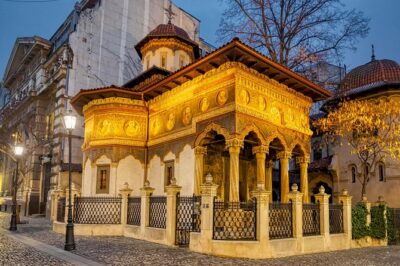
Stavropoleos Monastery is stop number five and it’s described as small and coquet, the kind of place you might miss if you were rushing. The guide treats it as a symbol of Byzantine architecture and spirituality, and it helps you visualize the painted monasteries you might have seen in Bucovina. You get the sense that regional styles and religious traditions travel and transform.
Next is Biserica Sf. Dumitru Posta, nicknamed the White Princess of the Old Town. This church stop is brief, but the guide shares enough history to make it feel more than a pretty facade. If you like architecture plus narrative, this is one of the best ways to get both in under an hour.
Then comes Muzeul Curtea Veche, the Old Princely Court Museum. This is where Bucharest’s medieval weight shows up. The site holds historical testimony dating back to the 13th century, and rulers of Wallachia resided there starting in the 14th century. The guide also connects it to Vlad the Impaler, which instantly turns your walk into a real sense of place rather than just a name from legend.
If you’re the type who gets impatient when tours move too slowly, you might still enjoy this segment because it’s short, but it clearly explains why the location matters.
Biserica Sfantul Anton and the Courtyard-Centered Atmosphere

Right near Curtea Veche, you also visit Biserica Sfantul Anton, where the guide focuses on the importance of the church in Romania’s history. This stop is short, but it’s designed for one thing: to get inside and feel the atmosphere and beauty inside.
That’s a smart approach. Many walking tours treat churches like quick scenic punches. Here, you’re encouraged to actually look around, because the experience depends on what’s inside, not what’s visible from the street.
If you’re taking photos, do it respectfully and keep an eye on whatever rules you see at the entrance. The best church moments tend to happen when you slow down for a minute and stop treating it like another landmark.
Manuc’s Inn: A Historic Place to Plan Lunch
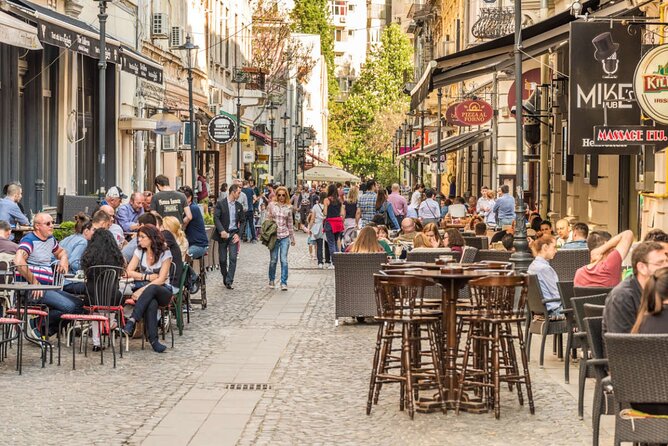
After so much architecture and politics, Manuc’s Inn becomes a practical reset. The tour presents it as the oldest inn and restaurant in town, and it comes with a story tied to a rich and cunning boyar who caused a stir across Russian and Ottoman empires.
Even if you don’t stop for food, it’s a great place to regroup because it’s structured for that role. And the tour specifically recommends booking lunch there. That’s a rare benefit because it turns the walking tour into a full day starter, not a “good luck finding food” situation afterward.
If you want a simple strategy, plan to have your longest break here, not at the end. It keeps your energy up for the final optional sights.
Optional Finishes: Unirii Square Views and the Patriarchal Cathedral
Depending on time and your interest, the tour offers two optional add-ons.
First, there’s a view point connected to Unirii Square. You’re not just moving through the city, you’re given a distance view that can help you understand where things sit relative to each other.
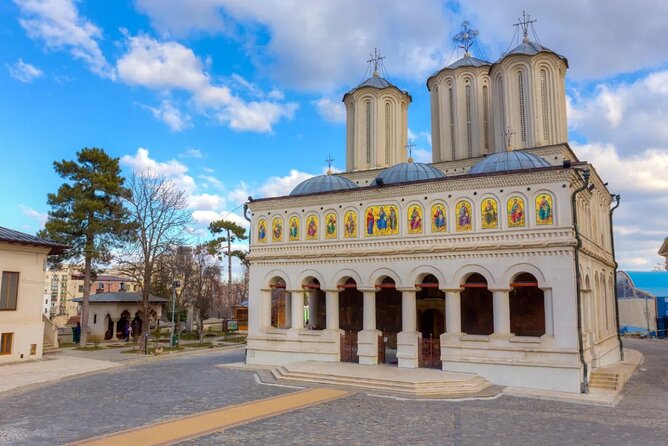
Then, there’s the Patriarchal Cathedral on the hill near Unirii Square. If you choose it, you can enter a sacred place described as full of beautiful paintings and decorations. It’s a strong way to end if you want one last interior moment with more visual detail.
Think of these options as a choose-your-own-ending. If you’ve already had your church quota, the view might be enough. If you still want more art and sacred space, go into the cathedral.
Walking Time, Group Size, and When This Tour Is Your Best Match
Duration is about 2 to 3 hours, with most stops relatively short. That makes it a good fit for a first day in Bucharest, especially if you want orientation without losing your whole day.
The group size maximum is 14, and the tour is offered in English with a mobile ticket. In practice, a smaller group usually means fewer awkward pauses while you wait for everyone to regroup, and it helps you ask questions without shouting.
This tour also suits you if you enjoy connections between architecture and political change. The route covers:
- monarchy and civic institutions,
- the communist era and the revolution,
- and the religious sites that keep shaping Bucharest’s identity.
If you only want laid-back wandering with zero history, you may find some segments heavier than you expected. But if you like your landmarks explained, this one is built for that.
Price and Value: What You Pay for and Why It Adds Up
The price is $54.77 per person for a 2 to 3 hour walking experience. That’s not the cheapest way to see Bucharest’s center, but the value comes from two things.
First, you get multiple guided stops with stories tied to what you’re looking at. It’s not just a route, it’s an explanation system, and you cover enough ground that it saves time compared to planning the same sequence yourself.
Second, entrance fees are included for churches and monasteries, specifically St. Anthony, Stravropoleos Monastery, and St. Demeter Church. Plus, the tour includes a visit to the Romanian Athenaeum if it’s open. For a traveler, that matters because ticket lines and extra costs can quietly inflate the real cost of a sightseeing day.
Your own spending likely becomes mostly food, plus any drink or other personal expenses. That’s clearly stated, which helps you budget without surprises.
Guides in English: How the Storytelling Makes the Stops Stick
The experience is offered in English, and the guide is a real part of why it works. Several guides are specifically mentioned by name in prior feedback, including Cristina, Maria, and Nicolae. That’s a good sign if you care about style, because different guides bring different pacing and personality, and you can often feel the difference in how well a tour keeps your attention.
The best praise points center on guides explaining history in a way that makes you stand closer to the building and the monument while they talk. You’re not just walking from photo to photo. You’re getting anecdotes linked to the monarchy, the revolution, and the church architecture.
One caution though: because a few people reported no-shows and last-minute cancellations, don’t treat this like a guaranteed free win. If your schedule is tight, recheck your plan before you leave your hotel and be ready with a backup activity if needed.
Should You Book This Bucharest City Center Walking Tour?
I think this is a strong booking if:
- it’s your first time in Bucharest and you want a structured orientation,
- you like history that connects to what you see on the street,
- you want church interiors, not just exteriors,
- and you’d rather pay for guide time plus included entries than assemble the same day yourself.
I would hesitate if:
- your vacation is extremely schedule-bound and a no-show would ruin your day,
- you only want light sightseeing with minimal historical context.
If you do book, I’d go in with the right mindset. Bring comfortable shoes, expect a series of short, meaningful stops, and use Manuc’s Inn as your lunch anchor. You’ll leave with a clearer understanding of Bucharest’s center, including the monarchy and the 1989 revolution footprints that still shape the city.
FAQ
How long is the Bucharest City Center walking tour?
It runs about 2 to 3 hours.
What is the tour price per person?
The price is $54.77 per person.
What language is the tour offered in?
The tour is offered in English.
Where do I meet the guide?
The meeting point is Manuc’s Inn, Hanul lui Manuc, Str. Franceză 62, București 030167.
Where does the tour end?
The tour ends at the Romanian Athenaeum, Strada Benjamin Franklin 1-3, București 010287.
What attractions are included, and which entrances are covered?
The tour includes a visit to the Romanian Athenaeum if it is open, and entrance coverage for churches and monasteries including St. Anthony, Stravropoleos Monastery, and St. Demeter Church.
Are there any optional stops?
Yes. The view from Unirii Square and the Patriarchal Cathedral are listed as optional depending on time and desire.
Is there a mobile ticket?
Yes, the tour uses a mobile ticket.
What is the maximum group size?
The tour has a maximum of 14 travelers.
Can I cancel and get a full refund?
Yes. You can cancel for a full refund if you cancel up to 24 hours in advance of the experience start time.
Recently listed in Bucharest
- Wine Tasting and Dinner, including Sommelier★ 5.0 · 3 reviews
- Winery touring & private wine tasting – one day private tour★ 5.0 · 3 reviews
- Village Museum Bucharest Guided Tour★ 5.0 · 6 reviews
- Bucharest: Dealu Mare Winery Private Trip with Wine Tasting★ 4.9 · 6 reviews
- Transylvania Tour: Dracula’s Castle, Peles Palace & Brasov★ 5.0 · 19 reviews
- Traditions in Bucharest: Village Museum and Wine Tasting★ 5.0 · 8 reviews
- Airport Henri Coanda (Otopeni) to Bucharest – Private Transfer – Driver★ 5.0 · 5 reviews
- Discover Medieval Transylvania Small Group Tour – 7 days★ 5.0 · 4 reviews
City Tours, compared.


Bucharest Panoramic Sightseeing – Private City Tour
Read our review →
SB01 – City Tour Sibiu: Exploring the Heart of Transylvania
Read our review →Browse the lists this tour appears in