REVIEW · TOURS
9 days Balkans Tour from Bucharest to Sofia and Budapest
A road trip across the Balkans can feel big. This one ties together UNESCO sights, classic old towns, and a guided route with one-way logistics. You also sleep in daily 4-star hotels with breakfast, so mornings start with energy instead of figuring things out.
What I like most is the structure: you get a professional tour leader, plus local guides in key stops, and you move by air-conditioned vehicle without backtracking. The possible drawback is physical pace. You’ll do several 2 to 4, sometimes 3-hour walking tours, and the walk length can run up to several kilometers, plus you may carry your bag a few steps at hotel entry.
In This Review
- Key highlights at a glance
- The real value: guided route over self-planning
- Road comfort and group flow, what you should expect
- Day 1: From Bucharest to Lovech, caves and travertine waterfalls
- Day 2: Lovech covered bridge and Sofia’s domes, mosques, and synagogue
- Day 3: Rila Monastery’s Orthodox art to Skopje’s gateway feel
- Day 4: Skopje Old Bazaar and Ohrid’s lake-city walking route
- Day 5: Crossing into Tirana and making sense of Skanderbeg Square
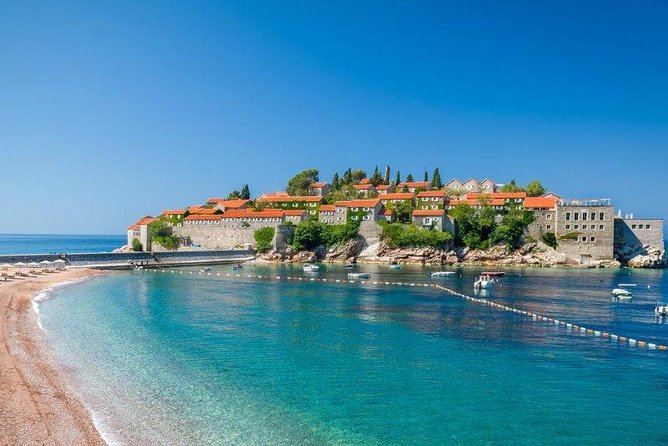
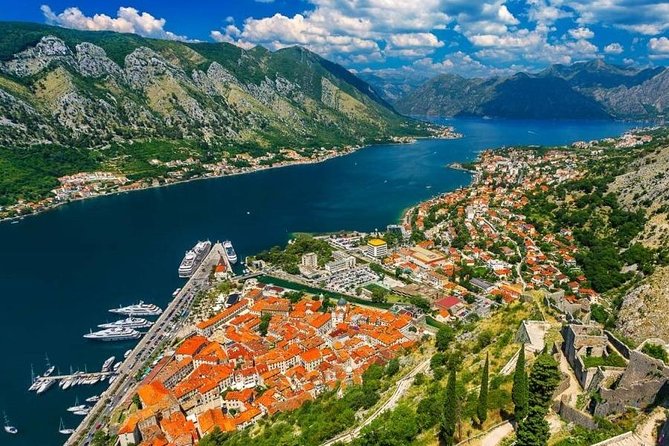
- Day 6: Kotor’s Stari Grad, a fortified old town stop at the right pace
- Day 7: Mostar’s bridge story and Sarajevo’s Ottoman to Austro-Hungarian layers
- Day 8: Belgrade essentials, from Kalemegdan to Skadarlija
- Day 9: Novi Sad pause and Budapest’s first Danube evening
- Price and what you actually get for the money
- Pace and walking level, so you don’t get surprised
- Who should book this Balkans route
- Should you book this Bucharest to Budapest tour?
- FAQ
- What is the duration of this tour?
- How much does the tour cost?
- Where does the tour start and what time does it begin?
- Where does the tour end in Budapest?
- What’s included in the price?
- What is not included?
- Is the tour guided and in English?
- What walking level should I expect?
- Do I need a passport?
- Can I cancel for a refund?
Key highlights at a glance
- One-way routing cuts down on wasted transit time and avoids return loops
- Air-conditioned transport for the full itinerary means fewer sweaty hours in transit
- Breakfast included for 8 days so you can hit early sights without hunting for food
- Multiple UNESCO stops including Rila Monastery, Ohrid, and Kotor’s Stari Grad
- Big-city walking tours with clear landmark focus in Sofia, Skopje, Sarajevo, and Belgrade
- Group size capped at 46 for a more manageable, conversational pace
The real value: guided route over self-planning
This tour works when you want the wow factor of the Balkans without the headache of coordinating buses, tickets, and changing plans. The biggest value is practical: it’s one-way, so you’re not doubling back. That matters because the Balkans can look close on a map and still take real driving time.
You’re also not left to wander. A professional tour leader runs the show, and in several locations you’ll meet local guides to explain what you’re actually looking at, not just recite dates. When you’re hopping countries, that guide context is what turns a pile of landmarks into a story you can remember.
More of Bucharest worth a look before you book:
- Bucharest: Dracula’s Castle, Peles Castle, & Brasov Old Town
★ 4.5 · 17,858 reviews - Bucharest: Dracula Castle, Peles Castle & Brasov Old Town
★ 4.6 · 10,891 reviews - Bucharest: Dracula’s Castle, Peleș Castle & Brașov Day Trip
★ 4.4 · 6,100 reviews
Road comfort and group flow, what you should expect
Transport is by air-conditioned vehicle for the entire tour, which is a big deal on a route like this. You’re spending many hours traveling between cities, so comfort affects the whole trip. Bring a light layer, because tour buses and vans can swing from warm to chilly fast.
Group size is capped at 46 travelers, which generally keeps things from feeling chaotic during orientation and walking tours. You’ll still have the classic group-tour rhythm: depart, arrive, walk, then regroup. If you like flexibility, this setup is more structured than a DIY trip, but it’s also less stressful.
Day 1: From Bucharest to Lovech, caves and travertine waterfalls
The day starts early from central Bucharest, with the plan listing an early departure around 8:00 to 8:30 am. After pickup, you’re headed to Bulgaria for two nature stops that feel made for photos and slow walking.
Devetashka Cave is one of those caves that doesn’t feel like pure darkness and claustrophobia. It’s described as well lit, with greenery on the ground in warmer seasons, which makes it easier to appreciate the karst formations instead of just surviving a tunnel. It’s a solid 1-hour stop.
Then you go to Krushunskiye Waterfalls, the biggest travertine cascade in Bulgaria. What makes it different is the terraces and round-shaped pools of mineral water, not just one big fall. Expect a scenic, easy sightseeing hour, with plenty of spots to stop for views.
You end in Lovech for an overnight in a 4-star hotel. This is a smart landing city because it sets you up for an easy start the next morning.
Day 2: Lovech covered bridge and Sofia’s domes, mosques, and synagogue
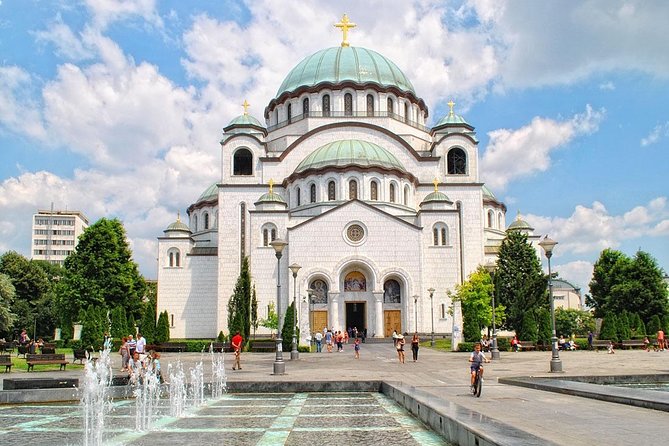
Lovech gets a short, high-impact morning stop. You’ll see the Covered Bridge over the Osam River, described as uniting the two halves of town. It’s the kind of structure that teaches you how cities were built around daily movement, not just monuments.
In the evening you arrive in Sofia, and the walking tour focuses on key buildings that show how layers of culture coexist in one place. The list is nicely focused: the gold-domed Alexander Nevsky Cathedral, Sveta Sofia Church, Banya Bashi Mosque, the Sofia Synagogue, and the main shopping street Vitosha.
Practical tip: in Sofia, plan to dress for walking right after arriving. You’ll get the most out of this evening tour if you’re ready for uneven sidewalks and photo stops.
A different sort of day out in Romania:
- Bucharest: Palace of Parliament Tickets and Guide
★ 4.3 · 3,182 reviews - Bucharest: Day Trip to Dracula Castle, Peles Castle & Brașov
★ 4.4 · 3,049 reviews - Bucharest to Dracula Castle, Peles Castle and Brasov Guided Tour
★ 4.5 · 2,933 reviews - Bucharest: Palace of Parliament Tickets and Guided Tour
★ 4.4 · 1,877 reviews
Day 3: Rila Monastery’s Orthodox art to Skopje’s gateway feel
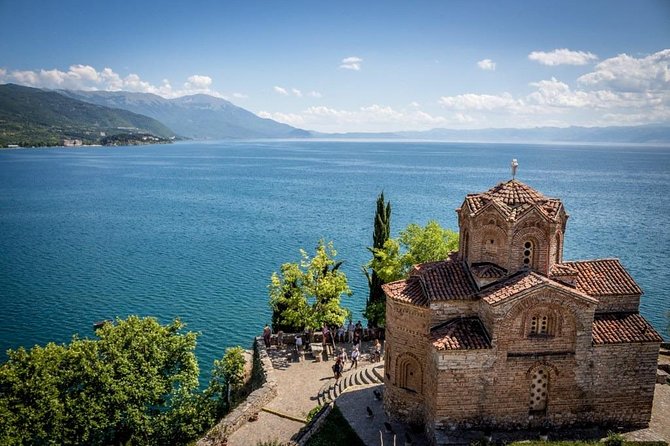
After breakfast, you head to Rila Monastery, Bulgaria’s most famous tourist site and a UNESCO World Heritage location. The monastery is tied to the 10th century and Saint Ivan Rilsky, and what you’ll feel there is scale. You’re visiting one of the largest monastic complexes in the Balkans, but the tour particularly includes the church because it was adorned by 19th-century masters from multiple Bulgarian schools of painting and woodcarving.
Then the day shifts to Skopje. You arrive in the early evening and get an orientation tour first, before a centrally located hotel. It’s not trying to cram everything into one day, which is good. Skopje can take over your attention if you let it, so orientation is a helpful reset.
Day 4: Skopje Old Bazaar and Ohrid’s lake-city walking route
Skopje day is built around the landmarks that make the city feel like a crossroads. You’ll walk by the Vardar River quay and through Old Bazaar, described as the biggest preserved bazaar in the Balkans. You also hit the Memorial house of Mother Teresa, plus Kale fortress that anchors the city visually, and Macedonia Square with the statue of Alexander the Great on horseback.
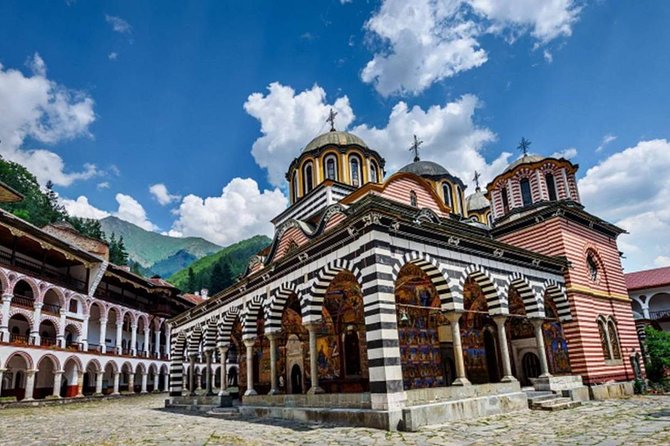
Then you move on to Ohrid, a UNESCO World Heritage site on the lake between Macedonia and Albania. Ohrid is presented as a place shaped by thousands of years, and the walking tour follows that theme: narrow streets and squares, the Ancient Theater, churches and monasteries including Sveti Sofia Church, plus Tsar Samuil’s Fortress.
The best part of Ohrid, practically, is how it’s built for walking. You’re not just seeing one monument. You’re moving through a historic old-city pattern of squares, churches, and pedestrian streets.
Day 5: Crossing into Tirana and making sense of Skanderbeg Square
You continue the route over the Macedonian-Albanian border to Tirana, Albania’s capital. The walking tour targets the big central anchors, which helps you quickly understand the city layout.
You’ll visit Skanderbeg Square, the National History Museum, Et’hem Bey Mosque, and the Skanderbeg statue. That combination matters because it spans national identity, culture, and architecture in one sweep.
If you’re the type who wants context before you wander off on your own, this is the day where the tour structure is especially useful. You’ll have a clear mental map after these stops, so your free time later is more enjoyable.
Day 6: Kotor’s Stari Grad, a fortified old town stop at the right pace
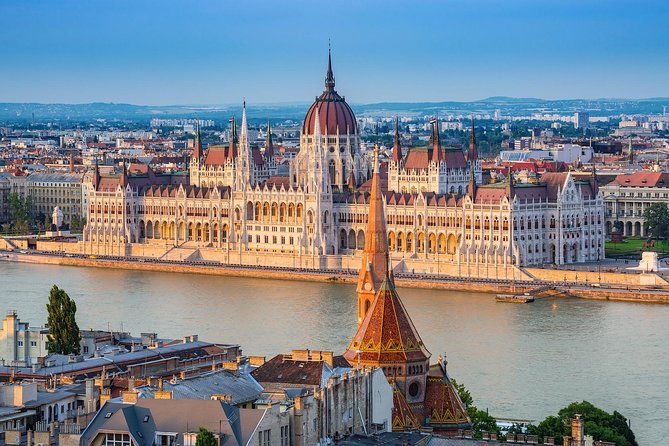
In the evening you arrive in Kotor and visit the fortified old town Stari Grad, also noted as a UNESCO site. Even without extra interpretation, a place like this makes sense instantly. Fortifications and tight streets shape how you move, and you feel the old-city rhythm right away.
The tour gives you about 3 hours, which is a good window. Long enough to see major angles, short enough that you’re not exhausted before the next travel day.
Practical note: Kotor’s streets often mean stone underfoot and lots of stair-style walking. You’ll be glad you didn’t plan for sneakers-only comfort.
Day 7: Mostar’s bridge story and Sarajevo’s Ottoman to Austro-Hungarian layers
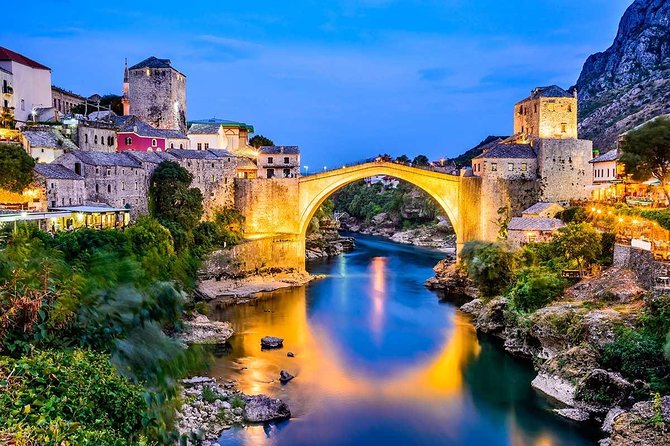
After breakfast, you head to Mostar. The focus is the Old Bridge of Mostar, built in 1566 and described as the main reason Mostar developed as a regional capital. The story matters historically too, because it was destroyed during the Siege of Mostar in November 1993, and the tour covers the reasons behind that event during the walking tour.
Mostar also has an active tradition associated with the bridge, where young jumpers perform off the structure in front of tourists. I’d approach that with sensible expectations. It’s part of the modern scene now, and it can make the area lively and crowded.
Then you move on to Sarajevo, via a scenic route passing Jablanica Lake and the Neretva River canyon. Sarajevo’s walking tour covers the old part of the city and explains origins from the medieval Bosnian kingdom. You’ll visit both Ottoman and Austria-Hungarian parts, and that mix is key to understanding why Sarajevo feels like more than one European city.
You also stop at Latin Bridge, tied to the story about how World War I was triggered. The tour adds more layers by referencing the 1984 Winter Olympics and life during the Siege of Sarajevo. If you’re sensitive to heavy history, this is where your day may feel weightier than a typical sightseeing day.
Day 8: Belgrade essentials, from Kalemegdan to Skadarlija
After breakfast, you travel into Serbia and arrive in Belgrade in the afternoon. The walking tour covers major anchors that give you a fast overview of the city’s identity.
You’ll see Republic Square, the National theater, and the National museum. You also visit Skadarlija, the old Bohemian quarter, plus Kalemegdan park and Belgrade fortress. The tour includes Viktor, described as Belgrade’s most famous symbol, and the confluence of the Sava and Danube rivers.
I like this style of stop order because it moves from the civic core to the older feel of the city. By the end, you’re not just seeing buildings, you’re understanding how Belgrade’s geography shaped its culture and defenses.
Day 9: Novi Sad pause and Budapest’s first Danube evening
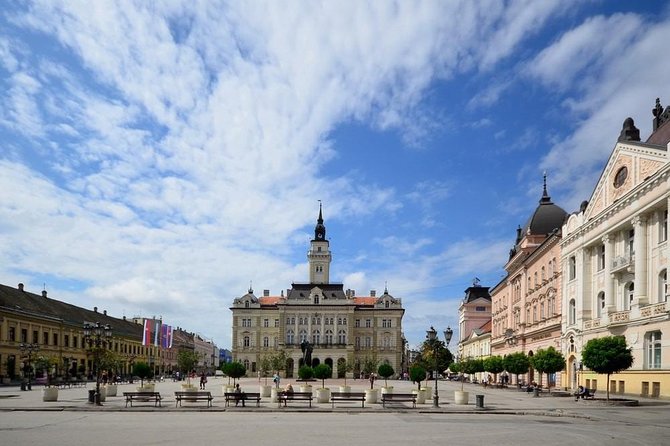
You leave Belgrade for Budapest with a stop in Novi Sad. Novi Sad gets about an hour, and the walking route focuses on Zmaj Jovina Street and the Danube embankment, plus sights like the Palace of the Orthodox Bishop and Petrovaradin Fortress outside view.
The details here help you recognize Novi Sad’s character quickly: the older one-story 19th century houses along Dunavska street, the promenade vibe, and the river angles.
Then you arrive in Budapest in the evening. You get a 3-hour walking tour around the arrival period, and the tour highlights Budapest as the Queen of Danube, which is really the theme for how to see the city. This is a good time for a first pass, not a deep day of museums, because you’re already traveling.
Price and what you actually get for the money
The price is $1,191.42 per person for an around 9-day trip. In practical terms, you’re paying for three big buckets:
- Logistics: air-conditioned transport across multiple countries with a one-way plan
- Guiding: a professional tour leader plus local guides in several cities
- Built-in rhythm: daily hotels (listed as 4-star) with breakfast included for 8 days
What’s not included is important: tips for the driver/tourguide (listed as 5 euro/day/person), food and drinks not specified, and entrance fees at museums. So your final total depends on how often you choose paid interiors versus free exterior views.
Value tip: for a trip like this, entrances add up quickly on UNESCO-heavy days. If you budget conservatively for entry fees, you’ll avoid the end-of-trip sticker shock.
Pace and walking level, so you don’t get surprised
The tour is described as an easy walking tour with moderate effort. You should still be ready for real walking days. There are notes that walking tours range from about 2 hours up to 4 to 5 hours, and distances can run from 1 km up to 7 km depending on the sites.
You may also carry your own bag on some steps when entering hotels, though many hotels have elevators. If you’re comfortable walking several kilometers and handling stairs occasionally, you’re in the right zone.
If you’re not, adjust your expectations for how much free wandering you’ll want after the guided walk ends.
Who should book this Balkans route
This tour fits best if you want to see a lot of countries and old towns without running your own schedule. It’s also a good fit if you like guided explanations, especially for places like Rila Monastery, Ohrid, Sarajevo, and the UNESCO sites.
You might want to skip it if you hate group pacing. This is structured, and you trade some spontaneity for smooth movement and guided coverage.
For history-minded travelers, this route is strong because it includes Orthodox sites, Ottoman and Austro-Hungarian influences, and story-based stops like Latin Bridge and siege-era context in Sarajevo.
Should you book this Bucharest to Budapest tour?
I’d book it if your main goal is a well-organized, one-way Balkans sampler with real stops and guided walking tours, plus hotels and breakfast handled for you. The UNESCO anchors and the range of cultures across Sofia, Skopje, Ohrid, Tirana, Kotor, Mostar, Sarajevo, Belgrade, and Budapest is a lot of variety for a single price.
I’d think twice if you’re very sensitive to long travel days or if you prefer a slower pace with fewer scheduled walks. If you do book, bring comfortable shoes, plan to budget for tips and entrance fees, and treat each walking tour like the main event of the day.
FAQ
What is the duration of this tour?
It runs for 9 days (approximately), with 8 nights of accommodation included.
How much does the tour cost?
The price is $1,191.42 per person.
Where does the tour start and what time does it begin?
Start is in Bucharest, with the listed start time of 8:30 am. The pickup details also mention an 08.00 departure from University Square. The start location given is Bulevardul Regina Elisabeta 7, București 030167, Romania.
Where does the tour end in Budapest?
The tour ends at Budapest, Kerepesi út 2, 1087 Hungary, near the train station.
What’s included in the price?
Included are 8 nights in 4-star hotels, transport by air-conditioned vehicle for the entire tour, a professional tour leader, and breakfast (8).
What is not included?
Not included are tips (listed as 5 euro/day/person), food and drinks unless specified, and entrance fees at museums.
Is the tour guided and in English?
Yes. The tour is offered in English, and it includes a professional tour leader plus local tour guides in Romania, Sofia, Skopje, Tirana, and Sarajevo.
What walking level should I expect?
The tour is described as an easy walking tour with moderate effort. Walking tours can last roughly 2 hours to 4 or 5 hours, and distances can range from about 1 km to 7 km depending on the sites.
Do I need a passport?
Yes. A current valid passport is required on the day of travel.
Can I cancel for a refund?
Yes. You can cancel up to 6 days in advance for a full refund. 2 to 6 full days before the start time gives a 50% refund. Less than 2 days before the start time is not refunded.
Recently listed in Bucharest
- Village Museum Bucharest Guided Tour★ 5.0 · 6 reviews
- Wine Tasting and Dinner, including Sommelier★ 5.0 · 3 reviews
- Winery touring & private wine tasting – one day private tour★ 5.0 · 3 reviews
- Bucharest: Dealu Mare Winery Private Trip with Wine Tasting★ 4.9 · 6 reviews
- Transylvania Tour: Dracula’s Castle, Peles Palace & Brasov★ 5.0 · 19 reviews
- Traditions in Bucharest: Village Museum and Wine Tasting★ 5.0 · 8 reviews
- Airport Henri Coanda (Otopeni) to Bucharest – Private Transfer – Driver★ 5.0 · 5 reviews
- Discover Medieval Transylvania Small Group Tour – 7 days★ 5.0 · 4 reviews
Tours, compared.
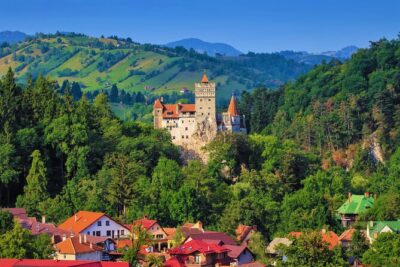
Bucharest to Dracula Castle, Peles Castle and Brasov Guided Tour
Read our review →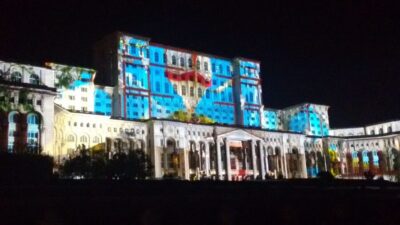
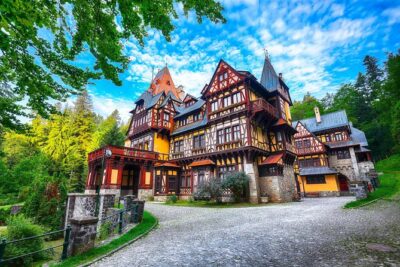
Transylvania and Dracula Castle Full Day Tour from Bucharest
Read our review →
Peles Castle, Bran Castle, & Brasov Old Town Tour
Read our review →
Small-group tour Bran, Rasnov, and Peles Castles
Read our review →