
REVIEW · MARAMURES WOODEN CHURCH TOURS
3 Day Tour of Maramures
Wooden crosses in Maramures hit hard. This private 3-day tour links the Merry Cemetery with towering wooden churches, then adds serious context in Sighet’s museums. I love that it mixes art and daily life, from Săpânța blue epitaphs to real craft workshops. I also love how the local guide, Teo, helps you talk to people like you are in the same room, not behind a glass wall. One consideration: the schedule is packed, and some stops are only about 30 to 90 minutes, so you need to go with the flow.
You’ll start in Cluj-Napoca at 9:30 am, ride in private transport, and sleep two nights in 3-star accommodation with two breakfasts included. Most key entry tickets are covered, but meals, drinks, and snacks are not, so budget time and cash for lunch along the way.
In This Review
- Key highlights you will actually feel
- Entering Maramures: wood culture, crafts, and honest history
- Cluj-Napoca meeting point and how the days are paced
- The fitness note that matters
- Day 1 in Sighet: Merry Cemetery, wooden churches, and the memory museums
- Stop 1, Merry Cemetery: humor and grief carved into wood
- Stop 2, Sapanta-Peri Monastery: a towering wooden church
- Stop 3, Memorial of the Victims of Communism and the Resistance: an old prison as education
- Stop 4, The Elie Wiesel Memorial House: Jewish culture and Holocaust learning
- Day 2 in Northern Transylvania villages: monastery wood, plant-dyed weaving, and living workshops
- Stop 1, Barsana Monastery plus a wood carving workshop
- Stop 2, Botiza: plant-dyed wool rugs and field work
- Stop 3, Sacel: Dacian-style pottery and ritual masks (if available)
- Day 3: crafts in Breb and Sarbi, then an optical illusion at Budesti
- Stop 1, Breb: locals, a village poet, and a crafts workshop
- Stop 2, Sarbi: water-powered farm machines that still work
- Stop 3, Budesti: an optical illusion and a medieval wooden church
- Why Teo and the local approach can be the whole point
- Price and value: what $763.34 covers, and what it does not
- What kind of traveler should book this
- Should you book this 3-day Maramures tour?
- FAQ
- What language is the tour offered in?
- Where does the tour start in Cluj-Napoca?
- What time does the tour begin?
- How long is the tour?
- Is this a private tour?
- Is accommodation included?
- Are breakfasts included?
- Are admission tickets included?
- What is not included in the price?
- Does the tour use a mobile ticket?
Key highlights you will actually feel
- The Merry Cemetery’s wooden epitaphs in Săpânța blue, with humor and family portraits carved right into the crosses
- Barsana Monastery, a huge wooden church complex plus a major wood carving workshop in the same village
- Botiza weaving with plant dyes, where wool rugs still use antique motifs and traditional dye methods
- Sacel craftsmen keeping older techniques alive, including Dacian-style unglazed pottery and ritual masks (if available)
- Sighet’s Memorial of Communism and the Resistance, taught through an old prison converted into museum exhibits
- Teo’s translation and local access, which turns craft visits into real conversation with community members
Entering Maramures: wood culture, crafts, and honest history
Maramures is the kind of place where wood is not a theme, it is the tool of daily life. You feel that fast, from the moment you see painted wooden cemetery crosses to the way monasteries and workshops run on handmade skills. This tour does a smart job of balancing beauty with weight. You get lyrical cemetery art and tall wooden churches, then you also get Sighet’s prison museum and Jewish heritage learning that will stay with you after the car ride ends.
If you care about authenticity, this tour leans the right way. It is not built only around grand monuments. It spends time with people who still weave, carve, fire pottery, and keep old processes running.
More Maramures wooden church trips:
- Maramures best, full day tour from Cluj
★ 5.0 · 33 reviews - From Cluj-Napoca: Maramures Day Tour
★ 5.0 · 19 reviews - Two days tour to Maramures: local experiences and culture
★ 5.0 · 9 reviews
Cluj-Napoca meeting point and how the days are paced
The tour begins at Piața Unirii 15 in Cluj-Napoca and starts at 9:30 am. It is a private group, so you are not squeezed into a big herd. You travel by private transportation, and your local guide stays with you throughout.
The pacing is practical, not rushed for the sake of rushing. Still, expect a mix of stop lengths, like 30 minutes for a key church visit and around 1 hour 30 minutes for the bigger museum and monastery stops. That means you should bring a flexible attitude. If you are the type who wants to linger for hours in one spot, you may have to accept quick but meaningful visits instead.
The fitness note that matters
The tour asks for moderate physical fitness. That is a good match for uneven outdoor walking you might face at cemeteries and village sites. You do not need to be an athlete, but comfortable shoes help.
Day 1 in Sighet: Merry Cemetery, wooden churches, and the memory museums
Day one is the emotional setup. It moves from community storytelling to tall wooden devotion, then into 20th century history that Romania still carries.
A different sort of day out in Romania:
- Curly Tour – Day trip from Cluj 🙂
★ 5.0 · 330 reviews - Cluj: Turda Salt Mine, Corvin Castle, Alba Carolina Tour
★ 4.8 · 184 reviews - Cluj-Napoca: 2.5-Hour Guided Walking Tour
★ 4.8 · 104 reviews - From Cluj: Turda Salt Mine, Gorge, and Remetea Full-Day Trip
★ 5.0 · 84 reviews
Stop 1, Merry Cemetery: humor and grief carved into wood
The Merry Cemetery is world famous for a reason. The crosses are wooden, painted in vivid colors, and dominated by Săpânța blue. What you will remember most is how each epitaph mixes portraits of the deceased with verse. Some are straightforward, some are funny, and many read like a local chronicle of virtues and vices, all in the same community voice.
The time slot is 1 hour 30 minutes with the admission ticket included. That is enough to slow down and read more than one or two epitaphs. If you tend to walk past inscriptions quickly, this is one of the few places where stopping and actually reading changes the experience.
Stop 2, Sapanta-Peri Monastery: a towering wooden church
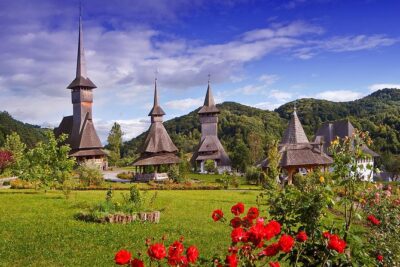
Next comes Sapanta-Peri Monastery, known as the tallest wooden church in the world at about 75 meters. You get a 30 minute visit with admission included. This is a quick hit, but it works because you are already in a wood-focused mood from the cemetery.
A possible drawback here is that 30 minutes can feel short if you want photos from every angle. Still, the height is the point, and you will likely want to take a moment just to look up and take in the scale.
Stop 3, Memorial of the Victims of Communism and the Resistance: an old prison as education
Then the tone turns serious at the Memorial of the Victims of Communism and the Resistance. It is set in an old prison that has become a museum. Instead of abstract explanations, you move through cells that now function as exhibits, learning Romania’s recent history from 1945 to 1989, up to the fall of the Berlin Wall.
You get about 1 hour 30 minutes, and admission is included. This is one of the best documented museums in Romania for this theme, and it is also compared internationally for its role in Europe’s memory of totalitarianism and resistance. If you want context to understand why people still speak so carefully about the communist period, this stop gives you it.
Stop 4, The Elie Wiesel Memorial House: Jewish culture and Holocaust learning
The last stop of day one is the Elie Wiesel Memorial House, which hosts the Jewish Museum of Maramureș, focused heavily on the Holocaust. You visit about 30 minutes with admission included.
The museum is tied to Elie Wiesel’s story, including the fact that he was born here and later became a Nobel Prize for Peace winner and author of Night. If you want optional added sites, the tour notes possibilities like the Sephardic Synagogue, the Jewish Cemetery, and the Holocaust Monument, time permitting.
This stop can be heavy. But it also makes the region’s history feel complete, not just architectural.
Day 2 in Northern Transylvania villages: monastery wood, plant-dyed weaving, and living workshops
Day two is where you see the hands behind the beauty. Monasteries are still here, but so are the crafts that shaped everyday life.
Stop 1, Barsana Monastery plus a wood carving workshop
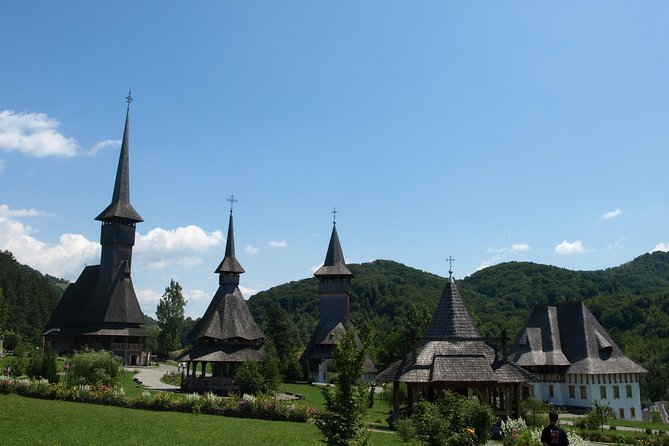
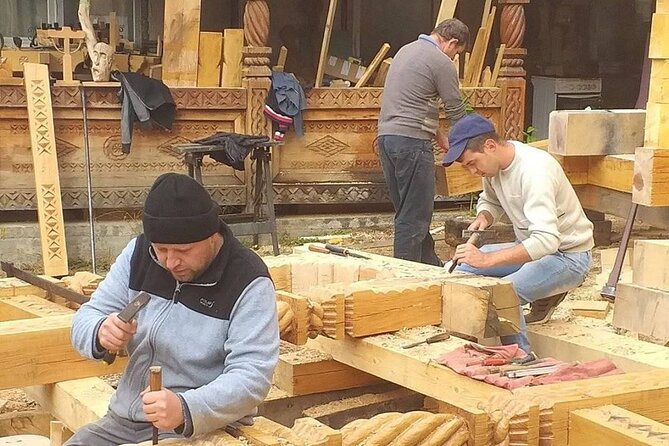
You start with Barsana Monastery, described as the most impressive monastery in Northern Transylvania, built as a huge complex in wood. You also visit a wood carving workshop nearby, in the same village, and the time is 1 hour 30 minutes with admission included.
The monastery is a visual anchor for the whole region. The workshop adds the practical side, showing you how the carved look is made by real people using traditional skills. If you like to understand the how, not only the what, this pairing is a win.
Stop 2, Botiza: plant-dyed wool rugs and field work
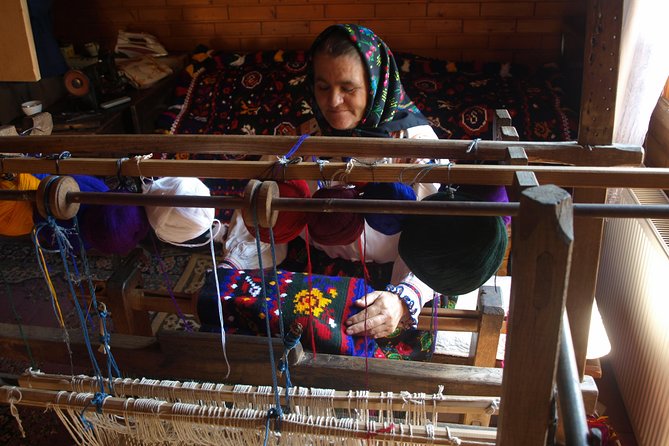
In Botiza, you meet a woman who weaves woolen rugs using dyes produced from plants and decorated with antique motifs. This tradition is listed as intangible cultural heritage on the UNESCO Representative List (inscribed in 2016). You also see people working in the fields and visit a mineral spring.
The stop runs about 1 hour, and it is listed as free of admission. You will feel the difference between museum viewing and craft witnessing here. You are watching a living process and meeting someone who expects to keep doing it tomorrow too.
Stop 3, Sacel: Dacian-style pottery and ritual masks (if available)
Then you go to Sacel, known for keeping older pottery methods alive. You visit a ceramist who still makes Dacian style unglazed pottery. You may also meet a craftsperson who makes wool and sheepskin ritual masks, if available, plus a wood carver and a lady in a 100-year-old wooden house.
This is about 1 hour 30 minutes, also marked as admission free. The best part is that it is not one showpiece. It is a cluster of older skills, grouped inside small village life. That makes your photos less like souvenirs and more like proof of real work.
One consideration: because access depends on what craftspersons are available, the exact mix may vary. The tour language makes it clear there are options, so you should treat this as a chance to learn, not a guarantee of a specific demonstration.
Day 3: crafts in Breb and Sarbi, then an optical illusion at Budesti
Day three keeps the village focus and adds a couple of quirky stops that help the serious history days breathe.
Stop 1, Breb: locals, a village poet, and a crafts workshop
In Breb, you meet friendly locals, including a village poet, and you visit a crafts workshop. The time is 1 hour 10 minutes, and admission is listed as free.
This is the kind of stop that makes a tour feel human. A poet adds context that a guidebook cannot. Even if you only catch a few words, you get the sense that art and identity live in everyday life here.
Stop 2, Sarbi: water-powered farm machines that still work
Next is Sarbi, where you see farm machines pulled by water still operating for community needs. The tour highlights a fulling mill, a carding mill, a whirlpool setup, and an alcohol distillery.
You get about 1 hour, and admission is free. This is practical heritage, not just decoration. It also helps you understand why wool and textiles matter in the region. If you like how systems work, this stop scratches that itch.
Stop 3, Budesti: an optical illusion and a medieval wooden church
Finally, you go to Budesti. The tour calls out a famous optical illusion, plus a fine medieval wooden church. The time is about 1 hour, and admission is free. Then you head back to Cluj-Napoca, and the tour ends at the original meeting point.
This ending works because it gives you a light moment after two days of thoughtful history and craft work. The optical illusion is a fun reset, and the church brings you back to the wooden identity of the region.
Why Teo and the local approach can be the whole point
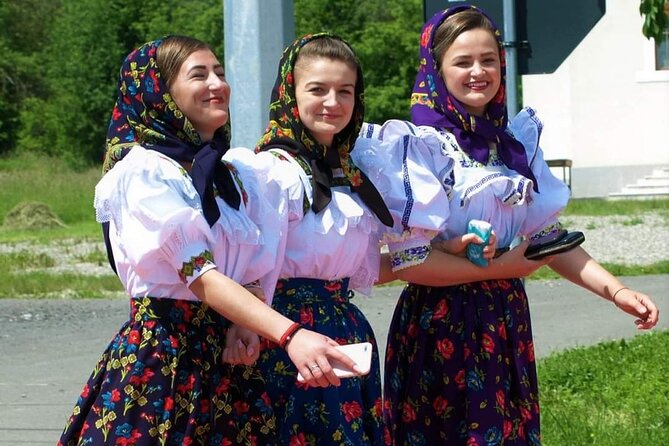
I think one of the strongest reasons to pick this tour is the way it treats the villages as places where people live, not stages built for visitors. A great guide makes that difference. Teo is highlighted for exactly this kind of impact.
What you should look for is how you are guided into conversation. You are not only looking. You are asking. And you are getting translation that keeps you from nodding along without real understanding. That is what turns a normal sightseeing day into a day you can replay later because you remember the voices, not just the buildings.
If your goal is purely photography, you will still find great shots. But if your goal is to feel the human side of Maramures, this tour direction is the right one.
Price and value: what $763.34 covers, and what it does not

The price listed is $763.34 per person for the 3-day experience. That number can look steep until you break down what’s actually included.
Included:
- Private transportation
- 3-star accommodation for 2 nights
- A professional local guide
- Breakfast for 2 days
- All fees and taxes
- Admission tickets for multiple featured stops, while several village visits are not ticketed
Not included:
- Meals, drinks, and snacks
- Travel insurance
- Tips and souvenirs and other personal expenses
So where is the value? You are paying for guided access across multiple villages, plus lodging and transportation, not just entry tickets. The English guide matters too, especially for places like the Sighet memory museums and Jewish cultural learning where context changes what you see.
The tradeoff is that you need to plan on lunch and dinner on your own. The tour does not include meals, so you should budget for that and build in time to grab food between stops when possible.
Also, the tour notes group discounts. If you are booking as a group, it may reduce your per-person cost.
What kind of traveler should book this
This tour is a great match if you:
- Want traditional crafts with real makers, not just demonstrations
- Like wooden churches and cemeteries but want those tied to people and story
- Want history that goes beyond dates, especially Sighet’s communist-era prison museum and Jewish heritage learning
- Prefer a private group feel, with time to ask questions
You might not love it if you:
- Need lots of free time for wandering on your own
- Want meals included in the price
- Struggle with moderate walking, uneven ground, and tight stop windows
If you like a balanced mix of art, daily life, and serious context, this is one of the better ways to see Maramures in only three days.
Should you book this 3-day Maramures tour?
I’d book it if your ideal trip includes wooden culture plus lived-in village encounters. The combination of Merry Cemetery storytelling, Barsana Monastery, craft visits in Botiza and Sacel, and the memory museums in Sighet is a strong balance. The guide approach, especially with Teo and translation, is the kind of difference you cannot replace with apps or a casual self-drive.
Skip it if you want a slow, unstructured trip with long stays in fewer places. This tour is built on movement and variety, so you will enjoy it most if you like that rhythm.
FAQ
What language is the tour offered in?
The tour is offered in English.
Where does the tour start in Cluj-Napoca?
It starts at Piața Unirii 15, Cluj-Napoca 400394, Romania.
What time does the tour begin?
The start time is 9:30 am.
How long is the tour?
The duration is 3 days, approximately.
Is this a private tour?
Yes. Only your group will participate.
Is accommodation included?
Yes. It includes 3-star accommodation for 2 nights.
Are breakfasts included?
Yes. Breakfast is included for 2 days.
Are admission tickets included?
Admission tickets are included for several stops, while other village visits are listed as free. The exact inclusion depends on the specific stop.
What is not included in the price?
Meals, drinks, and snacks are not included. Travel insurance is also not included, along with tips, souvenirs, and other personal expenses.
Does the tour use a mobile ticket?
Yes, the tour includes a mobile ticket.
Recently listed in Cluj Napoca
- Private tour to Turda Salt Mine, Rimetea and Alba Iulia★ 4.8 · 5 reviews
- Turda Salt Mine, Gorge & Rimetea Village (private from Cluj)★ 5.0 · 5 reviews
- Turda salt mine and Corvin Castle day tour from Cluj★ 5.0 · 9 reviews
- CLUJ ADVENTURE TOUR ! ZIP LINE and HIKE★ 5.0 · 15 reviews
- Discover Apuseni Mountains – Scarita Summit,Sipote Waterfall and Dumesti Village★ 5.0 · 17 reviews
- Two days tour to Bucovina & UNESCO Painted Monasteries★ 5.0 · 3 reviews
- Turda Gorge, salt mine and Rimetea village private tour★ 5.0 · 12 reviews
- Day Trip To Turda Salt Mine, Rimetea Village & Coltesti Fortress★ 5.0 · 25 reviews
Maramures Wooden Church Tours, compared.
Classic Romania Tour – small group in 8 days: Transylvania and Maramures
Read our review →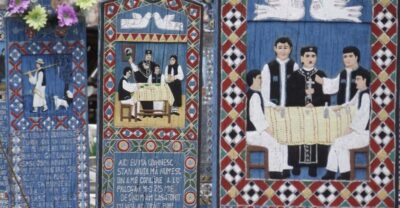
Two days tour to Maramures: local experiences and culture
Read our review →
A Journey Back in Time: Countryside from Transylvania and Maramures – 15 Days
Read our review →
Your rendez-vous with Europe’s past: time-travel to Maramures, Transylvania
Read our review →Browse the lists this tour appears in