REVIEW · BUCHAREST TOURS
The Real Story of Gypsies – Slavery in Romania
Bucharest has a Roma story you cannot miss. This 3-hour walking tour connects Romana Square and several key Bucharest landmarks to the trade in human lives and its lasting impact on Roma identity, with English interpretation and free admission stops. One consideration: the themes are heavy, so plan to keep your mood respectful at memorial sites.
I love that the route mixes major architecture with specific, street-level reminders, including the site of an old slaves market and the Holocaust Memorial. I also like the human pace of the experience, especially if your guide is Mihai, a name that shows up in feedback for clear English and taking real time for questions.
In This Review
- Key things to know before you go
- Walking from Romana Square to Mesteshukar ButiQ in 3 hours
- What you pay for: value at $30.04 per person
- Stop-by-stop: the story told through Bucharest landmarks
- Stop 1: Platoul Piata Amzei, the old slaves market site
- Stop 2: Palatul Stirbei, power and participation in Roma history
- Stop 3: Ateneul Roman, arts, pride, and perceptions
- Stop 4: Cismigiu Parc, oldest and largest garden in Bucharest
- Stop 5: Holocaust Memorial, remembrance for Roma victims
- Stop 6: Iuliu Maniu Statue, when the name Gypsies was still common
- Stop 7: Mesteshukar ButiQ, copper craftsmanship you can take home
- How the tour uses Bucharest’s layout to shape what you notice
- Who this tour is best for
- Should you book this Bucharest Roma history walk?
- FAQ
- Where does the tour start?
- Where does the tour end?
- What time does the tour begin?
- How long is the tour?
- Is there walking during the tour?
- How much does it cost?
- Is the tour offered in English?
- Do I need an admission ticket for the listed stops?
- How big is the group?
- Can I cancel and get a full refund?
Key things to know before you go
- A tightly timed 3-hour route that stays focused, with about 1 hour 20 minutes of walking
- Free admission stops at every listed location, so you are not juggling extra costs
- Central Bucharest landmarks used as story markers, from palaces to memorials
- Roma craftsmanship at the end, with copper work by Roma artisans at Mesteshukar ButiQ
- Small group size (max 15), which keeps questions possible
Walking from Romana Square to Mesteshukar ButiQ in 3 hours
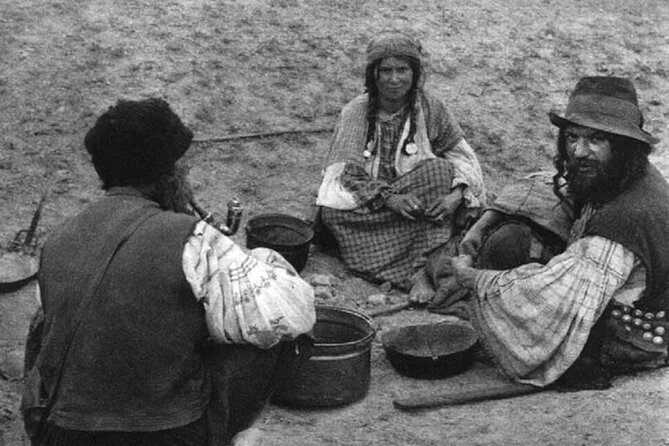
This is a guided walking tour through Bucharest, starting at Teatrul Ion Creangă, Sala Mare on Strada Piața Amzei 13 (start time 10:00 am). It runs about 3 hours, and the schedule leaves roughly 1 hour 20 minutes for walking, so you are not spending the whole time on your feet. The group is kept small, with a maximum of 15 travelers, which matters for a tour like this, because you might have questions that do not fit neatly between landmarks.
You’ll also get a mobile ticket, and the tour is offered in English. The meeting point is described as near public transportation, which is practical if your day is already packed.
One small tip that will save you stress: wear comfortable shoes even if the route is not all walking. Some stops are longer than the clock time suggests, because you will want to look carefully at the meaning of each site.
More of Bucharest worth a look before you book:
- Bucharest: Dracula’s Castle, Peles Castle, & Brasov Old Town
★ 4.5 · 17,858 reviews - Bucharest: Dracula Castle, Peles Castle & Brasov Old Town
★ 4.6 · 10,891 reviews - Bucharest: Dracula’s Castle, Peleș Castle & Brașov Day Trip
★ 4.4 · 6,100 reviews
What you pay for: value at $30.04 per person
At $30.04 per person for about 3 hours, the best value here is not just the walking. It is the fact that the tour packs multiple stops, each with a clear purpose, and lists free admission tickets at the locations along the way. That means you are paying for the guide’s interpretation and the guided flow, not for buying your way into buildings.
It also helps that the tour ends in a real place where craftsmanship is on display. When a tour finishes at Mesteshukar ButiQ, it gives you a chance to convert learning into something tangible, like seeing copper work close up and choosing to support local Roma artisans directly.
If you have only a morning or early afternoon to spare, this price is reasonable compared with typical city tours that often charge extra entry fees. The math works even better if you tend to appreciate walking tours because they let you see how neighborhoods stitch together.
Stop-by-stop: the story told through Bucharest landmarks
The tour is built like a walk with alternating emotional “beats.” Some stops are outward and architectural. Others ask you to slow down. Most stops are short, often around 10 to 15 minutes, so the guide’s job is to give you enough context to connect the dots without turning the whole thing into a lecture.
Stop 1: Platoul Piata Amzei, the old slaves market site
Your tour starts at Platoul Piata Amzei (Romana Square area). The first stop is the site of an old slaves market, described as a haunting reminder of Romania’s complex history with the Roma community.
This opening matters because it sets the frame: the tour is not only about identity and culture as something decorative. It is about harm that shaped lives and language, including the trade in human lives and how that history echoes into Roma identity today.
Practical consideration: this is the part of the tour where you should be mentally ready. If you know topics like forced enslavement and persecution are difficult for you, plan for a short breathing space before you step into the next streets.
A different sort of day out in Romania:
- Bucharest: Palace of Parliament Tickets and Guide
★ 4.3 · 3,182 reviews - Bucharest: Day Trip to Dracula Castle, Peles Castle & Brașov
★ 4.4 · 3,049 reviews - Bucharest to Dracula Castle, Peles Castle and Brasov Guided Tour
★ 4.5 · 2,933 reviews - Bucharest: Palace of Parliament Tickets and Guided Tour
★ 4.4 · 1,877 reviews
Stop 2: Palatul Stirbei, power and participation in Roma history
Next comes Palatul Stirbei, a palace in Bucharest built in 1835. The tour focuses on how its owner was involved in one of the important moments of Roma history in Romania.
Even if you only see the building from outside, this kind of stop helps you connect what you can see (a grand palace) with what you might not assume at first (that power structures shaped Roma lives). It’s a useful reminder that history often sits right next to everyday beauty.
Drawback to consider: palaces can feel visually impressive and easy to romanticize. If you catch yourself doing that, keep your attention on what the guide highlights about that owner’s role.
Stop 3: Ateneul Roman, arts, pride, and perceptions
Then you pass by the Ateneul Roman (the Romanian Athenaeum). The tour treats it as a symbol of national pride and cultural heritage, and it connects that to the role of the arts in shaping perceptions of the Roma community.
This stop is a good break from the hardest subject matter, but it still keeps the message grounded. Instead of treating culture as neutral, the guide frames it as something that can influence how Roma people are viewed across time.
If you like architecture, you will likely enjoy spotting details quickly, because the time here is about 15 minutes. It is enough to notice, without forcing you to become an art historian on the spot.
Stop 4: Cismigiu Parc, oldest and largest garden in Bucharest
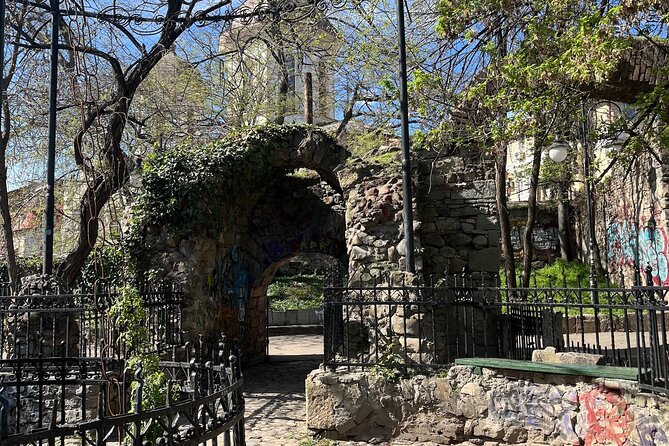
Next is Cismigiu Park, described as Bucharest’s oldest and largest garden. This is your “walk and breathe” moment, where you stroll through greenery and pick up more truths and myths around the Roma community.
I like this kind of pacing because it prevents the tour from becoming one long, heavy block. It also gives you a chance to reflect on what you just learned while you are not standing still on memorial ground.
One consideration: park stops can be affected by weather. If it’s hot or rainy when you go, take that seriously, because you will still be moving through the space.
Stop 5: Holocaust Memorial, remembrance for Roma victims
The tour takes a somber turn at the Holocaust Memorial. Here, the tour pays homage to victims of Romania’s dark chapters, including the thousands of Roma lives lost to persecution and genocide.
This stop is important, and it is also the part where you should keep your phone use minimal. Give it the attention it deserves, even if you have seen other memorials before. The guide’s framing helps you understand that Roma suffering was not separate from wider persecution, it was part of the broader machinery of hatred.
Time is about 15 minutes, so it is not meant to be a long ceremony. Still, this is a stop where you might want a quiet minute even after the group moves on.
Stop 6: Iuliu Maniu Statue, when the name Gypsies was still common
Next is the Iuliu Maniu Statue. The tour highlights another significant moment in Roma history, at a time when the community was still very much called Gypsies.
This stop works well if you are sensitive to language, because names carry history. Even if the statue itself is familiar-looking city art, the conversation around it is what makes it meaningful.
Potential drawback: if you find discussions of labels and naming uncomfortable, it can still be a useful chance to learn and to think. The guide’s job is to keep it respectful.
Stop 7: Mesteshukar ButiQ, copper craftsmanship you can take home
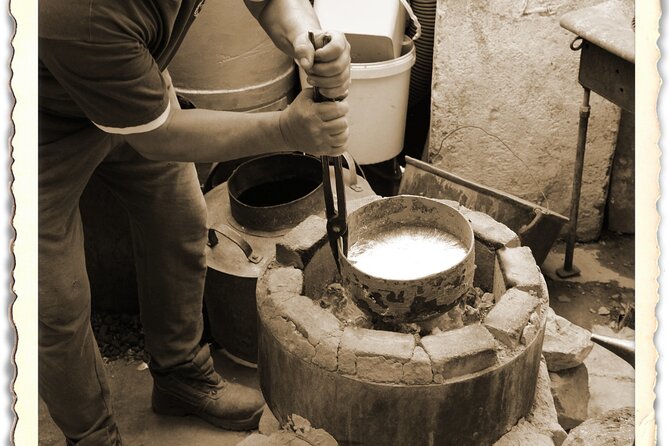
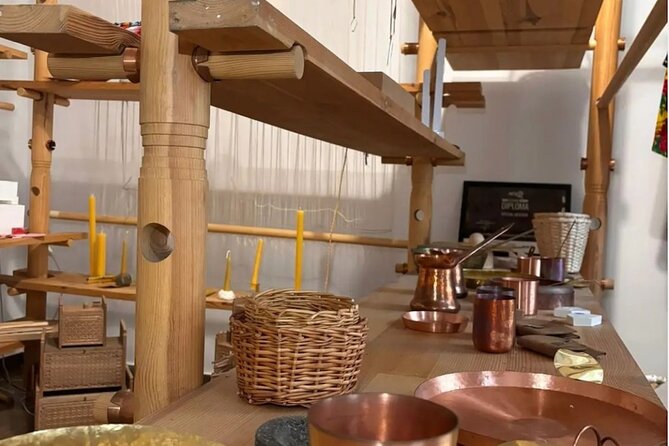
The walk ends at Mesteshukar ButiQ, a shop described as carrying products manufactured only by Roma craftsmen. You get about 15 minutes here, enough time to see the copper work firsthand and understand why craftsmanship matters as living culture, not just a story from the past.
I like ending in a place like this because it makes the tour feel complete. You leave with knowledge and you get a real option to support artisans directly. If shopping is not your thing, you can still treat it as a short cultural visit and enjoy watching skill up close.
Tip: if you want to buy something, keep your budget in mind. The tour price covers the guide and walking time, not purchases.
How the tour uses Bucharest’s layout to shape what you notice
One reason this route works is that it keeps shifting between different kinds of “evidence.” You have story anchored in a place of forced slavery, then you have a palace tied to the past, then national culture through the Athenaeum, then a park where myths are addressed, and finally memorial remembrance.
That mix helps you avoid the trap of treating history as only text. Instead, you learn to read a city: buildings can signal power, memorials demand accountability, and parks can hold cultural conversations.
I also like the balance of architecture and human consequences. The guide’s explanations, especially in English, are meant to connect the physical world in front of you to the Roma experience the tour is discussing. And if your guide is Mihai, based on feedback, you can expect time for questions, which makes it easier to personalize what you take away.
Who this tour is best for
This tour suits you best if you want more than a sightseeing loop. It is a good fit for travelers who:
- enjoy guided walking tours and want a focused route
- want to understand Roma history in Romania through city landmarks
- prefer small groups (max 15) so you can ask follow-ups
- appreciate ending with a real craft experience, not just another photo stop
If you are traveling with very young kids, or if you know you are sensitive to persecution topics, you might consider whether this emotional content fits your comfort level. The itinerary includes Holocaust remembrance and the history of enslavement themes, so it is not a light casual stroll.
Should you book this Bucharest Roma history walk?
Book it if you want a 3-hour, small-group walking tour that takes Roma history seriously and uses central Bucharest to make the story concrete. The price is reasonable for the time, the free admission stops, and the fact that it ends at Mesteshukar ButiQ for a practical look at Roma copper craftsmanship.
Skip it if you are looking for only upbeat cultural sights. This tour covers trauma and persecution, so it asks you to be mentally present.
If you decide to go, come with comfortable shoes and an open mind. You will finish with a clearer sense of how Bucharest remembers, forgets, and re-explains the Roma story through the places you walk past.
FAQ
Where does the tour start?
The tour starts at Teatrul Ion Creangă, Sala Mare, Strada Piața Amzei 13, 030167 București, Romania.
Where does the tour end?
The tour ends at Mesteshukar ButiQ, Bulevardul Mihail Kogălniceanu 12, București 030167, Romania.
What time does the tour begin?
The start time is 10:00 am.
How long is the tour?
The duration is approximately 3 hours.
Is there walking during the tour?
Yes. The schedule allots about 1 hour 20 minutes for walking time.
How much does it cost?
The price is $30.04 per person.
Is the tour offered in English?
Yes, it is offered in English.
Do I need an admission ticket for the listed stops?
Admission tickets for the listed stops are free.
How big is the group?
The tour has a maximum of 15 travelers.
Can I cancel and get a full refund?
Yes. You can cancel up to 24 hours in advance for a full refund. If you cancel less than 24 hours before the start time, the amount paid will not be refunded.
Recently listed in Bucharest
- Wine Tasting and Dinner, including Sommelier★ 5.0 · 3 reviews
- Winery touring & private wine tasting – one day private tour★ 5.0 · 3 reviews
- Village Museum Bucharest Guided Tour★ 5.0 · 6 reviews
- Bucharest: Dealu Mare Winery Private Trip with Wine Tasting★ 4.9 · 6 reviews
- Transylvania Tour: Dracula’s Castle, Peles Palace & Brasov★ 5.0 · 19 reviews
- Traditions in Bucharest: Village Museum and Wine Tasting★ 5.0 · 8 reviews
- Airport Henri Coanda (Otopeni) to Bucharest – Private Transfer – Driver★ 5.0 · 5 reviews
- Discover Medieval Transylvania Small Group Tour – 7 days★ 5.0 · 4 reviews
Bucharest Tours, compared.
Dracula’s Castle, Peles Castle, & Brasov Old Town
Read our review →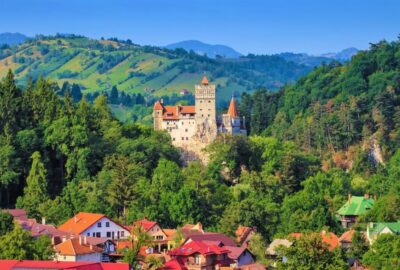
Dracula Castle, Peles Castle & Brasov Old Town
Read our review →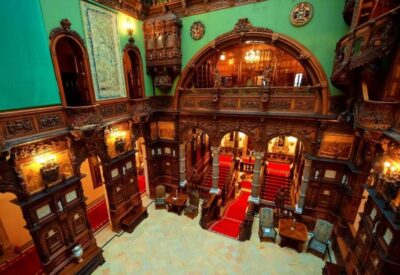
Dracula’s Castle, Peleș Castle & Brașov Day Trip
Read our review →
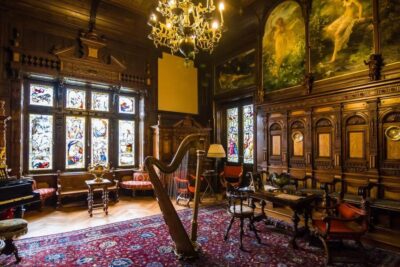
Day Trip to Dracula Castle, Peles Castle & Brașov
Read our review →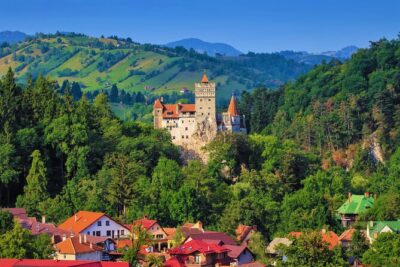
Bucharest to Dracula Castle, Peles Castle and Brasov Guided Tour
Read our review →