REVIEW · PRIVATE
Private 8 Day Romania UNESCO Tour
Painted monasteries in one tight circuit. This private 8-day UNESCO route links Bucharest with Transylvania, Maramures, and Bucovina, guided step by step by someone who explains what you are seeing and why it matters.
Two things I really like. First, the lineup is built around UNESCO sites you can actually visualize in a week, from wooden churches to the painted monasteries. Second, you get time in the countryside with local stays and hands-on touches like a horse-driven wagon ride near Sibiu and taste-and-learn moments with local craftsmen and food.
One consideration: it is a lot of driving and sites in a short span, and not all admissions are included. The tour notes about 85 euro for entrance tickets, so you will want to budget for that if you care about seeing everything inside.
In This Review
- Key things to know before you go
- The value of a private UNESCO route, not a bus tour
- Day 1 Bucharest monuments to Cozia Monastery and Sibiu-area countryside
- Day 2 Corvin Castle and Alba Iulia, then onward to Cluj-Napoca
- Day 3 Cluj-Napoca walking tour, then Maramures wooden churches
- Day 4 Merry Cemetery, Sapanta Peri, and Sighet optional context
- Day 5 Carpathian crossing to Bucovina painted monasteries and black pottery
- Day 6 Voronet, Bicaz Gorges, Red Lake, then Sighisoara at night
- Day 7 Sighisoara UNESCO center, fortified church at Prejmer, then Brasov
- Day 8 Bran Castle, Peles Castle, and returning to Bucharest
- Price and logistics: what you should budget for
- What makes the guide and included meals matter
- Who this tour is for
- Should you book this private 8-day Romania UNESCO tour?
- FAQ
- What time does the tour start in Bucharest?
- Where does the tour start and end?
- Is pickup included?
- How long is the tour?
- What is included in the price besides the tour guide and transport?
- Are entrance tickets included?
- Is this tour really private?
- What kinds of lodging are used during the trip?
- Are there optional stops?
- What is the cancellation window for a full refund?
Key things to know before you go
- A private guide for the whole route, with lots of chances to ask questions as you move between medieval cities, churches, and castles
- UNESCO coverage that goes beyond postcards, including wooden churches in Maramures and multiple painted monasteries in Bucovina
- Countryside nights are part of the plan, with local guest houses or pensions plus traditional dinners
- Hands-on cultural stops, like seeing craftsmen at work and tasting local products (including jam, chutney, and syrup)
- Big-name highlights are here too, with Bran Castle and Peles Castle closing the trip before you return to Bucharest
The value of a private UNESCO route, not a bus tour
A private tour is not just about comfort. It is about pacing and context. On this one, you start in Bucharest with a guided sweep of the main sights, then you move out into regions where Romania’s history actually changes from place to place.
The value comes from how the package bundles real logistics: 7 nights in double or twin rooms, a private guide, and transport by car or minibus. Add in 7 breakfasts and 3 dinners, plus specific cultural inclusions like the horse-driven wagon tour and local tastings, and the price starts to make sense as more than a ticket to sites.
If you prefer a trip where you can ask, compare, and connect facts to what is in front of you, this setup fits well. If you want lazy days and long breaks, you will likely feel the pace.
A few more Bucharest trips worth weighing up
- Castles of Transylvania: Private Day Trip from Bucharest
★ 4.5 · 248 reviews - Bucharest: Best of Bucharest Private Tuk-Tuk Tour
★ 5.0 · 238 reviews - Dracula’s Castle, Peles Castle and Brasov – Private Day Trip from Bucharest
★ 5.0 · 211 reviews
Day 1 Bucharest monuments to Cozia Monastery and Sibiu-area countryside
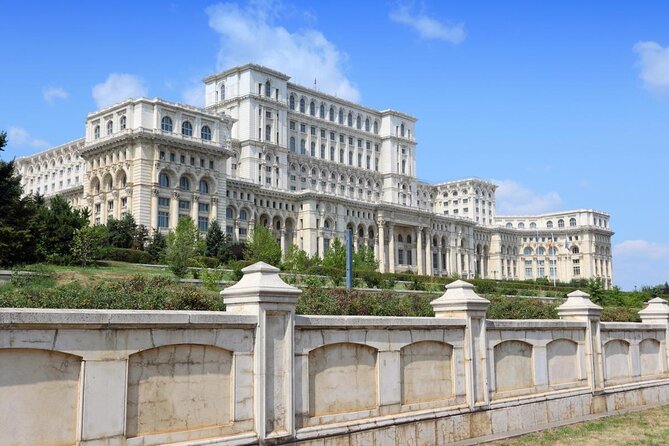
Your day starts with a morning pickup at your hotel in Bucharest, and a panoramic tour with major landmarks like the Parliament Palace, Revolution Square, the Athenaeum, the Royal Palace, and Triumph Arch. This is a fast way to orient yourself, especially if Bucharest feels like it has too many eras stacked on top of each other.
After the city stops, you head toward Romania’s older spiritual architecture. One highlight is Cozia Monastery, dating to the late 14th century, and closely tied to Wallachian ruler Mircea the Old. This is the kind of stop that makes later stories about fortresses and religious art click.
Then the trip shifts into Transylvania style. You visit Sibiu’s old district with a walking tour that includes the Big Square, Small Square, the Stairs Tower, Liar’s Bridge, and multiple cathedrals (Evanghelic, Catholic, and Orthodox). If you like medieval towns that still feel walkable and human-scaled, this is a strong start.
The day ends outside Sibiu in Sibiel, where you can take a horse-driven wagon tour through the old village and enjoy a home-made dinner with traditional products. It is a gentle way to shift from city heritage into countryside life.
Day 2 Corvin Castle and Alba Iulia, then onward to Cluj-Napoca
Day 2 keeps the medieval thread going. The first major stop is Corvin’s (Hunyad) Castle near Hunedoara, described as Romania’s biggest medieval castle, dating to the 15th century. It served as a residence for Transylvanian governors, so you can frame it as power and politics in stone, not just a spooky silhouette.
Next comes Alba Iulia, a city with ancient roots and a Roman layer you can still read in the ruins. It also ties directly to modern Romanian identity, as the city is known as the Union place. You will have time to visit the Orthodox and Catholic cathedrals and the fortification system in Vauban style, which gives you a different lens on defense than the medieval castles earlier in the trip.
You finish the day in Cluj-Napoca, staying overnight at a 4-star hotel or similar. This kind of night in a larger city can help you reset before the more rural, detail-heavy days that follow.
Day 3 Cluj-Napoca walking tour, then Maramures wooden churches
Cluj-Napoca is the “big Transylvania” stop, and you start with a walking tour covering St Michael’s Cathedral, Union Square, Museum Square, an Orthodox cathedral, and the National Theatre area. You also see the Matei Corvin statue, which adds a face to the story of regional rule.
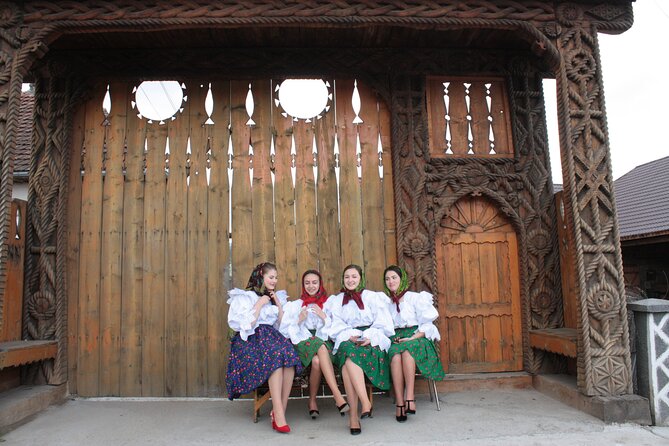
In the middle of the day, you switch to Maramures, and that change matters. Maramures is often where visitors realize that Romania’s heritage is not just castles and palaces. It is craft, wood, and community traditions you can feel in how buildings are shaped.
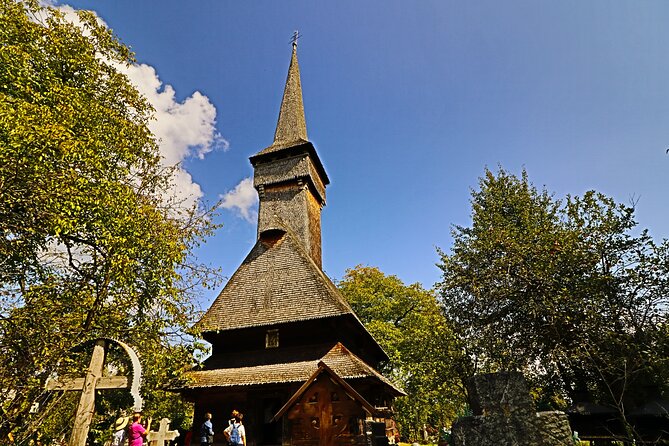
You visit Surdesti Wooden Church (UNESCO), then Church of the Holy Paraskeva in Desesti (UNESCO). Both are part of the UNESCO cluster of wooden churches, with tall wooden towers and interior character that comes from age and design, not decoration-for-decoration’s-sake.
After that, you head to Barsana Monastery, another key wooden-heritage stop. The day closes in Botiza, with time to visit a local household, plus a visit that can include a sheepyard depending on the season. Dinner and overnight are in a local pension, which turns this into more than a series of photo stops.
A different sort of day out in Romania:
- Bucharest: Dracula’s Castle, Peles Castle, & Brasov Old Town
★ 4.5 · 17,858 reviews - Bucharest: Dracula Castle, Peles Castle & Brasov Old Town
★ 4.6 · 10,891 reviews - Bucharest: Dracula’s Castle, Peleș Castle & Brașov Day Trip
★ 4.4 · 6,100 reviews - Bucharest: Palace of Parliament Tickets and Guide
★ 4.3 · 3,182 reviews
Day 4 Merry Cemetery, Sapanta Peri, and Sighet optional context
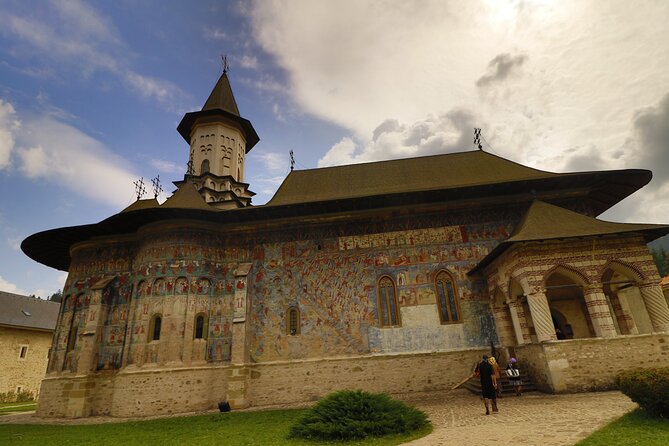
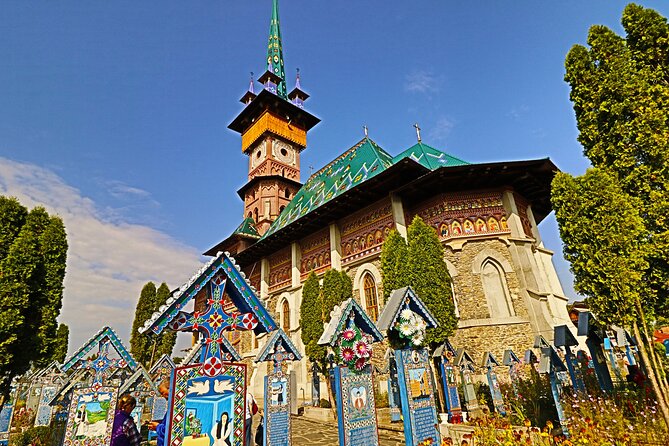
Day 4 is built around the Maramures cemeteries and wooden church superlatives, starting with Sapanta Merry Cemetery (UNESCO). This is famous for colorful tombstones with short, funny poems, which means you see grief expressed in a very personal, sometimes playful way. That emotional contrast is one of the reasons this region leaves people thinking.
In the same area, you can also see Sapanta-Peri (Sapanta Peri Monastery). It is described as the highest wooden church in the world in the Guinness Book context, and it gives you a clear sense of what “wood construction at scale” looks like.
There is an optional stop if you want a darker historical angle in Sighet, the Communist Prison Museum. It is listed as optional, so if you want the quieter focus on craft and faith, you can skip it.
In the afternoon, you visit Muzeul Tarancii Romane (Maramures Woman Museum) in Dragomiresti. This is small but specific, with a wooden gate at the entrance and explanations of carved symbols. Then you move on to Bogdan Voda Wooden Church (UNESCO), noted for frescoes painted on wood by local painters. The day ends back in Botiza with downtime and another rural night.
Day 5 Carpathian crossing to Bucovina painted monasteries and black pottery
Crossing the Carpathians toward Bucovina is where the tour’s mood changes again. You will pass through scenic villages like Ciocanesti, known for decorated houses and painted eggs traditions. There is an optional museum stop if you want more on that specific tradition.
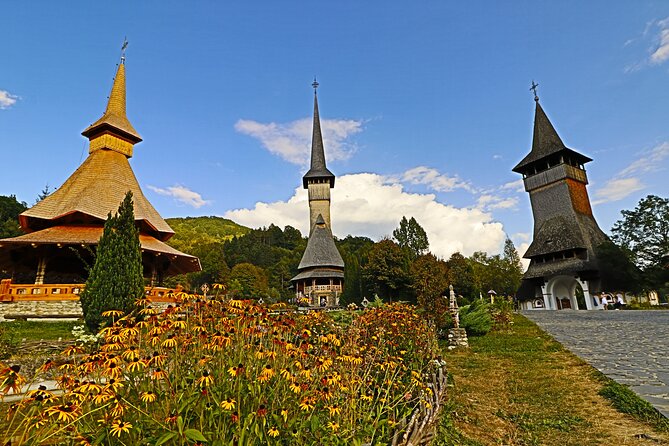
Then comes the heart of Bucovina: painted monasteries, all listed as UNESCO stops. You start with Moldovita Monastery, dating to 1532 under Prince Petru Rares, and described as fortress-like in appearance with strong towers and thick walls. That fortress feel matters, because these paintings sit inside a larger defensive story.
You also visit Sucevita Monastery, described as the most magnificent monastic achievement among the painted monasteries in Bucovina. Again, the key theme is church plus fortification design, with watch-like structures that help you see why monasteries had real strategic value.
Between monasteries, you get craft time. There is a museum connected to painted eggs art, plus a workshop visit at Ceramica neagra (black pottery) in Marginea. The tour notes traditional techniques, so this is not mass souvenirs. It is the slower, hands-on side of regional identity.
Day 6 Voronet, Bicaz Gorges, Red Lake, then Sighisoara at night
Morning starts with Voronet Monastery, founded in 1488 by Stephen the Great. It is famous for frescoes with a signature blue background and for its Last Judgment depiction. If you love religious art with strong composition, this is one of the most memorable stops on the whole route.
Then you head across the mountains back toward Transylvania, passing Bicaz Gorges and the Red Lake area. These stops are shorter, but they give your eyes a break from churches and towns. You get dramatic natural scenery, which is also a good contrast tool for understanding why region-to-region travel shaped Romania’s different cultural styles.
You finish in Sighisoara, with time to carry that medieval town feeling into the next day.
Day 7 Sighisoara UNESCO center, fortified church at Prejmer, then Brasov
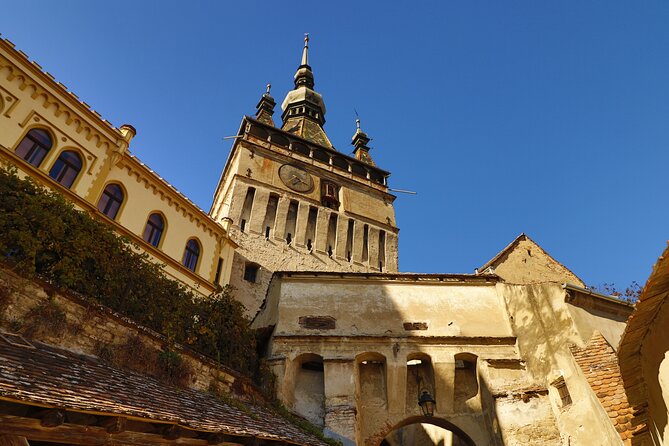
Sighisoara is the “medieval city that still works today.” You start with a walking tour of the historic center, described as one of Europe’s best preserved medieval towns and included in UNESCO. It is also called the Pearl of Transylvania, and the route takes you through the citadel built in the 13th century by Saxon settlers.
Next you drive through small villages with traditional architecture and customs. A stop at Saschiz focuses on homemade jams, chutneys, and syrups, with tasting included.
Then you visit Peasant Fortified Church at Prejmer (UNESCO). This is a different type of structure than castles. It shows how communities defended themselves, mixing defense and worship in one complex.
In the afternoon, you reach Brasov, with a walking tour of the medieval center. You see Concil Square, Black Church, Weaver’s Bastion, Ecaterina’s Gate, and the White and Black Towers. The tour stays focused on the defensive and street-level medieval layout, and Black Church is included as a major stop on the route.
You do not spend all day indoors, but you still get a lot of “why this town was important” in one sweep.
Day 8 Bran Castle, Peles Castle, and returning to Bucharest
Final day means icons. You start with Bran Castle, built in the 14th century, originally meant to control access in Transylvania. Today it is tied to the Dracula legend, but even if you are not chasing the myth, it is useful for understanding why castles sat where they did.
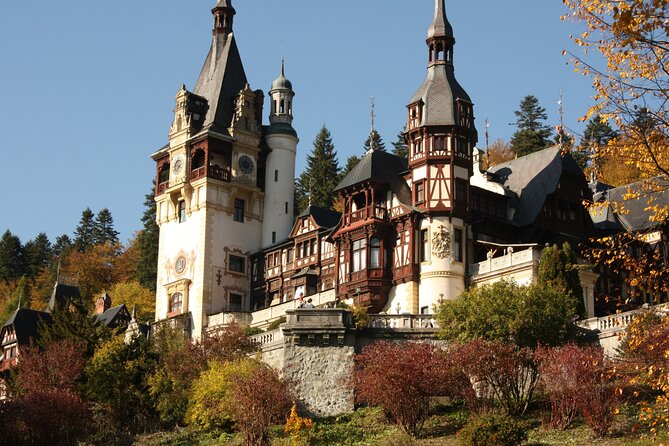
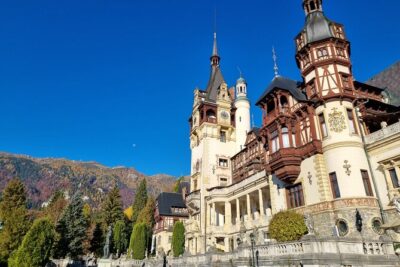
Next you go to Peles Castle in Sinaia, a former summer residence of Romanian kings. It is described as one of the nicest royal residences in Europe. You get a strong contrast to Bran, since this one reads more like polished court life rather than strict border control.
Then you return to Bucharest, with drop-off at the airport or hotel around 16:00.
Price and logistics: what you should budget for
At $2,315.49 per person, this is clearly not a bargain-basement group deal. The price makes sense if you treat it as a full-service package: transport by car or minibus, a private guide, 7 nights of lodging, and multiple meals.
Here is what you should plan for:
- Entrance tickets are about 85 euro in total, as noted, and not all stops are free
- Your meals beyond breakfast and the listed dinners are not included
- You will also likely pay for optional add-ons if you choose them, like the Communist Prison Museum in Sighet or certain museum stops mentioned as optional or not included
The best way to get value is to go in with the right expectations. You are paying for efficient routing across regions, plus interpretation from a private guide, plus lodging and meals that keep the trip moving without you having to organize every transfer.
What makes the guide and included meals matter
This tour is designed to turn “see a monastery” into “understand the art, politics, and daily life around it.” The private guide is central, and that shows in the way the route jumps between church architecture, fortifications, and local craft traditions.
You also get cultural food beats, not just restaurant time. The included stops include local craftsmen visits and tasting jam, chutney, and syrup, plus a horse-driven wagon tour in the Sibiel area and home-made dinners at rural stays. Those are small on paper, but they change how the trip feels.
Who this tour is for
This works especially well if:
- You want UNESCO sites without the hassle of chaining tickets and transfers
- You care about painted monasteries and the wooden church tradition in Maramures
- You want both major cities and rural nights, rather than only sightseeing in big towns
If you dislike driving days or you only want a few big highlights, you might feel this route is dense. But for travelers who like a “regional story” trip, it is a strong match.
Should you book this private 8-day Romania UNESCO tour?
I would book it if your priority is a guided UNESCO route that mixes famous names with lesser-seen craft and rural life. The tour’s strongest selling point is the way it balances art and architecture with the people behind it, especially through the countryside nights and the Monasteries of Bucovina focus.
I would think twice if entrance fees and a fast pace bother you. With the listed extra admissions and the amount of ground covered, you will have the best time if you enter with a flexible mindset and comfortable walking shoes.
If you want, tell me your travel dates and what you care about most, painted monasteries, wooden churches, castles, or local food. I can help you decide if this exact route fits your style and help you plan what to prioritize each day.
FAQ
What time does the tour start in Bucharest?
The tour start time is 9:00 am.
Where does the tour start and end?
It starts in Bucharest and ends back in Bucharest. Drop-off is around 16:00 on the final day at the airport or to a Bucharest hotel.
Is pickup included?
Pickup is offered, with the meeting point described as meeting your tour guide in the morning at your hotel in Bucharest.
How long is the tour?
The duration is 8 days (approximately).
What is included in the price besides the tour guide and transport?
The included items list 7 nights accommodation in double or twin rooms, a private tour guide, transport by car or minibus, breakfasts (7), dinners (3), a horse-driven wagon tour in the Sibiu area, visits to local craftsmen, and jam, chutney, and syrup tasting.
Are entrance tickets included?
Entrance tickets are not included as per the itinerary, with an estimate of about 85 euro.
Is this tour really private?
Yes. It is described as a private tour/activity, so only your group participates.
What kinds of lodging are used during the trip?
It includes 7 nights in double or twin rooms. The itinerary specifically notes a 4-star hotel or similar in Cluj Napoca, and local guest house or local pension stays in the countryside.
Are there optional stops?
Yes. For example, the Communist Prison Museum in Sighet is optional, and some museum visits and workshop options are listed as optional or not included.
What is the cancellation window for a full refund?
You can cancel up to 3 days in advance for a full refund, based on the experience’s local time.
Recently listed in Bucharest
- Village Museum Bucharest Guided Tour★ 5.0 · 6 reviews
- Wine Tasting and Dinner, including Sommelier★ 5.0 · 3 reviews
- Winery touring & private wine tasting – one day private tour★ 5.0 · 3 reviews
- Bucharest: Dealu Mare Winery Private Trip with Wine Tasting★ 4.9 · 6 reviews
- Transylvania Tour: Dracula’s Castle, Peles Palace & Brasov★ 5.0 · 19 reviews
- Traditions in Bucharest: Village Museum and Wine Tasting★ 5.0 · 8 reviews
- Airport Henri Coanda (Otopeni) to Bucharest – Private Transfer – Driver★ 5.0 · 5 reviews
- Discover Medieval Transylvania Small Group Tour – 7 days★ 5.0 · 4 reviews
Private, compared.

Castles of Transylvania: Private Day Trip from Bucharest
Read our review →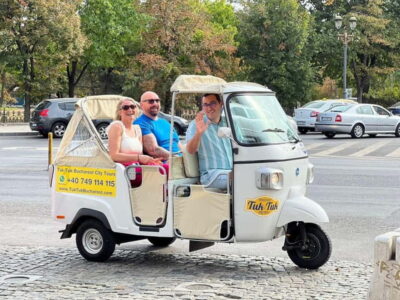
Dracula’s Castle, Peles Castle and Brasov – Private Day Trip from Bucharest
Read our review →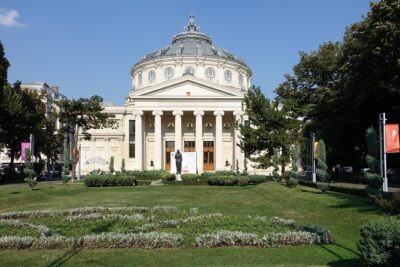
Bucharest Panoramic Sightseeing – Private City Tour
Read our review →
THERME “Take It Easy” Pack: Full Spa Access + Private Transfers
Read our review →
Piatra Craiului National Park Private Hiking Tour from Brasov
Read our review →