
REVIEW · DRACULA'S CASTLE TOURS
Dracula beyond the legend: 8-day private tour in Transilvania
Eight days, one very human monster. This Dracula-themed Romania trip takes you beyond spooky stories and into real places tied to Vlad Tepes, with guide talk that connects the legend to medieval power. I especially liked the way the route mixes famous stops (Bran and major citadels) with lesser-known churches and fortresses, so it feels more like a history walk than a theme park. The other big plus is everything practical is handled for you, from guided transport to included entrance fees and hotel check-ins. The main drawback to plan for is the amount of driving between sites, so you need to be okay with long stretches on the road.
I also like that the tour starts in Bucharest and builds the mood in a smart order. You see the Palace of Parliament first, then step into Centrul Vechi for a slower, more human feel with cafés and streets where you can easily mix in a meal before heading out again.
Finally, let’s talk value. At $3,113.31 per person (based on 2 people sharing a double room), it is not a budget trip, but it includes 7 nights of centrally located hotels with breakfast, airport transfers, a professional English-speaking guide, modern transport, and the entrance fees for the listed sights.
In This Review
- Key highlights to know before you go
- Dracula done the straight way, Vlad Tepes sites from Bucharest onward
- Day 1 in Bucharest: Palace of Parliament and Centrul Vechi (Old Town)
- Wallachia power stops: Târgoviște and Curtea de Argeș
- Transfăgărășan Highway to Sibiu: mountain views and the ASTRA Museum carriage ride
- Corvin Castle and Densuș Church: gothic walls with real theories
- Alba Iulia citadel defenses and Salina Turda: fortification plus underground play
- Saxon walls and UNESCO streets: Biertan and Sighișoara
- Brasov streets, Black Church, Bran Castle, and Peles in the castle day
- Snagov Monastery and the last morning transfer
- What this tour feels like in real life: pace, comfort, and guide care
- Price and value: $3,113.31 per person, what you actually get
- Who should book this Dracula tour, and who should consider another style
- FAQ
- How long is the Dracula beyond the legend tour?
- Where does the tour start and how does pickup work?
- Is the tour guided and in English?
- What’s included in the price?
- Are meals other than breakfast included?
- What group size should I expect?
- What is the cancellation policy?
- Should you book this Dracula tour?
Key highlights to know before you go
- Vlad Tepes context all week: you’ll connect stories to actual courts, towers, monasteries, and fortifications.
- Small group feel: the experience caps at 8 travelers, which usually means quicker answers and fewer waiting around.
- Major castles plus big extras: Bran Castle and the Brasov area, plus fortresses and churches in Wallachia and Transylvania.
- Included entry and transport: entrance fees and guided transport are part of the package, so you spend less time organizing.
- Sibiu by carriage: a ride included at the ASTRA Museum makes the history feel more hands-on.
- Underground fun: Salina Turda turns a salt mine into an active, surprising stop.
Dracula done the straight way, Vlad Tepes sites from Bucharest onward
This tour’s pitch is Dracula, but what you really get is an education in how legends form. Vlad Tepes, historical ruler of Wallachia, is the thread running through the week. Some sites tie to him directly, others explain the world around him, and your guide helps you separate what’s documented from what’s been stretched over time.
What works best is the balance. You’re not only chasing the loudest names. You also visit older religious sites, defensive walls, and medieval cities where the setting makes the stories feel believable. That’s where this tour earns its keep: it gives you the backstory that turns a myth into a map.
The route also makes sense geographically. You start in Bucharest, sweep into Wallachia for places like Târgoviște and Curtea de Argeș, then move through Transylvania’s Saxon and medieval centers. By the time you reach Bran and the mountain scenery, you already know why each place matters.
More Dracula's Castle Tours in Bucharest
- Bucharest: Dracula’s Castle, Peles Castle, & Brasov Old Town
★ 4.5 · 17,858 reviews - Bucharest: Dracula Castle, Peles Castle & Brasov Old Town
★ 4.6 · 10,891 reviews - Bucharest: Dracula’s Castle, Peleș Castle & Brașov Day Trip
★ 4.4 · 6,100 reviews
Day 1 in Bucharest: Palace of Parliament and Centrul Vechi (Old Town)
Bucharest is a quick but powerful opener. The Palace of Parliament is your first stop, also known as Casa Poporului. This massive complex, built between 1984 and 1997, is the largest administrative building in the world and the kind of building that makes you feel Romania’s modern history as much as its older one.
Then you walk Centrul Vechi, Bucharest’s Old Town, the city’s heart for cafés, restaurants, and sightseeing. Your guide also points out Curtea Veche, the Old Court, described as the first royal court in Bucharest and linked in the narrative to Vlad Tepes. Even if you don’t come for “gothic” Bucharest, this stop helps you get your bearings fast and sets the tone for the whole week.
Practical note: Old Town is where you’ll feel the most walking energy on day one. Wear comfortable shoes, because even a short walk can turn into a longer loop if you find a bakery you like.
Wallachia power stops: Târgoviște and Curtea de Argeș
Day 2 shifts from big-city scale to medieval rule. You head to Târgoviște, which served as a capital for Wallachia during the Middle Ages. The Princely Court connects the city to the political center of the region, and your visit includes the Princely Church and Chindia Tower.
This stop is valuable because it explains how a ruler’s presence shaped a place. When you hear about sieges and invasions, and when your guide links Vlad’s military reputation to the area’s memory, the story stops being abstract. You’re seeing the skeleton of the power system rather than just collecting anecdotes.
Afterward you go to Curtea de Argeș Monastery, erected between 1512 and 1517. It’s famous for the legend of Manole, with its idea that you can’t create something everlasting without sacrifice. You’ll also learn that the monastery became a key historical monument and a burial place for members of Romania’s royal house.
The day ends with the travel push toward the Transfăgărășan area. Your route takes you toward Valea cu Pești, where you’ll be staying at a hotel positioned on the famous Transfăgărășan road. This sets you up perfectly for the mountain scenery the next day.
Transfăgărășan Highway to Sibiu: mountain views and the ASTRA Museum carriage ride
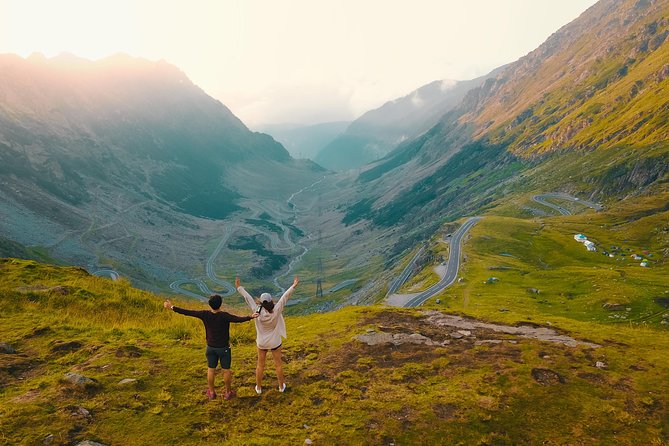
On day 3, you get a break from straight-up Vlad stops and trade them for mountain air. Transfăgărășan crosses the Southern Carpathians and climbs to around 2,042 meters. The payoff here is photos and a reset for your eyes after days of churches and fortresses.
When you roll onward, you reach Sibiu, a city where the Dracula legend supposedly spread among noblemen and merchants. You’ll visit the ASTRA Museum and take a ride with a wooden carriage. That carriage ride matters more than it sounds. It slows you down and helps the museum buildings feel less like exhibits and more like lived spaces, including a collection that includes over 300 traditional buildings and thousands of traditional household objects.
Then you explore Sibiu’s Main Square, Piata Mare, and key landmarks like the Brukenthal Museum, the Holy Trinity Roman Catholic Cathedral, and Huet Square with its Evangelical Church. After that, you get a few hours to explore on your own. This is a great window for doing something simple and human, like lingering over a coffee or finding one of Sibiu’s side streets and wandering without a checklist.
More Transylvania Tours in Bucharest
- Transylvania and Dracula Castle Full Day Tour from Bucharest
★ 4.5 · 1,589 reviews - Castles of Transylvania: Private Day Trip from Bucharest
★ 4.5 · 248 reviews - 2-Day Medieval Transylvania with Brasov,Sibiu and Sighisoara Tour from Bucharest
★ 4.5 · 145 reviews - 2-Day Transylvania from Bucharest: Brasov, Bran, Sighisoara
★ 5.0 · 60 reviews
Corvin Castle and Densuș Church: gothic walls with real theories
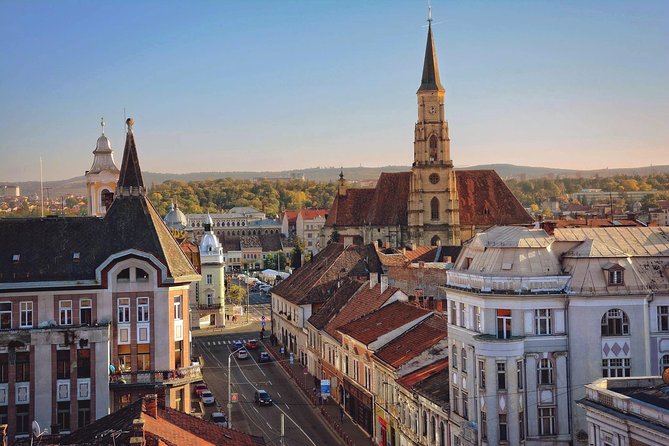
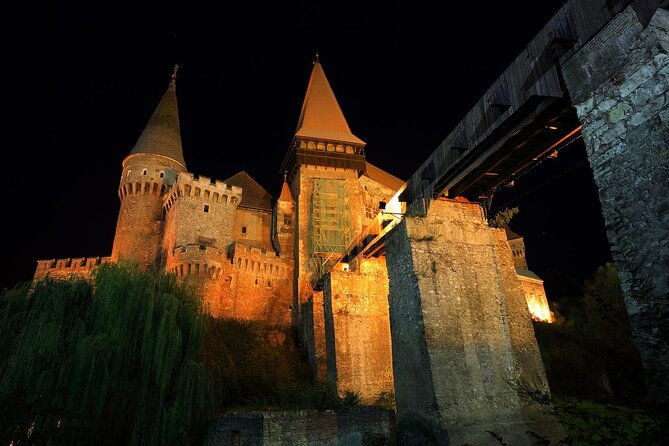
Day 4 starts with Castelul Corvinilor, also called Hunyadi Castle. It’s in Hunedoara County and is described as one of the largest medieval castles in Europe. Expect Renaissance-Gothic architecture, tall towers, bastions, a moat, and a strong, dramatic inner courtyard. Your guide also includes the legend that it was a place where Vlad the Impaler was imprisoned for seven years.
Even if you treat that part as legend, the castle itself is worth the day. It’s the kind of fortress that makes you understand why Europe’s medieval rulers invested so heavily in defense and spectacle. This is one of those stops where your brain starts filling in how power looked and felt.
Next comes Densuș Church in the village of Densuș. The church is noted as one of the oldest Romanian churches still standing, with construction sometime in the 7th century, and murals from the 15th century. The murals reportedly depict Jesus wearing traditional Romanian clothing, which is exactly the kind of cultural detail that keeps this tour from becoming purely gothic-themed.
You’ll also hear two competing hypotheses about the church’s origins: one suggests it began as a pagan temple, and another suggests it was built as a mausoleum to Roman general Longinus Maximus. Either way, it’s an excellent moment to practice a travel skill: enjoying uncertainty without turning it into nonsense. Your guide helps you keep the myths labeled as myths and the evidence as evidence.
Alba Iulia citadel defenses and Salina Turda: fortification plus underground play
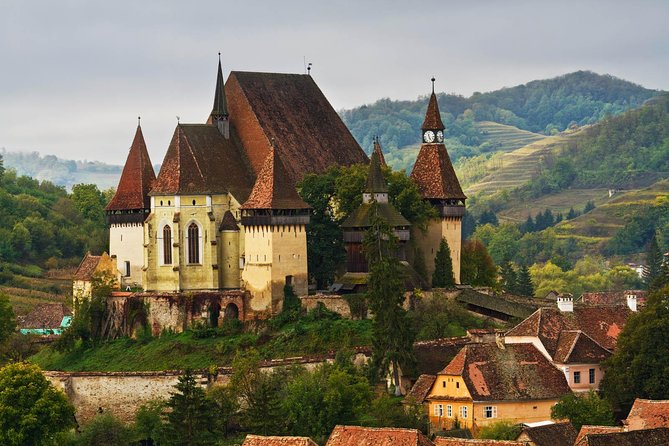
Day 5 is a one-two punch: big defensive architecture in daylight, then a fun underground break. You start at Cetatea Alba Iulia, the Alba Carolina Citadel. It’s described as the largest medieval citadel in Romania, built between 1715 and 1738, and it connects to older fortifications on the site including a Roman castle of Legio XIII Gemina and a medieval citadel.
This stop is especially interesting if you like understanding how empires protected newly conquered areas. The citadel ties into a fortification system created by Prince Eugene of Savoy to defend Habsburg territories. It’s also presented as a representative Vauban bastion system, which helps you see fort design as a science, not just a style.
Then you head to Salina Turda, one of Transylvania’s most entertaining detours. It’s built on centuries of salt mining, first mentioned in 1075. Today, it’s turned into an underground attraction with mini-golf, ping pong, bowling, a Ferris wheel, and even rides like a boat on an underground lake. This is the stop that makes the week feel less gloomy and more real-world fun.
If you’re traveling with someone who doesn’t want another church, this is your peace offering. If you’re you, and you like quirky attractions that still teach you something, this is also a win.
Saxon walls and UNESCO streets: Biertan and Sighișoara
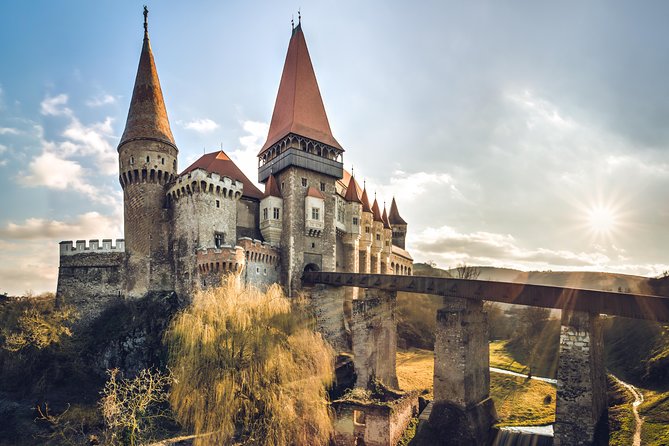
Day 6 leans into Saxon-era Transylvania. You start at Biertan Fortified Church. It’s surrounded by three sets of walls, and the Gothic architecture is described as inspiring awe and admiration. Fortified churches like this weren’t just about worship. They were built to keep communities safe, which changes how you read the walls when you’re standing inside the complex.
Then you go to Sighișoara, the only inhabited medieval fortress in Europe and a UNESCO World Heritage site. You walk the medieval citadel on winding cobblestones lined with historic buildings. Your route includes the Clock Tower, the symbol of the city.
Your visit also includes a museum of medieval weapons and a torture chamber inside the Clock Tower. This is where a Dracula tour can either feel too theatrical or perfectly honest. The key is tone, and your guide keeps it grounded, using it to explain medieval power and fear, not just to scare you for fun.
Sighișoara is also considered the birthplace of Vlad the Impaler, and you visit the place where he lived in his first years. That connection helps the myth feel like a human life story, not a costume.
Brasov streets, Black Church, Bran Castle, and Peles in the castle day
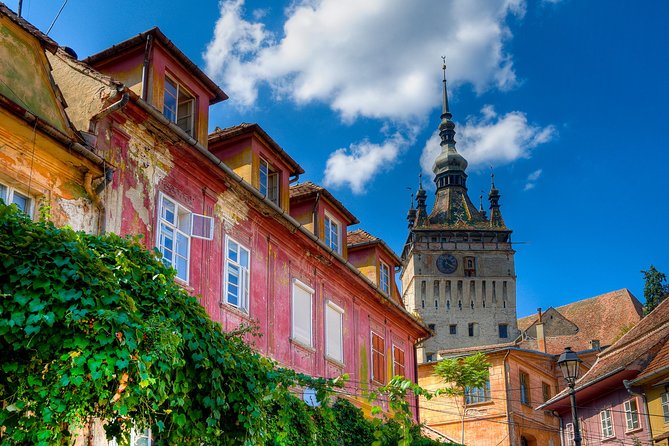
Day 7 brings you to Brasov for a classic medieval city walk. You’ll explore the historic center, including Council Square and narrow streets. Your route includes the Black Church, a well-known Gothic cathedral.
The Brasov part matters because it gives the week a change of pace. You’re no longer just staring at fortresses. You’re in a living town with street life, and your guide’s pacing helps you actually take in the vibe, not rush past it.
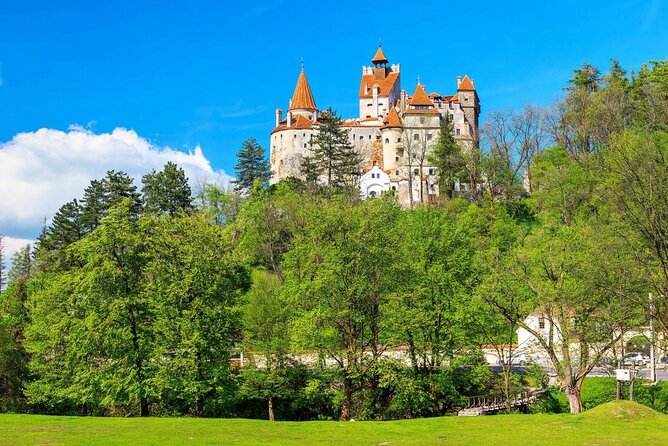
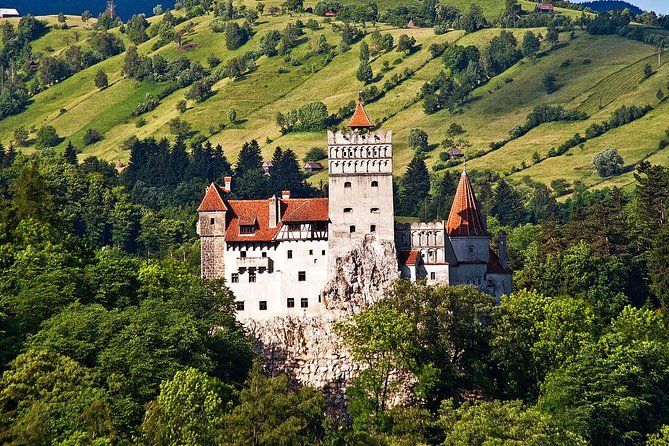
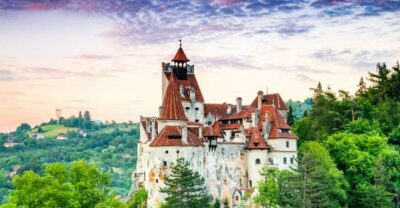
After that you head into castle country for Bran Castle, often called Dracula’s Castle. Bran is built on a 60-meter cliff and is said to guard the important access route into Transylvania. It’s a 13th-century castle, and your guided visit keeps the focus on why this location became famous rather than letting it turn into pure “spooky selfie” time.
About Peles Castle: the tour’s highlights specifically mention both Bran and Peles as the two famous Romanian castles. So if castle interiors and architecture are part of your travel fantasy, this is one reason this tour works better than a Vlad-themed day trip.
Practical note: Castle days can be the most tiring. You’ll likely walk more than you expect between viewpoints and entrances. Build in water breaks and keep your phone battery ready for the best angles.
Snagov Monastery and the last morning transfer
Day 8 is short and tidy. After breakfast, you’re transferred to the airport based on your flight hours. It’s a clean finish, and it avoids the common problem of arriving home after a full day of driving.
If you had any energy left to spare, day 7 sets you up for it with Snagov Monastery, where Vlad Tepes is described as being buried. Your tour includes the burial-site story and the controversy around it. You’ll hear that the burial place remained disputed and that there are legends linking the body to Italy, including a story where Vlad is ransomed by his daughter and brought to Naples.
The more accepted legend you’ll hear is that after Vlad’s death, rival aristocratic families prevented him from being buried according to Christian custom. In that story, monks at Snagov supposedly stole the prince’s body and gave it a proper burial in secrecy.
Whether or not you buy every twist, the point is how memory works. A legend survives because people need it to mean something. Snagov is a fitting last Vlad stop because it turns the story toward faith, secrecy, and the human need to protect a legacy.
What this tour feels like in real life: pace, comfort, and guide care
This is a small-group experience, with a maximum of 8 travelers per departure, and up to 14 people per booking. That size usually helps with logistics, like fewer disruptions at hotels and less waiting around when the group needs to regroup.
Accommodation is included for seven nights in centrally located 4-star hotels with breakfast. You also get airport pick-up and drop-off and transportation in a modern vehicle. Entrance fees for the listed sights are included too, which is one of those quiet savings that adds up fast when you’re paying one ticket at a time.
The best proof of how it runs day to day comes from the tour’s strong guide feedback. I’d bet you will feel it most in check-ins. In one standout account, the guide was Florin, and the key praise was that he handled hotel arrivals smoothly and kept everyone settled without drama. That matters because your energy is limited. When you show up tired after hours of driving, you want one less thing to worry about.
Also, remember that “Dracula tour” can trick people into expecting constant horror movie vibes. You do get atmosphere, but the dominant feeling is medieval and historical. That’s a good thing. It makes the week more satisfying long after the photos fade.
Price and value: $3,113.31 per person, what you actually get
At $3,113.31 per person, based on 2 people sharing a double room, this is a premium packaged tour. You should expect to pay for the combination of guided transport, included entrance fees, and a full 7-night hotel stay.
Here’s where it makes sense for value:
- You get professional English-speaking guidance for multiple days of long-distance driving.
- Entrance fees are included for the planned stops, which cuts out a bunch of small expenses and confusion.
- Hotel nights include breakfast, which lowers daily costs and keeps mornings efficient.
- Airport transfers are included, so you avoid the common start-of-trip scramble.
The main “cost” is time and comfort trade-off. A week like this is more about packing a lot into a limited time window than slow travel. If your ideal trip is quiet and spontaneous, you might find the schedule intense. But if you want the Dracula route done cleanly, with someone handling the routes, it’s a strong deal.
Who should book this Dracula tour, and who should consider another style
Book it if you want:
- A guided Dracula story tied to actual places connected to Vlad Tepes.
- Big-name castles plus fortress churches, citadels, and medieval towns.
- A schedule that includes entrance fees and smooth hotel check-ins, with a guide who manages the flow.
Consider a different style if you:
- Don’t enjoy driving days or prefer fewer stops.
- Want total freedom to linger, because there is a built itinerary with set sights.
- Are sensitive to walking in older towns and castles. You’ll likely do plenty of steps.
One more match point: the tour asks for moderate physical fitness. That doesn’t mean it’s a hike-heavy trip, but it does mean you’ll benefit from being comfortable walking and standing at historic sites.
FAQ
How long is the Dracula beyond the legend tour?
It is an 8-day tour, approximately.
Where does the tour start and how does pickup work?
It starts at 9:00 am, and the company picks up from any hotel in Bucharest.
Is the tour guided and in English?
Yes. It includes a professional English-speaking guide.
What’s included in the price?
Included items are: 7 nights in centrally located 4-star hotels with breakfast, professional English-speaking guide, modern vehicle transportation, airport pickup and drop-off, entrance fees, and a carriage ride in Sibiu. A mobile ticket is also included.
Are meals other than breakfast included?
Meals are not included beyond what is listed in the itinerary (breakfast is included with the hotel).
What group size should I expect?
The tour has a maximum of 8 travelers. The booking maximum is up to 14 people.
What is the cancellation policy?
You can cancel for free up to 24 hours in advance for a full refund. If you cancel less than 24 hours before the start time, the amount paid will not be refunded.
Should you book this Dracula tour?
If you want Dracula as history, not just Halloween vibes, I think this is a smart booking. You get a clear route across Wallachia and Transylvania with included logistics that protect your energy, plus a guide like Florin who is praised for keeping hotel check-ins trouble-free. If you can handle driving and you’re okay with a full, sight-packed week, this tour is a solid way to see Romania’s medieval power centers without spending your trip doing paperwork and ticket-hunting.
Recently listed in Bucharest
- Village Museum Bucharest Guided Tour★ 5.0 · 6 reviews
- Wine Tasting and Dinner, including Sommelier★ 5.0 · 3 reviews
- Winery touring & private wine tasting – one day private tour★ 5.0 · 3 reviews
- Bucharest: Dealu Mare Winery Private Trip with Wine Tasting★ 4.9 · 6 reviews
- Traditions in Bucharest: Village Museum and Wine Tasting★ 5.0 · 8 reviews
- Transylvania Tour: Dracula’s Castle, Peles Palace & Brasov★ 5.0 · 19 reviews
- Airport Henri Coanda (Otopeni) to Bucharest – Private Transfer – Driver★ 5.0 · 5 reviews
- Discover Medieval Transylvania Small Group Tour – 7 days★ 5.0 · 4 reviews
Dracula's Castle Tours, compared.
Dracula’s Castle, Peles Castle, & Brasov Old Town
Read our review →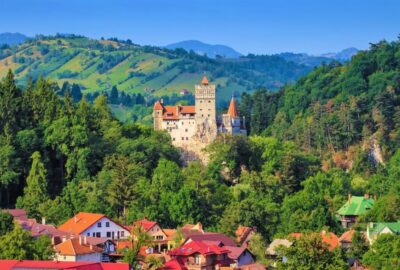
Dracula Castle, Peles Castle & Brasov Old Town
Read our review →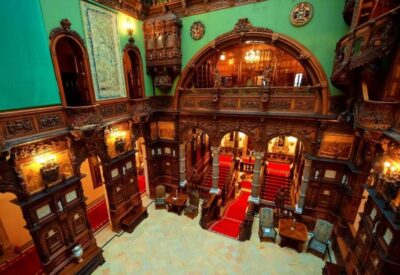
Dracula’s Castle, Peleș Castle & Brașov Day Trip
Read our review →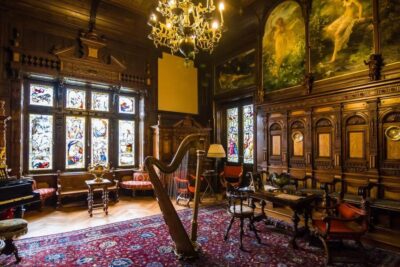
Day Trip to Dracula Castle, Peles Castle & Brașov
Read our review →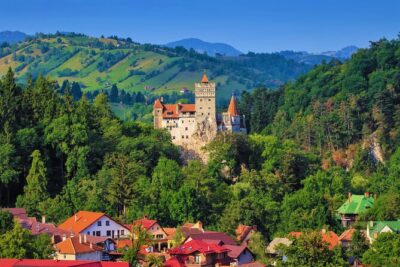
Bucharest to Dracula Castle, Peles Castle and Brasov Guided Tour
Read our review →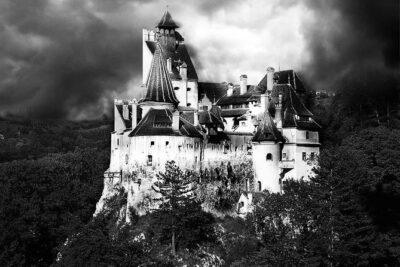
Dracula’s Castle, Peles Castle and Brasov Day Trip from Bucharest
Read our review →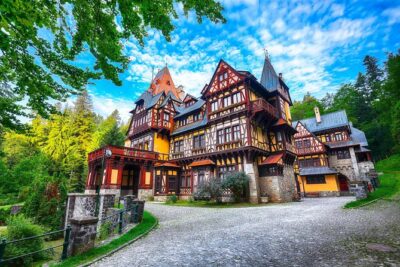
Transylvania and Dracula Castle Full Day Tour from Bucharest
Read our review →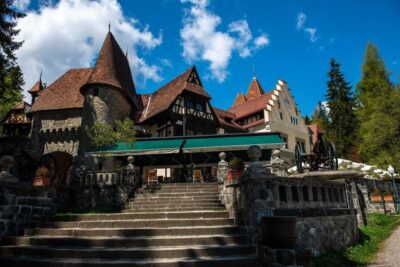
Browse the lists this tour appears in