
REVIEW · BULGARIA DAY TRIPS
Bulgaria -Private Tour- Basarbovo, Arbanasi, Veliko Tarnovo
One day, two empires, and plenty of stairs. This private trip is a fast way to reach Bulgaria from Bucharest, covering cliffside faith sites, National Revival architecture, and the royal hilltop of Tsarevets.
I love the door-to-door pickup that handles the drive and removes the language hassle, and I love the mix of places that lets you see Bulgaria from caves to fortified houses to a medieval capital. One drawback to plan for: it is a long 11-hour day, and lunch plus several entrance tickets are extra.
In This Review
- Key highlights worth noting
- Door-to-door Bulgaria: leaving Bucharest for Veliko Tarnovo
- Basarbovo Monastery: the active rock church with a plague legend
- Arbanasi plateau village: National Revival houses and fortress design
- Konstantsalieva House: fortified comfort inside the National Revival
- Tsarevets Fortress: the royal hilltop of the Second Bulgarian Empire
- Veliko Tarnovo and Samovodska Charshiya: medieval capital to artisan streets
- Price and logistics: what $170.16 covers, and what you should budget
- What to pack and how to pace yourself for a long day
- Who this day trip suits best (and who should skip it)
- Should you book this Bucharest to Veliko Tarnovo private tour?
- FAQ
- How long is the tour from Bucharest to Bulgaria?
- What sites are included in the day plan?
- Are entrance fees included in the price?
- Is lunch included?
- Do you get pickup and drop-off in Bucharest?
- Is this a private tour?
- What is the tour language?
- FAQ
- Can I get a full refund if I cancel?
Key highlights worth noting
- Active rock monastery at Basarbovo with the St. Dimitrii plague-protection legend and cave worship spaces
- Arbanasi plateau village with fortress-like 17th-century houses and great viewpoints toward Tsarevets
- Konstantsalieva House showing how wealthy merchants blended defense features with carved wooden interiors
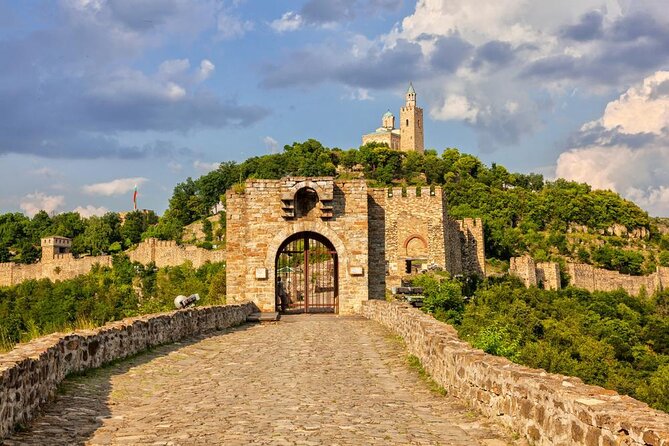
- Tsarevets Fortress on a hill with big-scale walls, the reconstructed Baldwin’s Tower, and palace ruins
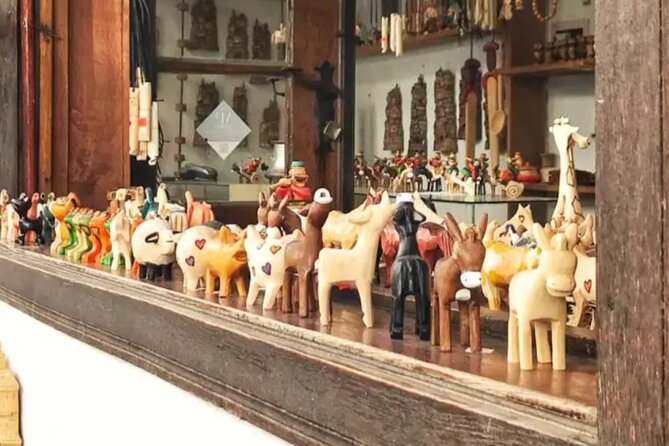
- Samovodska Charshiya artisan street for National Revival crafts, workshops, and a classic souvenir stroll
- Private transport and guide in English, often praised for clear explanations and relaxed pacing
Door-to-door Bulgaria: leaving Bucharest for Veliko Tarnovo
This is one of those trips that feels like a gift when you are short on time. Pickup is from your Bucharest hotel, you get round-trip transport in an air-conditioned vehicle, and your English guide handles the heavy lifting of navigating and timing.
The driving time is about 3 hours each way, so yes, you will be in the car for a chunk of the day. Still, that’s exactly what makes this doable as a day trip. It also means you do not have to puzzle out routes, bus transfers, or language barriers on the fly.
One practical thing: expect possible border-crossing delays depending on road and bridge work in Romania or Bulgaria. Even if everything runs smoothly, the day is long enough that a short wait does not derail the whole plan.
More cross-border trips into Bulgaria:
- Full Day Trip to Bulgaria from Bucharest
★ 4.5 · 343 reviews - From Bucharest: Experience Bulgaria Small-Group Trip
★ 4.2 · 80 reviews - Day Trip to Medieval Bulgaria- Small group tour
★ 3.5 · 75 reviews
Basarbovo Monastery: the active rock church with a plague legend
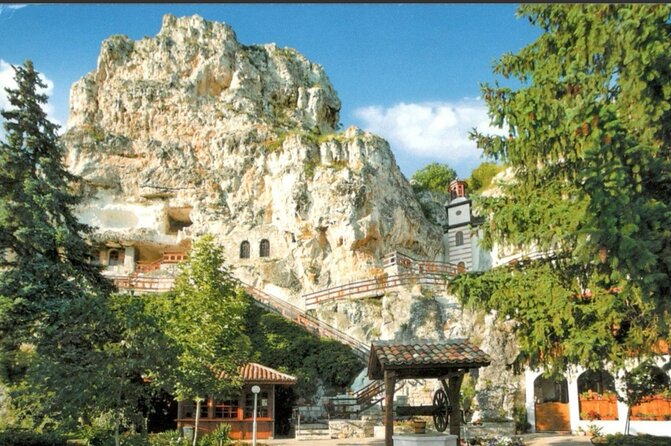
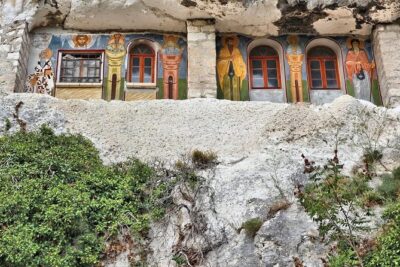
Stop 1 is St. Dimitrii of Basarbovo Monastery, a rock-hewn monastery located near the village of Basarbovo, about 10 km south of Ruse along the Rusenski Lom River. It is famous for being Bulgaria’s only active rock monastery, which is not just a neat label. It shapes what the site feels like: you are moving through stone and cave spaces where worship still happens.
The story you’ll hear connects faith, history, and protection. The monastery is tied to the Second Bulgarian Empire era (12th to 14th centuries). It even appears in an Ottoman tax register from 1431. St. Dimitrii Basarbovski, born in 1685, is the key figure. He led an ascetic life in the monastery’s caves and died in 1685. Later, his relics were moved to Bucharest during the Russo-Turkish War (1768-1774), and they are currently enshrined in the Church of Sts. Constantine and Helena.
For your visit, this matters because it changes how you look at the place. You are not just seeing architecture. You’re seeing a living tradition linked to a legend that traveled, relics and all.
Practical tip: plan for church etiquette, and dress modestly even if you are just popping in for an hour. The admission ticket is not included, so factor in the €2 per person.
Arbanasi plateau village: National Revival houses and fortress design
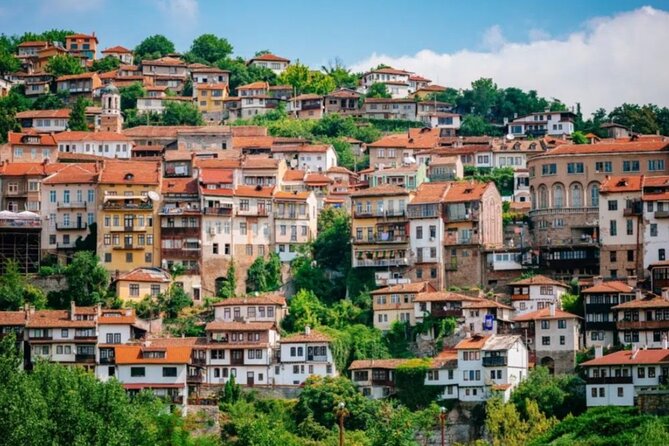
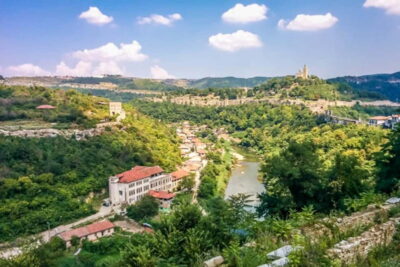
Arbanasi is next, and it is an easy win for anyone who likes architecture. The village sits on a plateau between the Tsarevets and Trapezitsa hills, about 4 km from Veliko Tarnovo. From there, you get that classic hill-town feel, with views that help you understand why Tsarevets mattered.
Arbanasi’s origins are usually traced to the 13th century, and some accounts connect its early settlement to boyars settling there after the Battle of Klokotnitsa in 1230. The name Arbanasi is believed to come from the medieval Bulgarian word Arbanas, meaning Albanian, which adds another layer to the region’s tangled past.
The real visual payoff is the building style. In the 16th and 17th centuries, Arbanasi prospered as a trading center. Wealthy merchants built two-story houses that looked like small fortresses: high stone walls, narrow windows, and heavy wooden gates built to handle raids. It’s not the usual village look. It’s a village that was ready to defend itself.
Your time here is about 1 hour, and the village itself is free to enter. This stop is also a good moment to slow down. You’ll likely walk through streets at your own pace, and it’s a break from the “big monument” feeling of fortresses and churches.
Konstantsalieva House: fortified comfort inside the National Revival
Konstantsalieva House gives you the inside story of Arbanasi’s prosperity. This is a well-preserved 17th-century traditional house that reflects Bulgarian National Revival architecture from the 17th to 18th centuries.
What makes it interesting is the mix of defense and comfort. The house uses stone and wood, with fortified walls and small windows for protection. Then, once you get inside, it shifts to the wealth side of the equation, with beautifully carved wooden ceilings and furniture.
You can also expect to see traditional Bulgarian textiles and household items, including rugs and costumes displayed in rooms to show what daily life looked like during the Ottoman-period merchant heyday. Even if you are not an architecture nerd, you’ll feel the contrast: the exterior says protection, the interior says pride and spending on craft.
Admission ticket is not included, and the entry fee is €5 per person. If you like taking photos, plan your time carefully here, because 1 hour goes faster than you think once you start reading details on furniture and ceiling work.
A few more Bucharest trips worth weighing up
- Castles of Transylvania: Private Day Trip from Bucharest
★ 4.5 · 248 reviews - Bucharest: Best of Bucharest Private Tuk-Tuk Tour
★ 5.0 · 238 reviews - Dracula’s Castle, Peles Castle and Brasov – Private Day Trip from Bucharest
★ 5.0 · 211 reviews - Best of Bucharest | Private Walking Tour
★ 5.0 · 199 reviews
Tsarevets Fortress: the royal hilltop of the Second Bulgarian Empire
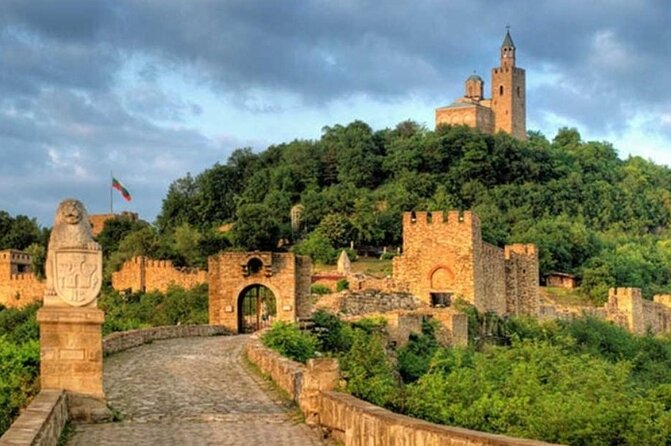
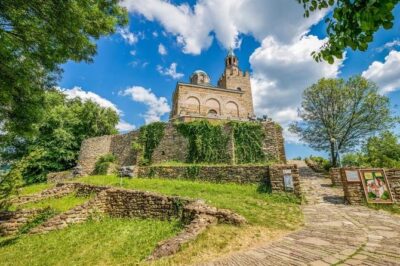
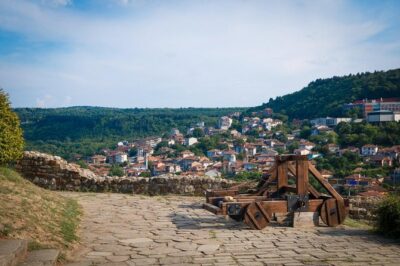
Tsarevets is the big medieval moment in northern Bulgaria. The fortress sits on Tsarevets Hill, protected on three sides by the Yantra River. That natural defense is part of why the site is so dramatic.
This is also where the day’s history “scales up.” The fortress walls are about 3 meters thick and enclose a large area with over 400 buildings, including churches, towers, residential structures, and administrative spaces. It’s not a single castle viewpoint. It’s an entire royal zone.
A standout feature is Baldwin’s Tower, a reconstructed watchtower named after Baldwin I of Constantinople, who was captured and allegedly died in the fortress after the Battle of Adrianople (1205). Whether every detail is taken literally, the point is how the fortress became linked to wider European events.
At the highest point, you’ll find the Royal Palace ruins, including a throne hall, the royal church, and royal chambers. Many visitors find these ruins especially satisfying after you’ve already seen the intimate cave spaces at Basarbovo and the merchant-house style at Arbanasi, because Tsarevets turns all that story into power, governance, and identity.
Your time here is about 2 hours. Admission is not included, and the Tsarevets ticket is €5 per person.
Practical tip: wear shoes you trust. Even with paths and viewing areas, this is a hilltop with uneven stone and steps.
Veliko Tarnovo and Samovodska Charshiya: medieval capital to artisan streets
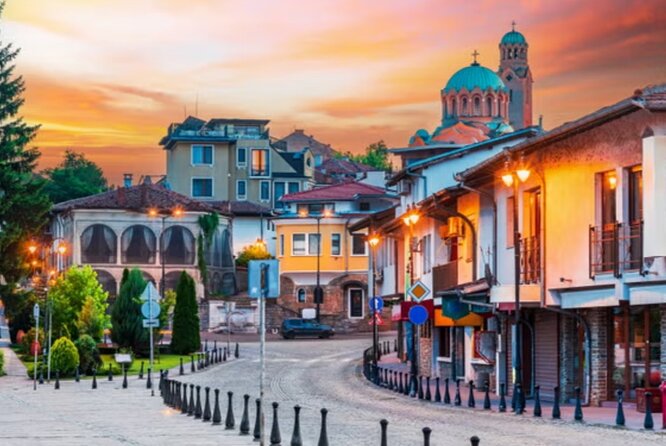
After the fortress, you’ll connect the dots in Veliko Tarnovo. This city sits on three hills, Tsarevets, Trapezitsa, and Sveta Gora, overlooking the Yantra River. It became famous as the historical capital of the Second Bulgarian Empire (1185-1396), following the uprising of the Asen and Peter brothers in 1185.
You’ll also hear about the city as a cultural and spiritual center for Orthodox Christianity, literature, and architecture, and the nickname Third Rome sometimes shows up in how people interpret its influence.
Then the tour finishes with a very practical, fun contrast: Samovodska Charshiya, an artisan district in Veliko Tarnovo. This is a street complex known for well-preserved 19th-century architecture from the 1860s and 1870s, when it served as a market and craft center during the National Revival period.
The name Samovodska comes from a nearby village, Samovodene, where women traditionally laid out produce on colorful rugs in the market. That tradition feels like a direct origin story for the district’s craft identity, and it is one of the reasons the area still feels like it is about making, not just selling.
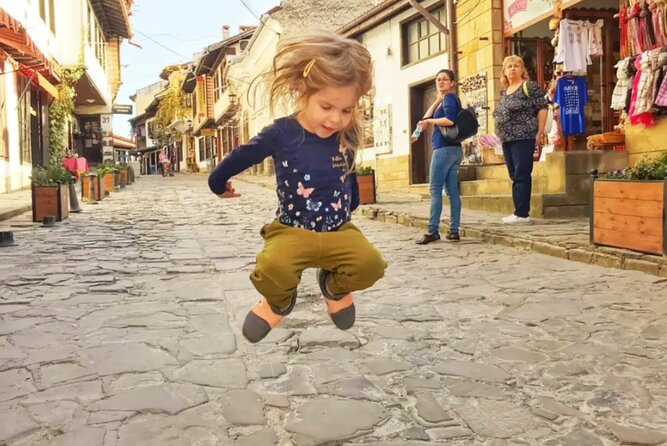
The district is formed by two narrow cobblestone streets lined with Revival-style houses, workshops, and inns. Here’s what I like for real-life travel: it is a good place to slow down, browse at human speed, and buy small, meaningful souvenirs rather than random tourist clutter. Admission is free, and it’s a gentle ending after the longer monument time.
Price and logistics: what $170.16 covers, and what you should budget
At $170.16 per person, this is not a budget bus tour. You are paying for a private vehicle, hotel pickup and drop-off, and an English-speaking professional guide. You’re also paying for stress reduction. Going from Bucharest into Bulgaria in one day is easier when someone else manages the route, timing, and translations.
Where the price stays honest is that some costs are clearly not included. You should plan for entrance fees for three main sites:
- Tsarevets Fortress: €5 per person
- St. Dimitrii of Basarbovo Monastery: €2 per person
- Konstantsalieva House: €5 per person
Lunch is also not included.
So your total day budget is basically tour price plus those €12 in entry fees, then whatever you choose for lunch. If you prefer a sit-down meal with something local, you’ll likely want to set aside money for it.
Another value point: the day is structured so you hit multiple distinct “Bulgaria moods” in one outing. Instead of just one monument, you see cave worship, merchant architecture, a royal fortress, and an artisan street. That mix usually justifies the cost for travelers who only have a week or two around Bucharest and want one extra country experience.
Finally, note that this tour averages being booked about 54 days in advance. That’s a sign it runs in demand, so I would not wait until the last minute.
What to pack and how to pace yourself for a long day
This itinerary is designed for walking, but it’s not a hike. Still, you will be on uneven surfaces at Tsarevets and you’ll be moving through church and museum interiors at Basarbovo and Konstantsalieva House.
Bring:
- Comfortable walking shoes
- A light layer for church interiors and driving time
- Some cash or card for entrance fees and lunch
- Water (especially if the day runs warm)
Also, plan your expectations around lunch. Because it is not included, your guide may suggest a local restaurant choice. That flexibility can be a plus, since you can often pick something that fits your taste and timing.
One more note for flexibility lovers: there are cases where guides can adjust the day for extra interests like a short winery stop around Veliko Tarnovo if timing allows. If that matters to you, mention it early.
Who this day trip suits best (and who should skip it)
This is a great fit if you:
- Want to add Bulgaria to a Romania trip without giving up an entire overnight stay
- Like history that you can see in buildings, not just read in books
- Care about Eastern Orthodox religious sites and legends tied to places
- Prefer private pacing over crowded group tours
- Want English guidance to handle the language and reduce friction
It may be less ideal if you:
- Hate long travel days. The drive is a big part of the experience.
- Have mobility concerns. Fortresses and hill towns usually involve stairs and rough ground.
- Want a full relaxed vacation day. This is a “see a lot, learn a lot” format.
Should you book this Bucharest to Veliko Tarnovo private tour?
If you’re doing Bucharest and you have limited time, I think this booking makes sense. You get Bulgaria’s northern highlights in a single day, plus the kind of private transport and English guidance that keeps the trip from turning into a logistics problem.
Book it if your priority is the big trio: Basarbovo’s cave monastery, Arbanasi’s National Revival merchant architecture, and Tsarevets as the medieval power center. Skip it if you want a slower, more local day, or if you’d rather spend time overnight in Bulgaria so you can spread out the walking and viewpoints.
If you do book, my best advice is simple: show up ready for a long day, budget for the entrance fees and lunch, and ask your guide for smart timing on where to spend your free moments, especially in Samovodska Charshiya.
FAQ
How long is the tour from Bucharest to Bulgaria?
The tour runs about 11 hours.
What sites are included in the day plan?
The stops include St. Dimitrii of Basarbovo Monastery, Arbanasi, Konstantsalieva House, Tsarevets, Veliko Tarnovo, and Samovodska Charshiya Complex.
Are entrance fees included in the price?
No. Entrance fees are not included for Tsarevets Fortress (€5 per person), St. Dimitrii of Basarbovo Monastery (€2 per person), and Konstantsalieva House (€5 per person).
Is lunch included?
Lunch is not included.
Do you get pickup and drop-off in Bucharest?
Yes. Hotel pickup and drop-off are included, and pickup is offered.
Is this a private tour?
Yes. It is private, meaning only your group participates.
What is the tour language?
The tour is offered in English.
FAQ
Can I get a full refund if I cancel?
You can cancel up to 24 hours in advance for a full refund.
Recently listed in Bucharest
- Wine Tasting and Dinner, including Sommelier★ 5.0 · 3 reviews
- Winery touring & private wine tasting – one day private tour★ 5.0 · 3 reviews
- Village Museum Bucharest Guided Tour★ 5.0 · 6 reviews
- Bucharest: Dealu Mare Winery Private Trip with Wine Tasting★ 4.9 · 6 reviews
- Transylvania Tour: Dracula’s Castle, Peles Palace & Brasov★ 5.0 · 19 reviews
- Traditions in Bucharest: Village Museum and Wine Tasting★ 5.0 · 8 reviews
- Airport Henri Coanda (Otopeni) to Bucharest – Private Transfer – Driver★ 5.0 · 5 reviews
- Discover Medieval Transylvania Small Group Tour – 7 days★ 5.0 · 4 reviews
Bulgaria Day Trips, compared.
Visit Bulgaria – Veliko Tarnovo Medieval Fortress – Private tour from Bucharest
Read our review →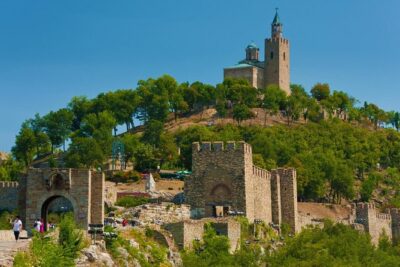
Private Day Trip to Bulgaria and Veliko Tarnovo from Bucharest
Read our review →
Private Daytrip to Buzludzha Monument and Veliko Tarnovo
Read our review →
Bulgaria -Private Tour – Caves, Waterfalls, Hiking, National Park
Read our review →Browse the lists this tour appears in