REVIEW · BUCHAREST TOURS
Bucharest: The Italian emigration in Romania
Italian Bucharest feels like a street-level history lesson. This 2-hour guided walk connects the end of the eighteenth century and early nineteenth century Italian immigration to real buildings you can still see, starting near Piata Natiunile Unite and crossing the Dambovita River into Victory Road.
I really like the way the route turns the city into a timeline. If you get a guide like Roberto, who was praised for being very helpful, or Daniel, who was highlighted for clear explanations and good humor, you’ll get answers, context, and those small details that make Bucharest feel less like a blur.
One thing to think about: it is still a city walk. Bring comfortable shoes, and give yourself extra time to find the Transylvanian Wonders office, because the meeting spot is close to Piata Natiunile Unite but not exactly flashy.
In This Review
- Key highlights to look for on the Italian emigration walk
- Walking Bucharest’s Italian trail on Victory Road
- Meeting near Piata Natiunile Unite, then crossing the Dambovita
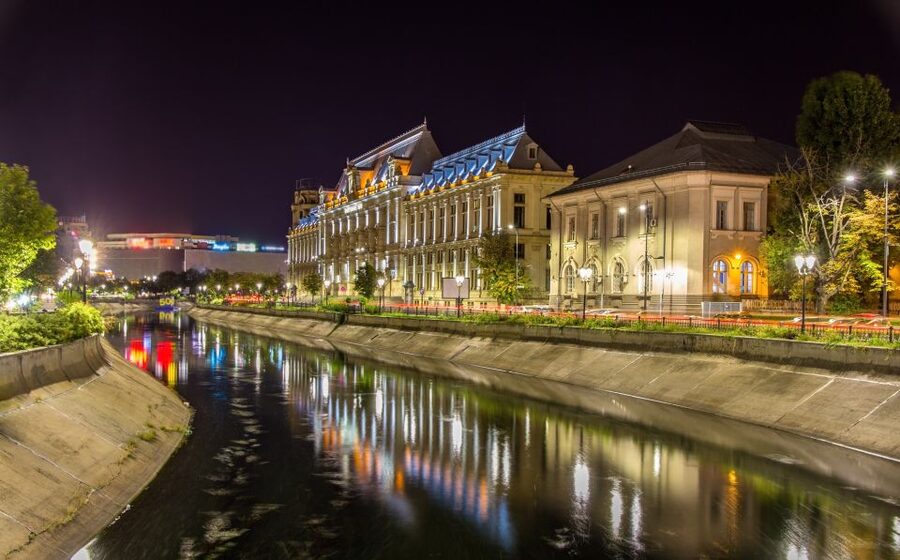
- Palace of Justice and the riverfront that sets the tone
- Victory Road: the “most famous street” where the story walks beside you
- CEC Palace and Revolution Square, where money and power show up in stone
- Italian Church and the culture stop that makes it personal
- What you actually get in 2 hours, and how to pace yourself
- Price and value: $11 for a guided story along real landmarks
- Practical rules that matter more than they seem
- Who should book this Italian emigration walk in Bucharest
- Should you book the Italian emigration tour in Bucharest?
- FAQ
- How long is the Bucharest Italian emigration walking tour?
- Where do I meet my guide?
- What is the tour language?
- What price should I expect?
- What is not allowed during the tour?
- Is the tour suitable for everyone?
Key highlights to look for on the Italian emigration walk
- Victory Road on foot: the famous street in Bucharest becomes your main classroom.
- Dambovita River crossing: you start by moving across the river and changing neighborhoods fast.
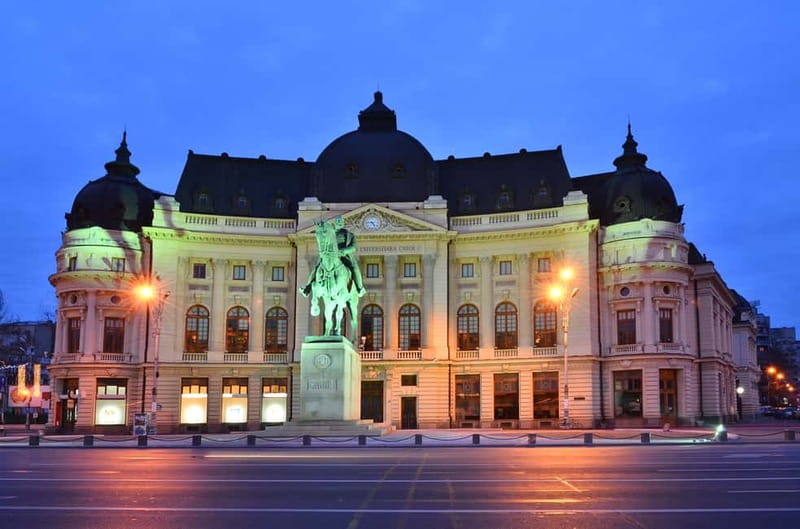
- CEC Palace and Revolution Square views: big civic buildings that explain how Italians left marks on the city.
- Palace of Justice landmark moment: a standout stop on the river banks.
- Italian Church stop: you get to connect faith and architecture to migration history.
- End in Old Town with a recap: you finish with a quick wrap-up so it all sticks.
Walking Bucharest’s Italian trail on Victory Road
This tour is built around one idea: Italian immigration is not just a fact in a book. It is visible in streets, institutions, and the kind of architecture that makes Bucharest feel like it has layers from different worlds.
You start outside the busiest tourist core and head into the old part of town with a guide. Then Victory Road takes over. It is described as a surreal world, and I get what that means once you’re walking it. The street feels like a corridor of history, where each corner pulls you to a new named building, and the guide ties it back to the Italian presence in Bucharest.
If you enjoy city walking tours that actually explain what you’re seeing (not just pointing), this one has the right structure. You get a steady flow of major stops, plus a recap at the end so you leave with a clear storyline.
More of Bucharest worth a look before you book:
- Bucharest: Dracula’s Castle, Peles Castle, & Brasov Old Town
★ 4.5 · 17,858 reviews - Bucharest: Dracula Castle, Peles Castle & Brasov Old Town
★ 4.6 · 10,891 reviews - Bucharest: Dracula’s Castle, Peleș Castle & Brașov Day Trip
★ 4.4 · 6,100 reviews
Meeting near Piata Natiunile Unite, then crossing the Dambovita
Plan for an easy but deliberate start. You meet your guide at the Transylvanian Wonders office at Bulevardul Natiunile Unite 4, Bloc 107/A. The guidance says you meet in Piata Natiunile Unite, about 100 meters from the office, so arrive early enough to orient yourself and not feel rushed.
From there, the tour crosses the Dambovita River. That move matters more than it sounds. Riverfronts in cities usually define where power, money, and public life concentrate, and here it sets you up for the civic landmarks that come next.
The tour runs for about 2 hours. That is a sweet spot for an urban theme walk. You won’t have to plan a whole day around it, but you still get enough time to move between several named locations and absorb the connections.
Palace of Justice and the riverfront that sets the tone
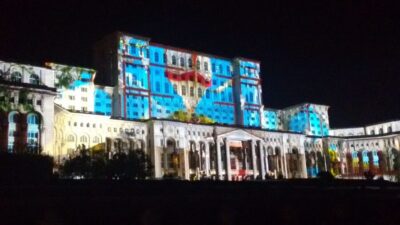
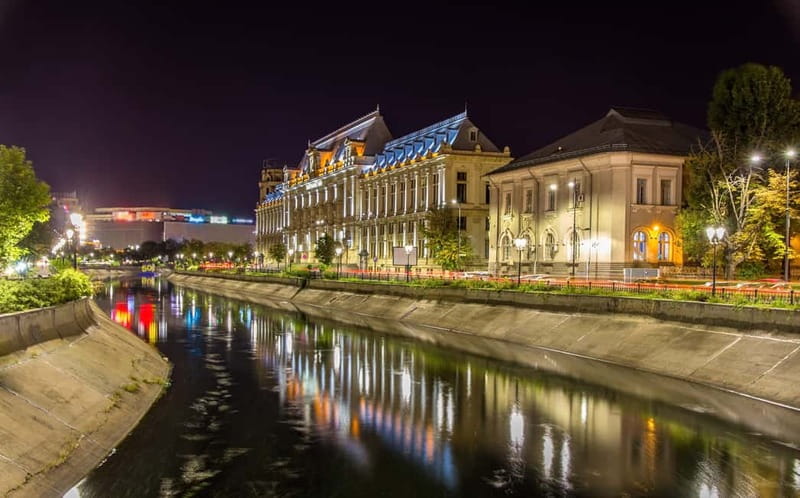
One of the highlights is the Palace of Justice on the banks of Dambovita. This is the kind of building you can’t ignore, even if you’re not a “monuments person.” Large civic architecture tends to project authority, and that is part of why it works so well for an immigration-themed walk.
As you’re standing here, you can think of the guide’s job as translating scale into story. Italian immigration in Bucharest during the late 1700s and early 1800s is the big topic, but the tour keeps grounding it in what you can see today. So you are not just hearing a timeline, you’re also learning how public spaces evolve when communities and institutions grow.
A practical note: this part of the walk can be more open. So dress for weather and keep an eye on the conditions. Comfortable shoes matter even more if the sidewalks are crowded or uneven.
Victory Road: the “most famous street” where the story walks beside you
Then you enter Victory Road, often described as Bucharest’s most famous street. This is where the tour becomes fun in a very specific way: the street is both a place and a guide.
Instead of hopping between far-flung areas, you walk along a corridor where landmarks cluster closely enough to feel efficient. And the theme stays consistent. You’re always on the traces of Italian immigration and its influence on the city’s development and history.
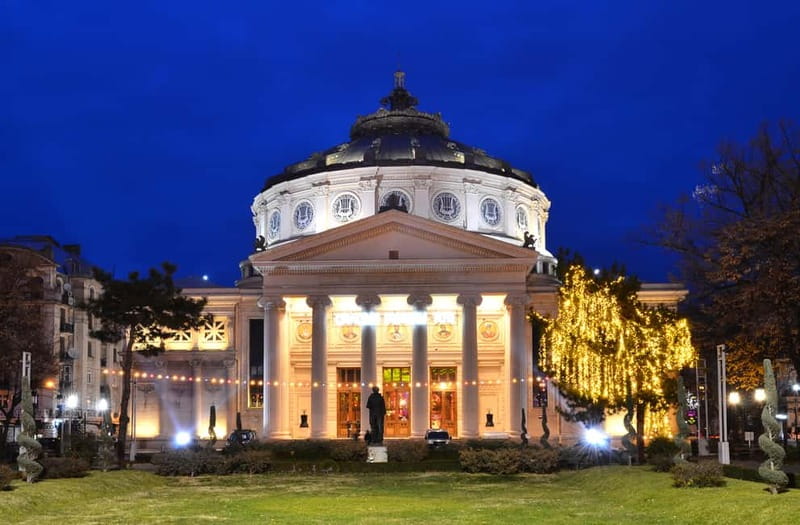
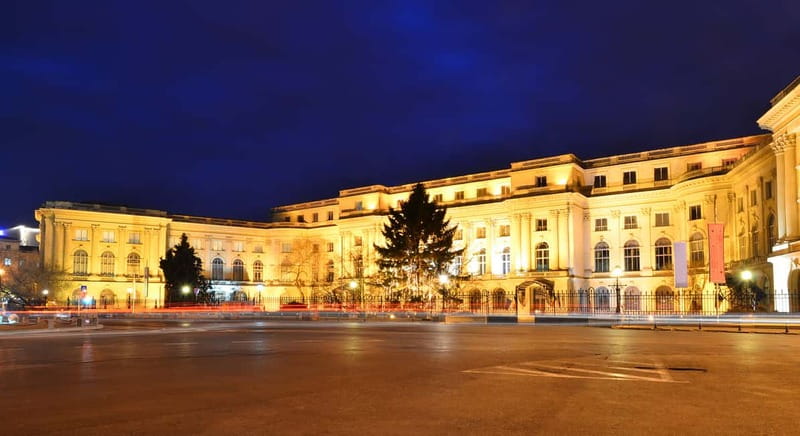
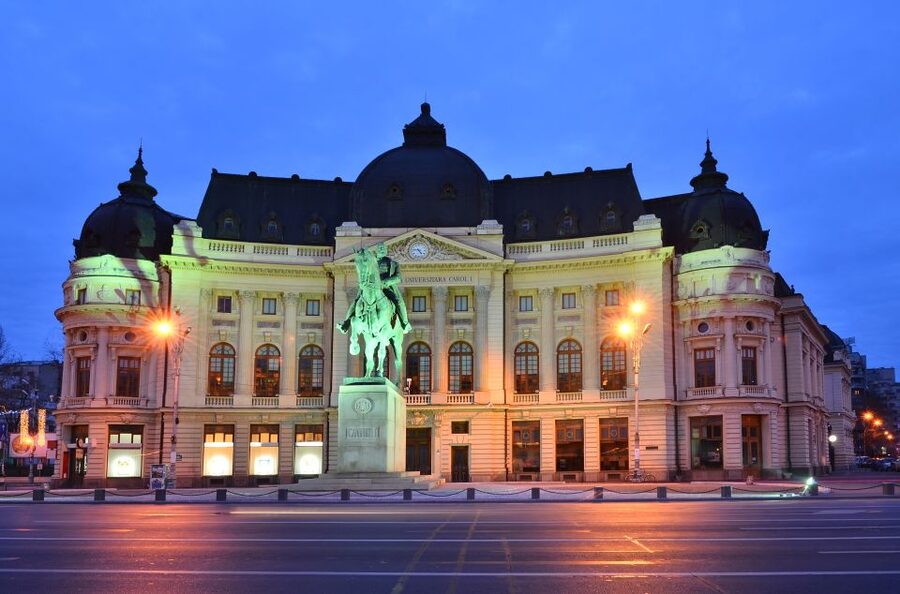
As you move, you’ll pass stops tied to major institutions and culture. The National History Museum is part of the route, as is the Atheneum. Even without getting stuck inside anything, the outside view helps you connect the Italians’ impact to Bucharest’s broader civic and cultural growth.
One benefit of keeping the story on one main street is that your brain can build a mental map quickly. You start recognizing how the buildings “talk” to each other along the avenue, which makes it easier to remember what the guide says later when you’re in Old Town.
A different sort of day out in Romania:
- Bucharest: Palace of Parliament Tickets and Guide
★ 4.3 · 3,182 reviews - Bucharest: Day Trip to Dracula Castle, Peles Castle & Brașov
★ 4.4 · 3,049 reviews - Bucharest to Dracula Castle, Peles Castle and Brasov Guided Tour
★ 4.5 · 2,933 reviews - Bucharest: Palace of Parliament Tickets and Guided Tour
★ 4.4 · 1,877 reviews
CEC Palace and Revolution Square, where money and power show up in stone
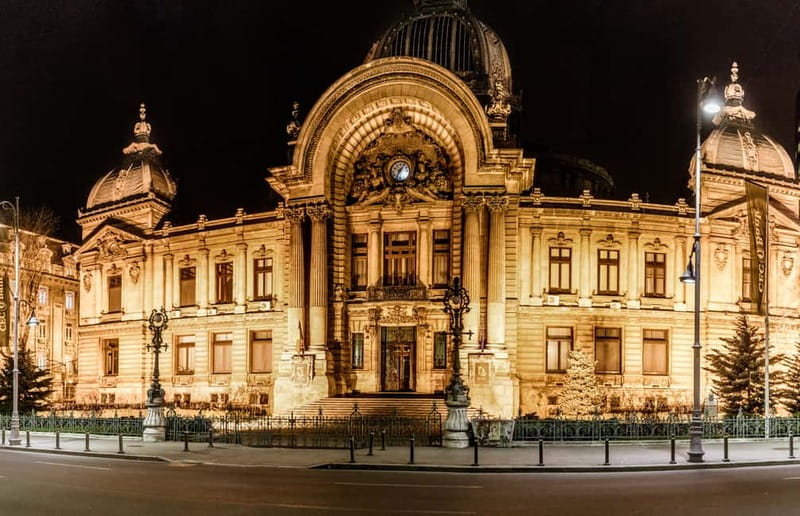
Two of the key landmarks on the itinerary are the CEC bank building (CEC Palace) and Revolution Square, plus the old Senate house area. These are not small stops. They are the kind of places you see in photos, yet they can still feel confusing if you don’t know what to look for.
On this walk, the guide connects these sites back to the Italian footprint. That might sound abstract, but the lesson is straightforward: immigration influences more than just neighborhoods. It can shape institutions, public life, and how a city organizes itself.
Revolution Square, in particular, works well for this theme because it’s a civic anchor. You can look at it like a “center of gravity” for the city’s public story. Then the guide adds the migration lens, so you understand how different communities contributed to what Bucharest became.
If you like when a tour gives you both location and explanation, this is one of the best stretches. The buildings are close enough that you can keep your attention on the theme without constantly relocating.
Italian Church and the culture stop that makes it personal
The tour also includes the Italian Church. For an Italian emigration theme, that is a natural “emotional anchor.” Churches are not just religious buildings, they are community markers. They signal continuity, identity, and where people felt they belonged.
Seeing it as part of a walking narrative works better than treating it as a random photo stop. You get to hear why this kind of site matters in a story about Italians arriving and leaving lasting marks in Bucharest.
If you’re the type who likes symbolism, pay close attention here. The guide tends to link buildings to the bigger picture of the city’s development and history, and the Italian Church is the kind of stop where that connection feels tangible.
What you actually get in 2 hours, and how to pace yourself
A 2-hour duration means you should treat this as a focused primer. You’ll see multiple major named locations, but you won’t have time for a long museum day or extended interior time at every stop.
That’s not a drawback for most people. It’s a good format for a theme like Italian emigration because it keeps you moving while the story stays coherent. You’re not trying to process everything at once in a single giant chunk.
I also like that the tour ends in Bucharest’s old town with a quick recap. That recap is underrated. It helps you sort the stops you saw, so you can continue exploring Old Town with clearer context instead of guessing which building had what significance.
If you’re worried about pacing, do yourself a favor: wear shoes you can walk in for an hour straight without thinking. This tour’s value comes from the flow. When you constantly stop to adjust blisters, you lose the narrative rhythm.
Price and value: $11 for a guided story along real landmarks
At $11 per person, this is a low-cost way to get structure in a city that can feel complicated fast. The big question is whether that price buys you more than basic sightseeing, and in this case, the tour’s design suggests yes.
You get a professional local guide and a tight set of major landmarks. You’re not paying for transport, and you’re not trying to fit in a long museum session. Instead, you’re paying for interpretation, which is where walking tours often justify their cost.
Also, the guide language is Italian. If you speak Italian, great, you’ll follow every nuance. If you don’t, you might still pick up the main thread through the places and the guide’s explanations, but you should set expectations that the full experience is in Italian.
The operator also lists free cancellation up to 24 hours in advance for a full refund, and a reserve now & pay later option. That’s helpful if your schedule is still a little messy.
Practical rules that matter more than they seem
This is a straightforward walking tour, and the rules are pretty standard, but worth noting:
- Bring comfortable shoes and weather-appropriate clothing.
- Avoid alcohol and drugs during the activity.
- Audio recording is not allowed.
- Bare feet are not allowed.
None of these are major deal-breakers. Still, they help keep things smooth if you’re the kind of person who likes to narrate your own video or record everything. Plan to enjoy the walk instead.
Who should book this Italian emigration walk in Bucharest
I’d point you to this tour if you want:
- a short, guided walk that connects migration history to specific places
- a route that uses Victory Road and major civic buildings as your “story spine”
- an Italian-speaking guide experience that focuses on the late 1700s and early 1800s
It’s also a good choice when you only have a limited window in Bucharest but still want more than generic highlights.
On the other hand, it is not suitable for people over 95 years. If that applies to you or a companion, choose a different format with less walking.
Language matters too. The tour language is Italian. If you need English, you may need another option.
Should you book the Italian emigration tour in Bucharest?
If you like theme walking tours where the guide explains why landmarks matter, I’d book this. The route is compact, the stops are major, and the story stays anchored to Italian immigration in a time period that shaped Bucharest’s development.
At $11 for a professional local guide in a 2-hour format, it’s strong value. Just come prepared with good shoes, arrive on time at the Transylvanian Wonders office near Piata Natiunile Unite, and expect an Italian-language guided experience.
If your goal is to understand Bucharest through one clear lens, Victory Road is a smart place to start.
FAQ
How long is the Bucharest Italian emigration walking tour?
The tour lasts 2 hours.
Where do I meet my guide?
Meet your guide at the Transylvanian Wonders office, Bulevardul Natiunile Unite 4, Bloc 107/A. You meet in Piata Natiunile Unite, about 100 meters from the office.
What is the tour language?
The live tour guide language is Italian.
What price should I expect?
The price is listed as $11 per person.
What is not allowed during the tour?
Alcohol and drugs are not allowed. Audio recording is also not allowed, and bare feet are not allowed.
Is the tour suitable for everyone?
It is not suitable for people over 95 years old.
Recently listed in Bucharest
- Winery touring & private wine tasting – one day private tour★ 5.0 · 3 reviews
- Village Museum Bucharest Guided Tour★ 5.0 · 6 reviews
- Wine Tasting and Dinner, including Sommelier★ 5.0 · 3 reviews
- Bucharest: Dealu Mare Winery Private Trip with Wine Tasting★ 4.9 · 6 reviews
- Transylvania Tour: Dracula’s Castle, Peles Palace & Brasov★ 5.0 · 19 reviews
- Traditions in Bucharest: Village Museum and Wine Tasting★ 5.0 · 8 reviews
- Airport Henri Coanda (Otopeni) to Bucharest – Private Transfer – Driver★ 5.0 · 5 reviews
- Discover Medieval Transylvania Small Group Tour – 7 days★ 5.0 · 4 reviews
Bucharest Tours, compared.
Dracula’s Castle, Peles Castle, & Brasov Old Town
Read our review →
Dracula Castle, Peles Castle & Brasov Old Town
Read our review →
Dracula’s Castle, Peleș Castle & Brașov Day Trip
Read our review →
Day Trip to Dracula Castle, Peles Castle & Brașov
Read our review →
Bucharest to Dracula Castle, Peles Castle and Brasov Guided Tour
Read our review →