
REVIEW · MUSEUMS
Bucharest: National Museum of Art of Romania Guided Tour
Romanian art makes sense fast. This guided walk through the National Museum of Art of Romania turns big names into a clear story, led by an expert guide in a small group of up to 10. You get to see how Romanian painting and sculpture changed over time, without having to figure it out alone inside a huge museum.
I particularly love the sweep from Teodor Aman and Nicolae Grigorescu. The tour frames their academic style alongside the lighter, Impressionist-leaning feel, so the shift feels logical, not random.
One thing to consider: accessibility is mixed. The museum is wheelchair accessible, but it is not fully accessible for people with mobility impairments.
In This Review
- Key highlights worth your time
- A smart way to see the National Museum of Art of Romania
- Entering the former Royal Palace galleries
- Teodor Aman and Nicolae Grigorescu, where Romanian art gets its polish
- Ștefan Luchian, the emotional turn on canvas
- Constantin Brâncuși, modernist sculpture you can feel
- How the guide turns a museum visit into a timeline
- Practical tips for a smooth visit
- Value check: is $43 worth it?
- Who this tour is best for
- Should you book this Bucharest art tour?
- FAQ
- How long is the Bucharest National Museum of Art guided tour?
- How much does the tour cost?
- What is included in the price?
- Where is the meeting point?
- What languages is the tour available in?
- How large is the group?
- Can I take photos during the tour?
- Is flash photography allowed?
- Is the tour suitable for children?
- Is the tour wheelchair accessible?
Key highlights worth your time
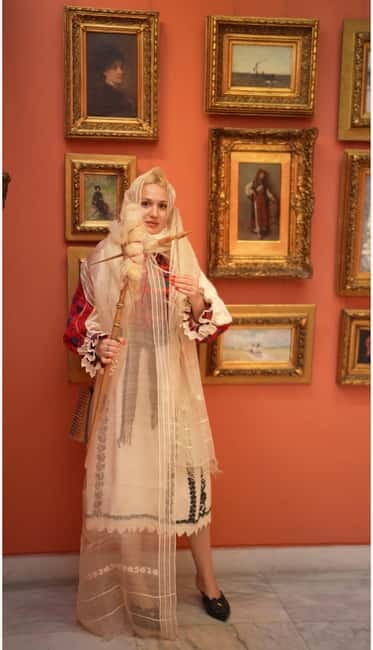
Up to 10 people for a real dialogue so you can ask questions and actually hear the guide.
A focused mix of Romanian masters from academic painters to expressive works and modern sculpture.
Brâncuși sculptures in person for a firsthand look at his minimalist revolution.
A guide-led storyline of modern Romanian art from the 1830s onward, not a random gallery shuffle.
Clear, passionate explanations that make the artworks easier to “read” in real time.
A smart way to see the National Museum of Art of Romania
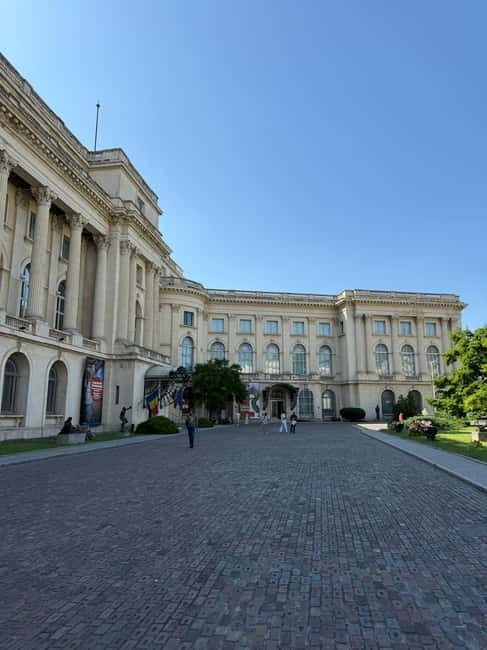
The National Museum of Art of Romania can feel like a lot, because it is a major collection in a very grand setting. This guided tour solves the main problem: you get context, and the artwork becomes a sequence instead of a wall of frames.
The format is also practical. You are in and out in about 1 to 1.5 hours, which is perfect if you want something meaningful without eating half a day. Plus, with a small group capped at 10 participants, you do not spend the whole time shoulder-to-shoulder.
You will also get a live guide in English and Romanian. The best tours are not just about knowing names, they are about translating art into plain language. From the guidance style I saw reflected in participant feedback, this is exactly what you get.
The setting helps too. The museum collection is housed in a former Royal Palace, so you are not just looking at art, you are moving through rooms that feel like they were built for drama. That atmosphere makes the guide’s stories land even harder.
More Museum Visits in Bucharest:
- Bucharest: Museum of Senses Entry Ticket
★ 4.2 · 364 reviews - Bucharest: Parliament, Ceausescu House & Village Museum Tour
★ 5.0 · 208 reviews - Communism in Bucharest – Landmarks, Museum & Communist Appetizers
★ 5.0 · 111 reviews
Entering the former Royal Palace galleries
You meet at the Romanian Modern Art Gallery entrance, on the right-hand side as you face the building. That matters because it gets you into the museum rhythm quickly. Arrive about 10 minutes early if you want a stress-free start, since the tour begins promptly.
Once you are inside, the experience is structured around a clear theme: the evolution of Romanian art. Instead of treating each artwork like a standalone fact, your guide connects the dots between artists, artistic movements, and changing tastes.
You are also covered on the essentials. Admission to the museum is included, and you have access to the permanent National Art Gallery exhibitions. So you are not paying extra just to view the collection your guide is talking about.
One more practical point: photography is allowed, just without flash. That’s a helpful rule because flash can get distracting in museums, and the guide can keep moving without constant reminders.
Also, comfortable shoes are not optional here. Even in a 1 to 1.5 hour tour, you will be walking between works and turning your focus often. The museum is big enough that a good pace matters.
Teodor Aman and Nicolae Grigorescu, where Romanian art gets its polish
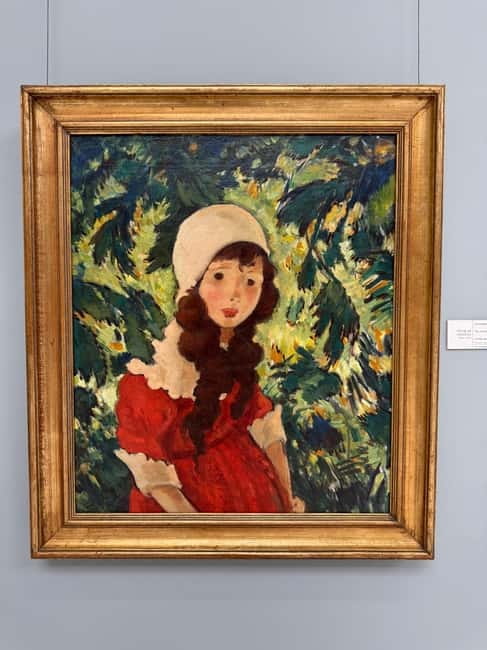
The tour starts by giving you a strong baseline: the academic and historical side of Romanian painting. Two names anchor this part, Teodor Aman and Nicolae Grigorescu, and you see why they mattered.
Think of it as the “how it’s supposed to look” stage of art. Academic painting leans toward craft, structure, and clear composition. In plain terms, it gives you something stable to compare later styles against. When you understand what academic work is aiming for, later expressive and modernist pieces make more sense.
With Nicolae Grigorescu, the guide shifts you toward the lighter mood often associated with Impressionist sensibilities. You might notice how the emphasis can feel different, even if the subject matter is similar. Instead of strict form being the whole story, light and atmosphere start to carry more weight.
What I like about this approach is the way the guide makes it feel “evolutionary.” You are not just being told who the artists are. You are learning how Romanian painters responded to broader European styles while keeping their own voice.
And because the group is small, you can actually stop long enough to look properly. In a larger museum visit, you often rush. Here, the pacing makes you do the looking, not just the listening.
Ștefan Luchian, the emotional turn on canvas
After the polished beginning, the tour moves into more deeply expressive territory with Ștefan Luchian. This is where the vibe changes. The brushwork and expression are meant to feel more personal, more charged, and less about “correct” form.
In a short tour, it can be tempting to treat this as a quick stop. But the whole point of going with a guide is that you get the interpretive tools you would miss if you only read labels.
The feedback I saw consistently praised the guide’s clarity and emotion in explaining each artist. That matters here, because Luchian’s impact is not just technical. It is how the work feels, and why that feeling resonated.
You also get the advantage of hearing anecdotes and inspiration stories. They help you connect what you see on the canvas to the why behind it. Even if you do not become an art critic in 90 minutes, you will leave with better instincts for what to notice.
So this section is a good “reset” from academic rules. It teaches you a different way of looking, one where feeling and expression are part of the message, not just the subject.
A few more Bucharest trips worth weighing up
- Bucharest: Palace of Parliament Tickets and Guide
★ 4.3 · 3,182 reviews - Bucharest to Dracula Castle, Peles Castle and Brasov Guided Tour
★ 4.5 · 2,933 reviews - Bucharest: Palace of Parliament Tickets and Guided Tour
★ 4.4 · 1,877 reviews - Bucharest: City Highlights Guided Walking Tour
★ 4.9 · 1,482 reviews
Constantin Brâncuși, modernist sculpture you can feel
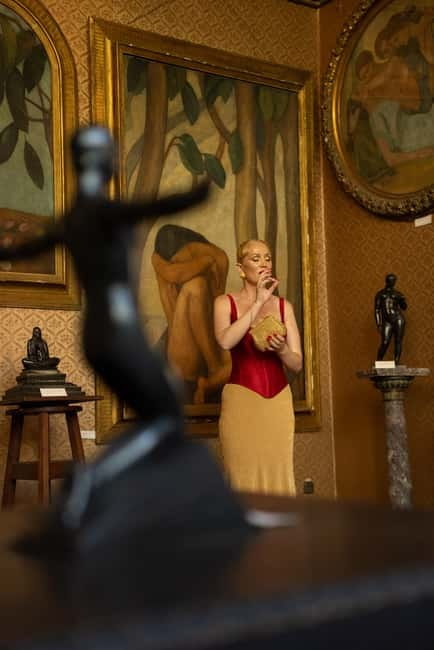
Then the tour reaches the big moment for many people: Constantin Brâncuși. Seeing Brâncuși in person is often a shock in the best way. His work reduces forms to their essence, but that reduction does not feel empty. It feels intentional.
In a guided setting, you are not just looking at a sculpture. You are getting the explanation of what made this approach revolutionary in the modernist era, and why it influenced later generations.
Brâncuși is also a perfect late-stage lesson because he sits at the point where art stops trying to copy appearances and starts focusing on ideas about shape itself. In other words, you can feel the leap from painting’s evolution to sculpture’s modern mindset.
If you normally skim museum objects quickly, this is where the tour helps most. The guide slows you down just enough to notice proportions, simplification, and the kind of attention the sculpture asks for.
You also learn how his minimalist, abstract forms changed the language of sculpture. That makes your visit more than sightseeing. It becomes a small history lesson you can walk away carrying.
How the guide turns a museum visit into a timeline
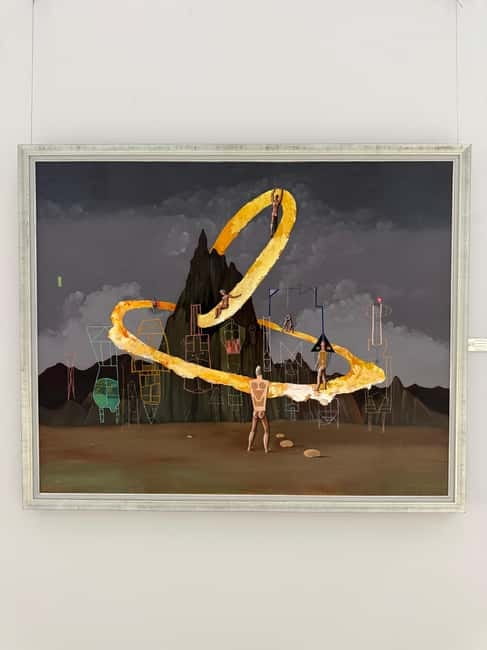
This tour’s real value is the way the guide organizes the collection. Many museum visits list masterpieces. This one connects them into a timeline of Romanian art.
You move through key works that represent major shifts: academic craft, Impressionist-leaning light, expressive emotional painting, and modernist sculpture. The guide’s job is to make those shifts readable, and the feedback on the guiding style is very consistent.
The name Iana comes up often in participant reviews. People describe her explanations as clear and engaging, with a warm, passionate delivery. That kind of guide makes you feel like the museum is talking back, not just waiting silently.
You can also feel the tour’s focus on modern Romanian art, often described as starting from the 1830s onward. That helps a lot because the museum collection is large. Without a guide, you can easily get lost in the sheer amount of material.
This is also a smart choice if you want an overview without turning into a label-reading robot. In a focused tour like this, you can learn enough to guide your own future museum explorations.
The downside is simple: because the time is limited, you cannot linger forever over every artwork. If you love to study brushwork for 30 minutes at a time, you may want extra unstructured time afterward. For a guided overview, though, the length is well chosen.
Practical tips for a smooth visit
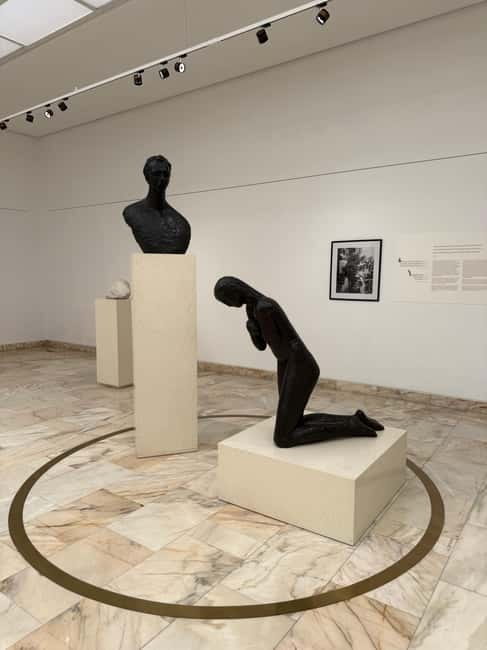
Before you go, keep a few rules in mind. No food and drinks are allowed inside, and flash photography is not permitted. Photography without flash is allowed, so bring your camera and plan to take photos of a few key works rather than everything.
Dress for walking. Comfortable shoes will save your feet more than you expect, especially if you plan to explore Bucharest the same day.
If you are coming during a busy time, give yourself buffer time to find the meeting spot. Again, it is the Romanian Modern Art Gallery entrance, right-hand side when you face the building. Arrive about 10 minutes early because the tour starts on time.
And about accessibility: the tour is described as wheelchair accessible, but the museum is not fully accessible for wheelchair users or people with mobility impairments. If mobility is a concern, it is worth planning on slower movement and possible limitations inside galleries.
Language is another practical point. You will have a live guide in English and Romanian, so you can choose based on what you feel most comfortable following.
Value check: is $43 worth it?
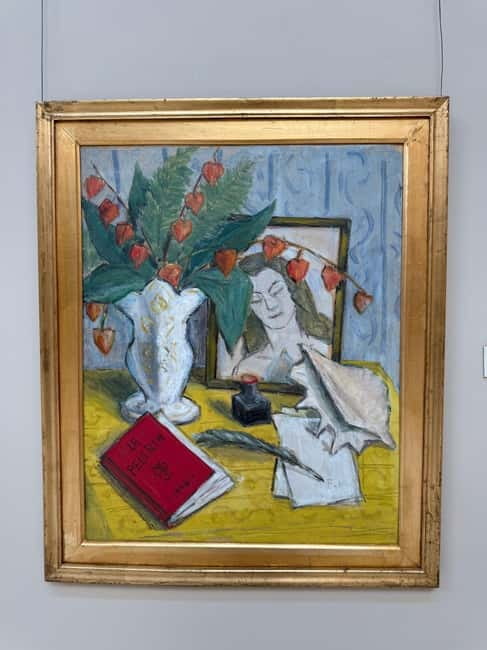
At $43 per person for 1 to 1.5 hours, the key question is what you get for your money. You receive admission to the National Museum of Art of Romania, plus access to the permanent exhibitions, and an expert guide who connects the artworks into a story.
A solo museum visit can be cheaper, but you lose the organizing layer. For me, this tour looks like good value when you want to understand the “why” behind the works, especially with Brâncuși and the transition between artistic styles. The guide’s storytelling is the product here, not just the ticket.
It is also good value because the group size stays small. When groups are larger, you pay for a guide but you do not always get time with them. Here, the tour is limited to 10 participants, which supports a more attentive experience.
If you already know Romanian modern art well and you enjoy reading labels at your own pace, you might not need a guide. If you want to get oriented quickly and see the major anchors of the collection with better context, this price feels fair.
Who this tour is best for
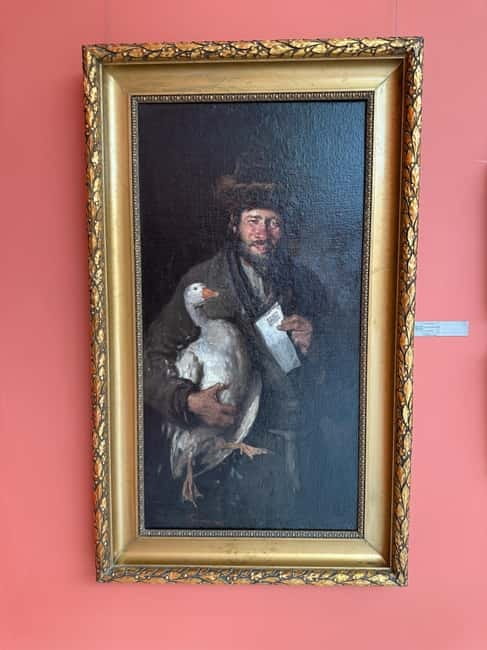
I think this tour fits best if you fall into one of these buckets.
You want a guided introduction to Romanian art and you like when the guide explains connections between artists. You are curious about Brâncuși but you do not want to rely only on the museum placards. Or you want something focused that does not turn into a long museum marathon.
It is also a smart pick for couples and small friend groups who want shared learning. The small group format makes it easier to ask questions and keep your pace.
There is one limit in the details: it is not suitable for children under 12. So if you are traveling with younger kids, you will likely need a different option.
Should you book this Bucharest art tour?
Book it if you want a clear Romanian art story in a short time, with a guide-led explanation that makes the collection easier to understand. This tour is especially attractive because it connects Aman and Grigorescu, brings emotional weight with Luchian, and ends with the modernist impact of Brâncuși.
Skip it, or consider another approach, if you want to roam slowly on your own for hours and you do not care about historical context. You also might rethink if you have significant mobility limits, since the museum is not fully accessible even though the tour is described as wheelchair accessible.
If your goal is smart orientation, this is the kind of guided museum stop that pays off later when you look at art around the city, and when you revisit these artists with a better mental framework.
FAQ
How long is the Bucharest National Museum of Art guided tour?
The tour lasts about 1 to 1.5 hours.
How much does the tour cost?
It costs $43 per person.
What is included in the price?
The price includes an expert guide, admission to the National Museum of Art of Romania, and access to the permanent National Art Gallery exhibitions.
Where is the meeting point?
Meet at the Romanian Modern Art Gallery entrance. If you face the building, it is on the right-hand side.
What languages is the tour available in?
The live tour guide speaks Romanian and English.
How large is the group?
The group is limited to 10 participants.
Can I take photos during the tour?
Yes, photography is allowed as long as you do not use flash.
Is flash photography allowed?
No, flash photography is not allowed.
Is the tour suitable for children?
It is not suitable for children under 12.
Is the tour wheelchair accessible?
The tour is described as wheelchair accessible, but the museum is not fully accessible for wheelchair users or people with mobility impairments.
Recently listed in Bucharest
- Winery touring & private wine tasting – one day private tour★ 5.0 · 3 reviews
- Village Museum Bucharest Guided Tour★ 5.0 · 6 reviews
- Wine Tasting and Dinner, including Sommelier★ 5.0 · 3 reviews
- Bucharest: Dealu Mare Winery Private Trip with Wine Tasting★ 4.9 · 6 reviews
- Transylvania Tour: Dracula’s Castle, Peles Palace & Brasov★ 5.0 · 19 reviews
- Traditions in Bucharest: Village Museum and Wine Tasting★ 5.0 · 8 reviews
- Airport Henri Coanda (Otopeni) to Bucharest – Private Transfer – Driver★ 5.0 · 5 reviews
- Discover Medieval Transylvania Small Group Tour – 7 days★ 5.0 · 4 reviews
Museums, compared.

Parliament, Ceausescu House & Village Museum Tour
Read our review →
Communism in Bucharest – Landmarks, Museum & Communist Appetizers
Read our review →
Palace of Parliament, Ceausescu House & Village Museum
Read our review →

Museum of Communism Ticket with Communist Coffee
Read our review →
Dinner+Tour at Museum of Communism after closing
Read our review →
Visit Parliament Palace, Ceausescu Mansion & Village Museum
Read our review →Browse the lists this tour appears in